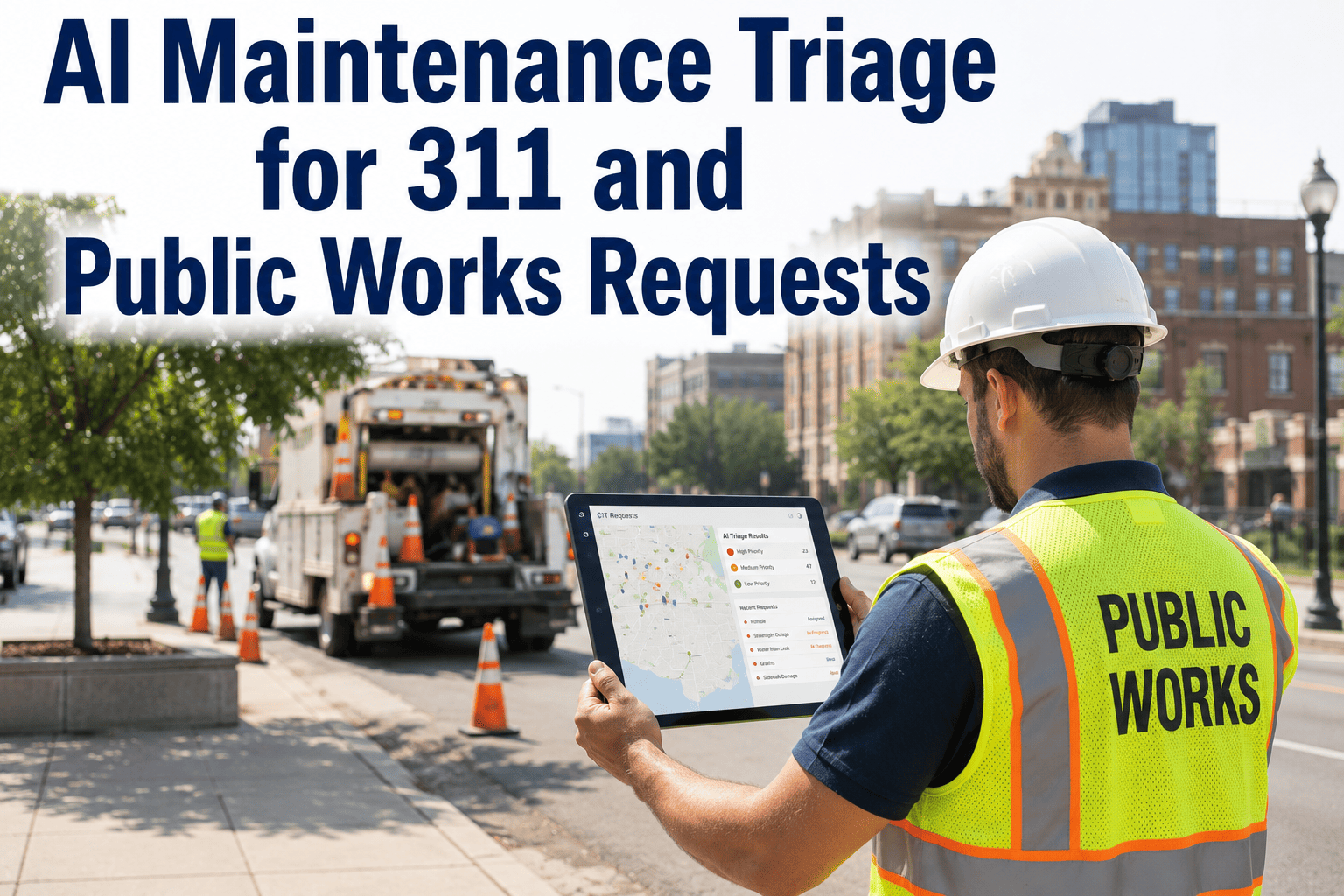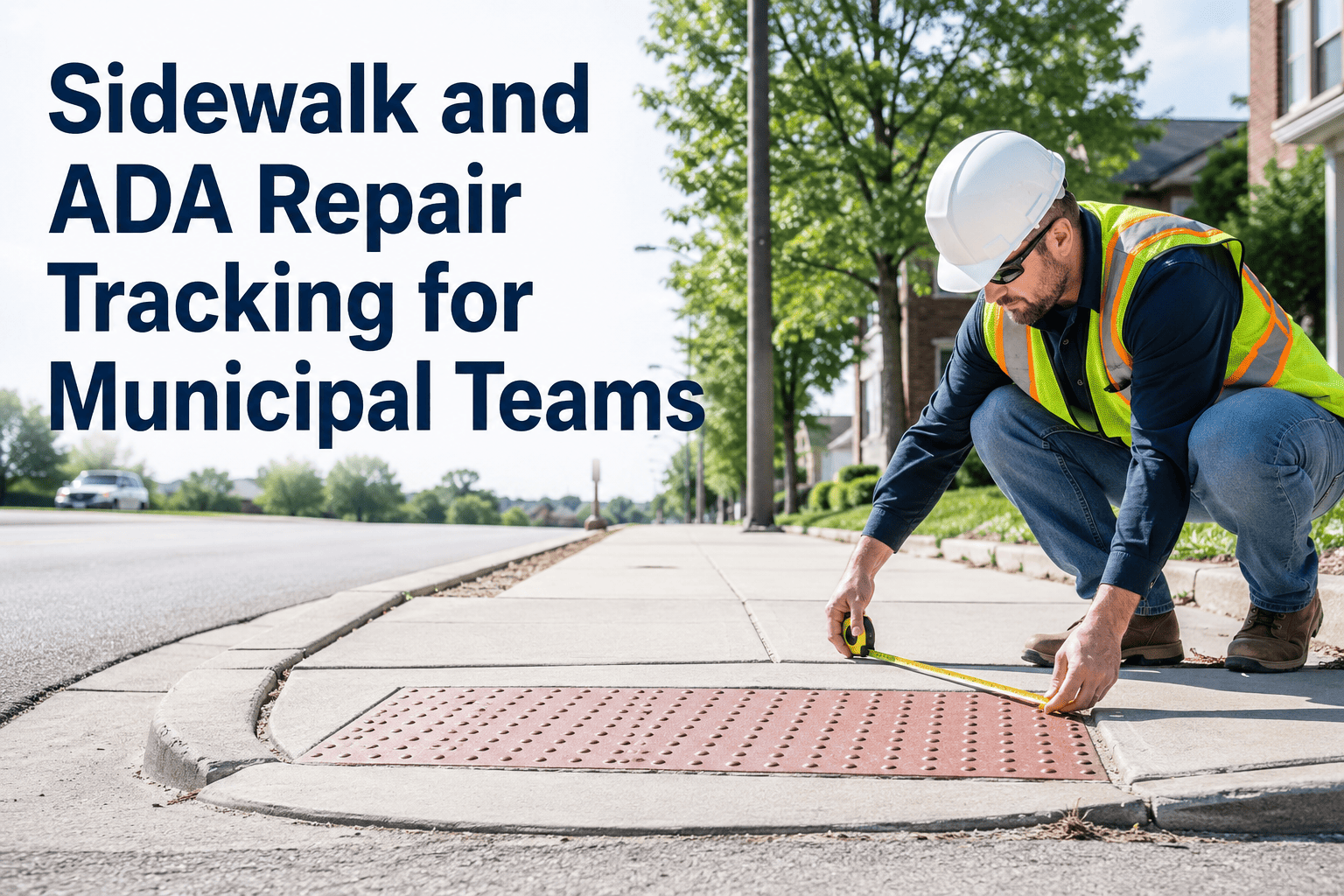
A citizen calls in a cracked sidewalk panel outside an elementary school. It gets written on a sticky note, the note gets misplaced, and eighteen months later that same panel is the reason a city is named in an ADA lawsuit. This is not a rare story — more than 142 local governments have been named in lawsuits over ADA sidewalk violations, and most end in multi-year settlement agreements running into the hundreds of millions of dollars. Federal fines alone can reach $75,000 for a first violation and $150,000 for each one after that, before a single lawsuit is even filed. OxMaint's request and repair tracking workflow gives municipal teams the one thing most sidewalk programs are missing — a documented, prioritized, closed-loop record from the moment a hazard is reported to the day it is fixed.
The Quarter-Inch Rule — Why Small Defects Carry Legal Weight
Federal accessibility standards do not leave room for judgment calls. A vertical offset between two sidewalk panels of more than a quarter inch is a documented violation the moment it is measured — no matter how minor it looks to a passerby. The ruler below shows where a routine crack turns into a compliance exposure.
The Most-Cited Sidewalk and Curb Ramp Violations
Municipal ADA audits find the same handful of defects again and again. Some cities, like Baltimore, have found that fewer than 2 percent of their curb ramps fully met the standard when audited. The table below is the checklist an inspector actually works from in the field.
| Defect Type | ADA Standard | Common Cause | Typical Fix |
|---|---|---|---|
| Panel offset | Vertical change under 1/4 inch | Root heave, settlement | Grinding or panel replacement |
| Running slope | Under 1:20 (5%) | Poor original grading | Panel replacement, regrading |
| Cross slope | Under 1:48 (2%) | Drainage-driven pitch | Panel replacement |
| Curb ramp slope | Max 1:12, 48" landing | Outdated ramp construction | Full ramp reconstruction |
| Clear width | Minimum 36 inches | Poles, signage, overgrowth | Relocation or trimming |
Every Unassigned Sidewalk Report Is a Future Line Item in a Settlement Agreement
OxMaint logs every citizen and inspector report against a location, scores it by ADA risk, and assigns it to a crew — so a hazard never sits unaddressed long enough to become a claim.
From Citizen Report to Closed Work Order
Most sidewalk hazards are first reported by residents, not inspectors. The path that report takes determines whether it becomes a five-day fix or a five-year liability.
What a Documented Program Actually Protects You From
Expert Review — A Municipal ADA Compliance Coordinator's Perspective
I coordinate ADA transition planning for a mid-size city, and the hardest part of my job was never disagreeing about what needs to get fixed. It was proving what we had already done. When an advocacy group or a DOJ reviewer asks for our sidewalk repair history, "we think we fixed most of the bad ones" is not an answer that holds up. What changed things for us was moving every citizen report and every inspection finding into one system where a repair could not be marked closed without a photo and a measurement. Now when we go into a program-access review, we hand over a dated record instead of a memory. That single change did more for our legal position than any amount of extra concrete work would have.
Turn a Backlog of Sticky Notes Into a Defensible Compliance Record
Every report, every risk score, every repair photo — tracked against the address, ready for the next budget cycle or the next compliance review.
Frequently Asked Questions
How does OxMaint decide which sidewalk reports get fixed first?
Each report is scored using the measured offset or slope, proximity to schools, transit stops, and medical facilities, and reported pedestrian volume, producing a ranked backlog instead of a first-in-first-out list. Start free in OxMaint to see the risk scoring model.
Can residents submit sidewalk hazard reports directly, and can they see the status?
Yes. Residents can submit a location and photo through a public request form, and receive status updates as the report moves from received to scheduled to completed, which measurably reduces repeat complaint volume. Book a demo to see the citizen-facing request flow.
Does the system produce records we can hand over during a DOJ or advocacy group review?
Every report includes the original defect measurement, assignment date, crew, completion photo, and corrected measurement, exportable by address, date range, or ward for exactly this purpose. Start free in OxMaint to see a sample compliance export.
Can we track work performed by outside concrete contractors as well as in-house crews?
Contracted repairs follow the same work order and photo-verification workflow as in-house crews, so contractor performance and completion timelines are visible in the same dashboard as internal work. Book a demo to see contractor work order tracking.
How do we prioritize a citywide backlog that already has thousands of open reports?
Existing reports can be bulk-imported and scored against the same risk model, giving you an immediate ranked backlog rather than a re-inspection project before any prioritization is possible. Start free in OxMaint to import and score an existing backlog.
The Next Sidewalk Complaint Is Coming In Right Now. Make Sure It Doesn't Disappear.
Citizen requests, ADA risk scoring, contractor dispatch, and photo-verified closure — one workflow built for municipal right-of-way teams.