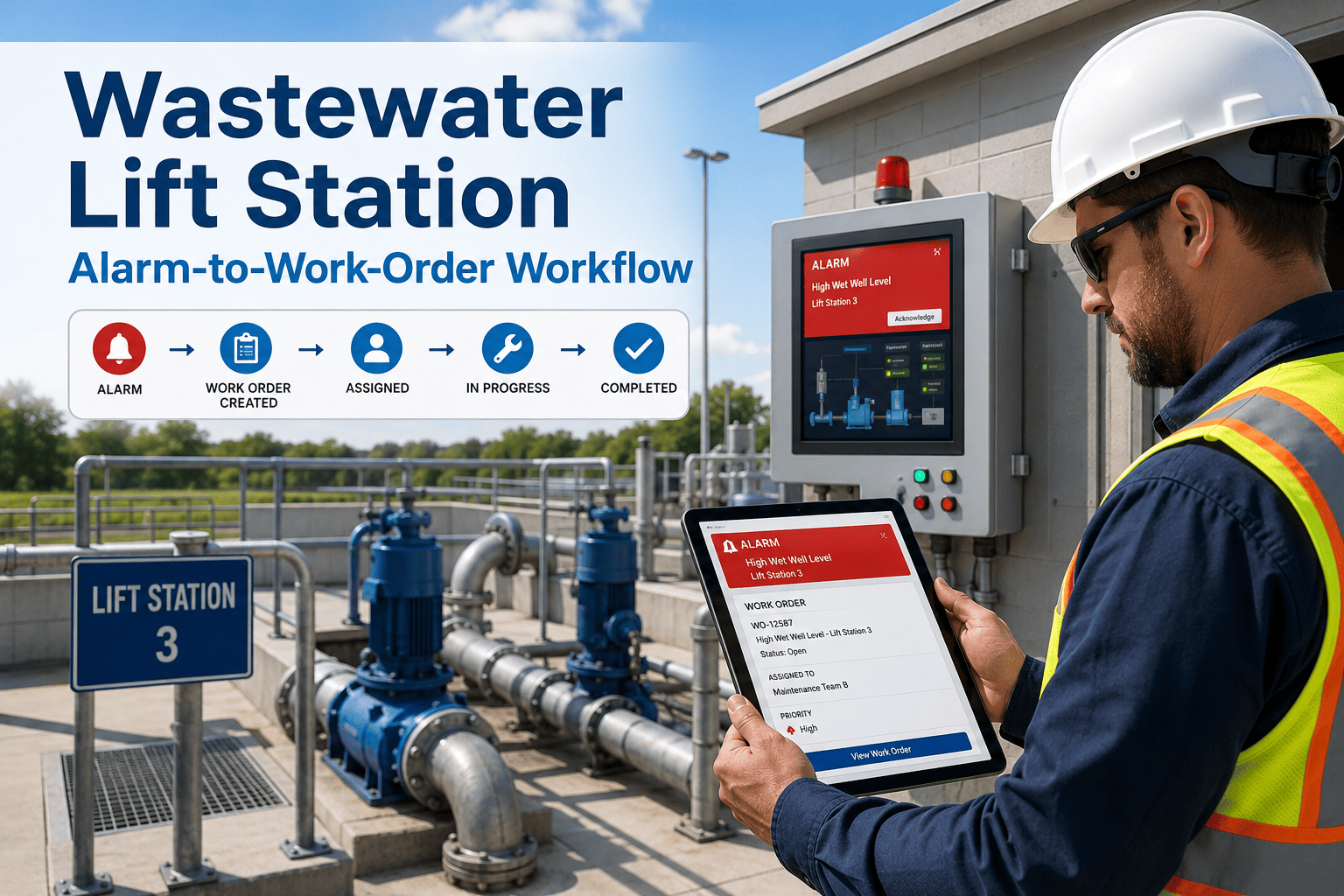
A sanitary sewer overflow is rarely a surprise to the crew that knows the system. It usually comes from a known weak point such as a root-bound joint, a grease-prone line or a lift station pump that has been marginal for months. Lowering overflow risk means finding those weak points, cleaning them on a targeted schedule and recording every response. This article covers practical cleaning, root control, pump station reliability and documentation, with work order software to keep the program organized.
Water and Wastewater / Collections
Sanitary Sewer Overflow Prevention: Maintenance Tips That Target the Real Cause
Match cleaning, inspection and pump station work to where blockages and failures actually start, and keep a defensible record of every action.
Service lateralRoots, offsets, grease
Gravity mainSags, debris, cracks
ManholeInflow, blockage, corrosion
Lift stationPump, power, level control
Treatment plantCapacity during wet weather
Match Each Cause to a Control
| Common cause | Maintenance control | Record to keep |
|---|---|---|
| Root intrusion | Scheduled root cutting, foaming or chemical treatment, joint repair planning | Date, method, footage treated, repeat location |
| Fats, oils and grease | Frequent cleaning of known lines, food-service inspection coordination | Line segment, debris type, cleaning interval |
| Debris and wipes | Cleaning at problem manholes, public education | Blockage findings and photos |
| Pipe defects and sags | CCTV inspection, spot repair or rehabilitation | Defect grade, repair status |
| Wet-weather inflow | Manhole sealing, inspection of cross connections | Event date, flow response, repairs |
| Pump or power failure | Pump station PMs, alarm tests, standby power exercise | Run hours, alarm tests, repairs |
Build a Tiered Cleaning Schedule
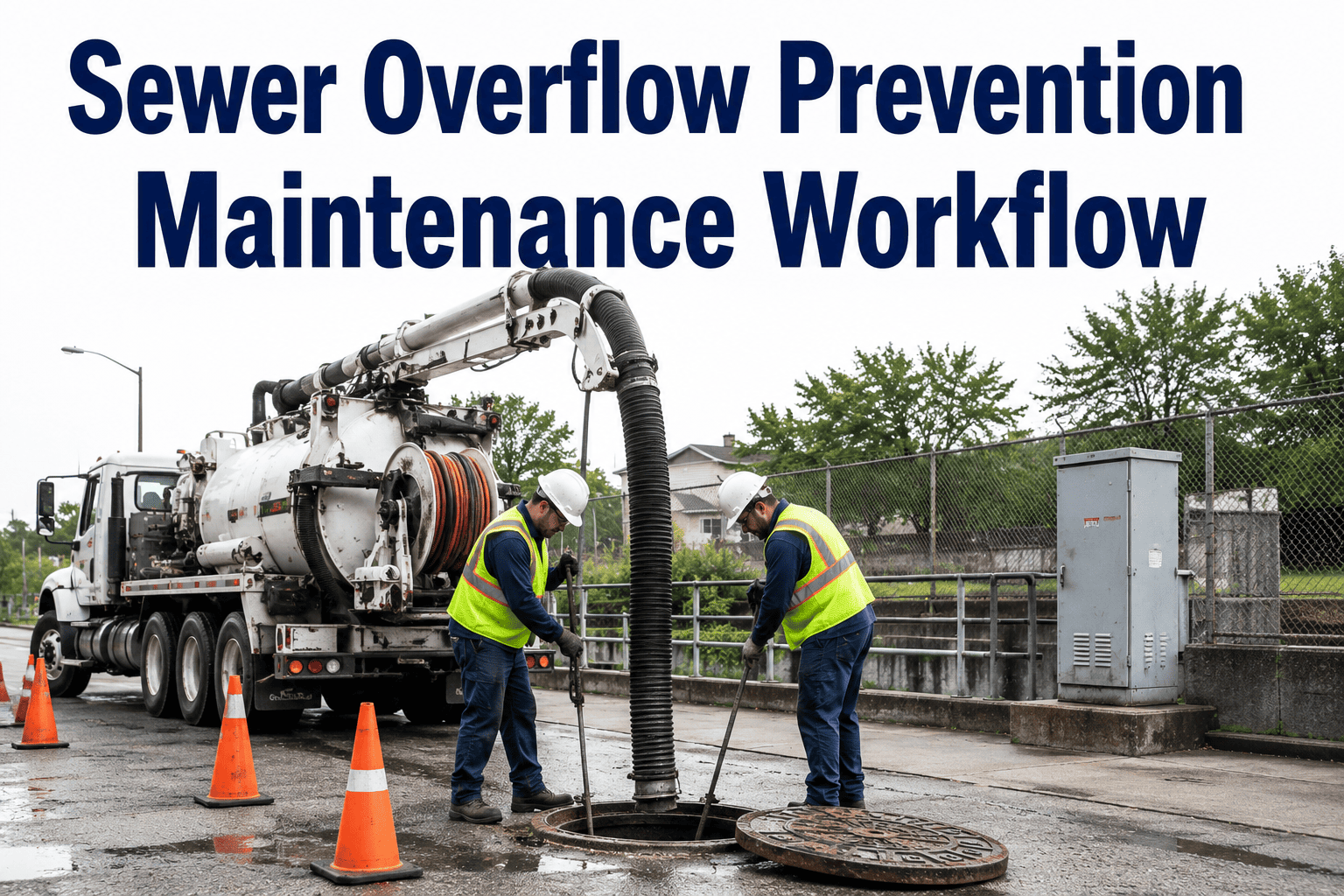
Tier 1: Hot spotsLines with past blockages or overflows get the shortest interval. Review each one after every cleaning.
Tier 2: Conditional linesRoot-prone, grease-prone or low-slope lines are cleaned on a moderate interval and adjusted by what crews find.
Tier 3: Routine cycleThe remaining system is cleaned in a planned rotation so no area is forgotten.
Replace Guesswork With a Documented Cleaning Program
Set up line segments, recurring cleaning orders and findings in one workflow your crews can use from the truck.
Lift Station Reliability Checklist
Weekly or routine visit
- Confirm both pumps alternate and start correctly
- Check wet well level and float or transducer operation
- Look for odors, grease cap and debris
- Record run hours and unusual noise
Periodic testing
- Test alarms and notification to the on-call phone
- Run the standby generator under load
- Inspect check valves, seals and electrical panels
- Clean the wet well on schedule
Response Sequence When an Overflow Happens
1Alarm or call received and logged
2Crew dispatched with location details
3Blockage cleared and flow restored
4Spill contained, cleaned up and disinfected
5Required notifications completed
6Cause identified and follow-up work ordered
Records That Support a Management Program
Many utilities follow capacity, management, operation and maintenance principles in line with EPA guidance. Good records make that practical.- Cleaning history by pipe segment
- Inspection findings and defect grades
- Overflow reports with cause and corrective action
- Pump station readings, alarms and repairs
- Contractor and in-house labor on each job
How Oxmaint Fits Collections Work
Oxmaint can hold your pipes, manholes and pump stations as assets, schedule recurring cleaning and inspection, and keep crew findings, photos and costs with each record. Dashboards highlight repeat locations so you can spend limited budget where the risk keeps returning.Data to Gather Before You Set the Schedule
- A list of every overflow, backup and blockage call, with the line segment involved
- Past cleaning dates and what crews found, such as roots, grease, grit or rags
- CCTV inspection results and defect grades
- Lift station alarm history, run times and repair records
- Locations of food-service establishments, hospitals and other likely grease or debris sources
- Low-lying manholes and areas affected by wet-weather flow
Root Control Options Compared
| Method | Best suited for | Limits | Record to keep |
|---|---|---|---|
| Mechanical cutting | Light to moderate root growth, quick relief | Roots regrow and pipe walls can be scored | Date, cutter type, amount removed |
| Foaming herbicide | Roots entering at joints, slower regrowth | Needs local approval and careful application | Product, date, footage treated |
| Spot repair | Single defective joint or short damaged pipe | Cost and excavation needed | Defect description and repair date |
| Lining or replacement | Repeated root or structural problems | Capital cost and planning required | Condition history that justified the decision |
Grease Control and Maintenance Work Together
Maintenance side
- Clean downstream lines on a tighter interval
- Log grease thickness and location at each visit
- Inspect traps and manholes near food-service clusters
- Flag repeat locations for enforcement follow-up
Program side
- Share cleaning findings with the inspection team
- Educate businesses and residents on disposal
- Track inspection dates against repeat problem locations
- Review results each season and adjust the plan
Wet-Weather Readiness Checklist
1Clean known inflow-sensitive lines before the wet season
2Test lift station alarms, floats and standby power
3Check manhole covers and seals in flood-prone areas
4Stock portable pumps, hoses, plugs and containment supplies
5Confirm on-call lists and contractor contacts
6Review overflow locations from the last storm season
Questions to Answer After Every Overflow
| Question | Why it matters |
|---|---|
| What blocked or failed? | Separates roots, grease, debris, pipe collapse and pump failure |
| When was the line last cleaned or inspected? | Shows whether the schedule was too long |
| Were there earlier warnings or calls? | Highlights where alerts were missed |
| How long to dispatch and to restore flow? | Measures response and crew readiness |
| What follow-up work was created? | Confirms the cause is fixed, not only cleared |
Measures That Show Progress
- Number of blockages and overflows by cause and by pipe segment
- Percentage of scheduled cleaning completed on time
- Repeat locations that moved to a tighter interval
- Lift station alarms that were found and fixed before an overflow
- Time from alarm to crew arrival
Train Crews to Capture Better Findings
Good data starts in the field. Ask crews to record what they removed, how much, and the condition of the pipe or manhole. A photo and a short note on each visit give planners far more to work with than a closed ticket with no detail.Why Overflows Cluster in the Same Places
Most collection systems have a short list of locations that generate a large share of blockages. The cause is usually physical and repeatable.- A sag that holds water and collects solids
- A joint where roots enter every growing season
- A downstream line serving restaurants or institutional kitchens
- A flat section that never reaches cleaning velocity
- A manhole where debris builds up during storms
- A lift station with aging pumps, floats or controls
Lift Station Failure Modes and Early Signs
| Failure mode | Early sign | Preventive task |
|---|---|---|
| Pump clogging | Rising amperage, reduced run efficiency, rags in the wet well | Pull and inspect pumps, clean wet well, review screening |
| Float or level sensor failure | Erratic starts, alarms that do not clear | Test and clean floats, calibrate transducers |
| Check valve failure | Backflow, longer run times, hammer noise | Inspect and exercise valves |
| Power loss | Station offline during storms | Test transfer switch and standby generator under load |
| Alarm or telemetry failure | Missed or delayed notifications | Test alarm path to on-call phone each cycle |
| Seal or bearing wear | Noise, vibration, leaks | Vibration checks and scheduled replacement |
| Wet well grease cap | Foul odor, false level readings | Clean on a schedule tied to findings |
| Control panel faults | Tripped breakers, moisture, heat | Inspect connections and enclosure condition |
Inspection Methods and What They Add to Maintenance Planning
| Method | What it finds | How the result feeds work orders |
|---|---|---|
| CCTV inspection | Cracks, offsets, roots, sags and debris | Create repair, cleaning or lining orders from defect grades |
| Smoke or dye testing | Illegal connections and inflow paths | Track corrections and verify repairs |
| Flow and level monitoring | Wet-weather response and surcharging | Target manhole sealing and cleaning |
| Manhole inspection | Corrosion, frame defects and infiltration | Schedule rehabilitation and cover repair |
| Operator and crew findings | Local knowledge of recurring problem areas | Add locations to hot-spot tiers |
Response Kit and Equipment Checklist
- Portable pump, hoses and fittings tested and ready
- Plugs, bypass equipment and containment materials
- Vacuum truck or jetter availability confirmed
- Disinfection supplies and cleanup tools
- Signage, barriers and PPE for the crew
- Phone and mapping tools for locating the line and manhole
Mutual Aid and Contractor Support
- Keep an up-to-date list of contractors, equipment and contact numbers
- Record response times from past calls so you know what to expect
- Share asset maps and access notes before an emergency
- Log contractor work orders in the same system as in-house work
- Review contracts and renewal dates before the wet season
Documentation Routine for Every Event
A reliable record answers the questions regulators, insurers and the public ask first. Capture the time the report was received, the line or station involved, the estimated volume and duration, what was affected, the cleanup and disinfection steps, notifications made and the follow-up work. Photos and crew notes strengthen the record. Reporting rules differ by permit and state, so build the form from your own requirements rather than a generic list.Build the Program in Stages
| Stage | Focus | Outcome |
|---|---|---|
| First 30 days | Asset list, hot spots and lift station inventory | A clear list of where risk is highest |
| Next 60 days | Recurring cleaning and station PMs | Planned work replaces habit |
| Next 90 days | Findings review and interval changes | Schedules reflect real conditions |
| Ongoing | Inspection data and repair planning | Fewer repeat events and a stronger capital case |
Common Mistakes to Avoid
- Cleaning every line on the same interval regardless of history
- Logging overflow calls without identifying the pipe segment
- Testing a pump but not the alarm that reports its failure
- Closing a work order without recording what was found
- Treating a cleared blockage as a fixed problem
- Leaving contractor work out of the maintenance history
How Oxmaint Supports Collections Maintenance
Oxmaint can hold pipe segments, manholes and lift stations as assets, schedule recurring cleaning, inspection and pump station tasks, and record crew findings with photos and costs. Mobile work orders let crews capture what they found at the manhole instead of back at the office. Reports show repeat locations, overdue cleaning and station repairs so supervisors can adjust tiers with evidence.- Recurring cleaning orders by pipe segment and tier
- Pump station PM checklists and alarm test records
- Overflow event records with cause, cleanup and follow-up work
- Dashboards for overdue work and repeat problem locations
Frequently Asked Questions
How often should sewer lines be cleaned?
There is no single interval. Use history, slope, roots and grease findings to set tiers, then adjust them after each cleaning.What is the best way to find repeat blockage locations?
Log every call and cleaning against a pipe segment. In Oxmaint, repeat entries show which lines need a shorter cycle or repair.Why do lift stations cause overflows?
Pump failure, power loss, plugged check valves and level control faults are common reasons. Alarm tests and standby power exercises reduce that risk.Do we still need CCTV inspection?
Yes. Cleaning shows what is in the pipe, while camera inspection shows its condition and guides repair planning.Can we see a collections workflow?
You can book a demo to review cleaning schedules and overflow response records.Reduce Overflow Risk With Targeted, Documented Maintenance
Organize cleaning, inspection and pump station work so every action is scheduled, assigned and recorded.