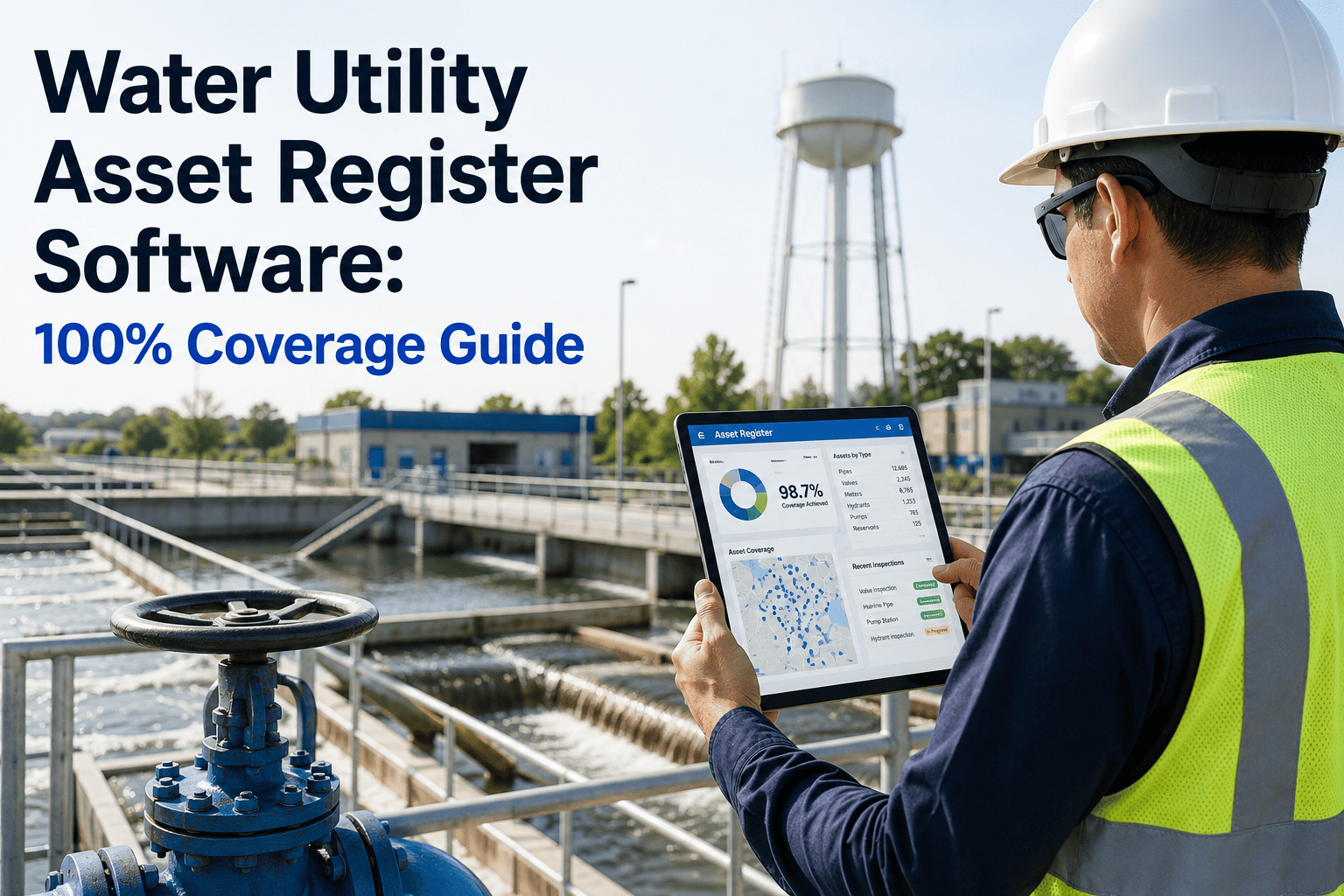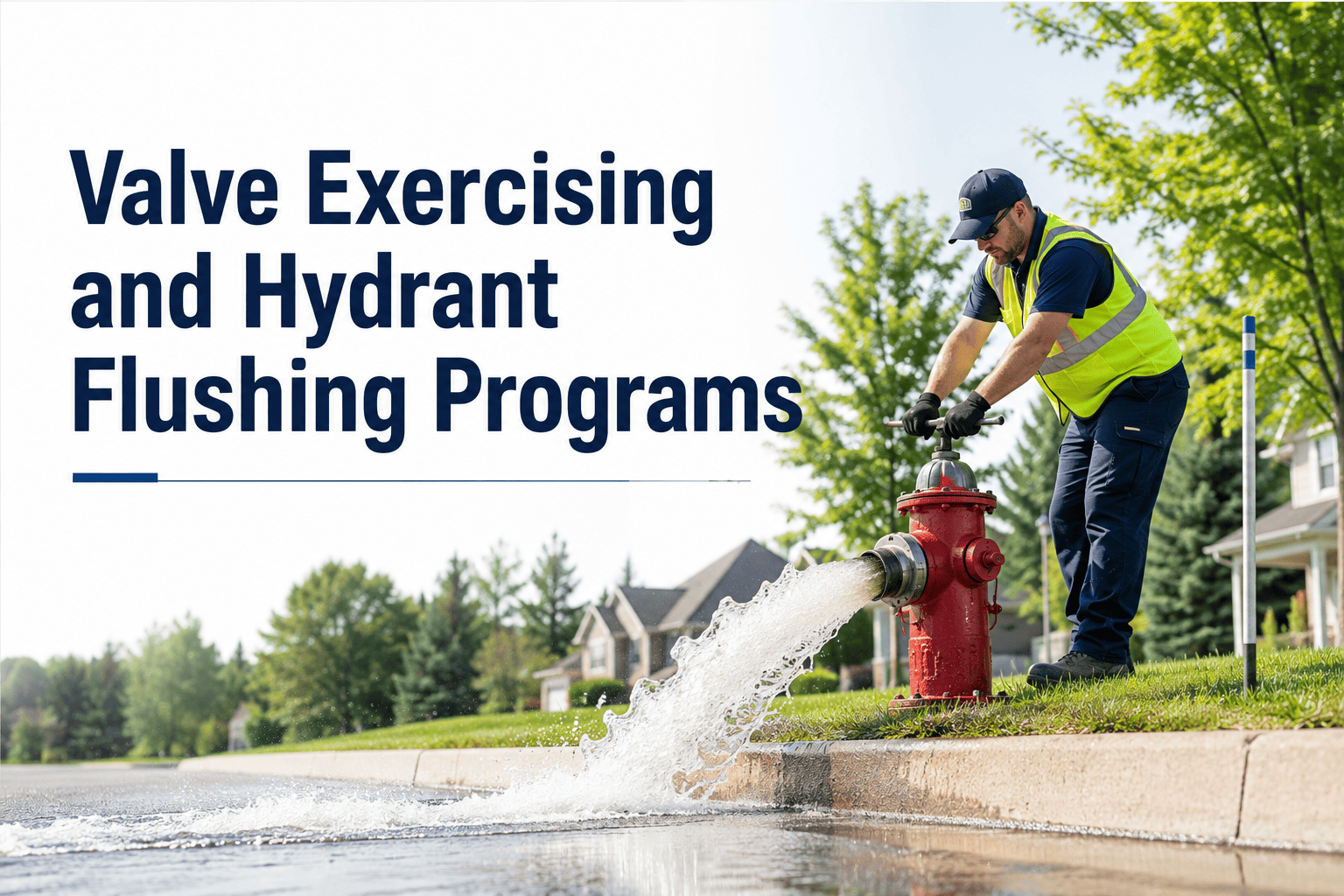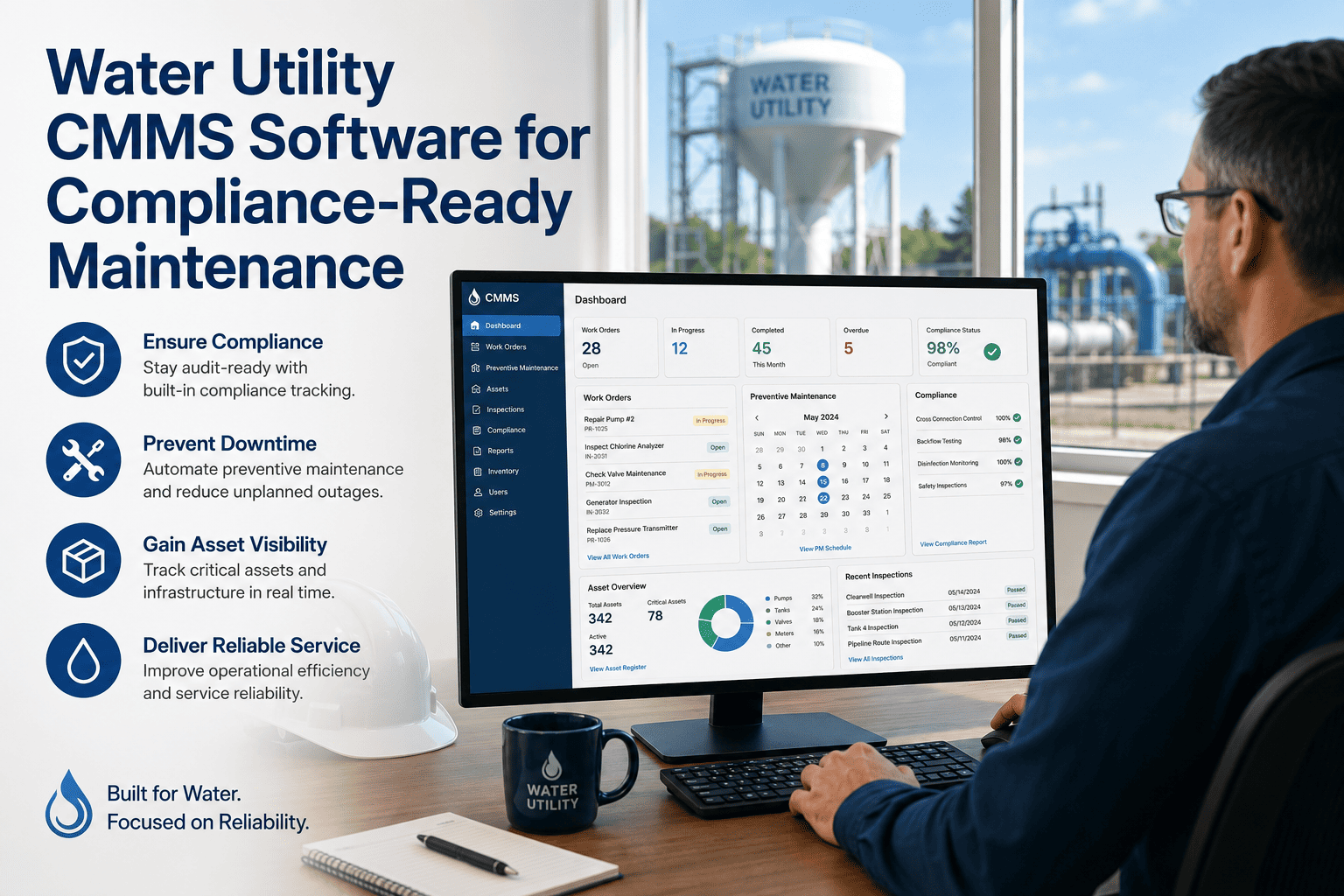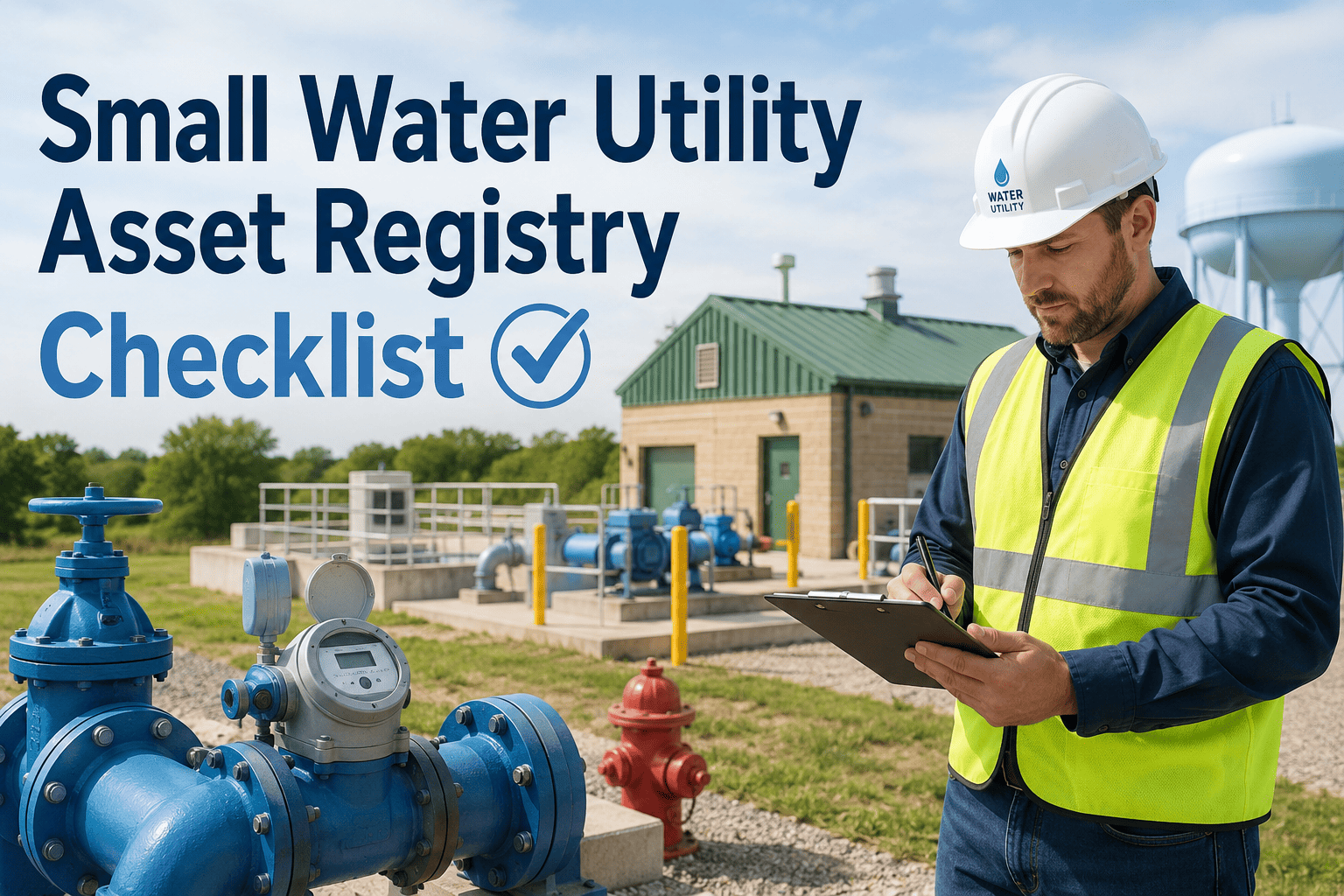
A small water utility runs on assets most people never see — buried mains, gate valves, fire hydrants, pumps, meters, storage tanks, and treatment equipment that quietly deliver safe water until the day one of them fails. The hard truth is that 40–60% of that buried infrastructure still sits in paper records or no records at all, which is exactly what turns a routine repair into a six-figure emergency and what disqualifies utilities from the grant funding their replacement budgets depend on. A complete digital asset registry is the foundation of every EPA and AWWA asset management plan, every AWIA risk assessment, and every defensible capital request to your board. This checklist builds that registry asset class by asset class, and shows how OxMaint Asset Management and QR Asset Tracking turns it into a living record updated from the field. Book a demo to see your whole system mapped in weeks, not years.
Small Water Utility Asset Registry Checklist
Build a digital registry for every pump, valve, hydrant, meter, tank, pipe, and treatment unit — the inventory EPA, AWWA, AWIA, and your SRF application all require, captured once and maintained from daily work orders.
What Every Asset Record Must Capture
Before you list a single pump, decide what a complete record looks like — because a registry of names with no condition, location, or value is just a phone book. EPA defines the lowest useful level as the "maintenance-managed item," the thing you actually write a work order against. These eight fields make each record auditable for compliance and useful for capital planning.
Asset-Class Registration Checklist
Work through your system one class at a time. Tag the asset, record the eight fields, and link it to a maintenance schedule so the record stays current. Group your hierarchy as System → Asset → Component so a tank, its mixer, and its level sensor all roll up correctly.
OxMaint builds your registry from the field — staff scan a QR tag, the asset record opens on their phone, and every work order, condition note, and break event writes back automatically. No dedicated data-entry team required.
Useful Life & Failure-Cost Reference Table
Use these EPA and AWWA benchmark figures to set replacement-fund targets and prioritize the registry build — high-cost, short-life assets first. Remaining life is install age subtracted from useful life, then adjusted by condition score.
| Asset Class | Typical Useful Life | Registry Check | Failure / Revenue Signal |
|---|---|---|---|
| Pumps & motors | 10–15 yrs | Quarterly run-hour & vibration | $45k–$180k per unplanned failure |
| Distribution valves | 35–40 yrs | Annual exercise (M44) | +$85k–$220k per non-isolatable break |
| Fire hydrants | ~40 yrs | Annual flow test & flush | Fire-flow & liability exposure |
| Meters | 10–15 yrs | Annual accuracy test | 3–8% under-register revenue loss |
| Storage tanks | ~30 yrs (coat 15–20) | Annual inspection (D100) | $80k–$350k recoat cost |
| Mains & transmission | 35–40 yrs | Condition score on breaks | Emergency repair 3–5× planned cost |
| Treatment / chlorination | 10–15 yrs | Monthly PM log | SDWA compliance risk |
Your Registry Answers the EPA Five Core Questions
A finished registry is not paperwork — it is the data layer that answers the framework EPA, AWWA, and your SRF reviewer all use. Map each field you collected to the question it satisfies.
What Water Asset-Management Professionals Say
The utilities that struggle with SRF applications are rarely the ones with the worst pipes — they are the ones who cannot prove the condition of what they have. Reviewers score documented, condition-assessed registries far higher than applications backed only by install dates and break stories. Building the registry is the single highest-return week of work a small utility can do, because it unlocks funding for everything that follows.
Water Infrastructure Funding Advisor · 16 Years State Revolving Fund Program SupportAge is the most over-trusted number in this industry. A 1935 cast-iron main in stable soil can outlast a 1985 ductile main in aggressive clay. If your registry ranks replacement by install year instead of condition score, you will replace good pipe and leave the failing pipe in the ground. Capture inspection and break data per segment, and let the condition index — not the calendar — drive your capital plan.
Certified Asset Manager · 21 Years Distribution-System Condition AssessmentFrequently Asked Questions
How small does a utility have to be before an asset registry stops being worth it?
It never stops being worth it — EPA's framework is explicitly scalable from systems serving 50 customers to the largest cities. Smaller utilities actually face higher per-failure risk because a single main break can consume an entire annual budget. Start free with your most critical assets and grow the registry over time.
We have most of our records on paper and in someone's head. How long does digitizing take?
Field-first capture is far faster than back-office data entry — a 200-mile system can be registered in three to four weeks using mobile QR scanning, with no dedicated entry staff. Crews tag assets during normal rounds and the record builds as they work. Book a demo to see the scanning workflow on your own assets.
Does a registry actually help with AWIA, SRF, and GASB 34 compliance?
Yes — the same inventory, condition, and replacement-value data feeds AWIA risk and resilience assessments, scores SRF and grant applications higher, and supports the infrastructure valuation GASB 34 requires of public systems. One dataset satisfies all three. Book a demo to see the compliance exports.
Every Asset You Tag Becomes a Compliance Record and a Capital-Plan Line Item
From hydrant flushes to chiller PMs to main-break logs, OxMaint connects every field action to a registry record — so the inventory regulators, funders, and your board all want is generated continuously, not assembled under deadline.