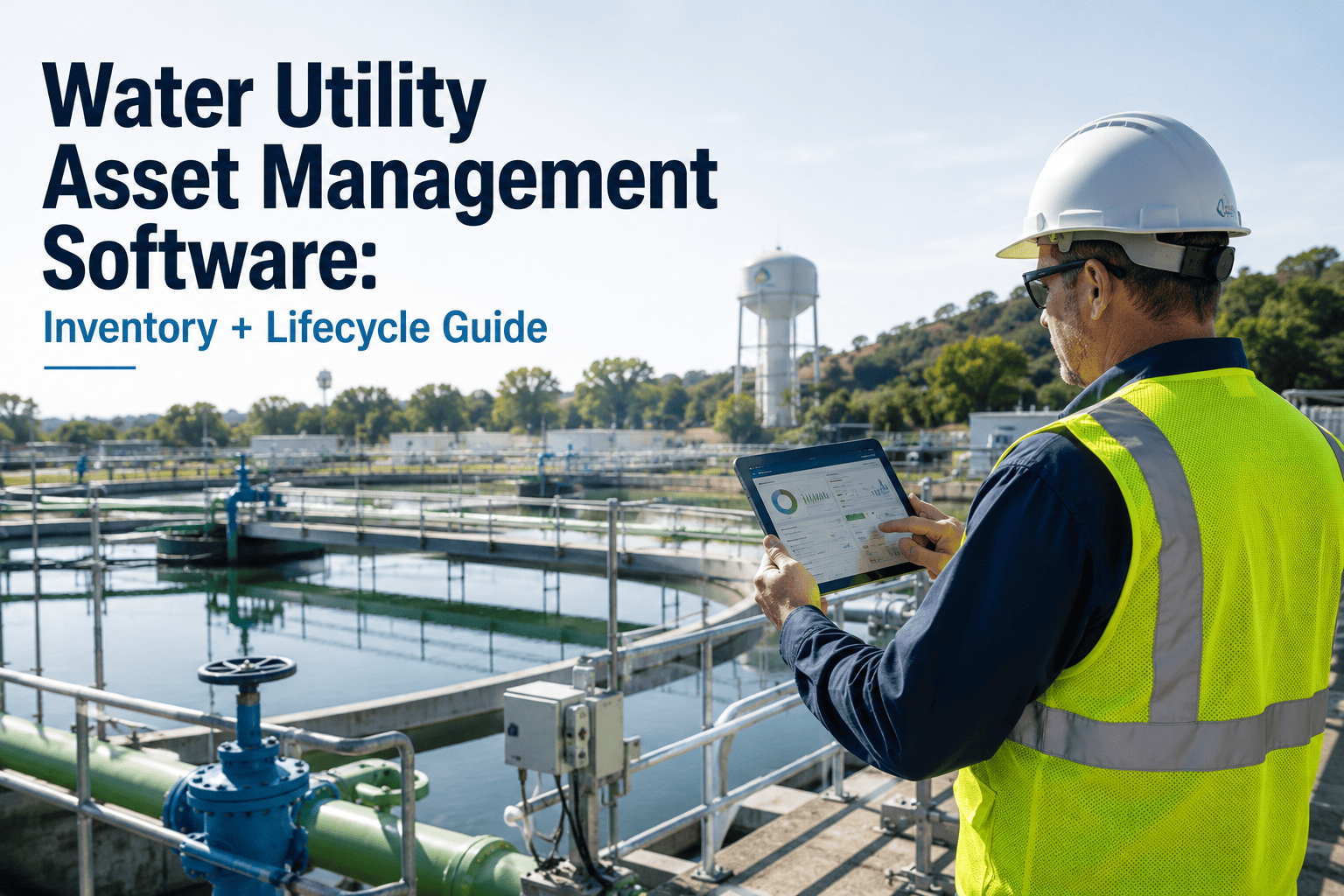
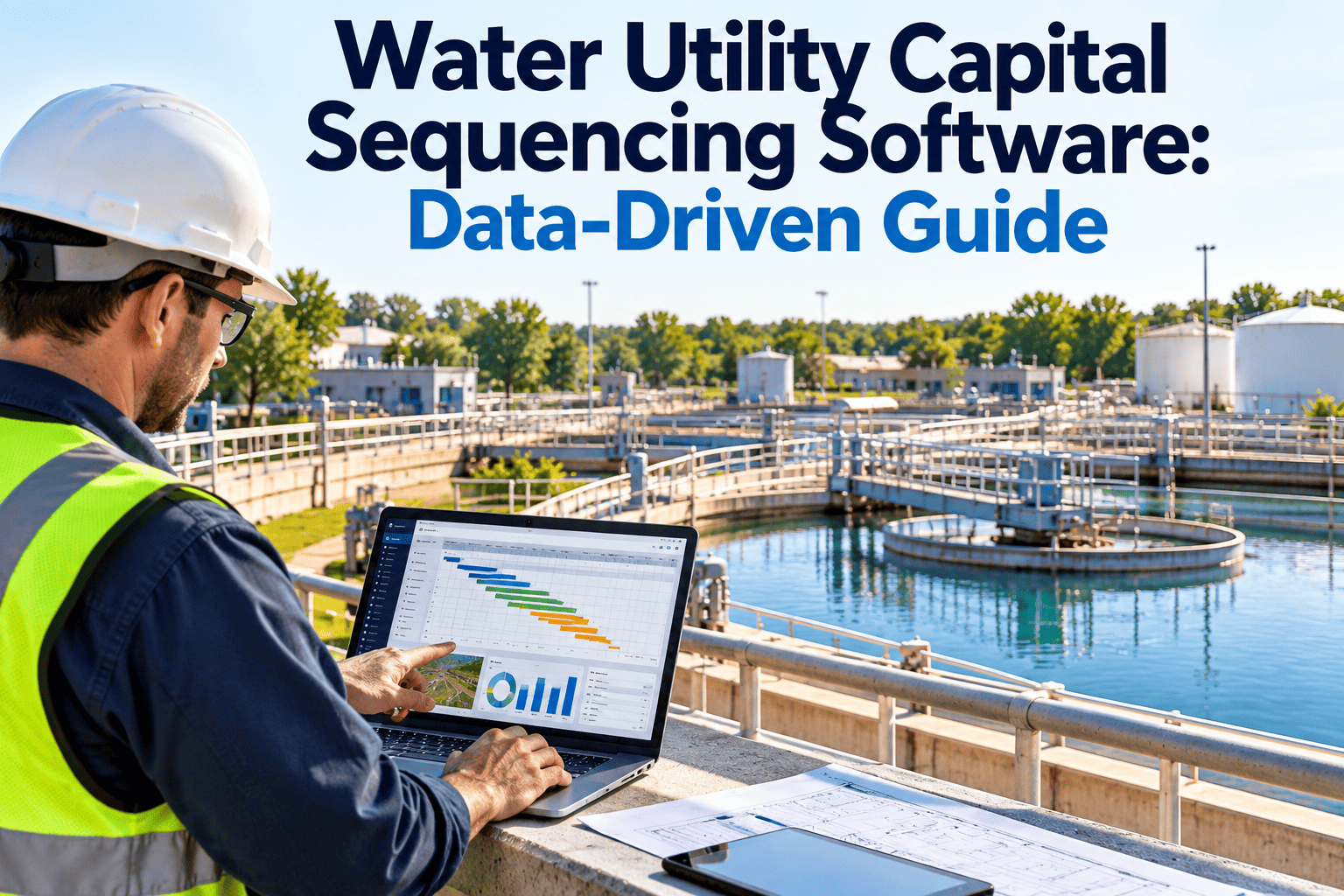
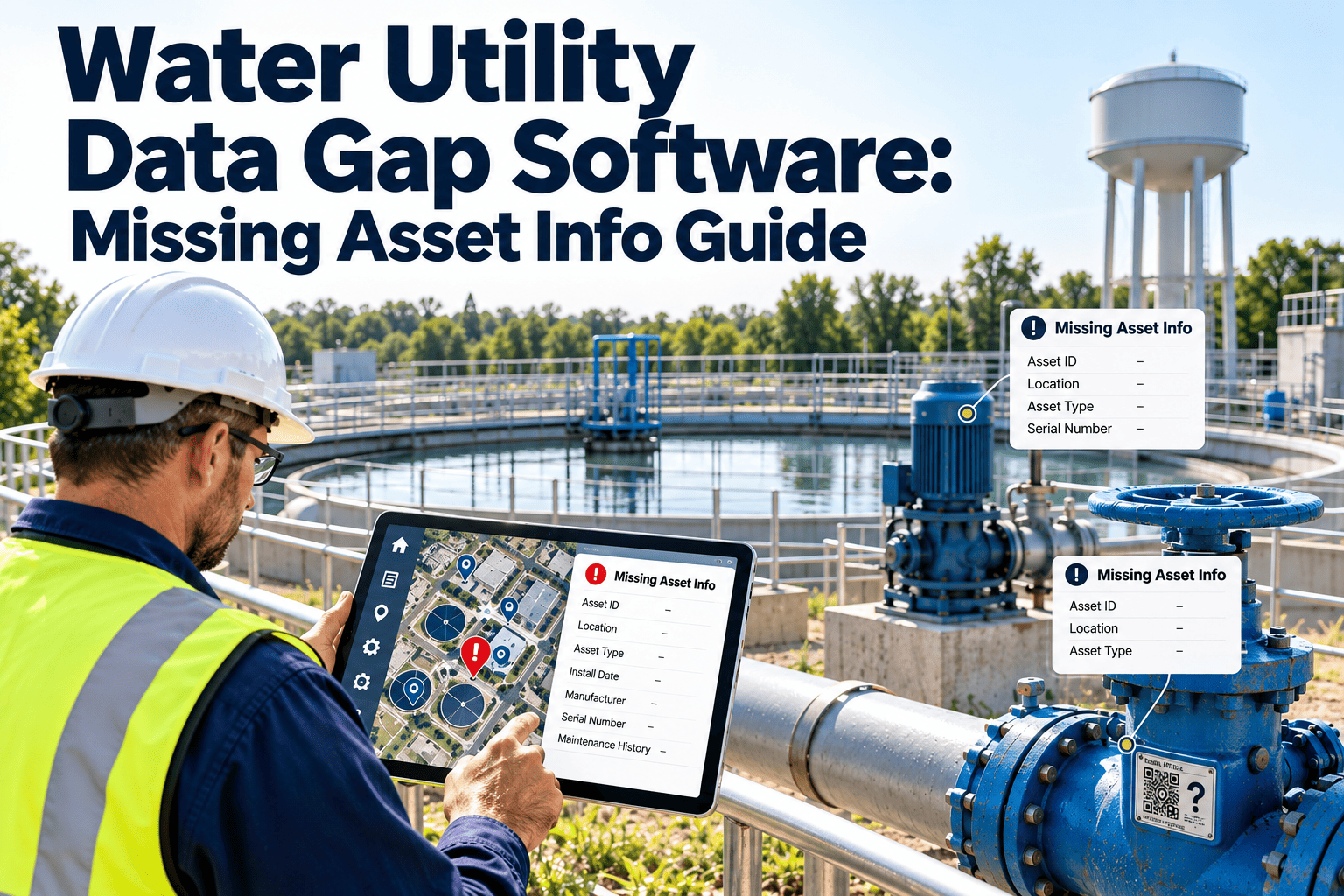
Most of what a water utility owns is buried, invisible, and aging on a timeline nobody is actually tracking. A distribution main installed in 1965 doesn't send a warning before it breaks — it just breaks, usually at the worst possible moment, and the utility scrambles to figure out what pipe material, what diameter, and what crew last touched it. AWWA and EPA both build their asset management guidance around the same five components: inventory, condition, criticality, level of service, and lifecycle cost — but most utilities are missing at least two of them, and often all five. Without that data living in one connected system, asset management becomes a folder of GIS shapefiles, a spreadsheet of pump ages, and a lot of institutional memory that retires when the senior operator does. This guide walks through what a complete water and wastewater asset management program looks like inside a CMMS, from the first pipe in the inventory to the day it gets replaced. If your utility is ready to move that data out of spreadsheets, you can book a demo with OxMaint and see an AWWA-aligned asset registry built around your own system.
Water & Wastewater Utilities · Asset Management · CMMS
Track Every Pipe, Pump, and Tank From Install To Retirement
Drinking water systems need $625 billion in infrastructure investment over the next 20 years, and most of that spend depends on utilities knowing exactly what they own, what condition it's in, and what it will cost to replace. This guide shows how an AWWA-aligned asset management program comes together inside one CMMS — inventory, condition, criticality, and lifecycle cost, all connected.
$625B
needed by U.S. drinking water systems for pipe and asset replacement over the next 20 years
40%+
of water mains in many mid-size systems are past 50 years old, the natural end of cast iron service life
40–60%
of buried infrastructure at many utilities is undocumented or exists only in paper records
$1.4M
average cost to replace a single mile of water main, making every deferred decision expensive
The AWWA Framework
Five Pillars Every Water Utility Asset Management Program Needs
AWWA and EPA converge on the same structure for asset management, even though they approach it from different angles — AWWA for operational excellence, EPA for regulatory compliance and public health protection. Both frameworks come down to the same five pillars, and a CMMS is what turns them from a planning document into a live, queryable system. Utilities that treat these pillars as a one-time report rather than a connected data structure end up rebuilding the same analysis every budget cycle instead of updating it continuously.
01
Asset Inventory
A complete registry of every pipe, valve, hydrant, pump, tank, and treatment component, with material, size, age, and location.
02
Condition Assessment
Field inspection and performance data that shows actual remaining service life, not just an age-based guess.
03
Criticality & Risk
A consequence-of-failure score for every asset, so limited budget goes to the assets that matter most first.
04
Level Of Service
Defined performance standards for reliability and water quality that guide daily operating decisions.
05
Lifecycle & Capital Planning
Total cost of ownership from acquisition through renewal, feeding a defensible capital improvement plan.
Asset Lifecycle
Where Every Asset Sits Between Installation And Replacement
A pipe, pump, or tank moves through the same five stages regardless of asset type. Most utilities can answer where an asset started and roughly when it needs to be replaced — the stages in between are where a CMMS earns its place, because that is where condition data actually gets captured. Skipping the middle stages is exactly how a utility ends up managing infrastructure by age alone, discovering real condition only once something has already failed.
1
Install
Asset enters the registry with material, size, install date, and GIS location logged.
2
Operate
Routine O&M work orders, performance readings, and failure history accumulate against the asset.
3
Assess
Condition inspections update the asset's actual remaining useful life beyond its install-date estimate.
4
Rehab Or Renew
Lining, relining, or component overhaul extends service life without a full asset replacement.
5
Retire
Asset is decommissioned and its full cost history feeds the next capital replacement decision.
OxMaint · AWWA-Aligned Asset Registry
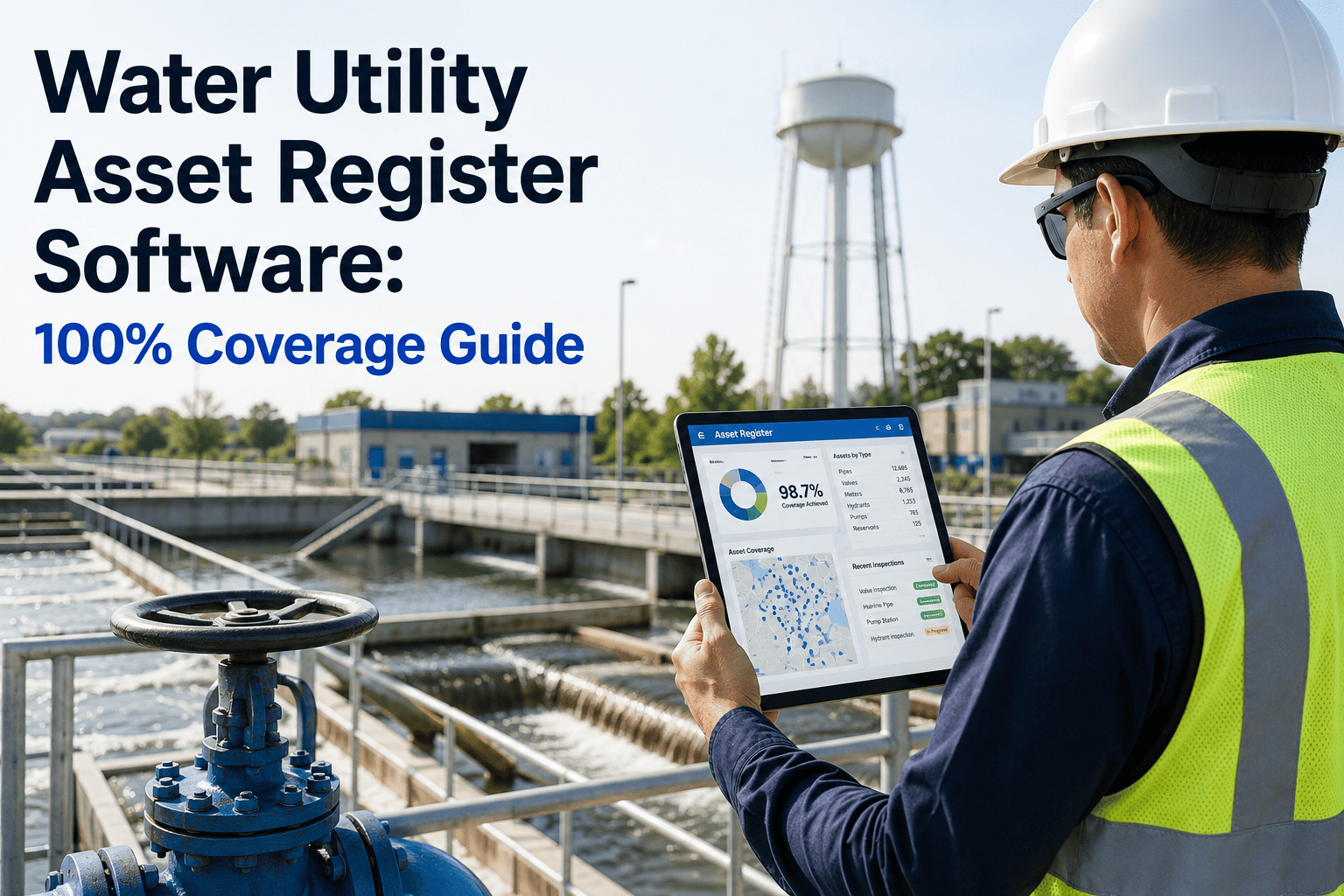
One Registry For Every Pipe, Pump, Tank, And Treatment Asset You Operate
OxMaint builds your asset inventory around AWWA's five-pillar framework, linking condition, criticality, and cost data to every asset so your capital plan is backed by evidence, not estimates.
Building The Inventory
What Data To Capture For Each Major Asset Category
An asset registry is only useful if it captures the fields that actually drive maintenance and replacement decisions. The categories below cover the core buried and above-ground assets most water and wastewater systems operate, along with the minimum data each one needs. Missing even one of these fields — replacement cost, for instance — means the registry can track an asset but cannot help plan its retirement.
| Asset Category |
Core Data Fields |
Primary Failure Risk |
Typical Service Life |
| Distribution Mains |
Material, diameter, install year, depth, GIS coordinates |
Corrosion, joint failure, ground movement |
50–80 years |
| Pump Stations |
Motor size, run hours, vibration readings, energy draw |
Bearing wear, seal failure, motor burnout |
15–25 years |
| Storage Tanks |
Capacity, coating condition, last inspection date |
Coating breakdown, structural corrosion |
30–50 years |
| Valves & Hydrants |
Type, size, last exercised date, operability status |
Seizing, incomplete closure, leakage |
25–40 years |
| SCADA & Instrumentation |
Firmware version, calibration date, communication uptime |
Sensor drift, communication loss, obsolescence |
7–12 years |
Risk-Based Prioritization
Scoring Criticality By Likelihood And Consequence Of Failure
Not every asset deserves the same attention, and a limited capital budget has to go where failure would actually hurt. AWIA risk and resilience assessments require exactly this kind of consequence-of-failure analysis, and the same likelihood-versus-consequence matrix that regulators expect also gives operations teams a simple way to rank what gets inspected, rehabilitated, or replaced first.
Consequence Of Failure
Medium
High
Critical
Low
Medium
High
Low
Low
Medium
Likelihood Of Failure
A transmission main under a hospital sits in the top-right, critical zone even with a low failure probability today. A secondary valve in a low-traffic area stays in the bottom-left, reviewed on a longer cycle. Criticality tiers built from this matrix flow directly into work order priority and capital ranking.
Regulatory Alignment
Turning Asset Data Into Compliance Documentation Regulators Actually Trust
Asset management compliance is fundamentally a data problem, not a paperwork problem. AWIA risk and resilience assessments, Lead and Copper Rule inventory requirements, and sanitary sewer overflow reporting all ask a version of the same question: what do you own, what condition is it in, and can you prove it. Utilities running asset data through spreadsheets and paper records are assembling that proof manually every time a regulator asks, and the result is usually incomplete, always late, and hard to defend under audit. A CMMS-integrated asset management program generates the same documentation automatically, as a byproduct of the maintenance work already happening every day.
AWIA Risk & Resilience Assessments
Consequence-of-failure and criticality data, already scored and stored per asset, forms the backbone of the assessment instead of a special one-time project.
Lead And Copper Rule Inventory
Service line material records tied to GIS location satisfy inventory requirements without a separate tracking spreadsheet outside the CMMS.
Sanitary Sewer Overflow Reporting
Work order history on lift stations and collection assets provides the timestamped record regulators expect when an overflow event is investigated.
Capital Improvement Justification
Condition and cost history behind every capital request holds up when state revolving fund reviewers or rate consultants ask for supporting evidence.
Who This Applies To
Utilities That Benefit Most From A Connected Asset Registry
Asset management discipline scales differently depending on system size, but the underlying need — connected inventory, condition, and cost data — is the same whether a utility serves three thousand people or three hundred thousand.
Small And Rural Water Systems
Limited staff means asset knowledge often lives with one or two long-tenured operators. A CMMS captures that knowledge before it walks out the door at retirement.
Mid-Size Municipal Utilities
Growing service areas and aging original infrastructure create a widening gap between what is known and what is assumed about system condition.
Regional Water And Sewer Authorities
Multiple treatment plants and hundreds of miles of pipe require the same rollup discipline larger portfolios use to compare performance across service areas.
Wastewater And Stormwater Utilities
Collection systems face the same buried-asset visibility problem as drinking water distribution, with added regulatory pressure around overflow events.
Getting Started
Building An Asset Management Program In Phases, Not All At Once
Utilities that try to inventory an entire system before touching a CMMS rarely finish. The programs that succeed start narrow, prove the model on the assets that matter most, and expand from there.
1
Inventory The Highest-Criticality Assets First
Transmission mains, treatment plant components, and lift stations go into the registry before secondary distribution assets, so the highest-risk gaps close first.
2
Import Existing GIS And Spreadsheet Data
Current GIS coordinates and asset spreadsheets load directly into the registry, avoiding a manual re-entry project that would otherwise stall the rollout.
3
Connect Condition Assessments As They Happen
Every field inspection, from routine to emergency, updates the asset's condition record instead of sitting in a separate inspection report.
4
Expand Criticality Scoring Across The Full System
Once the pilot group of critical assets is scored and reporting cleanly, the same likelihood-and-consequence model extends to the rest of the inventory.
The Financial Layer
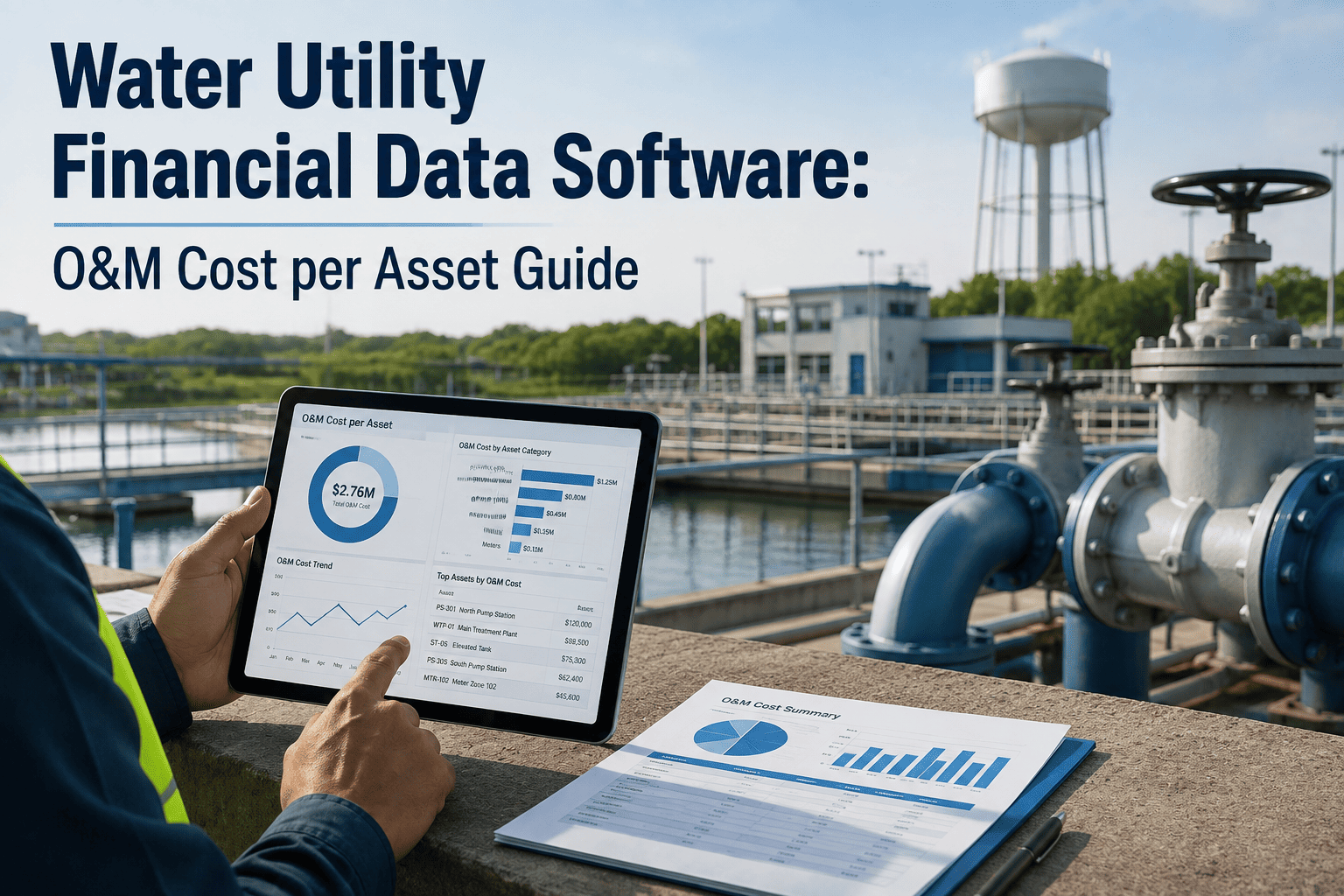
Connecting O&M Cost Data To Every Asset In The Registry
Asset management plans succeed or fail on financial credibility. A capital request that says "this pump station needs $400,000" without cost history behind it gets challenged. A request built on verified O&M spend, repair frequency, and total cost of ownership does not. The same financial layer that supports a capital request also supports the rate study that has to fund it, closing the gap between what the utility needs and what it can defend to ratepayers.
Total Cost Of Ownership
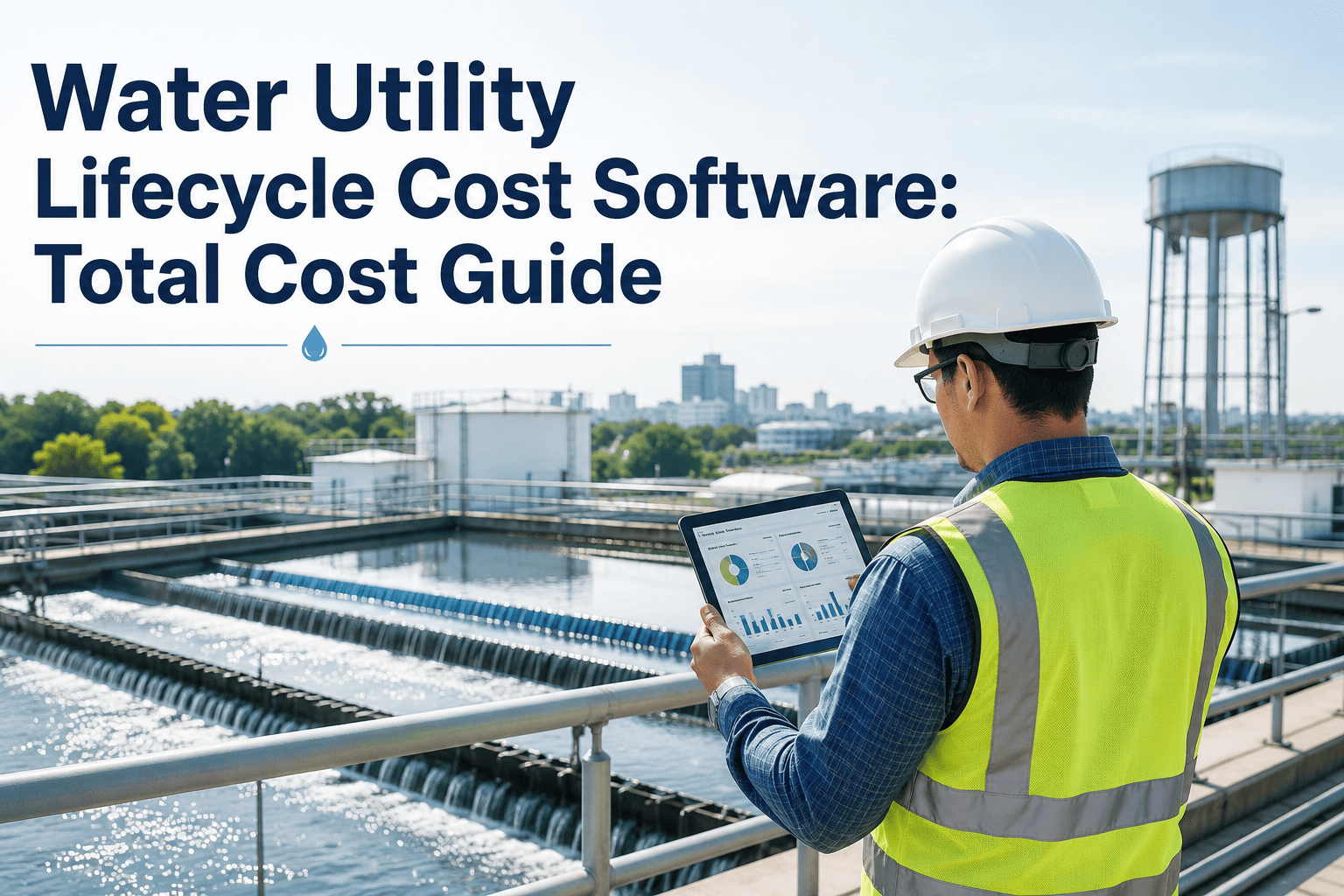
Acquisition, O&M, rehabilitation, and disposal costs tracked against each asset over its full lifecycle, not just the purchase price.
Reactive Vs. Preventive Spend
A rising ratio of emergency repairs to scheduled maintenance is the earliest financial signal that an asset needs capital attention.
Replacement Value Forecasting
Current replacement cost per asset category rolls up into a defensible, multi-year capital improvement plan.
Rate Study Support
Verified lifecycle cost data gives finance teams the evidence needed to justify rate adjustments to ratepayers and regulators.
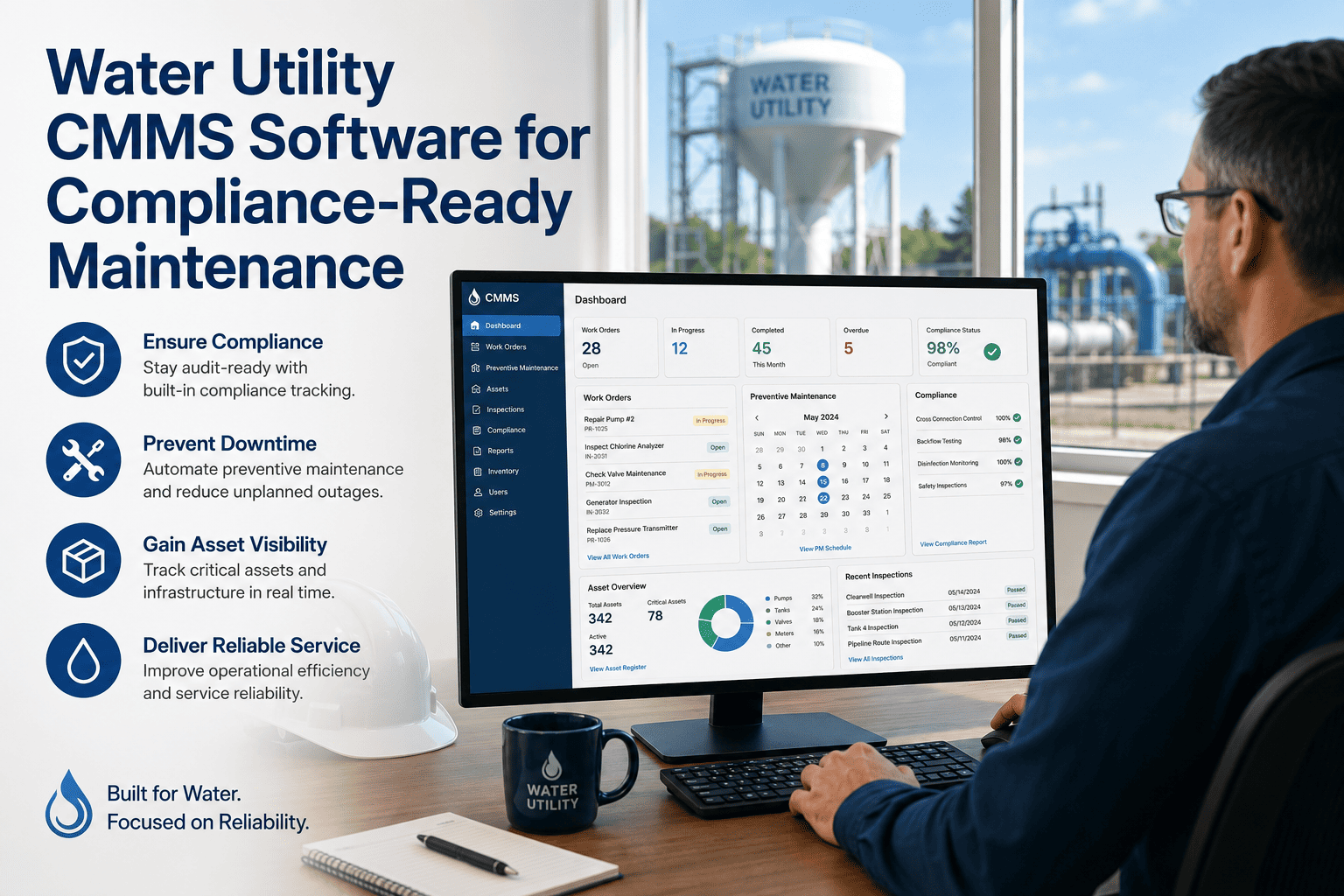
OxMaint · Water & Wastewater CMMS
Turn Asset Age Into A Defensible Capital Plan, Not A Guess
OxMaint connects inventory, condition, criticality, and cost data into one system, so your next capital improvement plan is built on evidence your board and your regulators can both trust.
Institutional Knowledge
Capturing What Only Your Senior Operators Currently Know
Every water utility has an operator who can tell you which valve sticks, which pump station floods first in a storm, and which stretch of main has broken three times already even though it isn't due for replacement for another decade. That knowledge is real, valuable, and completely undocumented — which means it retires the day that operator does. A connected asset registry does not replace field experience, but it does give that experience a permanent home, turning tribal knowledge into searchable maintenance history that the next generation of staff can actually use.
When Knowledge Stays Undocumented
New staff relearn known problem assets through repeat failures instead of existing history
Emergency response depends on reaching the one operator who remembers the asset's quirks
Retirement or turnover creates an immediate, unrecoverable gap in system knowledge
Condition assumptions vary by whoever is asked, with no consistent record to check against
When Knowledge Lives In The Asset Registry
Every repeat failure, workaround, and inspection note attaches permanently to the asset record
New technicians see full failure history before responding to a call, not after
Staff turnover no longer erases years of accumulated field knowledge
Condition assessments are consistent because they build on documented history, not memory
System Integration
Connecting The Asset Registry To GIS, SCADA, And Financial Systems
An asset registry that sits apart from the systems a utility already runs just becomes one more place data has to be re-entered by hand. The value of a CMMS-based approach comes from linking the registry to the tools operations and finance teams already depend on, so updates flow in one direction instead of requiring duplicate entry across three platforms.
GIS Mapping
Asset locations sync with existing GIS layers, so field crews and planners are always working from the same spatial data instead of two versions that drift apart.
SCADA And Telemetry
Pump run hours, pressure readings, and alarm history feed directly into asset condition records, replacing manual log entry from control room screens.
Financial And ERP Systems
Work order costs and purchase records reconcile against the utility's financial system, keeping lifecycle cost data accurate without a separate reconciliation step.
Mobile Field Data Collection
Technicians log condition notes, photos, and readings from the field, updating the central asset record in real time instead of at the end of a shift.
Common Pitfalls
Where Water Utility Asset Management Programs Break Down
Utilities that invest in asset management but still fail an AWIA risk assessment or lose a capital request usually run into one of the same three problems.
A
Age-Based Assumptions Instead Of Real Condition Data
Assuming every cast iron main fails at exactly 75 years ignores soil conditions, pressure history, and actual inspection findings that shift real remaining service life.
B
Inventory And Work Orders Living In Separate Systems
GIS holds the pipe network, a spreadsheet holds the pump ages, and the CMMS holds work orders — none of them update each other, so nothing stays current for long.
C
No Criticality Tier Behind The Numbers
A capital plan that ranks projects by age alone, without a consequence-of-failure score, spends money on old-but-low-risk assets while critical assets wait.
Field Perspective
What Utility Managers Say Once Asset Data Lives In One System
We used to manage our sewer network across a GIS map nobody updated and a maintenance log nobody trusted. Once both connected to one asset registry, our lift station replacement plan finally reflected what was actually failing, not just what was oldest.
General Manager, Regional Sanitary District
Our AWIA risk assessment used to take weeks of pulling records from three departments. With condition, criticality, and cost data already connected to every asset, the same assessment now takes days, and it holds up better under review.
Director of Production, Municipal Water Utility
Frequently Asked Questions
Water Utility Asset Management — Common Questions
Does a CMMS replace the need for an asset management plan?
No. A CMMS generates the inventory, condition, and cost data an asset management plan depends on, but the plan itself still requires defined levels of service and governance decisions from utility leadership.
How does asset criticality connect to AWIA risk assessments?
AWIA requires consequence-of-failure analysis for systems serving 3,300 or more people. A criticality score built from likelihood and consequence data, tracked per asset, is exactly the documentation that assessment expects.
Book a demo to see how OxMaint structures this scoring.
Can we migrate an existing GIS-based asset map into a CMMS?
Yes. Existing GIS coordinates, pipe attributes, and asset records import directly into the asset registry, so utilities are not rebuilding their inventory from scratch to get started.
How often should condition assessments be updated?
Critical assets are typically reassessed annually, while lower-criticality assets follow a longer cycle. The right frequency depends on asset type, consequence of failure, and inspection cost.
What is the fastest way to start building an asset registry?
Start with the highest-criticality assets — transmission mains, treatment components, and lift stations — rather than trying to inventory the entire system at once.
Start a free trial to begin building your registry today.
OxMaint · Water & Wastewater Asset Management
Stop Managing Critical Infrastructure From Memory And Spreadsheets
OxMaint gives your utility one AWWA-aligned asset registry — inventory, condition, criticality, and lifecycle cost connected across every pipe, pump, and tank you operate.