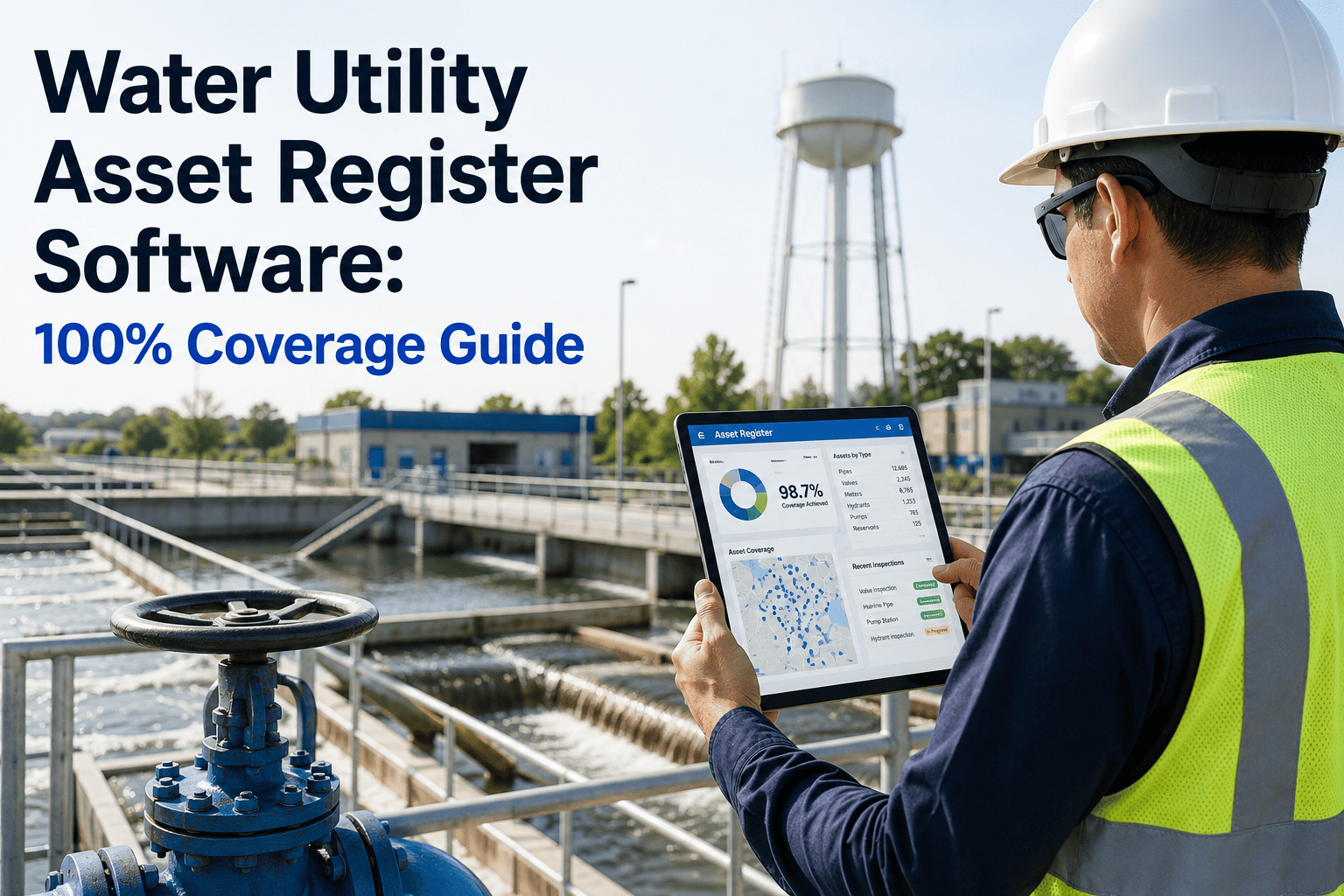
Ask most water utilities how many assets they have, and you get a confident number. Ask them to prove every pump, valve, meter, and buried service line in that number is actually accounted for, located, and current, and the confidence usually drops fast. A water utility asset register is only as useful as its coverage — the pipes nobody mapped, the vaults added during an emergency repair and never logged, and the wells retired but never removed all sit outside the register, invisible to planning until they fail or a risk assessment goes looking for them. Closing that gap to genuine 100% coverage, from source through distribution, is the discipline behind every AWWA J100-aligned risk and resilience program. Start a free trial with Oxmaint to see what a complete, source-to-distribution asset register actually looks like.
Water Utility Asset Register Software Built for 100% Coverage
Map every asset from intake to tap, or from collection to outfall, into one register that stays current as crews add, retire, and relocate infrastructure — the coverage discipline an AWWA J100-aligned risk and resilience assessment depends on.
What a Water Utility Asset Register Actually Needs to Cover
An asset register is the inventory that ties every physical component of a water or wastewater system — pumps, valves, tanks, mains, meters, lift stations, manholes, treatment units — to a location, an install date, a condition, and a maintenance history. "100% coverage" does not mean counting the assets you already know about carefully. It means the register also includes the assets nobody has looked at since construction: buried valves installed decades ago, small lift stations absorbed through a system consolidation, and emergency repairs that replaced a section of main without ever updating the map.
Coverage gaps rarely show up in daily operations, because the assets missing from the register are usually the ones nobody touches often. They surface at the worst possible moment — during a risk and resilience assessment, a capital plan review, or an emergency response when a crew needs to find and isolate a valve that exists in the ground but not in any system of record.
Register Coverage Across Every Stage of the System
Wells, raw water intakes, pumping stations, and source water infrastructure — often the oldest assets in the system and the easiest to under-document.
Treatment units, chemical feed systems, filters, and clarifiers, along with the electrical and control assets that keep them running.
Elevated tanks, ground storage reservoirs, and standpipes — high-consequence assets that a risk and resilience assessment weighs heavily.
Mains, valves, hydrants, meters, lift stations, and manholes — the largest asset count in the system and the most common source of coverage gaps.
Common Coverage Gaps and What They Put at Risk
| Asset Type | Typical Coverage Gap | What It Puts at Risk |
|---|---|---|
| Buried Valves | Installed but never logged with GPS location | Slow isolation during a main break or contamination event |
| Emergency Repairs | Replaced sections not reflected on system maps | Inaccurate pipe age and material data for capital planning |
| Retired Assets | Decommissioned wells or lines left active in records | Wasted inspection cycles and inflated asset counts |
| Consolidated Systems | Acquired systems never fully imported | Blind spots in risk assessment and rate base calculations |
| Fleet-Wide Total | Register reviewed against as-built and GIS data | Confidence the 100% figure is real, not assumed |
Typical Register Coverage Before and After a Structured Audit
Find Out What Your Register Is Actually Missing
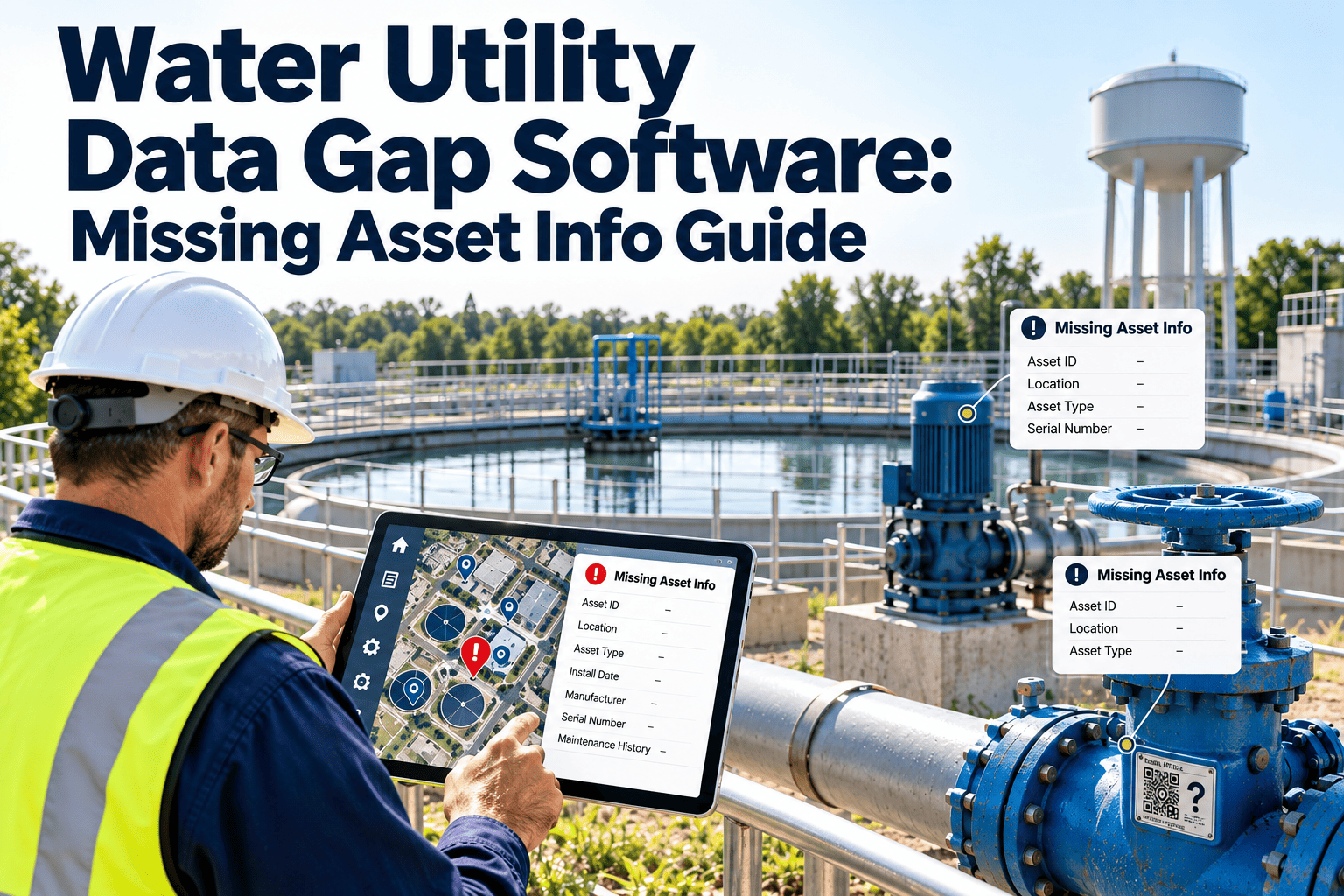
Oxmaint imports existing GIS, spreadsheet, and legacy CMMS data, then flags the gaps — assets referenced in work orders but missing from the register, or listed in the register but never inspected.
How Register Coverage Supports an AWWA J100-Aligned Assessment
AWWA J100, the risk and resilience management standard for water and wastewater systems, starts from the same premise every register audit does: you cannot assess the risk to an asset you have not identified. A J100-aligned risk and resilience assessment characterizes system assets by type, criticality, and consequence of failure, then evaluates threats and vulnerabilities against that inventory. If the inventory itself is incomplete, the resulting risk picture inherits that blind spot regardless of how rigorous the threat analysis is.
This is why utilities preparing a J100-aligned assessment, or responding to America's Water Infrastructure Act risk and resilience requirements, treat the asset register as the foundation rather than a formality. A register with genuine source-to-distribution coverage gives the risk assessment team confidence that high-consequence assets — storage tanks, treatment units, critical mains — are not being scored against an incomplete picture of the system they actually protect.
How Oxmaint Builds and Maintains 100% Register Coverage
Bring in existing GIS layers, spreadsheets, and legacy CMMS exports in one pass, then reconcile duplicate or conflicting asset records automatically.
Crews add assets discovered during fieldwork directly from a mobile device, with GPS location captured at the point of discovery, not reconstructed later from memory.
Cross-reference work order history against the register to surface assets that have been serviced but never formally logged, closing gaps proactively.
Tag each asset with criticality and consequence-of-failure ratings, structured to support a J100-aligned risk and resilience assessment without a separate spreadsheet exercise.
Organize the register by system stage — source, treatment, storage, distribution, or collection — so coverage can be reviewed and reported stage by stage.
Decommission assets formally in the register instead of leaving them active, keeping inspection schedules and asset counts accurate.
What Full Coverage Changes for a Utility
Frequently Asked Questions
What does 100% asset register coverage actually mean?
It means every physical asset in the system — from source intakes to the last distribution valve — is logged with a location, condition, and maintenance history, not just the assets serviced regularly. Start a free trial to run a coverage check against your current register.
How does an asset register support an AWWA J100 assessment?
J100-aligned risk and resilience assessments score threats and consequences against a defined asset inventory, so a complete register is the input the entire assessment depends on. Book a demo to see criticality tagging built for this purpose.
Can existing GIS and spreadsheet data be imported into a new register?
Yes. Existing GIS layers, spreadsheets, and legacy CMMS exports can be imported and reconciled in one pass, rather than rebuilding the register from scratch.
How are wastewater collection assets different from water distribution assets?
Both need the same coverage discipline, but collection registers typically weight manholes, lift stations, and gravity mains more heavily, while distribution registers weight valves, hydrants, and meters.
How often should an asset register be audited for coverage gaps?
An annual gap check against work order history and field data catches most missing assets early, rather than waiting for a multi-year risk assessment cycle to expose them.
Build a Water Utility Asset Register With Real 100% Coverage
Oxmaint maps every asset from source through distribution or collection, closes coverage gaps as they're found, and keeps the register ready for the next J100-aligned risk and resilience assessment — free trial, no credit card required.