A smart water network combines real-time sensors, district metered areas, and data-driven pressure management to cut non-revenue water by 20–40% and reduce pipe bursts by up to 50%. For mid-size utilities, aging infrastructure and rising energy costs make intelligent water network management essential, not optional. By integrating SCADA telemetry with a modern CMMS, maintenance teams can automatically trigger work orders the moment pressure anomalies or leaks are detected. OxMaint connects smart water infrastructure directly to preventive maintenance workflows so you can stop reacting to catastrophic main breaks and start managing assets proactively. Start Free Trial to see how AI-driven maintenance analytics transform your water network operations.
Smart Water Infrastructure
How much non-revenue water is your utility losing tonight?
Globally, utilities lose over 30% of treated water to leaks before it reaches a single customer. A smart water network with active pressure management reverses this drain — reducing breaks, lowering pumping energy, and extending asset life by 15–20 years.
The Foundation
What is a smart water network and why does pressure management matter?
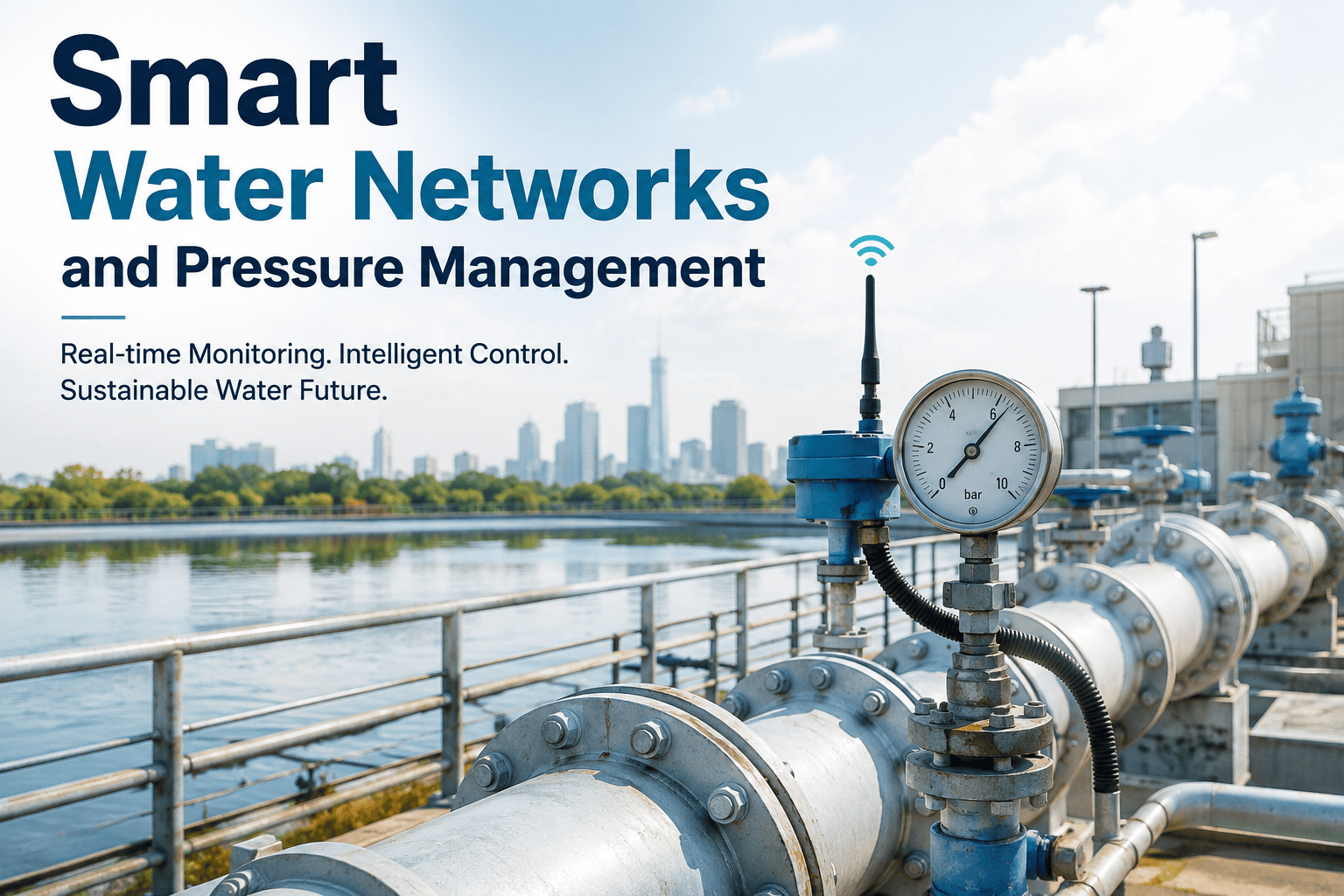
A smart water network layers IoT sensors, flow meters, and acoustic leak detectors across your distribution grid to deliver real-time visibility into every pipe, valve, and pump. The core operational unit of this intelligent water system is the District Metered Area (DMA) — a hydraulically isolated zone where inflow and outflow are measured continuously. When inflow exceeds outflow, you have a leak. When pressure spikes, you have stress on aging pipes. Water pressure management is the practice of modulating this pressure using altitude valves, pressure reducing valves (PRVs), and variable frequency drive (VFD) pumps to keep the system at the minimum required pressure, thereby reducing stress and leakage volume.
Implementation Strategy
How to design district metered areas (DMAs) for smart water utility management
Implementing DMAs is the critical first step in building a smart water grid. A well-designed DMA allows maintenance and reliability teams to isolate segments of the network, balance supply and demand, and pinpoint leaks to within a few hundred meters. For a mid-size utility managing 500 miles of pipe, dividing the network into 15–20 DMAs is standard practice. The goal is to establish a smart water infrastructure baseline: night flow analysis (between 2:00 AM and 4:00 AM when legitimate consumption is near zero) reveals the true leakage rate. Once DMAs are established, continuous water network monitoring software tracks minimum night flow, allowing teams to detect new bursts within hours rather than weeks.
DMA Design & Hydraulic Isolation
Define boundary conditions, install flow meters on DMA inlets/outlets, and close boundary valves to isolate the zone. Target DMA sizes of 1,000–5,000 connections for optimal leak detection resolution.
Baseline Night Flow Analysis
Measure minimum night flow over 14–28 days to establish the unavoidable annual real losses (UARL) and calculate the infrastructure leakage index (ILI). This sets the baseline for non-revenue water reduction.
Pressure Reducing Valve (PRV) Installation
Install or retrofit PRVs and altitude valves at DMA inlets. Integrate them with the SCADA network to enable remote, automated pressure modulation based on real-time demand profiles.
CMMS-Integrated Burst Detection
Connect telemetry to OxMaint so that when flow exceeds the burst threshold, the smart water system automatically generates a high-priority work order and dispatches the nearest maintenance crew.
ROI & Cost Justification
Calculating the ROI of smart water pressure management
Justifying the shift to a smart water management system requires a hard look at the economics of water loss and pipe degradation. Pressure management directly reduces the frequency of main breaks — one of the most expensive emergency maintenance costs a utility faces. A single main break can cost $10,000 to $50,000 in emergency labor, pavement repair, and water damage claims. By reducing average zone pressure by just 10–15 psi, utilities can extend asset life and significantly cut operational expenditure.
Pressure-Leakage Relationship Formula
Leakage Reduction (%) ≈ (P1 / P2) ^ N1
Where P1 is original pressure, P2 is reduced pressure, and N1 is the leakage exponent (typically 1.15 for distribution systems). Reducing pressure from 70 psi to 55 psi yields a theoretical leakage reduction of approximately 27%.
| Cost / Savings Factor | Reactive Status Quo | Smart Pressure Management | Annual Impact |
|---|---|---|---|
| Main breaks (per 100 miles/yr) | 25–30 breaks | 12–15 breaks | -$225K in emergency repairs |
| Non-revenue water volume | 25% of supply | 10% of supply | -$180K in treated water loss |
| Pumping energy consumption | Baseline load | 15% reduction | -$45K in energy costs |
| Asset replacement capital | Accelerated degradation | +15 years life extension | -$500K deferred CapEx |
Worked Example
A mid-size utility serving 50,000 connections
A utility spending $1.2M annually on treated water production loses 28% to hidden leaks and experiences 120 main breaks per year. By implementing 12 DMAs with smart PRVs and integrating the telemetry into OxMaint, the utility drops pressure by 12 psi during low-demand periods. Within 6 months, main breaks drop to 64 per year, night flow leakage drops by 22%, and the maintenance team saves 340 hours of emergency overtime. The $350K capital investment pays for itself in 14 months, while the CMMS integration ensures leaks detected by the smart water grid trigger automated dispatch — cutting leak run-time from 14 days to 48 hours.
Platform Integration
How OxMaint powers your CMMS-integrated smart water system
A smart water network is only as valuable as the maintenance team's ability to act on its data. When an acoustic sensor detects a leak, or a PRV reports an anomalous pressure drop, that signal must instantly become an action. OxMaint bridges the gap between water network monitoring and field execution — translating SCADA alerts into prioritized, trackable, and auditable work orders. By unifying asset tracking, preventive maintenance, and real-time telemetry, OxMaint eliminates the spreadsheet sprawl and disconnected communication that delays leak repair and drives up non-revenue water.
Automated Burst-Response Work Orders
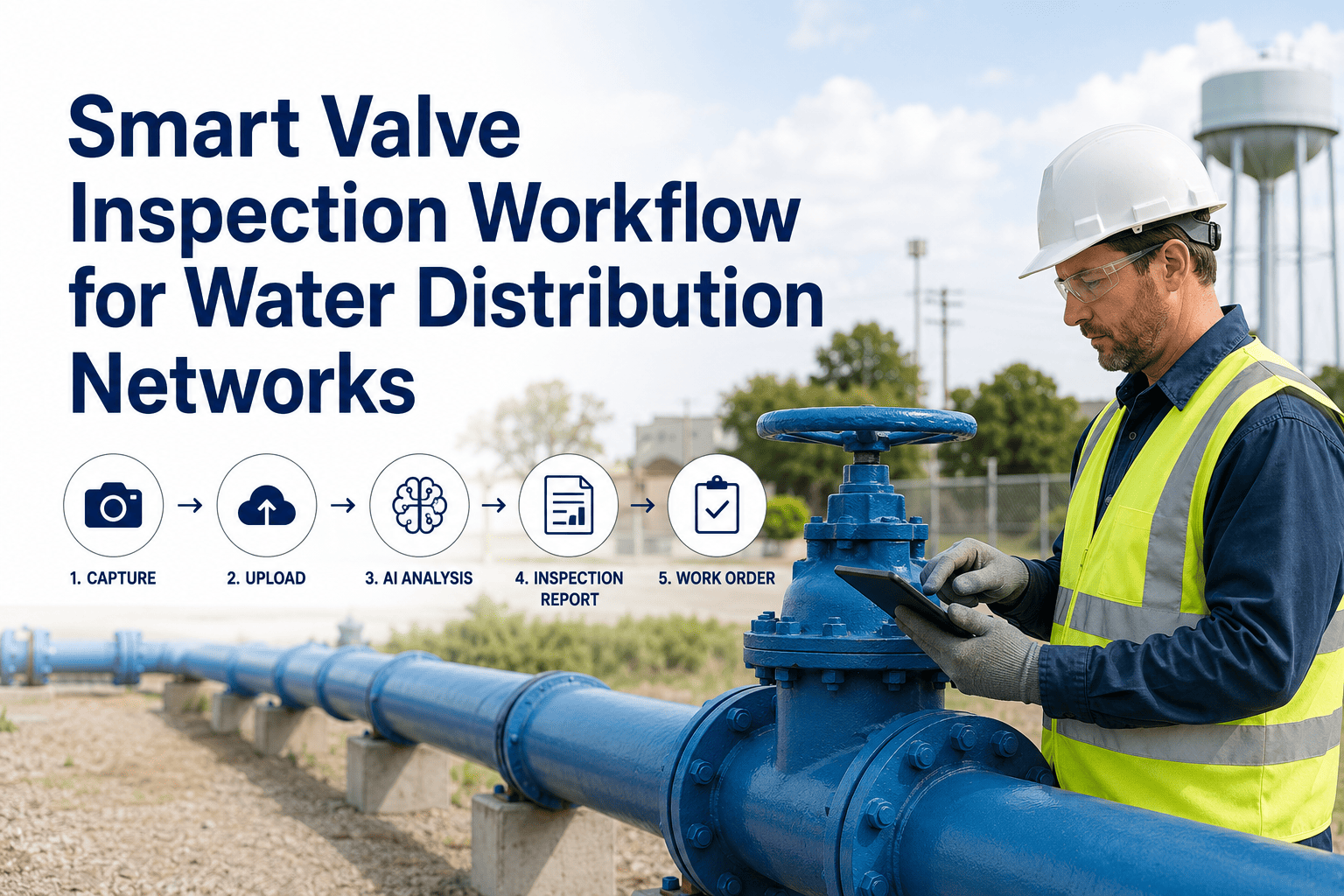
Connect your smart water grid directly to OxMaint. When DMA flow exceeds burst thresholds, the AI engine instantly generates a work order, assigns it to the nearest qualified technician, and tracks repair time — reducing leak run-time by up to 70%.
Predictive Valve & Pump Maintenance
Use maintenance analytics to track PRV and VFD pump performance trends. Predict failures before they compromise water pressure management, preventing the sudden drops that cause backflow contamination and service interruptions.
Asset Lifecycle Tracking
Maintain a complete digital twin of your smart water infrastructure. Track install dates, burst history, and pressure data for every pipe segment and valve to optimize your $1M+ asset replacement capital expenditure.
Spare Parts & Inventory Control
Never delay a critical main break repair due to missing parts. OxMaint automatically decrements PRV cartridges, pipe couplings, and valve boxes from inventory and reorders when stock hits minimum thresholds.
Stop losing water and start managing pressure intelligently
See how OxMaint connects your smart water network sensors to automated maintenance workflows. Cut non-revenue water, reduce main breaks, and extend asset life.
Frequently Asked Questions
Smart water network and pressure management FAQs
What is a smart water network?
A smart water network is an intelligent water system that uses IoT sensors, acoustic leak detectors, and smart meters to monitor water distribution in real time. It enables utilities to detect leaks, manage pressure, and track non-revenue water continuously, rather than relying on manual monthly readings and reactive repairs. Integrating this data with a CMMS like OxMaint ensures sensor alerts instantly become actionable work orders.
How does pressure management reduce water loss?
Pressure management reduces water loss by lowering the force exerted on pipe walls and joints, which directly decreases the volume of water escaping through existing leaks and prevents new bursts. Because leakage flow rate is exponentially tied to pressure, reducing average zone pressure by just 10% can cut leakage volume by 12–15%, significantly lowering non-revenue water and extending pipe lifespan.
What are district metered areas (DMAs) in water utility management?
District metered areas are hydraulically isolated zones within a water distribution grid where inflow and outflow are precisely measured. By analyzing the difference between supply and authorized consumption—especially during minimum night flow hours—utilities can accurately quantify leakage and pinpoint bursts. DMAs are the foundational building block of any smart water infrastructure strategy. You can Start Free Trial to map your DMAs in OxMaint today.
How much does a smart water management system cost?
For a mid-size utility, smart water management system costs typically range from $200K to $500K for DMA flow meters, acoustic sensors, and PRV retrofits. However, the ROI is compelling: reducing main breaks by 50% and non-revenue water by 10–20% usually yields a payback period of 12–24 months. Software integration via OxMaint ensures this hardware investment translates directly into maintenance savings.
How does a CMMS integrate with smart water infrastructure?
A CMMS integrates with smart water infrastructure by ingesting telemetry data from SCADA systems and IoT sensors. When the smart water grid detects a pressure anomaly or a burst, the CMMS automatically generates a prioritized work order, assigns a technician, tracks the repair, and logs the asset history. To see this automated workflow in action, Book a Demo with our team.
Ready to modernize your water network management?
Join utilities using OxMaint to turn smart water data into measurable maintenance outcomes — fewer breaks, lower costs, total compliance.
Free 14-day trial · No credit card