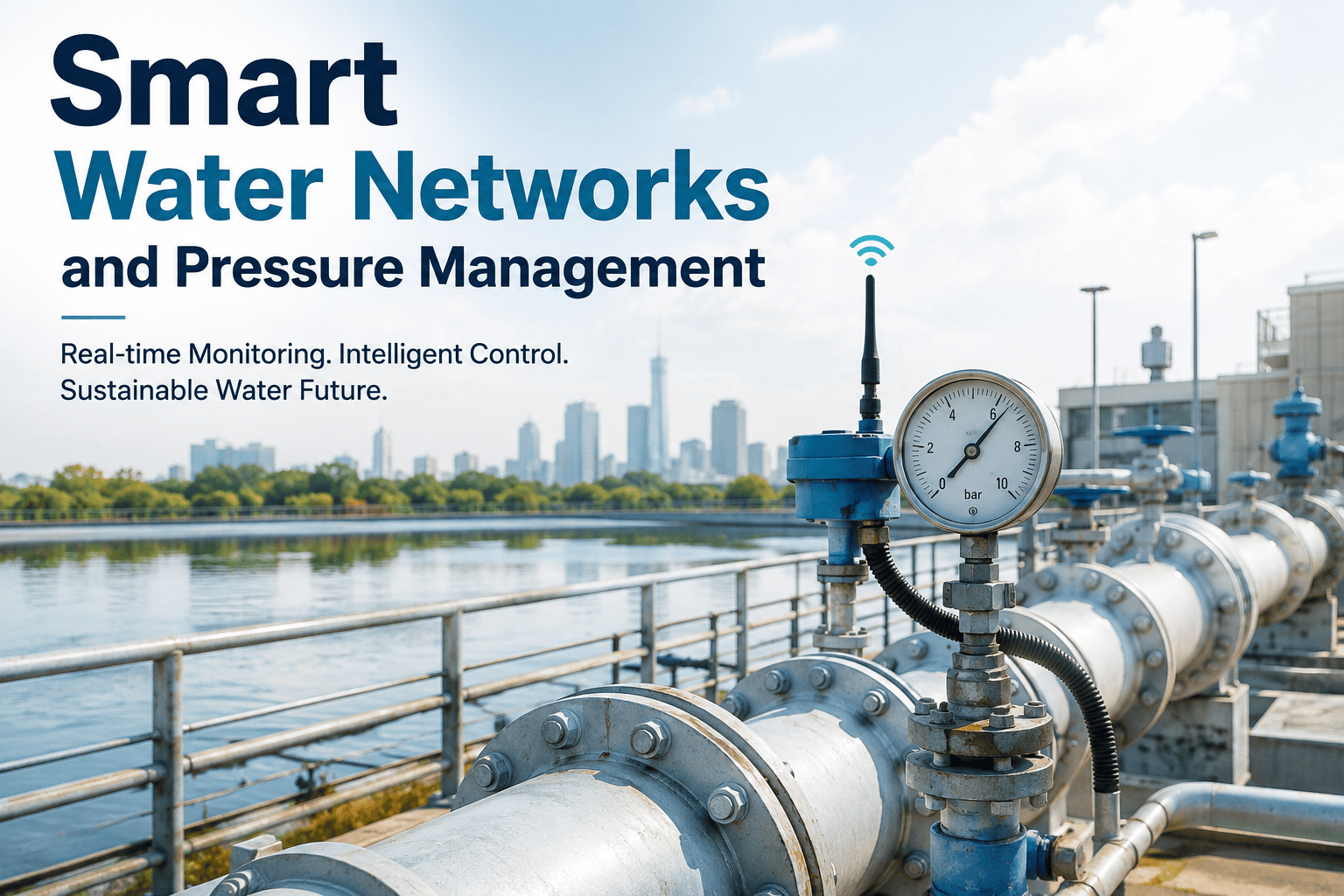
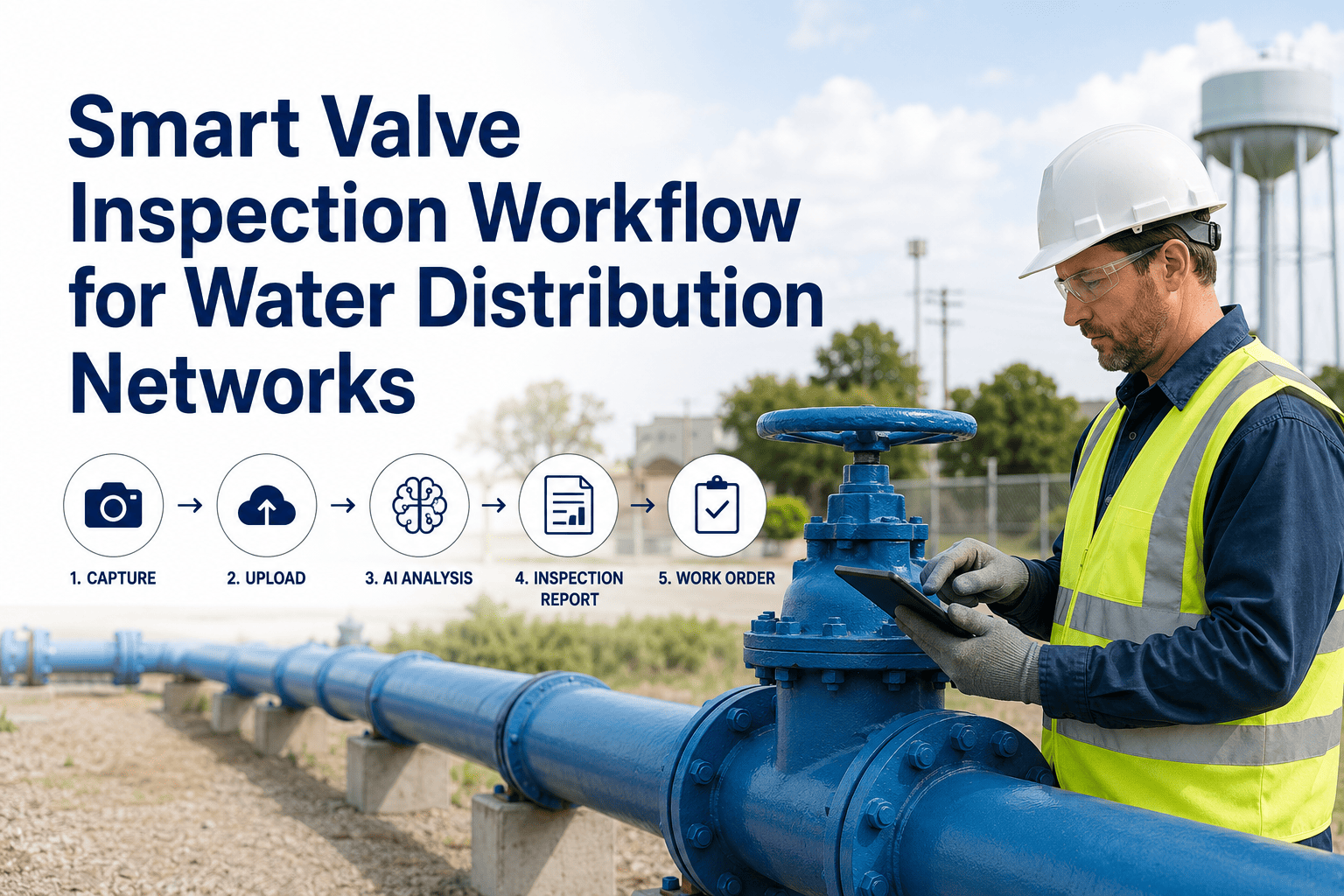
Municipal water utilities are operating aging infrastructure under mounting pressure — rising demand, climate variability, tightening regulations, and shrinking budgets. Digital transformation is not a future initiative for progressive utilities. It is the operational response that allows existing teams to manage more infrastructure, respond faster to failures, and demonstrate compliance without adding headcount. OxMaint gives water utilities the connected platform that bridges IoT sensor data, AI-driven analytics, and structured maintenance workflows — turning raw network data into scheduled action and documented results. Sign up free or book a demo to begin your utility's digital transition today.
From Manual Rounds to Smart Networks — OxMaint Bridges the Gap
Connect IoT sensors, automate maintenance workflows, and manage your entire water network from a single platform — without replacing your existing field teams or control systems.
Why Digital Transformation Is No Longer Optional
30%
of treated water is lost to leaks in the average municipal distribution system
$109B
infrastructure investment gap facing US water utilities over the next 20 years
2.4x
higher cost for reactive repairs vs. planned maintenance in water systems
43%
of water utility assets are past their design life with no condition data
The utilities that manage these realities most effectively are not the ones with the largest capital budgets — they are the ones with the best operational visibility. Knowing which pipe sections are at highest failure risk, which pump stations are consuming abnormal energy, and which treatment processes are drifting from optimal parameters transforms how budgets are allocated and how teams spend their time. Start building that visibility with OxMaint from day one.
The Smart Water Network Architecture
A smart water network is not a single technology — it is a stack of connected systems that each generate operational data and each depend on disciplined maintenance to remain reliable. OxMaint sits at the center of that stack, connecting sensor data to maintenance workflows and maintenance records to compliance reporting.
Analytics and Decision Layer
AI Anomaly Detection
Predictive Failure Modeling
Digital Twin Simulation
Compliance Dashboards
OxMaint Operations Layer
Work Order Automation
Asset Register and History
PM Scheduling and Tracking
Contractor and Team Management
Field and Sensor Layer
IoT Flow and Pressure Sensors
SCADA and RTU Integration
Water Quality Monitors
AMI Meter Infrastructure
Core Digital Capabilities OxMaint Delivers
01
IoT-Connected Asset Monitoring
Pressure sensors, flow meters, water quality instruments, and pump vibration monitors feed continuous data into OxMaint. Deviations from established baselines auto-generate work orders before failures develop — converting reactive callouts into planned interventions with defined time windows.
Sensor to Work Order
02
Predictive Maintenance and AI Analytics
OxMaint's AI engine analyzes historical maintenance records, sensor trend data, and asset age profiles to predict which assets are approaching failure thresholds. Engineering teams receive prioritized intervention lists weeks before problems manifest — shifting budget from emergency repair to planned maintenance at 2.4x lower cost.
Predictive PM
03
Digital Asset Register and Lifecycle Tracking
Every pipe section, pump, valve, meter, and treatment component lives in OxMaint's asset register with installation date, condition score, maintenance history, and remaining useful life estimate. This is the data foundation for capital improvement planning, grant applications, and rate case justification.
Asset Intelligence
04
Automated Compliance and Reporting
Regulatory reporting requirements — state health departments, EPA, AWIA — demand documented maintenance records, water quality logs, and asset condition evidence. OxMaint generates these reports automatically from operational data, eliminating manual compilation and ensuring no compliance deadline is missed.
Auto Documentation
Every Sensor. Every Asset. Every Maintenance Record. One Platform.
OxMaint connects your IoT field sensors, SCADA data, and maintenance workflows — giving your operations team a single source of truth for your entire water network.
Smart Network Applications by Infrastructure Type
Pressure zone monitoring with anomaly alerts for main breaks
Acoustic leak detection integration and work order creation
Valve exercise program scheduling and completion tracking
Hydrant inspection and flow test record management
Vibration and current draw trending for predictive bearing replacement
Energy consumption monitoring against baseline efficiency curves
Wet well level monitoring with overflow risk alerts
Backup power test scheduling and generator maintenance logs
Process instrumentation calibration scheduling and logs
Chemical dosing system performance and safety checks
Membrane and filtration media condition tracking
Effluent quality compliance records auto-generated per permit
Lift station monitoring with pump cycle anomaly detection
Sewer inspection scheduling with CCTV report attachment
I/I monitoring through flow meter trending and precipitation correlation
Manhole inspection program management and condition grading
Global Compliance: Digital Transformation Standards
USA
EPA / AWIA 2018 — America's Water Infrastructure Act requires risk assessments and resilience plans. EPA's Water Security Initiative and CISA advisories increasingly reference digital asset management and documented OT maintenance as compliance evidence. OxMaint auto-generates AWIA-aligned documentation.
Canada
Provincial Standards / CWWA — Canadian water utilities operate under provincial environmental acts with asset management mandates from Ontario's O.Reg 588/17 to BC's Water Sustainability Act. OxMaint's asset register and maintenance records support provincial asset management plan requirements.
UK
Ofwat / DWI — Ofwat's price review framework rewards utilities that demonstrate asset health evidence and investment efficiency. The Drinking Water Inspectorate requires documented maintenance and calibration records. OxMaint provides both automatically from operational data.
Germany
TrinkwV / DVGW — Germany's Drinking Water Ordinance and DVGW technical standards require documented asset maintenance and water quality monitoring records. OxMaint supports German-language documentation and DVGW-aligned PM scheduling for water network assets.
Australia
WSAA / State Acts — Water Services Association of Australia frameworks and state water acts require utilities to demonstrate asset management maturity. OxMaint's condition tracking and maintenance records satisfy WSAA asset management guideline documentation requirements.
Saudi Arabia
NWC / SWCC Standards — Saudi Arabia's National Water Company and Saline Water Conversion Corporation operate under Vision 2030 smart utility mandates. OxMaint supports Arabic documentation, NWC-aligned maintenance schedules, and smart network integration requirements.
Digital Transformation Roadmap with OxMaint
Most utilities attempt digital transformation by deploying sensors first and asking what to do with the data second. OxMaint inverts that approach — establishing the operational and asset management foundation first, then connecting sensor inputs to a system that already knows what to do when an anomaly is detected. This produces results within weeks, not after years of systems integration work.
1
Asset Foundation
Weeks 1 – 3
Register all network assets in OxMaint — pipes, pumps, valves, meters, treatment equipment — with condition scores, installation dates, and maintenance history. Establish the baseline that makes every future decision data-driven.
2
PM Program Activation
Weeks 3 – 5
Deploy structured preventive maintenance schedules across pumping stations, treatment plant instrumentation, and distribution network assets. Auto-assign to field teams with mobile work orders and completion tracking.
3
IoT and SCADA Integration
Month 2
Connect existing IoT sensors and SCADA data streams to OxMaint. Configure anomaly thresholds per asset and activate automated work order generation — sensor alerts become maintenance actions without manual intervention.
4
Predictive and Compliance
Month 3+
Activate predictive maintenance models drawing on accumulated condition data. Configure compliance dashboards and automated report exports for regulators, rate case proceedings, and grant applications.
OxMaint vs. Competing Platforms
| Capability |
OxMaint |
MaintainX |
UpKeep |
Fiix |
Limble |
IBM Maximo |
Hippo (Eptura) |
| Water utility PM templates |
Yes |
No |
No |
No |
No |
Custom |
No |
| IoT sensor to work order automation |
Yes |
Limited |
Limited |
No |
No |
Yes |
No |
| SCADA / OT data integration |
Yes |
No |
No |
No |
No |
Yes |
No |
| Predictive maintenance modeling |
Yes |
No |
No |
Limited |
No |
Yes |
No |
| Regulatory compliance documentation |
Yes |
No |
No |
Limited |
No |
Yes |
No |
| Multi-framework support (EPA, AWIA, Ofwat) |
Yes |
No |
No |
No |
No |
Custom |
No |
| Mobile-first field operations |
Yes |
Yes |
Yes |
Limited |
Yes |
Limited |
Limited |
| Deployment speed |
Days |
Weeks |
Weeks |
Months |
Weeks |
Months+ |
Months |
| Pricing |
Free tier |
Mid-range |
Mid-range |
Enterprise |
Mid-range |
Enterprise |
Mid-range |
Results: What Smart Network Utilities Achieve
25%
Reduction in non-revenue water through early leak detection and response
40%
Decrease in reactive maintenance costs after structured PM deployment
97%
PM completion rate vs. 41% with paper-based maintenance programs
100%
Compliance audit readiness — all records generated automatically
Your Network Generates Data Every Second. OxMaint Makes It Actionable.
Turn sensor alerts into work orders, maintenance records into compliance reports, and asset condition data into capital planning evidence — all from one platform your field teams will actually use.
OxMaint Platform Security
AES-256 encryption at rest, TLS 1.3 in transit — all utility operational and sensor data is encrypted end-to-end across every connection.
Role-based access with facility-level permissions — operators, supervisors, and managers each see only the assets and data their role requires.
Tamper-evident audit trail with 99.9% uptime SLA — every work order, every sensor event, and every compliance record is timestamped and immutable.
SOC 2-aligned with annual penetration testing — independently verified security posture for critical infrastructure operators and municipal clients.
Related Resources
Frequently Asked Questions
What is a smart water network and how does OxMaint support it?
A smart water network is a municipal water system instrumented with IoT sensors, connected to SCADA or telemetry infrastructure, and managed through digital platforms that convert sensor data into operational actions. OxMaint sits at the operations layer of this stack — receiving sensor alerts and SCADA anomalies, auto-generating work orders for field teams, maintaining a complete asset register with condition history, and producing the compliance documentation that regulators require. It bridges the gap between the data your network generates and the maintenance actions that keep it reliable.
Can OxMaint integrate with existing SCADA systems?
Yes. OxMaint integrates with SCADA platforms and OT data historians via API, allowing sensor readings and process alarms to flow into the OxMaint asset and work order framework. Anomaly thresholds are configured per asset — when a pump station exceeds its vibration baseline or a pressure zone drops below setpoint, OxMaint automatically creates a prioritized work order and assigns it to the appropriate field team without any manual intervention.
How does digital transformation help water utilities reduce non-revenue water?
Non-revenue water reduction depends on two capabilities: fast anomaly detection and rapid dispatch. OxMaint supports both — continuous pressure monitoring flags sudden pressure drops that indicate main breaks within minutes rather than hours, and automated work order creation routes the repair job to the nearest qualified field crew immediately. Utilities using structured digital maintenance programs consistently achieve 20 to 30 percent reductions in non-revenue water within the first year of deployment.
What compliance reporting does OxMaint generate for water utilities?
OxMaint generates exportable compliance reports covering asset maintenance history, calibration and inspection records, water quality monitoring logs, contractor access audit trails, and PM completion rates. These reports are formatted for EPA submissions, AWIA risk assessment evidence, state health department reviews, and rate case proceedings — and they are produced automatically from live operational data with no manual compilation required.
How long does it take to deploy OxMaint for a water utility?
Most water utilities complete asset registration and initial PM schedule deployment within three to four weeks. OxMaint provides pre-built templates for water sector equipment categories including distribution mains, pumping stations, treatment plant instrumentation, and wastewater lift stations — significantly reducing configuration time. IoT and SCADA integrations are typically live within the second month, and full compliance reporting is operational by week six.
Free to Start — No Credit Card Required
Modernize Your Water Utility. Connect Your Network. Prove Your Results.
OxMaint gives municipal water utilities the smart network operations platform — IoT integration, predictive maintenance, and compliance documentation — deployed in weeks without a multi-year transformation program.