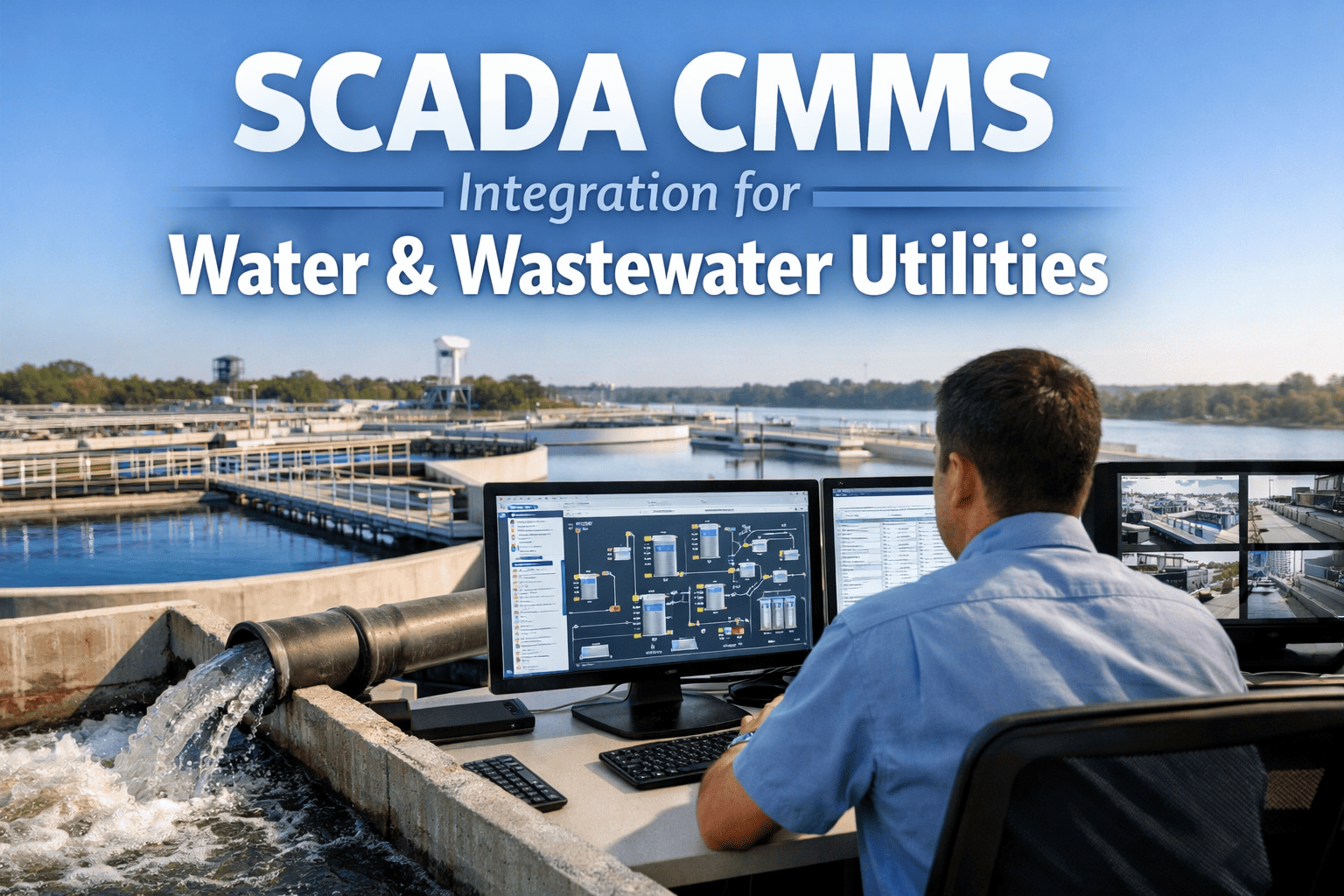
OT Cybersecurity for Public Infrastructure & Utilities
By Taylor on February 12, 2026
When a municipal water treatment plant is held for ransom by a cyberattack—halting operations and forcing manual overrides—the cost goes far beyond the $500,000 paid to hackers. The public trust is shattered, safety is compromised, and critical services are disrupted for weeks. This scenario is becoming increasingly common in Operational Technology (OT) environments, where legacy infrastructure often lacks the modern defense mechanisms required to repel sophisticated threats.
This guide provides public utility directors, city engineers, and IT/OT security managers with a comprehensive framework for mastering OT cybersecurity in 2026. We cover the complete lifecycle from asset discovery and network segmentation to real-time threat monitoring and incident response. Agencies ready to secure their critical infrastructure can start their free trial today.
Security Reality
The Cost of Vulnerable OT Systems
60%
of utility organizations have experienced a ransomware attack on OT systems
35%
increase in dwell time for undetected threats in legacy SCADA environments
80%
reduction in lateral movement risk with zero-trust network segmentation
Source: CISA & IBM Security Reports 2024-2025
Effective OT cybersecurity requires more than just a firewall at the perimeter. It demands rigorous control over asset inventory, real-time monitoring of industrial protocols, and rapid incident response capabilities. By adopting a zero-trust architecture and integrated security tools, municipalities can protect critical services from disruption and ensure public safety.
The OT Security Lifecycle
Successful cyber resilience follows a structured lifecycle. Each phase—from initial asset discovery to continuous monitoring—requires specific management activities, documentation, and compliance checks. Skipping steps or managing security in silos creates vulnerabilities that attackers can exploit to bypass defenses.
OT Security Delivery Framework
From vulnerability to resilience
01
Identify & Inventory
Asset discovery, vulnerability assessment, risk categorization, and mapping data flows across ICS/SCADA
02
Protect & Segment
Network segmentation (Purdue Model), access control (IAM), patching critical systems, and zero-trust implementation
03
Detect & Monitor
Real-time threat detection, anomaly monitoring, log analysis, and SIEM integration for 24/7 visibility
Implementing a unified OT security platform allows public works teams to track every asset, patch, and potential threat in a single system of record. Automated workflows streamline vulnerability management, ensuring that critical security patches don't languish while systems remain exposed. Digital documentation provides the audit trail needed for NERC CIP compliance and transparent reporting. Book a Demo.
Security Strategies: Legacy vs. Zero Trust
Public works departments must select the appropriate security strategy for their infrastructure. While "Air-Gapping" was once the gold standard, modern connectivity requirements have rendered it largely obsolete. Adopting a Zero Trust architecture—"never trust, always verify"—offers distinct advantages for connected utilities. Understanding the tradeoffs is critical for successful risk mitigation.
Security Strategy Comparison
1
Perimeter Defense (Legacy)
Relies on firewalls at the network edge
Implicit trust: "Once inside, you are safe"
Flat network topology allows lateral movement
Infrequent manual patching and updates
Reactive response to known signatures
High risk of compromised credentials spreading
Best for isolated, non-critical systems
Vulnerable & Rigid
2
Zero Trust Architecture
Identity-based micro-segmentation
Explicit verification: "Verify every request"
Limits blast radius of any breach
Continuous validation of device health
Proactive behavioral anomaly detection
Least-privilege access enforced dynamically
Best for critical, connected infrastructure
Resilient & Adaptive
Choosing the right security posture is a strategic decision. Integrated security management software supports Zero Trust models by providing flexible workflows for access reviews, asset verification, and patch management, regardless of the underlying legacy hardware.
Digital Security Impact
Measured improvements from integrated OT controls
15%
Risk Reduction
Fewer Audit Findings
20%
Faster Detection
Real-Time Alerts
100%
Visibility
Full Asset Inventory
90%
Compliance
Automated Reporting
Network Segmentation & Threat Monitoring
Securing public infrastructure requires rigorous segmentation. Effective cybersecurity involves dividing the network into secure zones, preventing attackers from moving from a corporate email server to a turbine controller. Monitoring is equally critical; seeing threats in real-time allows for intervention before physical damage occurs. Book a Demo.
Essential Controls for OT Security
Network Segmentation
Isolating critical OT systems from IT networks using the Purdue Model / DMZs. Prevents lateral movement of malware like ransomware.
Asset Inventory
Real-time tracking of all connected devices, firmware versions, and patch levels. You cannot protect what you cannot see.
Threat Detection
Passive monitoring of network traffic to identify anomalies, unauthorized protocols, or potential intrusions without disrupting operations.
Secure Remote Access
Enforcing Multi-Factor Authentication (MFA) and granular access controls for vendors and remote operators. Eliminating unmonitored backdoors.
The Value of Integrated Security
Investing in professional OT cybersecurity delivers substantial returns. It prevents the operational downtime that drains budgets, ensures infrastructure reliability, and protects sensitive data. Integrated systems allow security managers to focus on mitigating risks rather than manually correlating logs.
ROI Calculator: Integrated OT Security
Based on a typical ransomware incident scenario
Vulnerable / Manual Tools
Avg. Ransom Payment$500,000
Downtime Costs (Per Day)$200,000
Regulatory Fines$100,000
Recovery & Cleanup$50,000
Incident Cost: $850,000+
VS
Integrated Security System
Security Platform Cost$30,000
Training & Implementation$20,000
Security Staffing$150,000
Incident Prevention($300,000)
Net Savings: $650,000
Municipalities that implement robust cybersecurity practices see immediate benefits: fewer disruptions, better vendor accountability, and higher public confidence. The data generated provides valuable insights for future capacity planning and risk management strategies.
Secure Your Infrastructure
Stop managing critical security risks with spreadsheets and hope. Oxmaint delivers the integrated asset and security management tools public works departments need to deliver safe, reliable services. Schedule a consultation to see the platform in action.
Building cybersecurity maturity is a journey. It starts with standardizing processes and implementing a central inventory. From there, agencies can advance to sophisticated segmentation, predictive threat hunting, and automated incident response.
Network SegmentationAccess Control (MFA)Patch ManagementReal-time Alerting
Level 3
Optimization (Months 10+)
Automated ResponsePredictive AI AnalyticsThreat HuntingIntegrated SOC
Start by establishing a "single source of truth" for asset data. Standardize your workflows for key processes like user access and patching. As your team becomes comfortable with digital tools, introduce more advanced behavioral monitoring to drive continuous improvement.
Cybersecurity Across Disciplines
Public works cybersecurity spans diverse disciplines—from vertical infrastructure (control centers) to distributed assets (pumping stations). A unified security framework ensures consistent protection standards across all departments.
Unified Security Across Public Works
Consistent protection for every infrastructure type
Power Generation
Water Treatment
Traffic Control
Smart Lighting
Waste Management
Gas Utilities
Public Buildings
Fleet Management
Standardized Reporting
Consistent compliance reports and dashboards across all utility types for executive visibility.
Incident Response
Coordinate response efforts to minimize public disruption (e.g., isolating compromised grids).
Budget Allocation
Track security funding (grants, bonds) across the entire OT portfolio to prioritize risks.
Deliver secure services for your communityGet Started →
By standardizing cybersecurity practices, municipalities gain portfolio-level visibility. This enables better resource allocation, improved risk forecasting, and the ability to demonstrate security due diligence to the public and elected officials. Book a Demo.
Transform Your OT Security
Join the forward-thinking municipalities using Oxmaint to protect critical infrastructure with confidence. Gain control over assets, threats, and access. Start your journey to cyber resilience today.
What is the difference between IT and OT Security?
IT security focuses on data confidentiality, integrity, and availability (CIA triad) for business systems like email and ERP. OT security focuses on Availability, Safety, and Reliability of physical processes (pumps, valves, turbines). In OT, a system reboot to install a patch can cause a physical service outage, so security measures must be non-disruptive and prioritize operational continuity above all else.
How does Zero Trust apply to legacy infrastructure?
Legacy OT devices often cannot run modern security agents. Zero Trust in this context is applied via the network. By placing legacy devices in micro-segments and strictly controlling which other devices can talk to them (using next-gen firewalls or software-defined networking), you create a Zero Trust wrapper around insecure hardware. This ensures that even if one device is compromised, the attacker cannot move laterally to others.
Why is "Asset Inventory" considered a critical first step?
You cannot protect what you don't know exists. Many utilities have "shadow OT"—devices connected by vendors or engineers without IT knowledge. These unmanaged devices are often unpatched and accessible from the internet. A comprehensive, automated inventory provides the foundation for vulnerability management, risk assessment, and network segmentation. Without it, security controls are blind.
What is the Purdue Model in OT security?
The Purdue Model is a reference architecture for industrial control systems that segments networks into hierarchical levels. Level 0-1 contains physical processes and controllers; Level 2 contains SCADA software; Level 3 is site operations; and Level 4/5 is the enterprise business network. Security best practices dictate placing firewalls between these levels (especially between IT and OT) to prevent business network infections from reaching critical control systems.
How can digital tools reduce dwell time?
Digital monitoring tools analyze network traffic in real-time. By baselining "normal" operational behavior (e.g., a PLC talking to an HMI), these tools can instantly flag anomalies (e.g., a PLC talking to an external IP address or receiving a reprogramming command at 2 AM). This moves security from reactive log review to proactive alerting, drastically reducing the "dwell time" attackers have inside the network before detection.