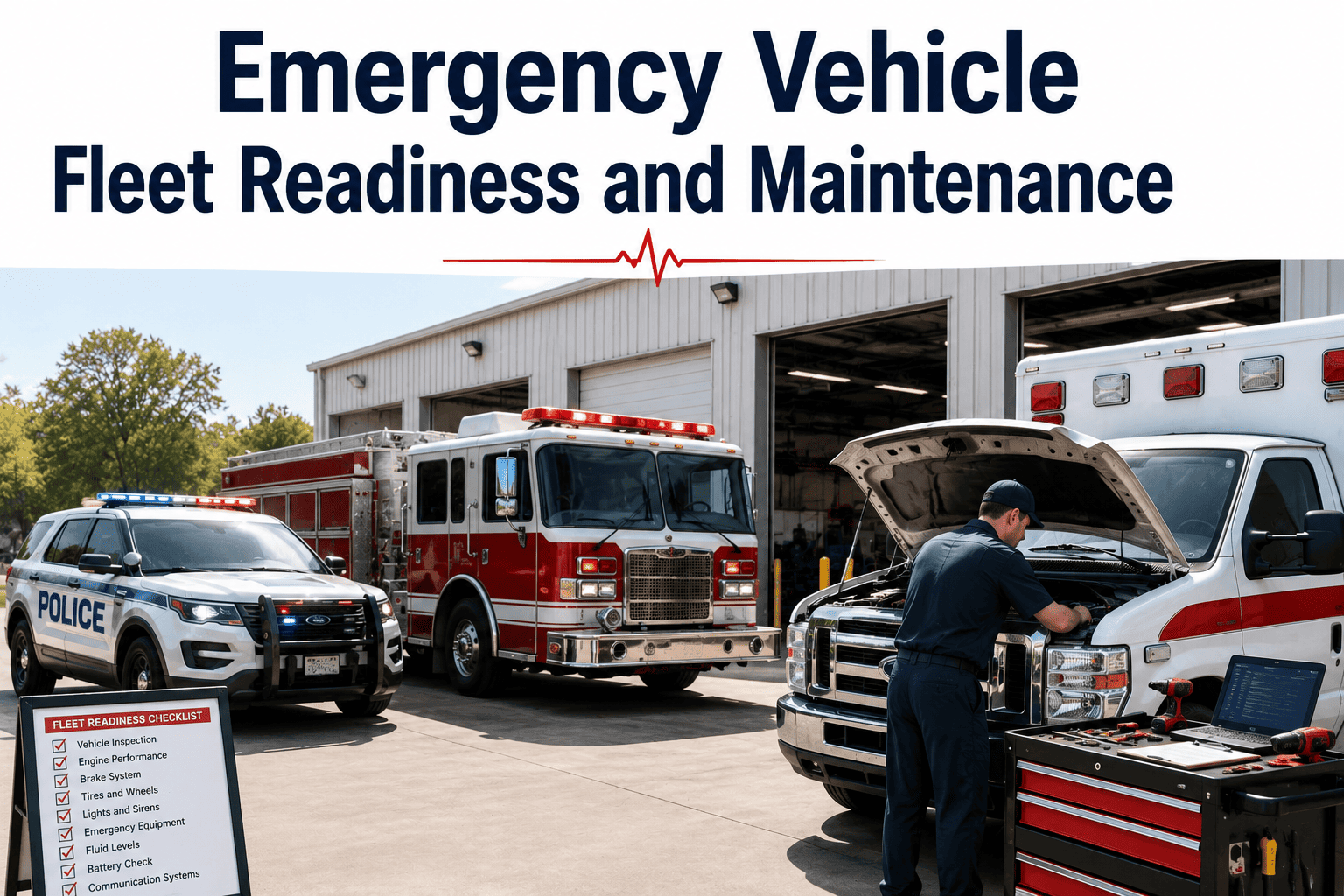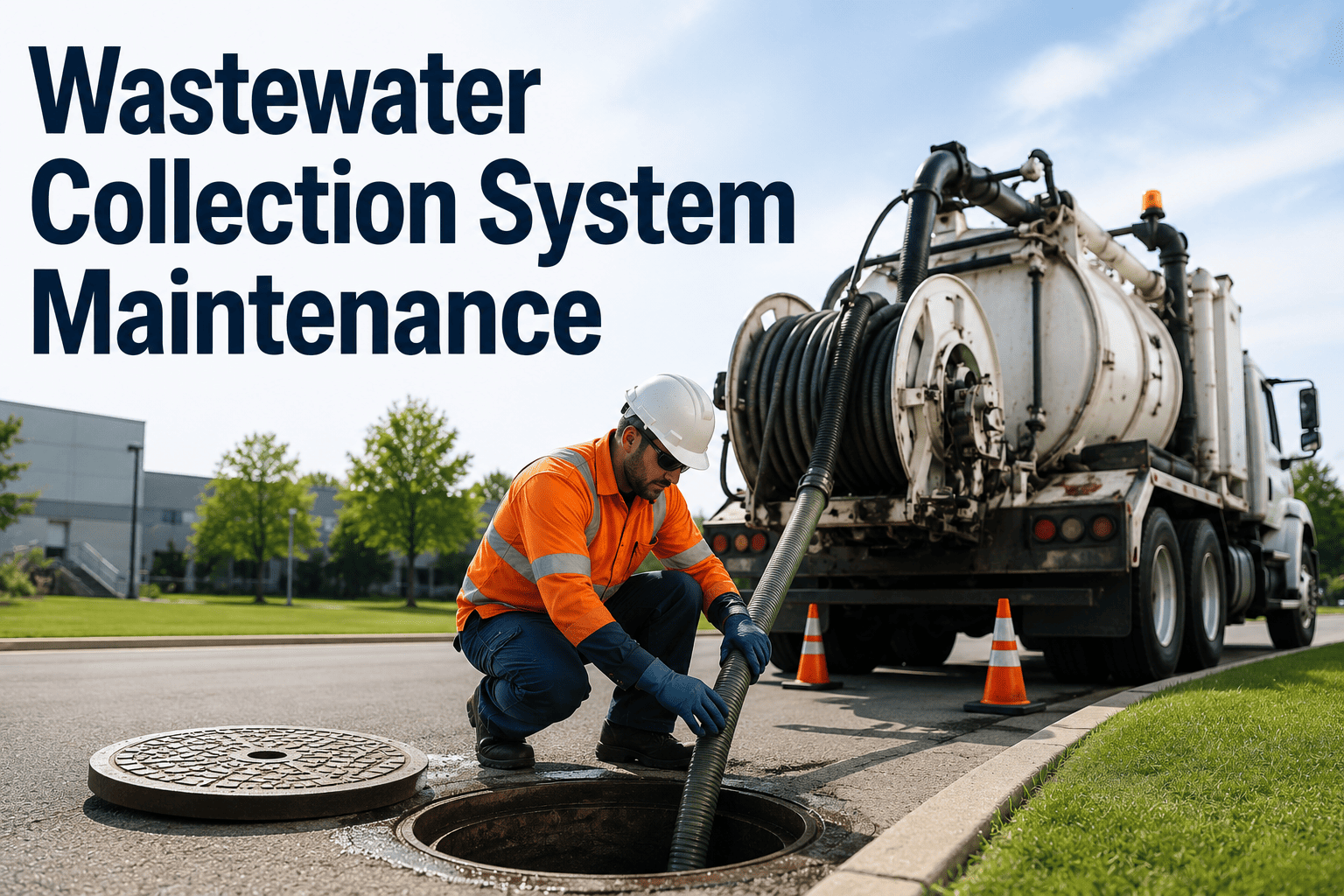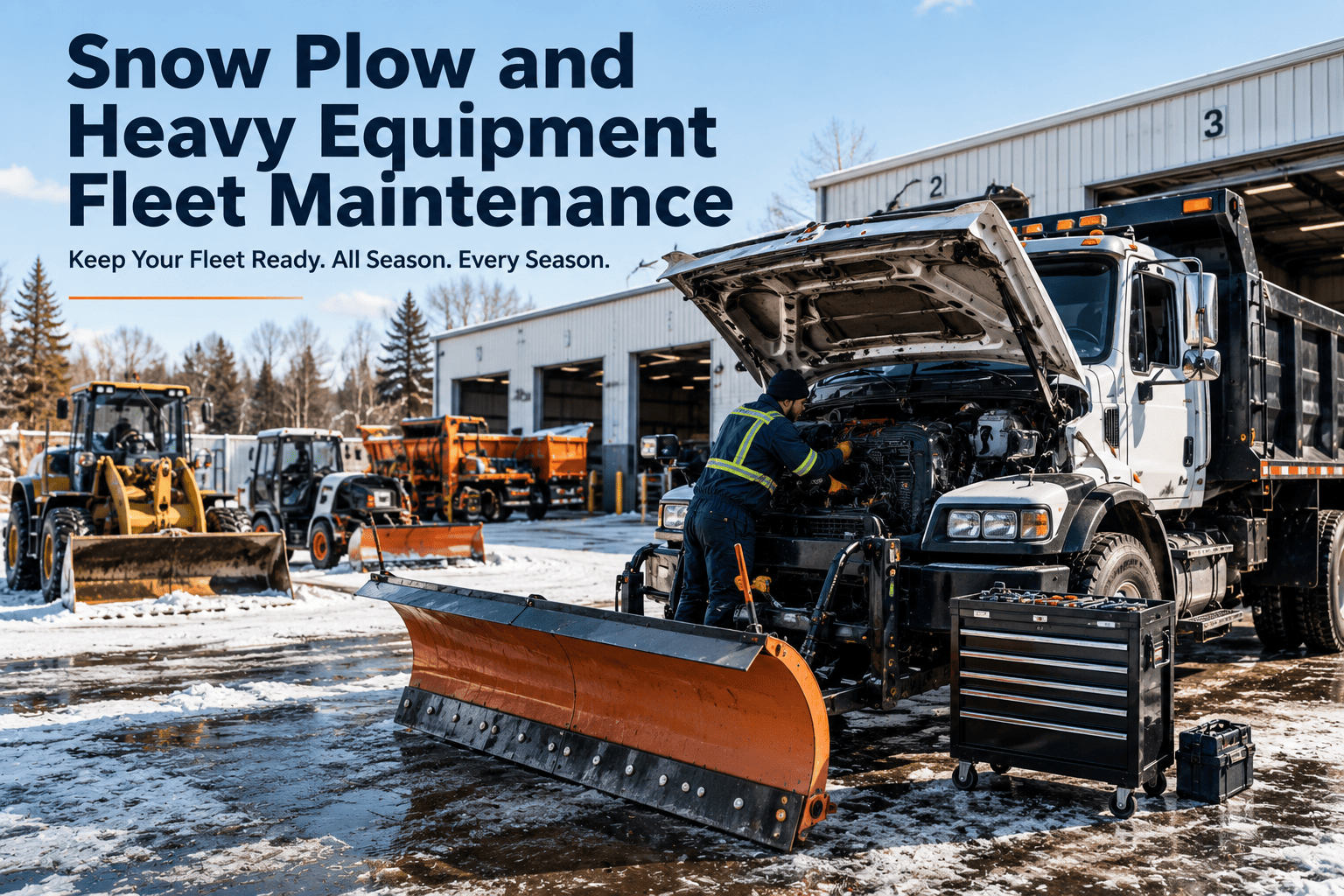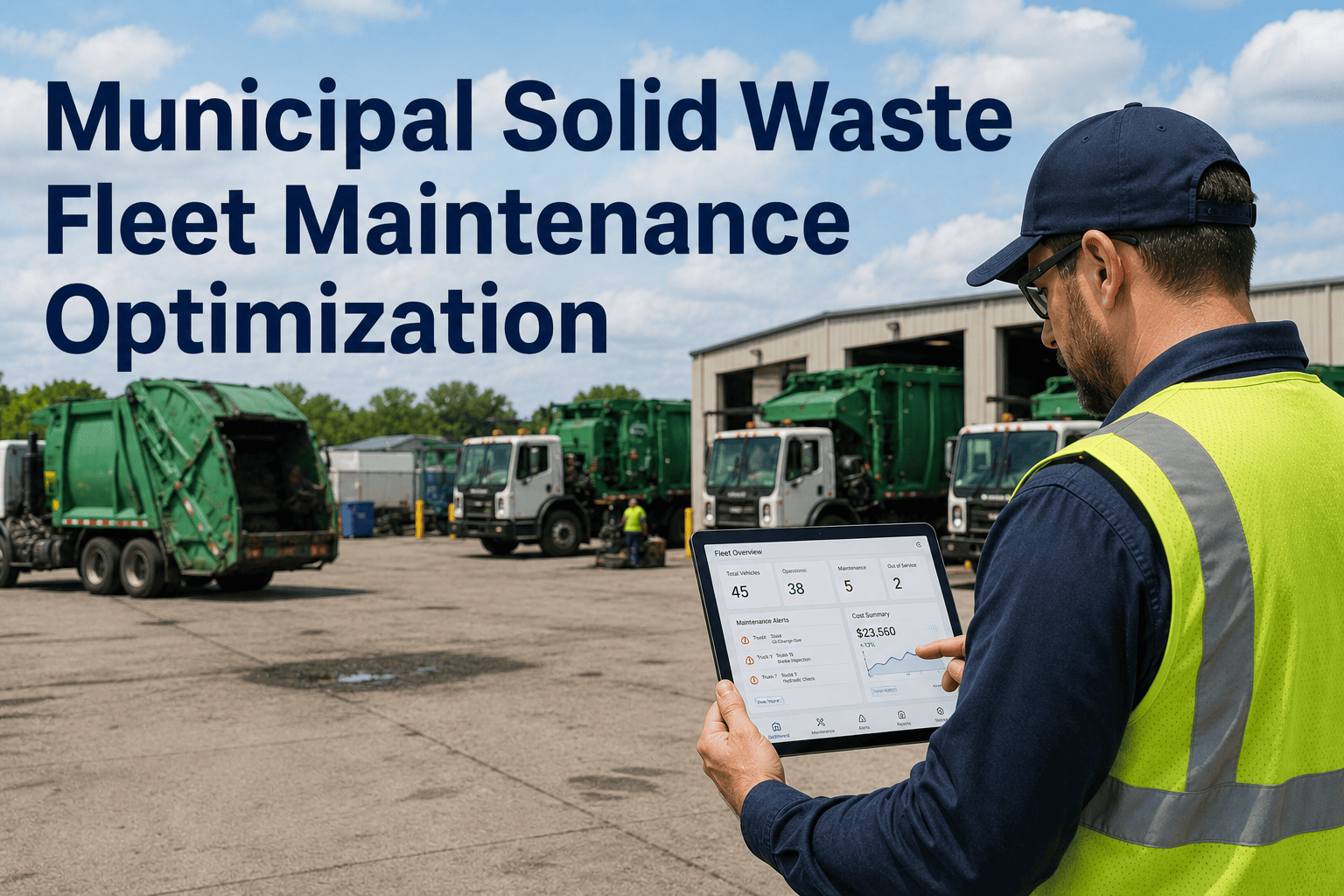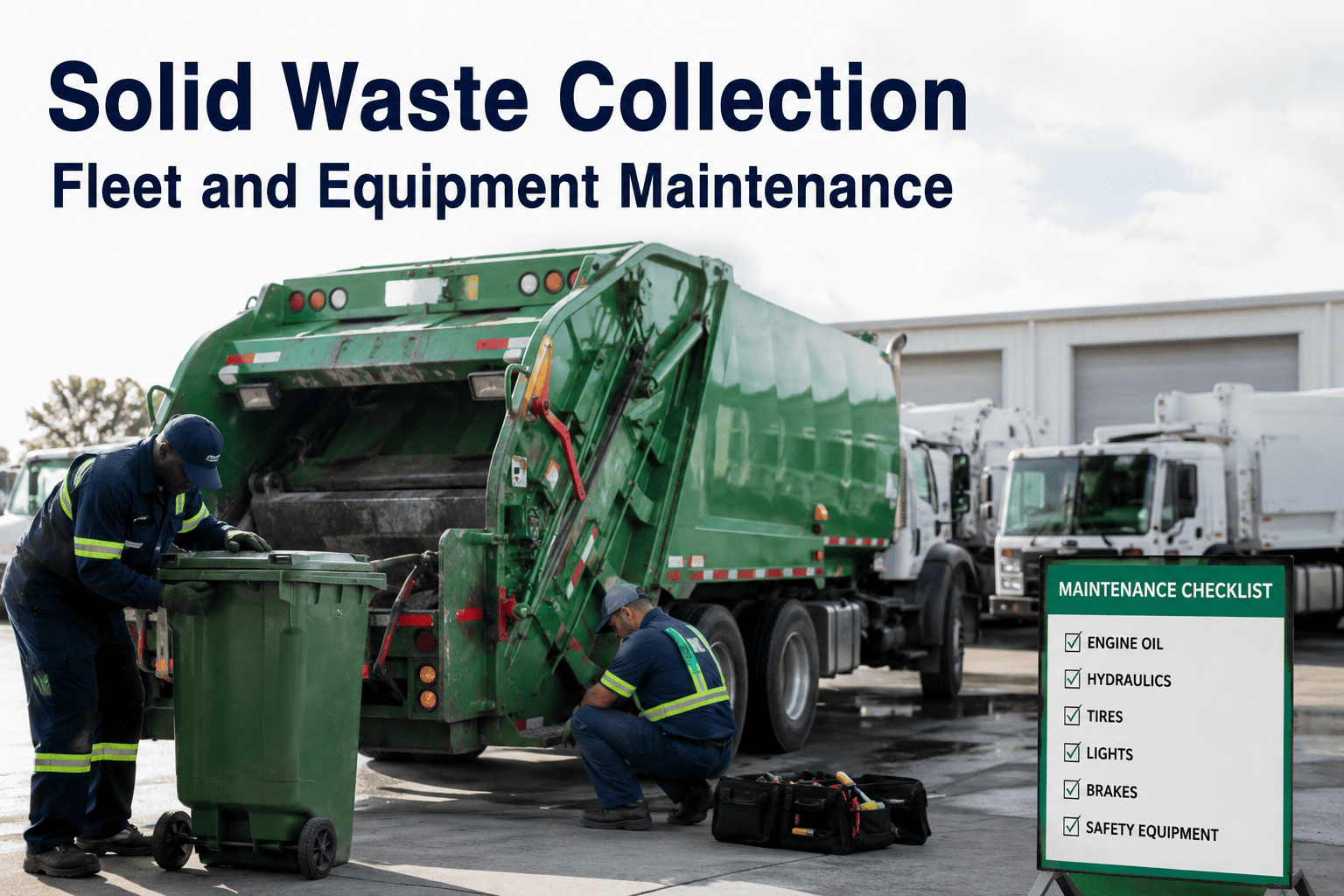
Solid waste collection fleet and equipment maintenance is the discipline of keeping garbage trucks, roll-offs, recycle haulers and automated side-loaders road-ready so every collection route runs on schedule with zero missed pickups. Sanitation fleets endure the highest daily duty cycle of any municipal vehicle class — stop-and-go driving, heavy PTO loads, hydraulic cycling every few seconds and corrosive leachate that attacks frames, wiring and cylinders. A modern CMMS like OxMaint transforms this punishing environment into a predictable, data-driven maintenance program that cuts unplanned downtime, protects hydraulic systems and keeps residents satisfied.
Is one down garbage truck costing you a missed route and resident complaints?
Refuse trucks run the toughest duty cycle in any municipal fleet — stop-and-go abuse, hydraulic loads every few seconds and corrosive leachate eating frames and cylinders. OxMaint turns reactive repairs into a predictive sanitation fleet maintenance program that keeps every route covered.
Fleets using CMMS-driven preventive maintenance schedules recover 30–40% of lost route-hours within the first year of implementation.
The Real Cost of Downtime in a Garbage Truck Fleet
Every hour a refuse truck sits in the shop, a collection route goes uncovered — and the municipality absorbs overtime, rerouting costs and resident complaints that erode public trust.
Average fully-loaded cost of a single refuse truck out of service — labor, rerouted routes and missed-pickup penalties included.
Industry benchmarks show 20–25% of sanitation fleet breakdowns stem from missed PMs, worn hoses or low hydraulic fluid — all predictable.
Typical time from failure report to road-ready when work orders are managed on paper or spreadsheets instead of a connected CMMS.
A 45-truck municipal sanitation fleet operating 5 days a week was averaging 6 unplanned breakdowns per month, each costing roughly $3,200 in overtime and contract-hauler fees. By moving to OxMaint's preventive maintenance scheduling, the fleet cut breakdowns to under 2 per month — saving over $140,000 annually and restoring 90+ route-hours to the schedule.
Garbage Truck Maintenance Checklist: Daily to Annual PM
A tiered PM program is the backbone of reliable waste collection fleet maintenance. Below is a field-tested schedule covering the systems that fail most often on refuse trucks.
- Walk-around inspection: body cracks, hydraulic leaks, tire condition
- Check hydraulic fluid level and inspect hoses for abrasion
- Test PTO engagement, packer cycle and arm operation (if automated)
- Verify brake air pressure, lights, backup alarm and camera feeds
- Drain moisture from air tanks; check DEF and fluid levels
- Inspect hydraulic cylinders for seal leaks and chrome scoring
- Grease all packer slide tracks, hinge pins and tailgate bushings
- Check transmission and engine oil levels; sample for contaminants
- Inspect brake adjustment and slack adjusters; log pushrod travel
- Wash undercarriage to remove corrosive leachate and road salt
- Change engine oil, filters and fuel/water separator
- Inspect hydraulic filter element; replace if delta-pressure is high
- Check tire pressure, tread depth and rotation — log wear patterns
- Test battery condition, alternator output and starter draw
- Scan ECU and body-controller codes; clear and document faults
- Perform DOT annual inspection; document brake, steering, exhaust
- Change hydraulic fluid and flush system; test relief valve pressure
- Inspect hopper floor and body welds for fatigue cracking
- Calibrate automated arm sensors and cart-tipper limits
- Review PM compliance metrics; adjust intervals based on failure data
Sanitation Fleet Maintenance: Hydraulic, Tire and Chassis Priorities
Refuse truck maintenance fails in three places first — hydraulics, tires and chassis welds. Targeted programs for these systems prevent 60–70% of costly roadside breakdowns.
Hydraulic System Service
Hydraulics drive the packer, lift arm and tailgate — and a single blown seal can sideline a truck for 2 days. Pull hydraulic fluid samples every 500 hours, replace filters at 1,000 hours and inspect cylinder rods weekly. OxMaint tracks fluid hours automatically and triggers work orders before contamination causes catastrophic pump failure — the #1 $8,000+ repair on a refuse body.
Tire Management Program
Front tires on refuse trucks last only 30,000–40,000 miles due to constant curb impacts and tight turns. Check pressure weekly, rotate at 10,000 miles and log tread depth in OxMaint against each asset. Underinflated tires increase fuel burn 3% and sidewall failures by 40% — a managed tire program saves $2,500+ per truck annually.
Chassis and Body Weld Inspection
Vibration and heavy loads crack hopper floors, body mounts and subframe rails. Inspect welds at every quarterly PM and after any route with unusual impacts. OxMaint maintains a photo log per asset so technicians can track crack propagation over time and schedule weld repairs before structural failure sidelines the truck for a week.
Spare Vehicle Strategy
Sanitation fleets should maintain a 10–15% spare ratio to cover unplanned downtime without missing routes. OxMaint's availability dashboard shows which spares are road-ready versus in-shop, so dispatchers always know exactly which trucks can roll — eliminating the guesswork that leads to last-minute contract-hauler fees.
How OxMaint Powers Your Solid Waste Fleet Maintenance Program
OxMaint is an AI-powered CMMS and EAM built to replace spreadsheets, paper work orders and tribal knowledge with a connected maintenance program tailored to the demands of refuse and sanitation fleets.
Automated PM Scheduling
Trigger preventive work orders by mileage, engine hours, calendar date or PTO cycle. OxMaint sends alerts before PMs are due and auto-generates task checklists — cutting missed services by 50% and keeping every truck audit-ready.
Predictive Analytics
OxMaint's AI analyzes hydraulic fluid samples, temperature trends and fault-code frequency to predict failures 7–14 days before they happen — reducing unplanned downtime 30–50% and shifting repairs from emergency to planned.
Asset and Equipment Tracking
Track every truck, lift arm, cart-tipper and chassis by VIN, asset tag and location. Capture complete maintenance history, warranties and lifecycle cost per asset so you know exactly when to repair versus replace.
Spare Parts Inventory
Auto-replenish hydraulic filters, seals, brake drums and wear parts with min/max levels tied to work orders. OxMaint eliminates stockouts on critical parts and cuts inventory carrying cost 15–20% by ordering only what PM schedules demand.
Cost of Spreadsheets vs. CMMS-Driven Waste Fleet Maintenance
Most sanitation fleets still manage maintenance on whiteboards and spreadsheets — and pay for it in overtime, missed routes and premature asset replacement. Here is what switching to OxMaint looks like.
| METRIC | SPREADSHEET / REACTIVE | OXMAINT CMMS |
|---|---|---|
| PM Compliance Rate | 55–65% — missed services common | 92–98% — auto-triggered, tracked |
| Unplanned Breakdowns / Month | 4–6 per 40-truck fleet | 1–2 per 40-truck fleet |
| Avg. Repair Turnaround | 14–18 hours | 6–8 hours |
| Hydraulic Pump Failures / Year | 3–5 at $8,000+ each | 0–1 — predicted and prevented |
| Inventory Carrying Cost | 15–25% overstocked | 5–8% lean, demand-driven |
| Audit Prep Time | 2–3 days per DOT audit | Under 2 hours — all records digital |
For a 40-truck fleet: (4 × $3,200) + (120 × $65) + ($4,500) = $21,900/month → $262,800/year in direct, measurable savings — paying back the CMMS investment in under 3 months.
See OxMaint on your garbage truck fleet — book a 30-minute demo
Stop losing routes to preventable breakdowns. Discover how OxMaint's AI-powered CMMS predicts failures, automates PM scheduling and keeps your sanitation fleet on the road.
Solid Waste Fleet Maintenance — Frequently Asked Questions
How often should garbage trucks receive preventive maintenance?
Refuse trucks should receive a daily pre-route inspection, a weekly grease and fluid check, a 250-hour service and a monthly 1,000-hour PM covering oil, filters and brakes. Quarterly inspections should cover hydraulic fluid and body welds, with a full DOT annual inspection. OxMaint automates these intervals by engine hours and mileage so no PM is ever missed — start a free trial to see it on your fleet.
What is the most common breakdown in a refuse truck fleet?
Hydraulic system failures are the leading cause of unplanned downtime — specifically pump failures, blown seals and hose ruptures from contamination and heat. These repairs average $8,000 or more and sideline trucks for 2–3 days. Regular fluid sampling, filter changes and pressure testing scheduled in a CMMS can prevent 70–80% of these failures.
How many spare trucks should a sanitation fleet maintain?
Industry best practice is a 10–15% spare ratio — meaning a 40-truck fleet should keep 4–6 road-ready spares. This ensures collection routes stay covered during unplanned breakdowns without resorting to expensive contract haulers. OxMaint's availability dashboard tracks which spares are dispatch-ready in real time.
Can a CMMS help with DOT and FMCSA compliance for waste fleets?
Yes. A CMMS like OxMaint stores every inspection record, work order, defect repair and driver vehicle inspection report (DVIR) digitally, making DOT and FMCSA audits take hours instead of days. All records are timestamped and traceable to the asset, technician and part — eliminating the paper chase that leaves fleets exposed during compliance reviews.
How long does it take to implement OxMaint for a municipal sanitation fleet?
Most sanitation fleets are fully live on OxMaint within 2–4 weeks. The platform imports existing asset lists, PM schedules and parts data, and technicians can start using mobile work orders on day one. OxMaint provides onboarding support and best-practice templates designed specifically for refuse and sanitation fleet workflows — book a demo to see the timeline for your fleet.
Ready to cut breakdowns and keep every route covered?
Join the maintenance and reliability teams using OxMaint to predict failures, automate preventive maintenance and maximize fleet availability — without the spreadsheet chaos.
Free 14-day trial · No credit card