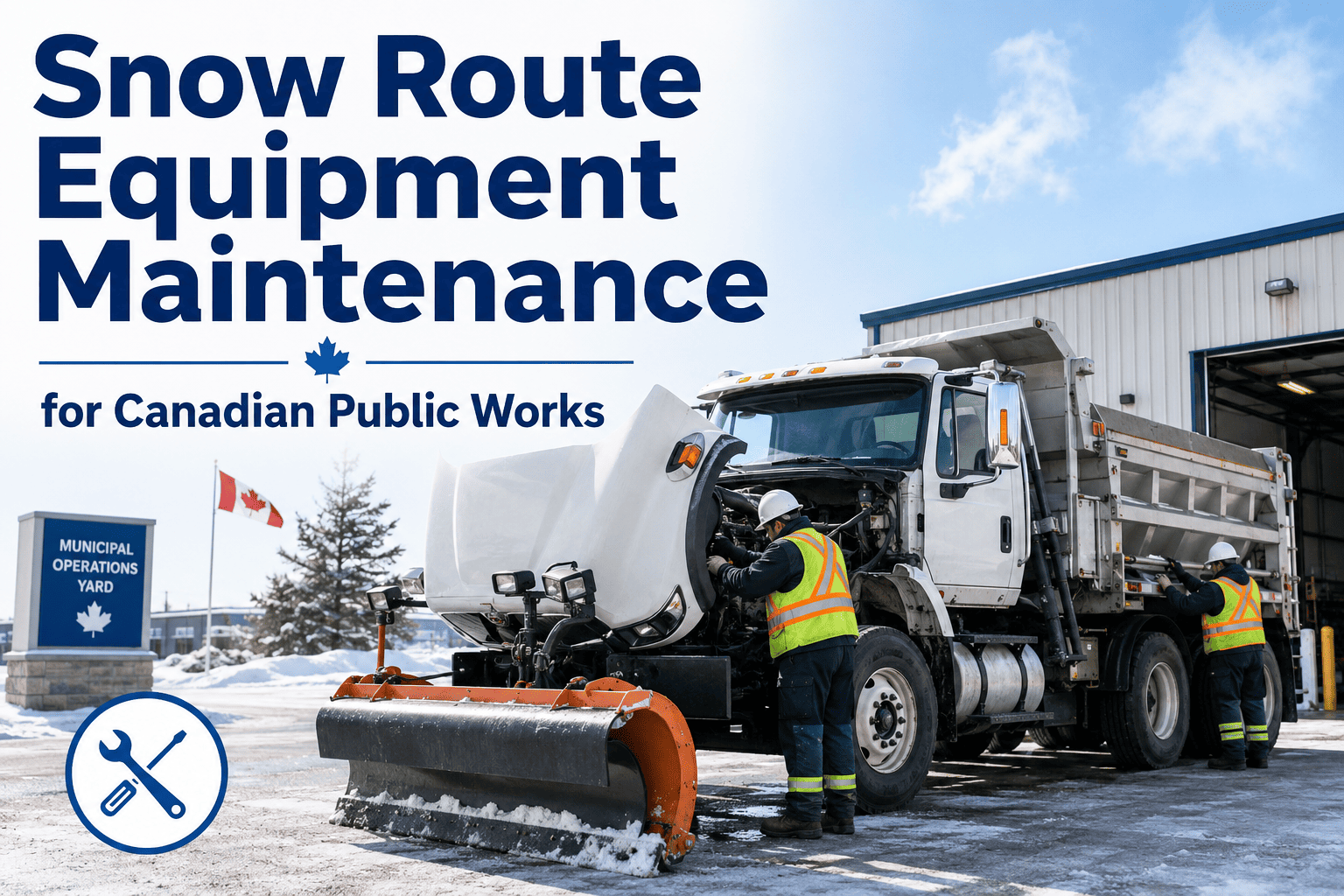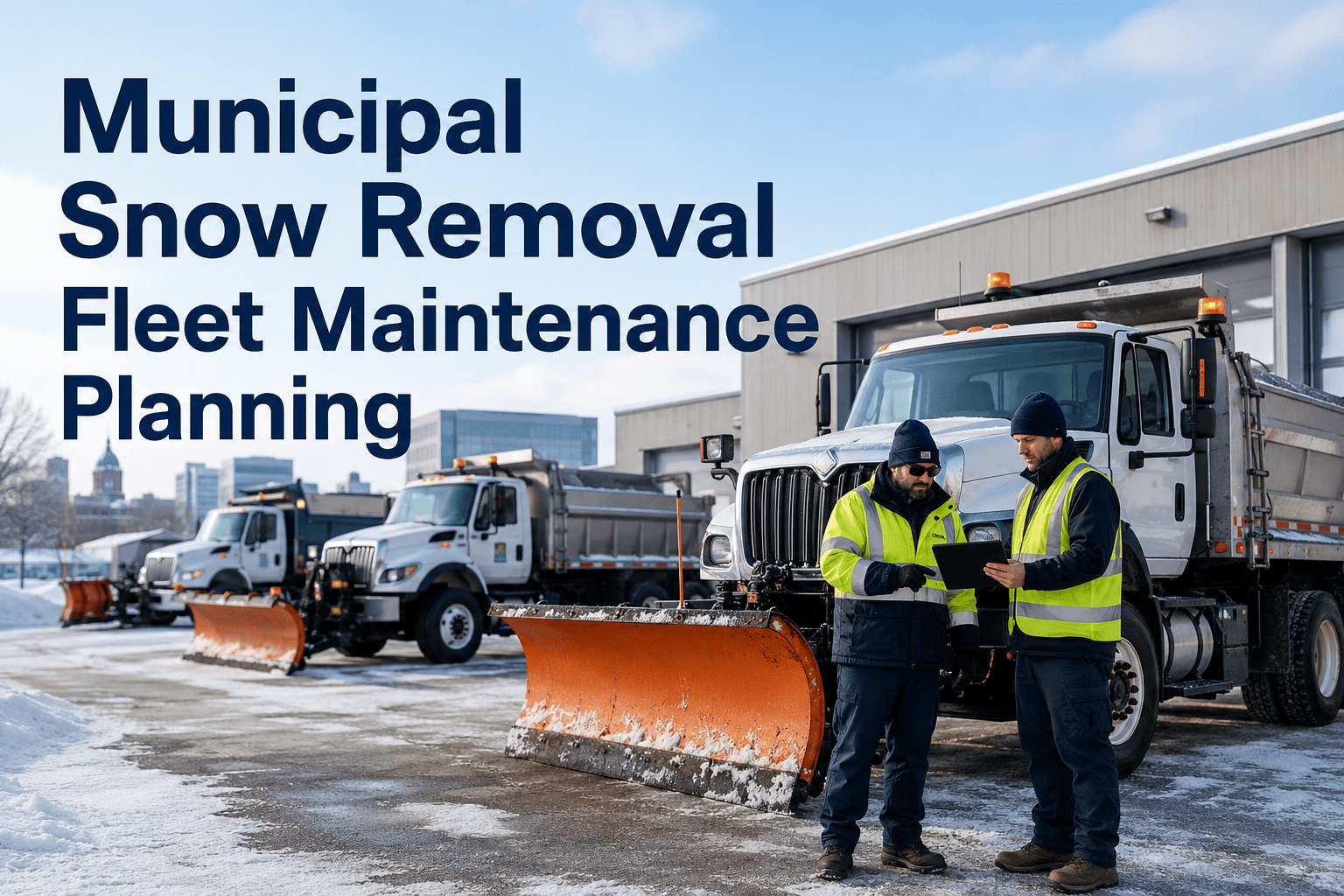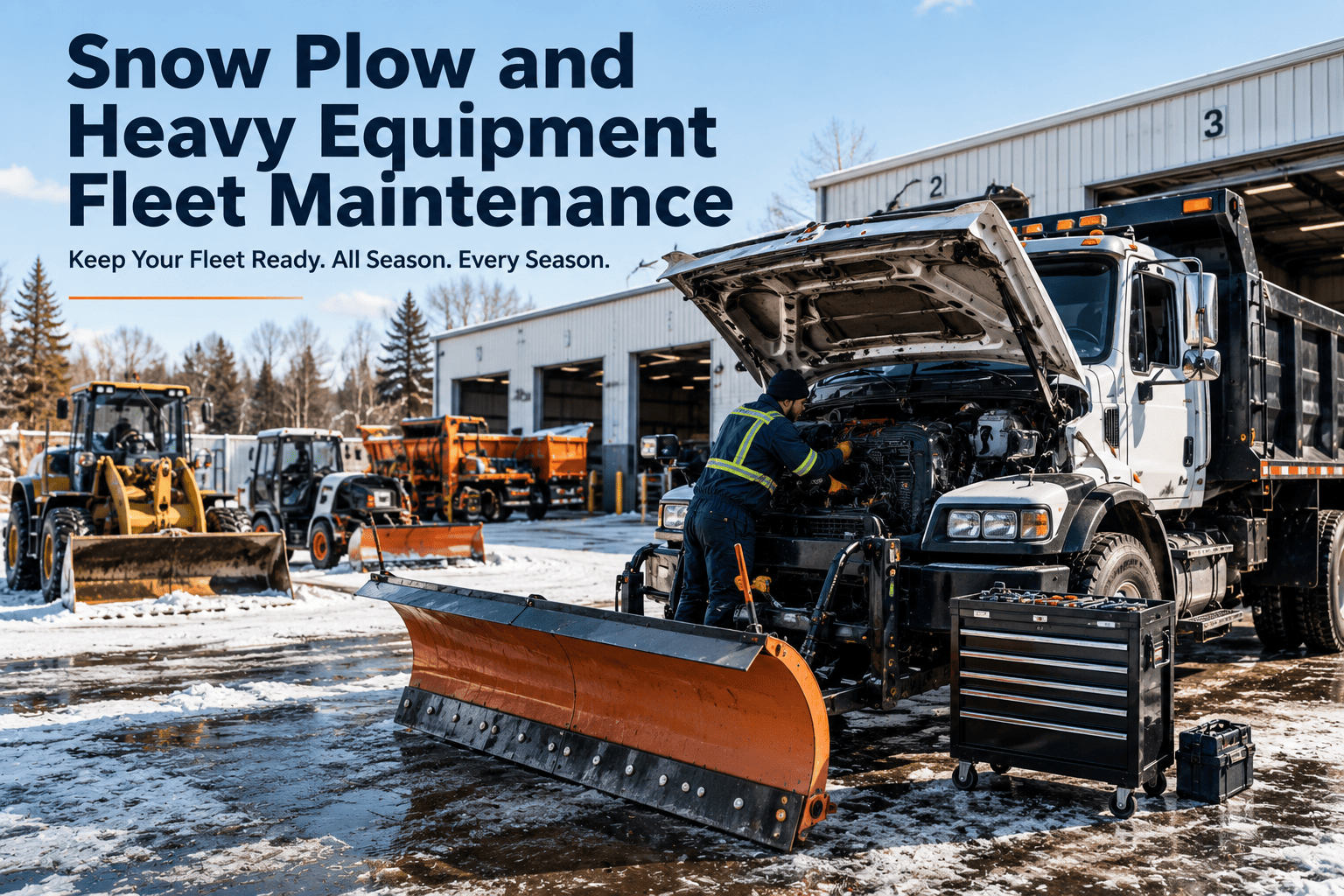
Snow crews get one real test each year, and it happens with whatever is parked in the yard right now, not whatever gets ordered next spring. Plows, spreaders, and loaders sit idle for months and are then expected to run nonstop through the harshest conditions a fleet sees all year. One overlooked hydraulic hose or a spreader that was never recalibrated can pull a truck off its route in the middle of a storm, and that single failure turns into blocked streets and stranded school buses. Departments that get through winter cleanly treat readiness as a season-long habit, not a scramble in November, and that habit starts with tracking every unit before the first flake falls, something you can see for yourself with a free trial.
The Storm Doesn't Wait For A Fleet That Isn't Ready
A truck that "passed inspection" in September can still fail in January. These are the numbers that separate departments who plan for winter from departments who survive it.
Four Phases That Decide How Your Fleet Performs This Winter
Snow fighting is won or lost long before the first storm watch. Each phase below feeds the next, and a gap in any one of them shows up as a truck off the road when you need it most.
Every plow, spreader, and heavy unit gets loaded into a digital record, PM schedules get set, and routes get mapped before the first cold snap.
A storm watch auto-triggers a readiness checklist across the fleet, so hydraulic systems, blades, and spreaders are confirmed, not assumed.
Breakdowns get logged and routed to a mechanic in real time, and supervisors see which units are available without a single radio call.
Salt use, overtime hours, and breakdown causes get reviewed by unit, turning one storm's data into a stronger plan for the next one.
See Your Fleet's Readiness Before The Forecast Changes
Oxmaint gives public works departments one place to track PM completion, plow and spreader calibration, and breakdown history across every heavy unit, so readiness is a documented fact, not a guess made in the yard.
The Same Fleet, Two Very Different Storms
Two departments with identical equipment can have completely different storms, and the difference almost always traces back to how readiness was tracked in the weeks before.
| Measure | Reactive Fleet | Proactive Fleet |
|---|---|---|
| Equipment readiness rate | Roughly 68 percent going into a storm | Roughly 95 percent, verified before the watch is issued |
| Storm response time | Around 5 hours after breakdown | Around 2 hours after breakdown |
| Inspection records | Paper logs, scattered or missing | Digital, timestamped, audit ready |
| Contractor hours | Paid on contractor-reported figures | Logged and verified inside one system |
| Emergency repair spend | Unplanned and budget-breaking | Reduced and tracked by unit |
Four Forces Working Against Every Truck In Your Yard
Cold, salt, and nonstop duty cycles do not damage a fleet evenly, they concentrate on specific parts. Knowing where the stress lands is what turns a maintenance plan from generic to genuinely useful.
Salt exposure can drive over five thousand dollars in premature corrosion per truck across five seasons if undercarriages go unwashed.
Coolant freeze points, battery output, and block heater function all need verification, since cold is what exposes a weak part first.
Constant raising and lowering under load puts steady wear on hoses and fittings that a mid-season check can catch before failure.
Units running continuously through a multi-day event age faster than mileage alone suggests, which is why hour-based tracking matters.
Five Numbers That Belong On Every Public Works Dashboard
A readiness plan is only as good as the records behind it. These are the data points that let a fleet manager answer "are we ready" with a fact instead of a feeling.
The share of the fleet with a fully documented pre-season inspection, unit by unit, not fleet-wide.
Hose condition, fluid levels, and lift cycle counts logged for every plow-equipped unit.
Confirmed application rates by unit, so material waste is caught before it hits the salt budget.
Wash cycle and coating records tied to each truck, since corrosion tracking cuts rust-related repairs sharply.
Every storm failure tagged by cause, feeding directly into next season's readiness plan.
Frequently Asked Questions
Why does a fleet fail during a storm if it passed inspection months earlier?
What is a normal pre-season PM completion rate?
Does a formal pre-winter maintenance program actually reduce breakdowns?
How much does road salt really cost a fleet over time?
How does a system like this help during an active storm, not just before one?
Build Winter Readiness Before The First Forecast
A fleet that tracks PM completion, calibration, and breakdown history all season long walks into every storm knowing exactly where it stands. See what that looks like for your own department.