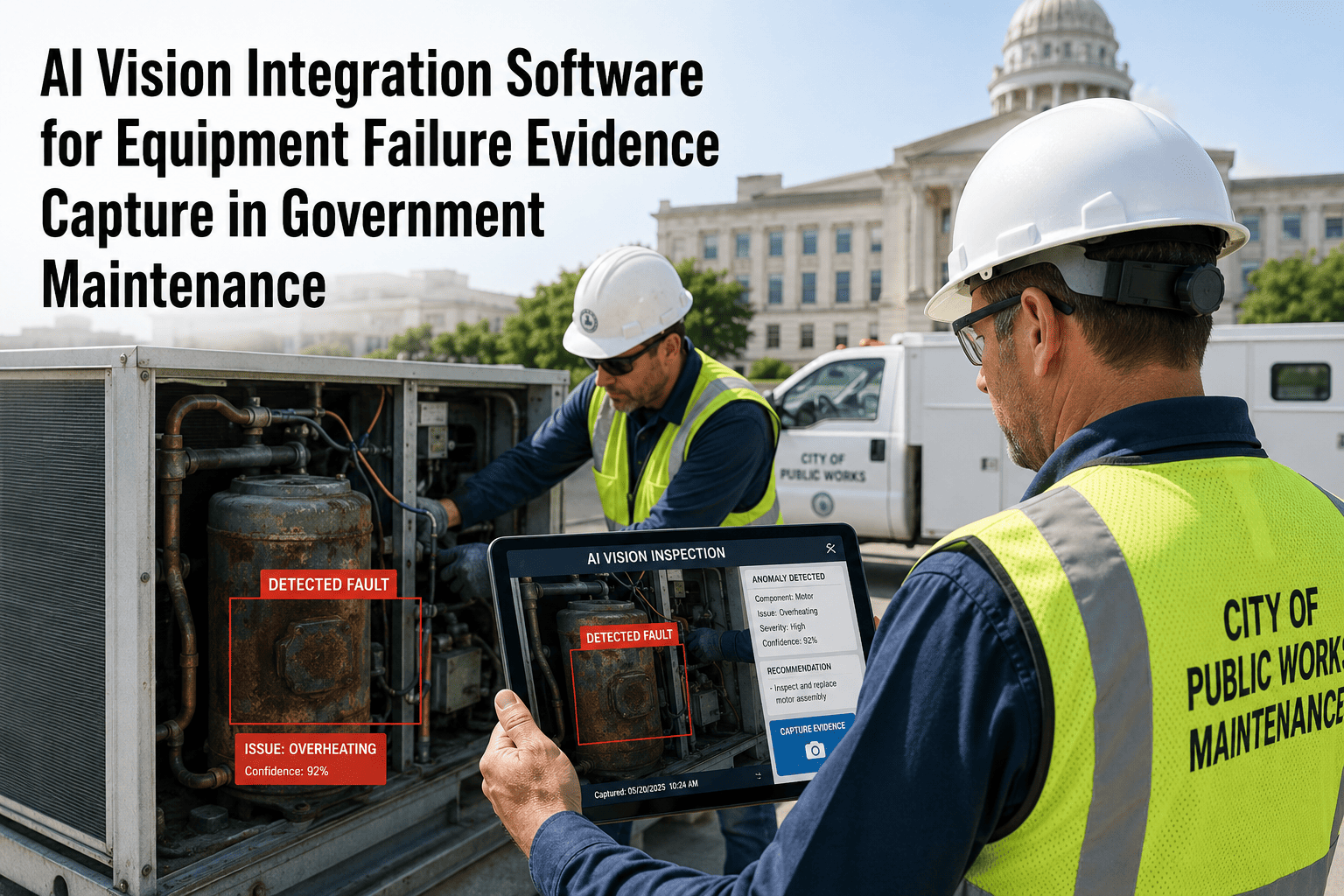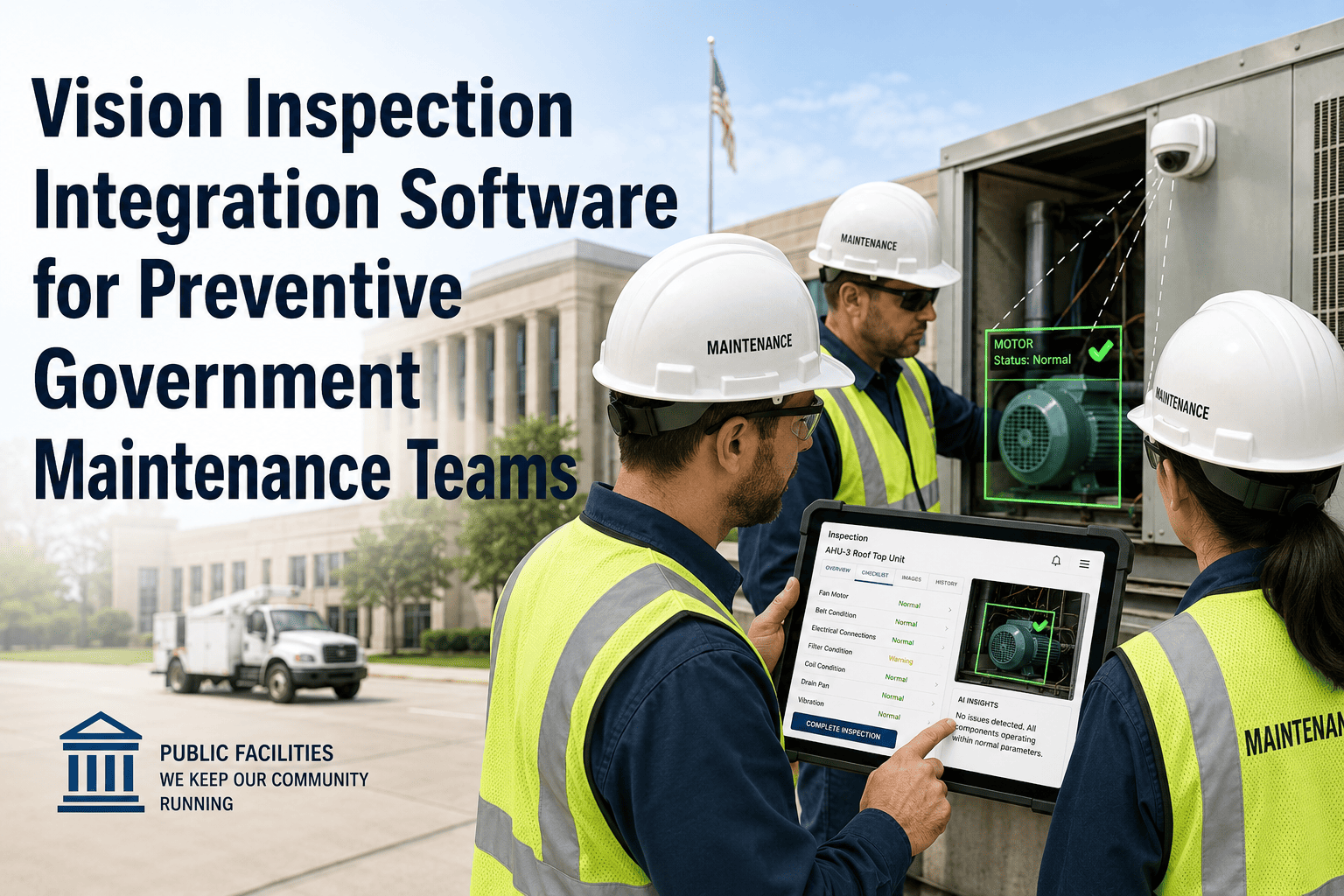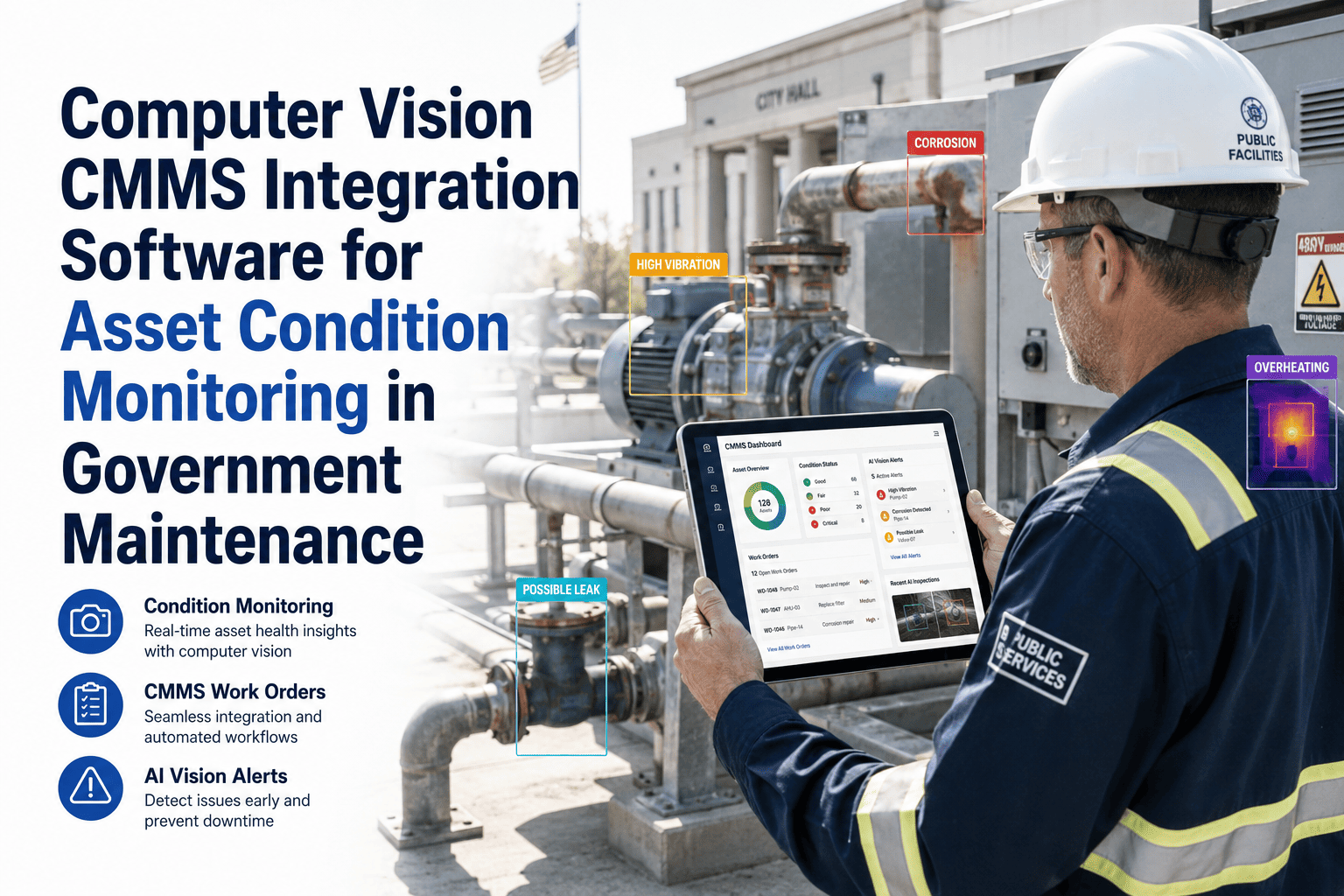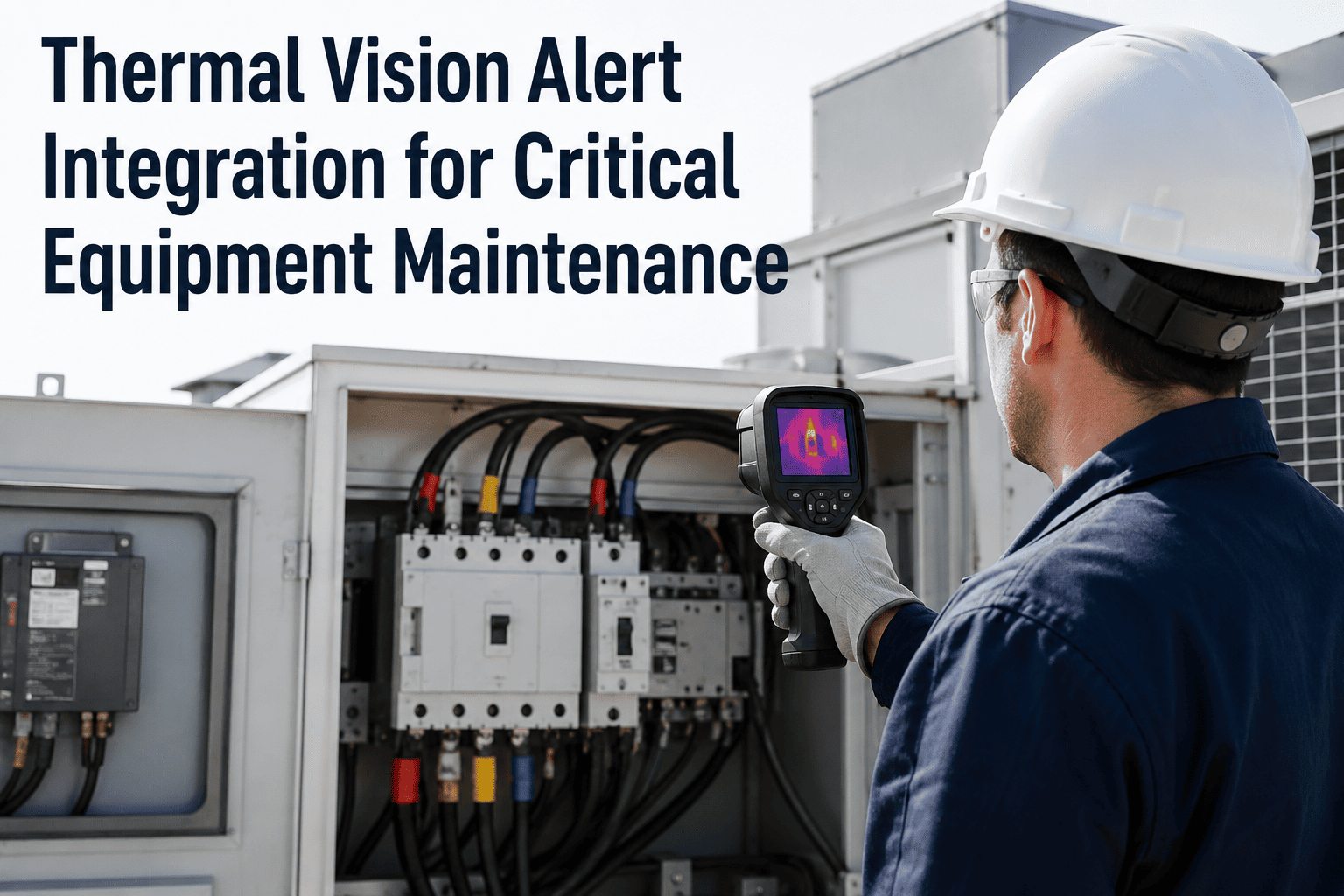
Government infrastructure relies on critical equipment—HVAC systems in municipal buildings, backup generators at public safety facilities, and electrical switchgear in wastewater plants—that often fails silently until it becomes a public safety emergency. Manual inspections catch visible degradation but completely miss the thermal signatures that precede electrical faults, bearing failures, and insulation breakdown. Thermal vision alert integration changes this by detecting abnormal heat patterns in real time and pushing those alerts directly into a CMMS as actionable maintenance work orders with visual evidence attached. OxMaint equips government maintenance teams with the workflow to receive AI-driven thermal alerts, map them to specific public assets, score severity, route approvals, and close the loop with documented compliance records. Book a demo to see how public works teams are automating critical equipment inspection.
Thermal Vision Alert Integration for Critical Equipment Maintenance
How government maintenance teams use thermal AI to detect electrical and mechanical faults before they become public safety failures.
Manual Inspections vs. Thermal Vision Integration
| Inspection Parameter | Manual Government Inspection | Thermal Vision + OxMaint |
|---|---|---|
| Fault Detection Method | Visual or physical touch (often inaccurate) | Infrared heat signature analysis (precise) |
| Time to Detect Electrical Overheating | Next scheduled inspection (weeks/months) | Real-time continuous monitoring |
| Evidence for Budget Approval | Handwritten notes, no visual proof | Thermal image + asset history attached to WO |
| Compliance Documentation | Retroactively assembled from paper logs | Auto-generated audit trail per asset |
How Thermal Alerts Flow Into Government Work Orders
How Thermal Data Translates to Maintenance Priority
Government Equipment Maintenance KPIs After Integration
What Public Works Directors Report
We had a municipal pump station motor burn out because a failing bearing went undetected during quarterly visual inspections. We integrated thermal cameras tied into OxMaint, and three months later the system caught an identical bearing fault on a duplicate pump—18 degrees above baseline. The alert routed to my phone with the thermal image attached. We replaced a $400 bearing instead of a $14,000 motor and avoided a sewage overflow event.
The biggest hurdle for government maintenance is getting capital approval for repairs that officials cannot see. A mechanic saying a breaker is running hot means nothing to a budget committee. An OxMaint work order with a glowing red thermal image of that same breaker, mapped to the asset ID and failure probability, gets approved in hours instead of months. The visual evidence completely changed our approval dynamics.
Frequently Asked Questions
How does OxMaint integrate with existing government thermal camera systems?
OxMaint accepts structured API alerts from standard thermal and AI vision platforms, mapping the temperature data and image directly to your asset registry to generate work orders instantly. Book a demo to review integration with your specific camera hardware.
Can severity thresholds be customized for different government asset classes?
Yes, temperature delta thresholds for warning, high, and critical alerts are fully configurable by asset type, ensuring a data center switchgear has different limits than a rooftop HVAC unit. Start free to configure your asset severity matrix.
Does this support government compliance and audit requirements for public records?
OxMaint maintains a complete, timestamped audit trail of the thermal alert, approval routing, technician response, and repair evidence, fully exportable for public records requests or internal audits. Book a demo to see the compliance export workflow.
Critical Government Infrastructure Deserves More Than a Clipboard and a Flashlight.
OxMaint turns invisible thermal threats into visible, prioritized, and budget-approved maintenance actions.