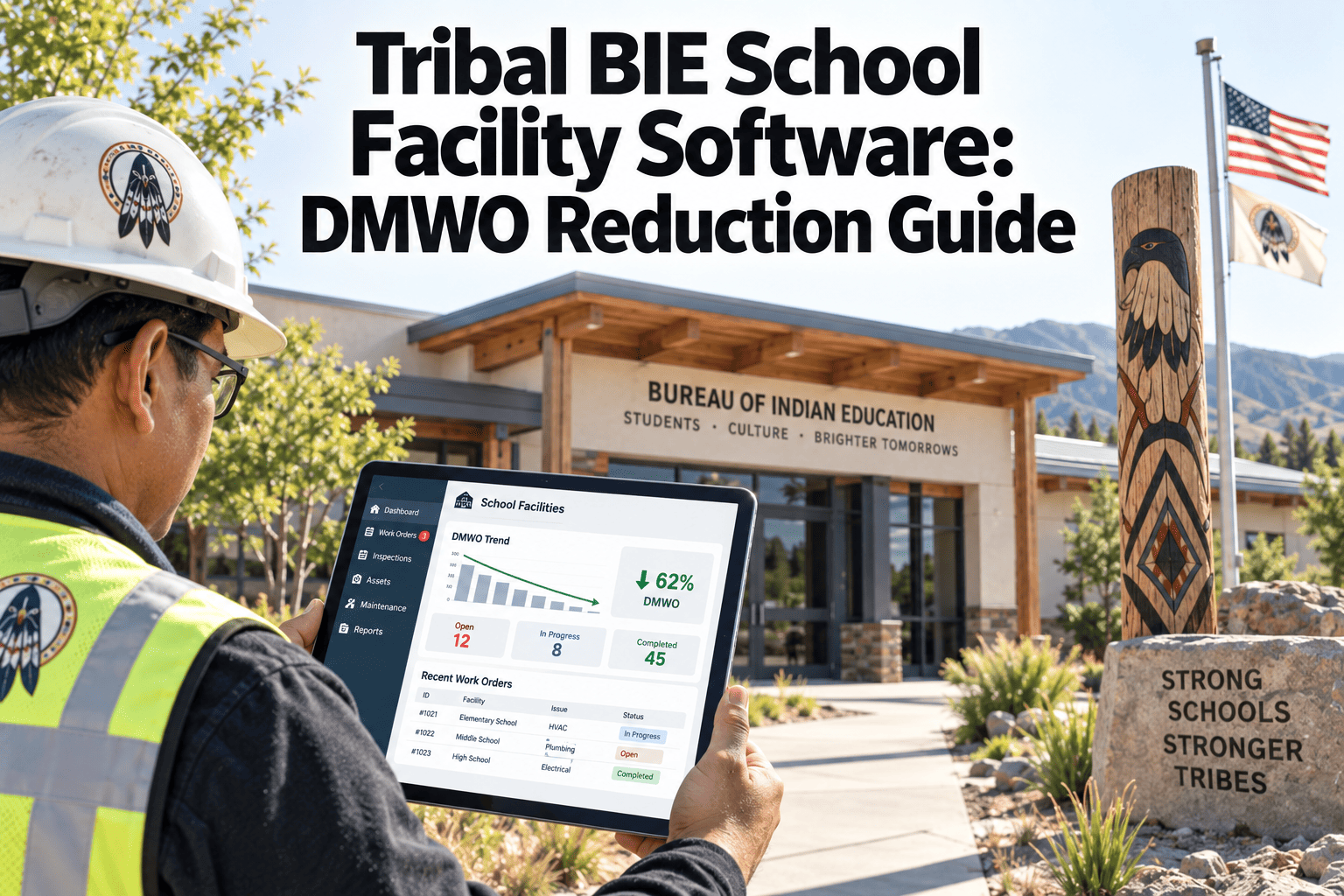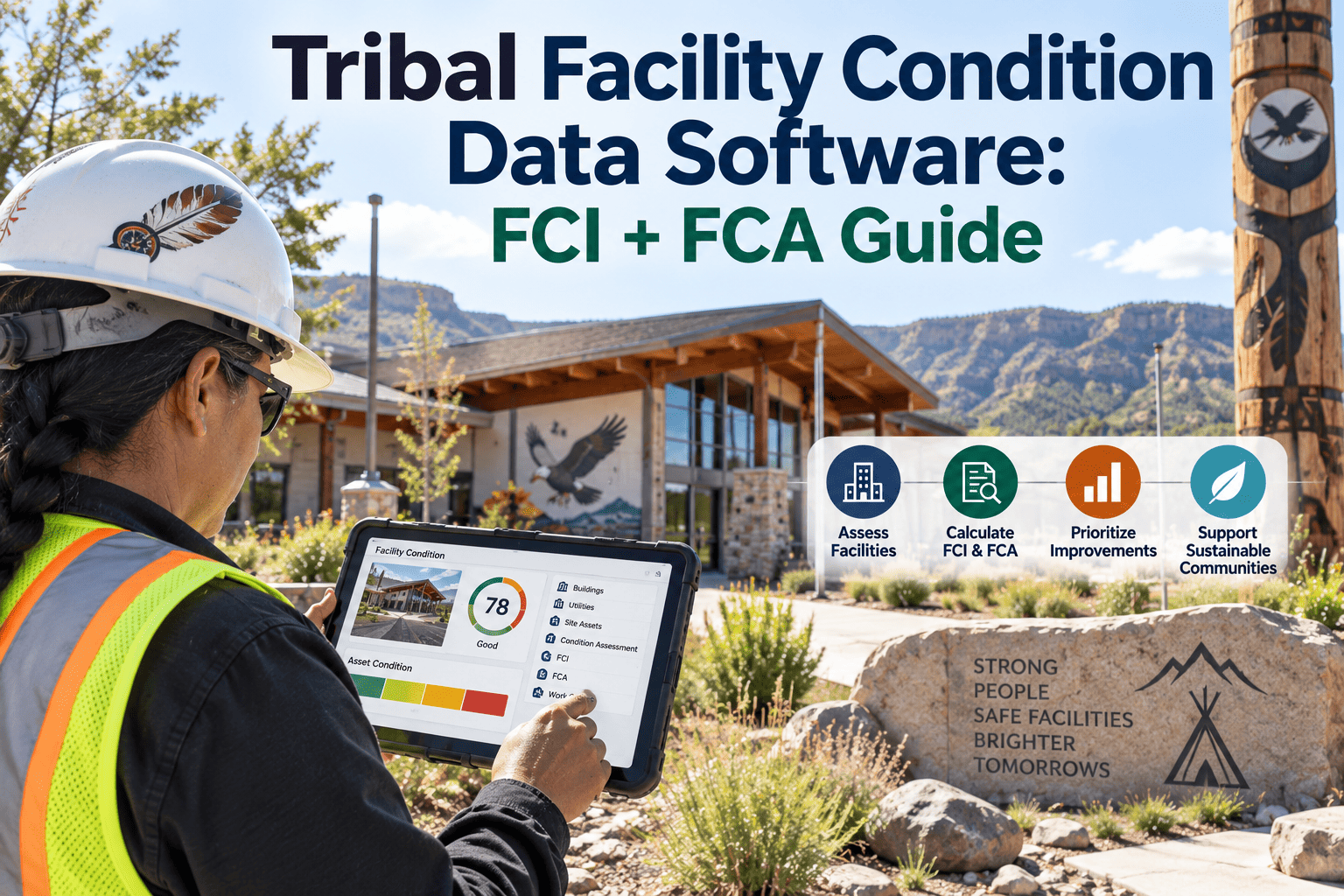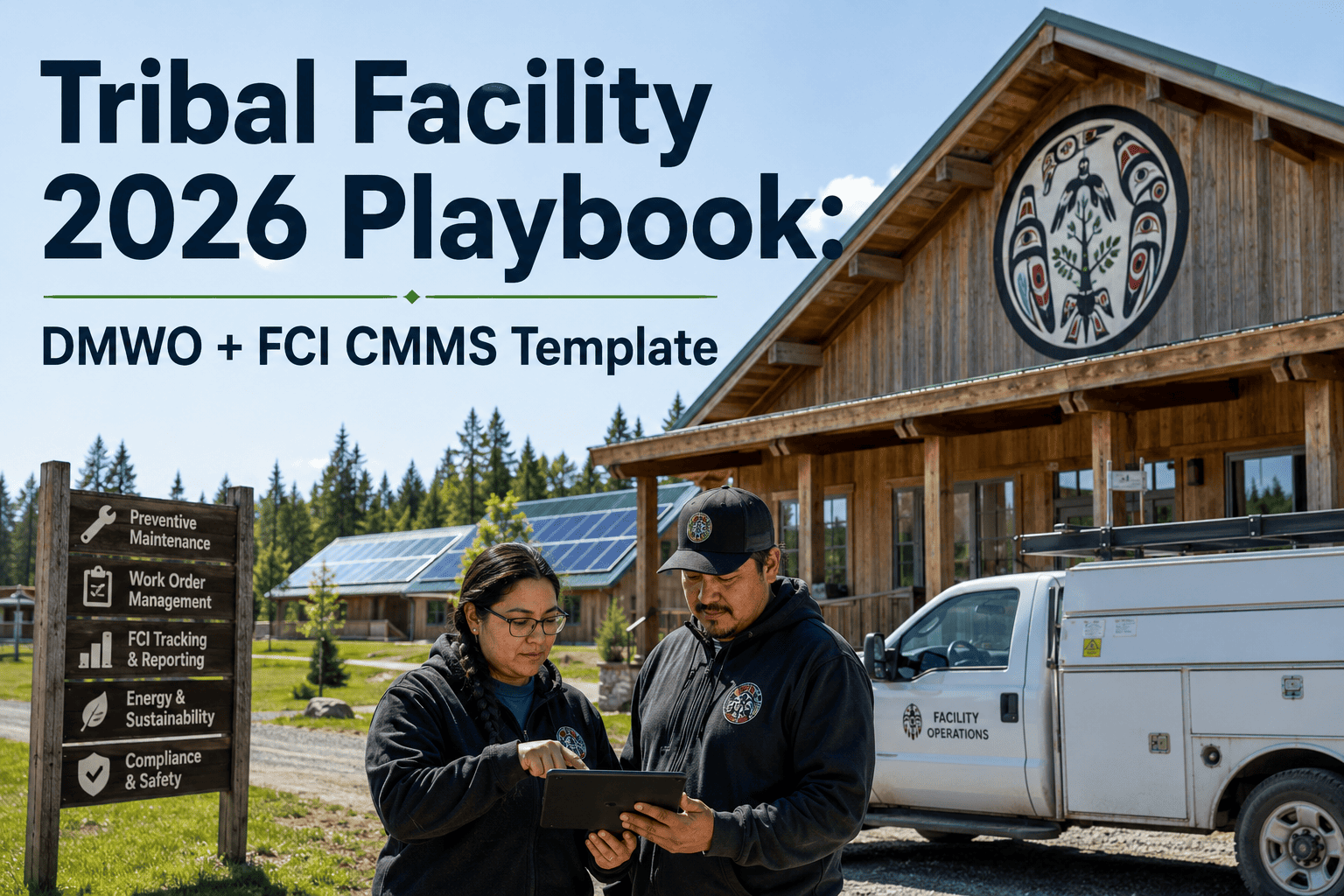
A Deferred Maintenance Work Order does not disappear because it goes unfunded — it sits, ages, and compounds. Across Bureau of Indian Affairs and Bureau of Indian Education facilities, the deferred maintenance backlog has been measured in the hundreds of millions of dollars for years, built one postponed repair at a time: a roof that should have been patched, a boiler that should have been inspected, a DMWO that sat past its automatic ten-day escalation window without anyone acting on it. Indian Affairs policy already defines the categories and the escalation rule. What most facilities are missing is a system that actually enforces them instead of relying on a spreadsheet someone updates when they remember to. Start a free trial with OxMaint to see what a DMWO backlog looks like when it's tracked instead of accumulated.
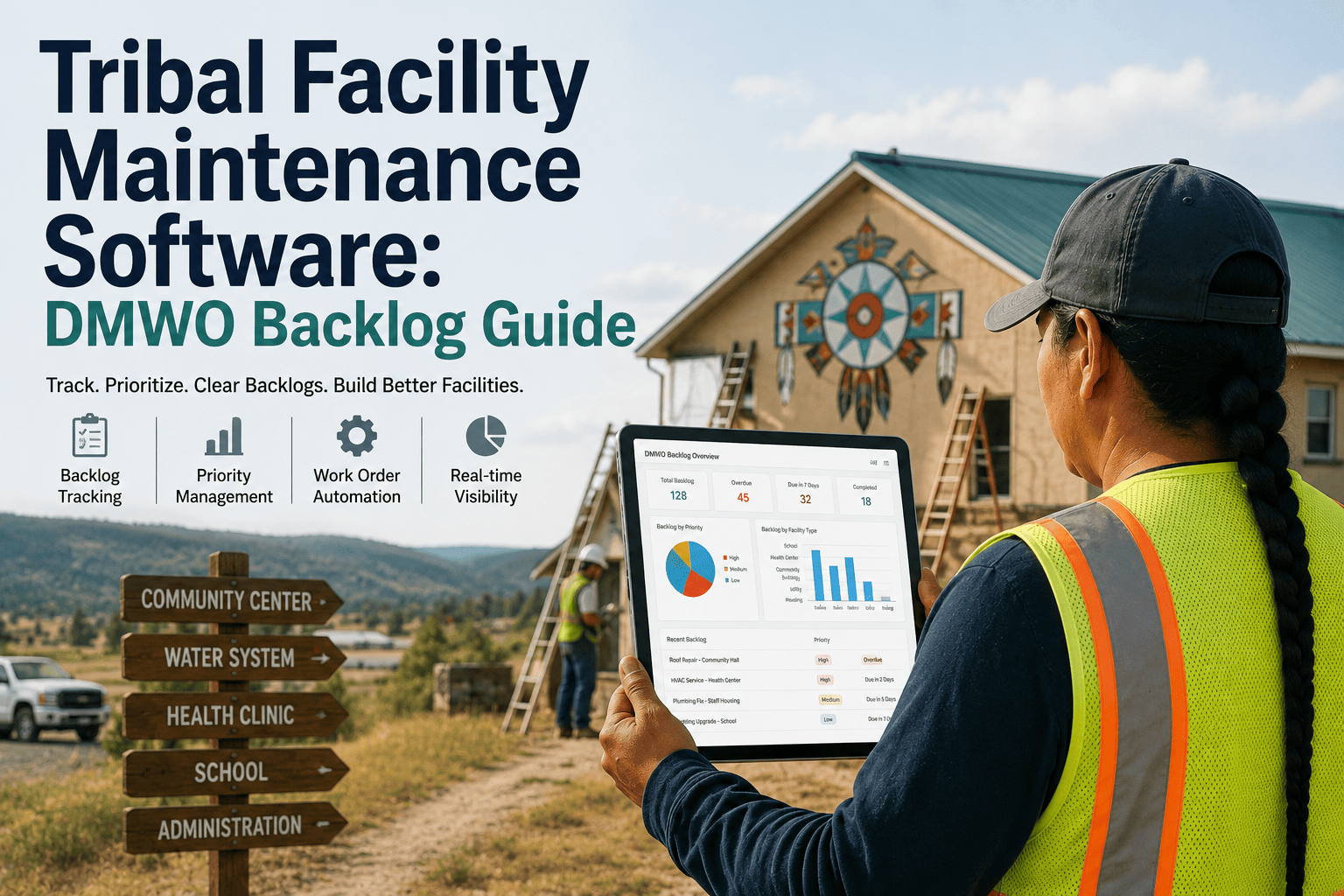
Tribal Facility Maintenance Software Built to Attack the DMWO Backlog
Track every Deferred Maintenance Work Order against the same categories and escalation rules Indian Affairs already uses, and finally see the backlog shrink instead of just grow.
O&M, Facility Maintenance, and Deferred Maintenance Are Not the Same Bucket
Indian Affairs facilities policy draws a hard line between three categories of work, and mixing them up is one of the fastest ways a facility loses track of its own backlog. Knowing which bucket a work order belongs in determines how it gets funded, tracked, and escalated.
Operations and Maintenance
Day-to-day activities — janitorial, utilities, grounds, pest control — that keep a facility running normally, funded through annual O&M allotments.
Facility Maintenance
Planned, recurring activity — inspections, preventive maintenance, painting, weatherproofing — meant to keep an asset functioning over its expected life.
Deferred Maintenance
Maintenance and repairs that should have happened but were delayed, opened as a distinct DMWO rather than paid for out of regular O&M funds.
What Happens to a DMWO After It's Opened
A Deferred Maintenance Work Order does not get approved instantly — it follows a defined review chain, with a built-in rule for what happens if that chain stalls.
Work Order Opened and Documented
A deficiency is identified during a condition survey, inspection, or facility report and logged as a DMWO with a description, location, and priority, separate from routine O&M requests.
Routed Through Approval Levels
The DMWO moves through a defined approval chain rather than sitting with a single reviewer, with each level expected to act within its window.
Automatic Escalation After 10 Days
If a DMWO is not approved within ten days, it is escalated automatically to the next approval level — except emergency work, which follows a faster path. This rule only works if something is actually tracking the clock.
Prioritized Against the Backlog
Approved DMWOs join the broader backlog, where funding decisions weigh life-safety risk, condition survey findings, and available deferred maintenance funding against every other open item.
Why the DMWO Backlog Keeps Growing Instead of Shrinking
No Central Work Order Record
DMWOs tracked across separate spreadsheets, emails, and paper forms make it nearly impossible to see the true size of the backlog at any given moment.
Escalation Rules Not Enforced
The ten-day auto-escalation rule only functions if someone — or something — is actually counting the days on every open DMWO, not just the urgent-looking ones.
Condition Data Goes Stale
Facility condition surveys that happen once every few years leave new deficiencies undocumented and unprioritized for long stretches in between.
Categories Get Mixed Together
Deferred maintenance items paid out of O&M funds, or vice versa, distort both budgets and make the real backlog number impossible to trust.
Spreadsheet-Tracked DMWOs vs a CMMS-Tracked Backlog
| Factor | Spreadsheet / Paper Tracking | CMMS-Tracked DMWO Backlog |
|---|---|---|
| Visibility into total backlog | Requires manual compilation across files | Live total, always current |
| 10-day escalation rule | Depends on someone tracking dates manually | Enforced automatically per work order |
| Category separation (O&M / FM / DM) | Easy to blur across funding sources | Each work order tagged and tracked by category |
| Prioritization against condition data | Manual cross-reference, often skipped | Condition scores and DMWOs linked per asset |
| Reporting for budget justification | Rebuilt from scratch each cycle | Exported directly from the live backlog |
Give Every DMWO a Clock That Actually Gets Watched
OxMaint tracks every Deferred Maintenance Work Order from the moment it's opened, enforces the escalation window automatically, and keeps O&M, Facility Maintenance, and Deferred Maintenance separated by category — so your backlog total is a real number, not an estimate.
How OxMaint Helps Tribal Facilities Attack the Backlog
Every Facility and Asset Gets a Record
Buildings, systems, and equipment are entered once as assets, giving every future DMWO a home tied to a specific location and condition history.
DMWOs Logged With a Category and Clock
Each work order is tagged O&M, FM, or DM on entry, and the ten-day approval clock starts automatically the moment it's opened.
Escalation Fires Without Manual Tracking
If a DMWO passes its approval window, it escalates automatically to the next level, with the full history attached so nothing needs to be reconstructed later.
The Backlog Becomes a Live, Exportable Number
Every open, approved, and completed DMWO rolls up into a single backlog view — ready for budget justification, Five-Year Plan updates, or an oversight review at any time.
How Open DMWOs Should Be Ranked Against Each Other
Not every deferred item carries the same urgency. A defensible backlog process ranks work in roughly this order before funding decisions get made.
What Facilities Report After Centralizing Their DMWO Data
Tribal Facility DMWO Backlog Software — Common Questions
What exactly is a DMWO and how is it different from a normal work order? +
Does the ten-day escalation rule apply to every DMWO? +
Can facility condition survey data feed directly into the DMWO backlog? +
How does keeping O&M, FM, and DM separate actually help reduce the backlog? +
How long does it take to move an existing DMWO list into a tracked system? +
Stop Letting the Backlog Grow by Default
OxMaint gives every DMWO a category, a clock, and a home in one live backlog view — so escalation rules get enforced automatically and your facility can finally show, with real numbers, where the deferred maintenance total stands and what it will take to bring it down.