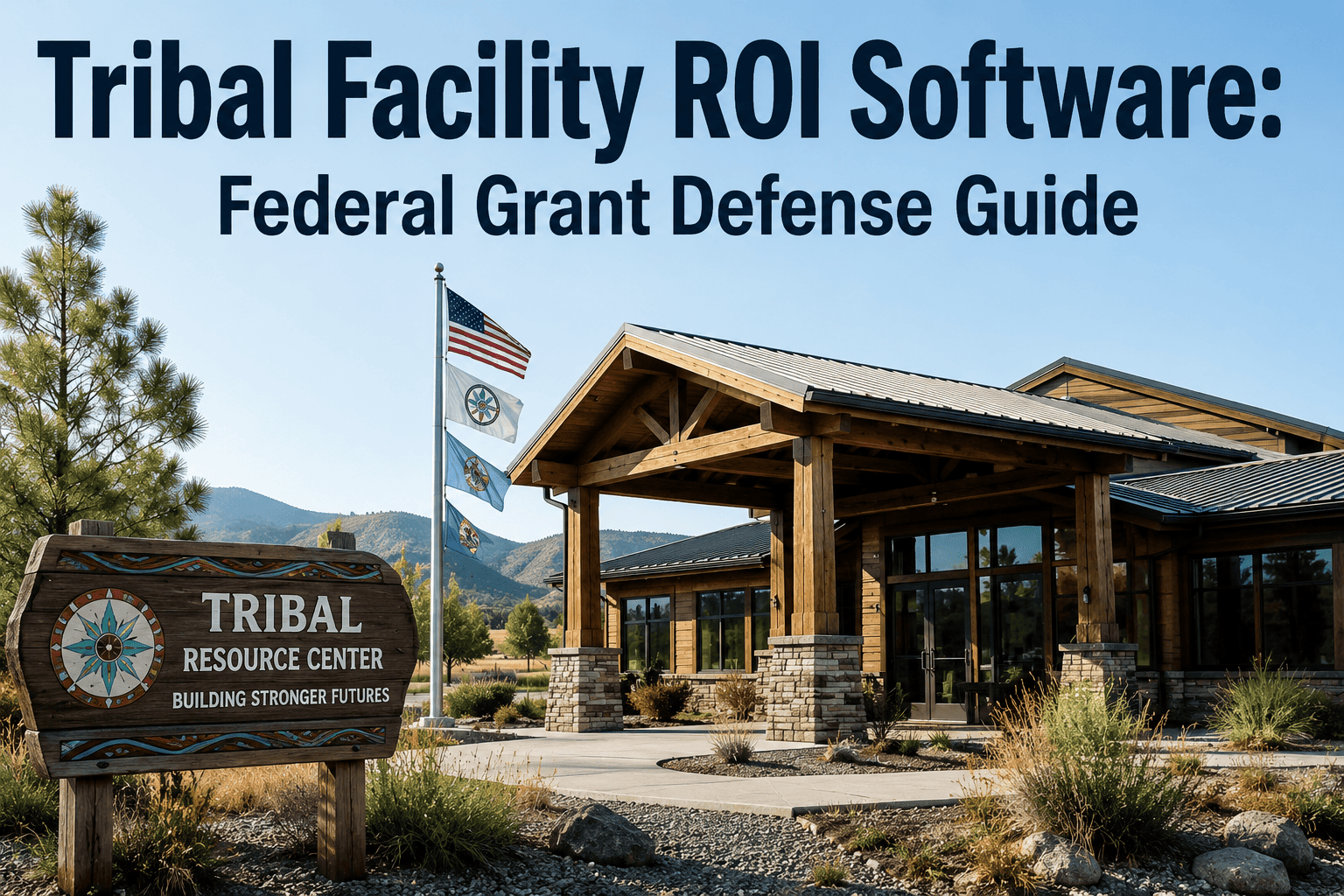
A tribal school built in 1978 does not fail all at once — the roof goes first, then the boiler, then the electrical wiring nobody fully trusted after the last inspection walkthrough. Aging buildings owned by tribal governments, from BIE schools to IHS clinics to tribal administration offices, carry a very specific kind of risk: federal funding cycles rarely align with the moment a forty-year-old envelope or system genuinely needs replacing. OxMaint gives tribal facility teams a single, defensible record of building age, system life, and condition that stands up to grant reviewers and council budget hearings alike. You can see how it works on your own building list by booking a short walkthrough with our team.
Aging Building Discipline for Tribal Schools, Clinics, and Administration Sites
Know exactly how old every tribal building really is — before it tells you the hard, expensive way
OxMaint tracks building age, envelope condition, and system life across every tribal school, clinic, and administrative site, turning scattered paper records and institutional memory into one defensible, exportable aging profile for the whole portfolio.
0–15 yrs
New Construction
16–30 yrs
Mid-Life Systems
31–45 yrs
Late-Life Envelope
46+ yrs
Legacy Risk Zone
Why building age deserves its own tracking discipline
Most CMMS platforms track work orders as they happen. Very few actually track the age of the building itself as a standalone risk factor, separate from any single piece of equipment sitting inside it. For tribal facilities, that gap matters more than almost anywhere else, because replacement funding often depends on proving a building's exact age and condition to a federal agency before a single dollar is ever released.
Grant-ready age documentation
Every facility carries a documented construction date, renovation history, and current condition score that can be exported directly into a BIE or IHS funding application without extra manual formatting.
Envelope condition tracking
Roofing, windows, and building envelope components are tracked separately from mechanical systems, since they age on a very different timeline and rarely get the same ongoing attention from facilities staff.
System life expectancy modeling
HVAC, electrical, and plumbing systems are compared against typical service-life benchmarks, flagging which ones are approaching or have already passed their expected replacement age this year.
Portfolio-wide aging visibility
Tribal facilities departments overseeing multiple schools, clinics, and administrative buildings can compare aging risk across the entire portfolio from a single shared dashboard view.
Council and community reporting
Simple, visual aging summaries make it far easier to explain to tribal council or community members why a specific building needs priority funding attention this particular year.
Audit and compliance history
Every inspection, repair, and condition assessment is timestamped and stored, giving facilities staff a complete history ready whenever federal auditors ask hard questions about a building.
How OxMaint scores an aging tribal facility
Rather than treating "old building" as a single vague label on a spreadsheet, OxMaint breaks facility age down into individual components that actually drive funding and safety decisions differently from one another, since a building rarely ages evenly across every system at once.
Why federal funding cycles make this harder for tribal facilities
Tribal facilities departments face a timing problem that most private building owners never have to think about. BIE school replacement funding, IHS facility improvement grants, and other federal programs run on multi-year cycles with fixed application windows, while buildings deteriorate on their own physical timeline. A roof that starts failing six months after a funding window closes can mean waiting years for the next opportunity, unless the deterioration was already documented and flagged well in advance.
Application windows do not wait for failures
Most federal facility funding programs only open applications on a fixed annual or biannual schedule, regardless of how urgently a specific building actually needs attention.
Evidence requirements keep getting stricter
Reviewers increasingly expect documented condition history and age data rather than a general narrative description of why a facility needs replacement funding.
Multiple buildings compete for the same pool
When several tribal facilities compete for the same limited funding pool, the application with the clearest supporting data usually has a real advantage over a general request.
Staff turnover erases institutional memory
When the person who remembered a building's full maintenance history leaves, that knowledge often leaves with them unless it was captured in a shared system first.
Emergency requests are harder to approve
A funding request submitted only after a system has already failed is treated very differently, and often less favorably, than one submitted proactively with a documented aging trend.
Climate and remoteness compound the risk
Many tribal facilities sit in remote locations where replacement parts and contractor availability are already limited, making early planning even more valuable than it would be elsewhere.
Turn your growing list of aging buildings into a clear, ready funding case
OxMaint converts scattered inspection notes, old grant paperwork, and paper records into a structured aging profile for every tribal facility, ready to attach directly to your next BIE or IHS funding request.
The four-stage aging lifecycle
Every tribal facility moves through the same broad lifecycle stages, even though the exact timeline varies by climate, construction type, and how well earlier maintenance was documented.
1
New Construction — Baseline Capture
Construction date, materials, and original system specifications are logged immediately at handover, creating the baseline every future age comparison for that building will be measured against.
2
Mid-Life — Routine Condition Reviews
Annual or biannual condition assessments track wear against the original baseline, catching early warning signs long before a system actually fails outright and forces an unplanned repair.
3
Late-Life — Funding Preparation
As systems approach the end of their typical service life, documentation is assembled proactively so a funding application can be submitted before a failure forces an urgent emergency request instead.
4
Legacy Risk — Prioritized Intervention
Buildings in this zone are flagged for priority review across the whole portfolio, with clear supporting data on which components pose the greatest safety or continuity risk right now.
Aging risk looks different across tribal facility types
A school building, a health clinic, and an administrative office all age quite differently from one another, both because of how heavily and continuously they are used, and because of the different federal agencies and regulations that oversee funding and safety standards for each particular facility type.
Because each facility type answers to a different oversight body and funding path, a single unified aging record becomes even more valuable to a facilities department. It lets a director speak the same evidence-based language whether the conversation is with an IHS reviewer about a clinic roof or with tribal council about an administration building's outdated electrical panel.
Building a defensible age record without starting from scratch
Most tribal facilities departments already have some record of building age scattered across old construction documents, prior grant applications, and the memories of long-tenured staff who have seen a building through several decades of use. OxMaint is built to absorb that existing knowledge rather than requiring a fresh survey of every building before anything useful can happen.
A
Import what already exists
Construction dates, prior grant documentation, and any existing condition assessments are entered first, even if the records are incomplete or inconsistent across buildings.
B
Fill gaps during routine inspections
As technicians perform regular inspections, missing age and condition details are captured naturally, rather than requiring a separate large-scale survey project.
C
Prioritize the highest-risk buildings first
Facilities already showing signs of legacy risk are documented in detail first, since these are the ones most likely to need funding support soonest.
D
Standardize going forward
New buildings and major renovations are entered with complete baseline data from day one, so future staff never have to reconstruct history from memory again.
Signs a tribal facility has quietly entered the legacy risk zone
Aging risk rarely announces itself with a single dramatic failure. It tends to show up first as a pattern of small, easy-to-dismiss issues that only start looking genuinely serious once someone actually lines them up side by side and compares notes.
Repeated emergency repairs on the same system
A recurring wear pattern in the same electrical panel or air handler is usually well past its realistic service life, regardless of what the original installation date on paper actually says about it.
Replacement parts are increasingly hard to source
When technicians start describing a part as discontinued, back-ordered for months, or salvaged from another site entirely, the underlying system has effectively already reached the end of its useful service life.
Energy costs rising without a clear cause
Aging envelopes, aging windows, and aging HVAC systems all lose efficiency gradually over time, so a slow creep in monthly utility costs is often the earliest measurable and most overlooked sign of legacy risk.
Inspection findings repeat year after year
The same deficiency showing up again and again on consecutive annual inspections usually means a temporary patch was applied instead of the actual underlying replacement the system genuinely needed all along.
Our clinic building was constructed in 1982, and for years we described it internally as "old" without ever quantifying what that actually meant in terms that a funding reviewer would recognize. Once we built out a proper aging profile in OxMaint, we could show reviewers exactly which systems were past service life, supported by real inspection data instead of a general impression passed down from previous staff. That documentation was a direct factor in getting our roof and HVAC replacement approved in the very next funding cycle, instead of being pushed to the following year again like it had been twice before.
— Facilities Director, Tribal Health Services Program
That kind of outcome is not unusual once age and condition data exist in a structured, shareable form. Funding reviewers are not looking for dramatic language about a building's ongoing struggles, they are looking for evidence they can point to when justifying an award internally to their own leadership, and a documented aging profile is exactly the kind of evidence that makes their job easier and makes your request considerably harder to quietly set aside for another cycle.
Frequently asked questions
Does this replace our existing facility condition assessments?
No. OxMaint organizes and tracks the results of existing condition assessments over time, turning one-time reports into a continuously updated aging profile for each building you manage.
Can this support a BIE or IHS funding application directly?
Yes. Age, condition, and system life data can be exported into a format suited for grant applications, giving reviewers a clear, structured picture of genuine facility need.
How do we get started if our records are still on paper?
Most facilities begin by entering construction dates and major system installation years, then layer in inspection history as it happens. You can
start a free trial with whatever records you already have.
Does this work across multiple buildings and site types?
Yes. Schools, clinics, and administrative buildings can all be tracked together in the same portfolio view, which is especially useful for tribes managing several different facility types at once.
How quickly can we see a full aging profile?
Most facilities departments have an initial aging profile ready within a couple of weeks. A guided setup call is available if you would like to
book a demo first.
Stop explaining building age informally. Start documenting it.
Give your facilities team, tribal council, and federal funding partners the same clear, evidence-based picture of every building's age, condition, and remaining useful life, updated continuously rather than reconstructed from memory each time it is needed.