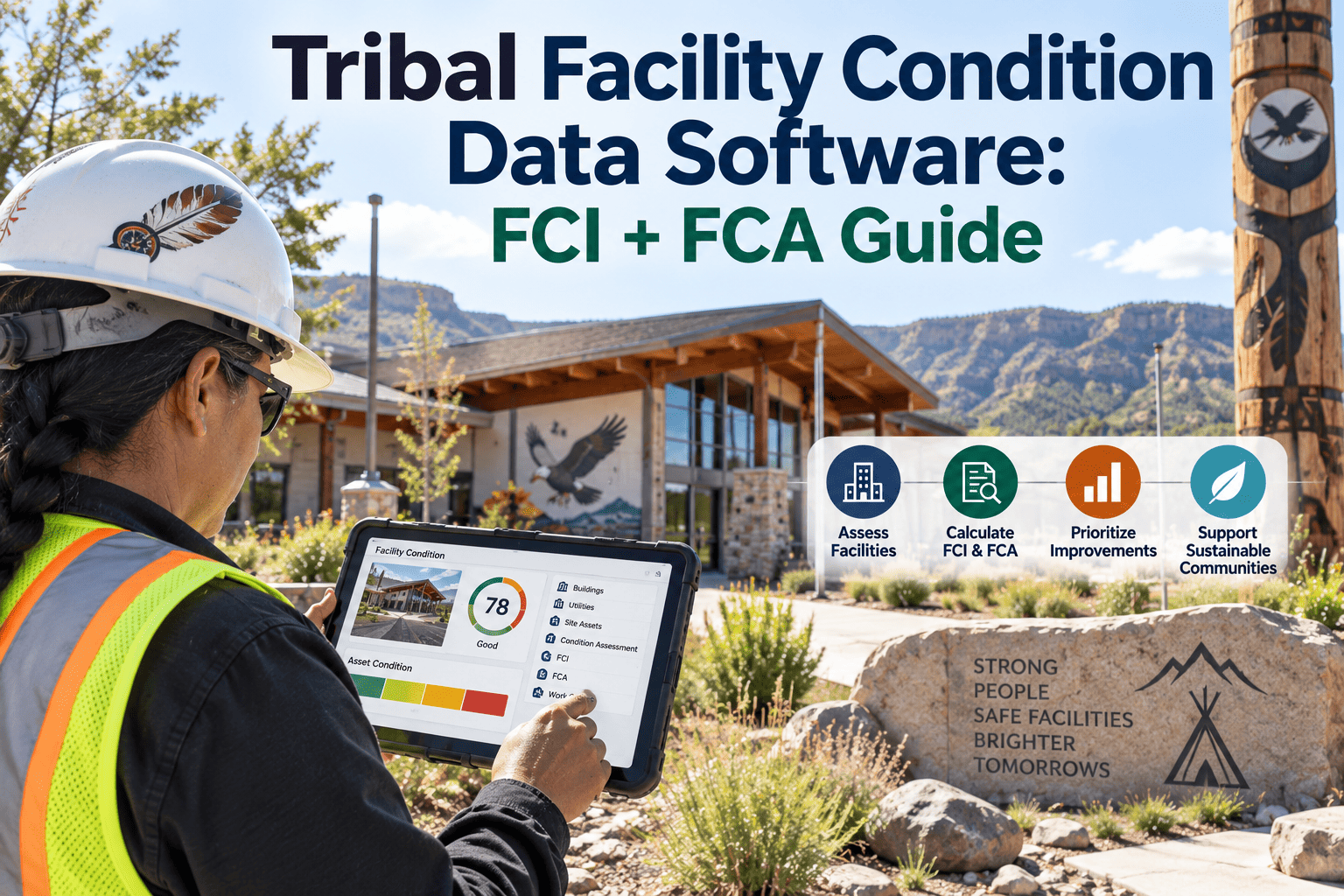
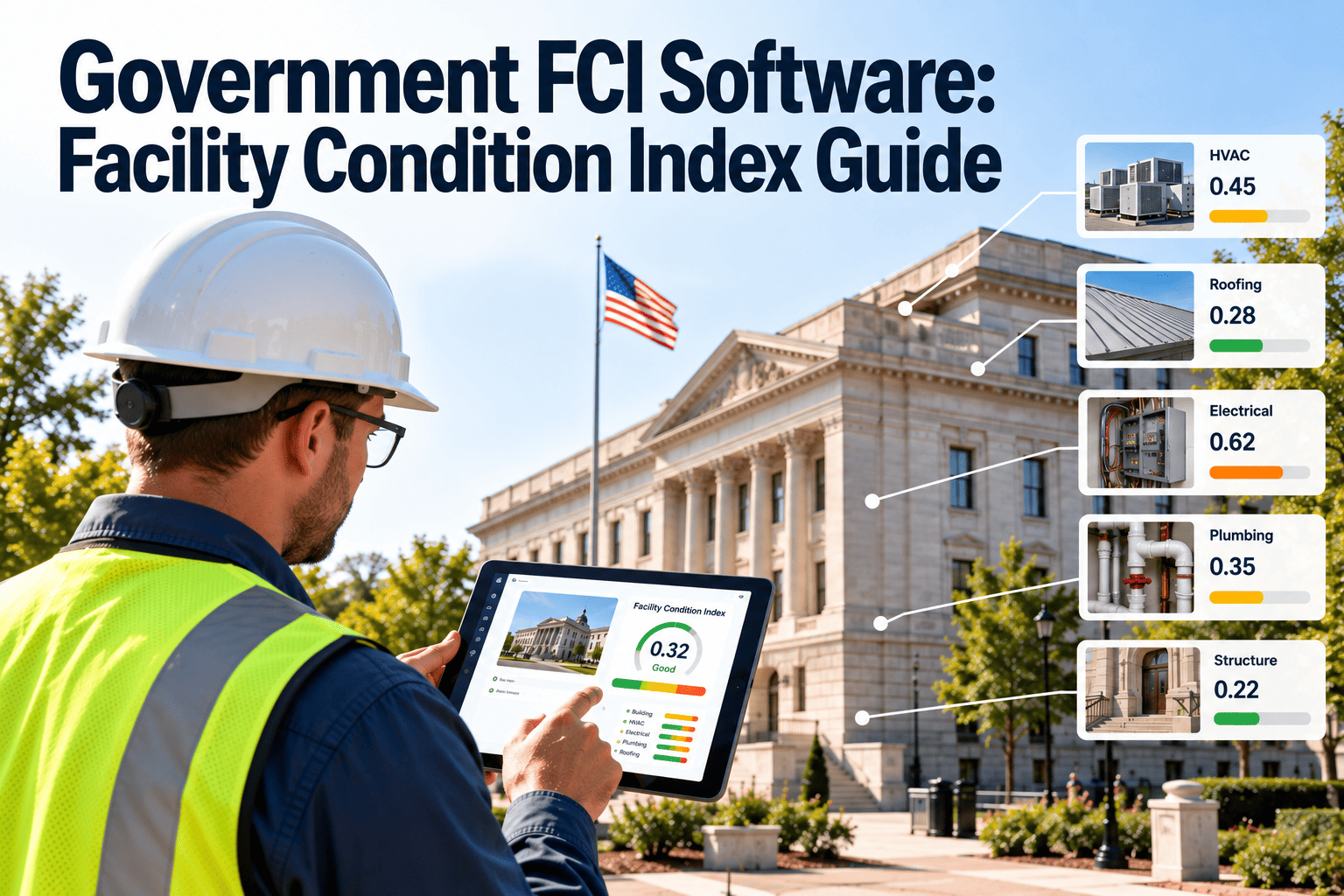
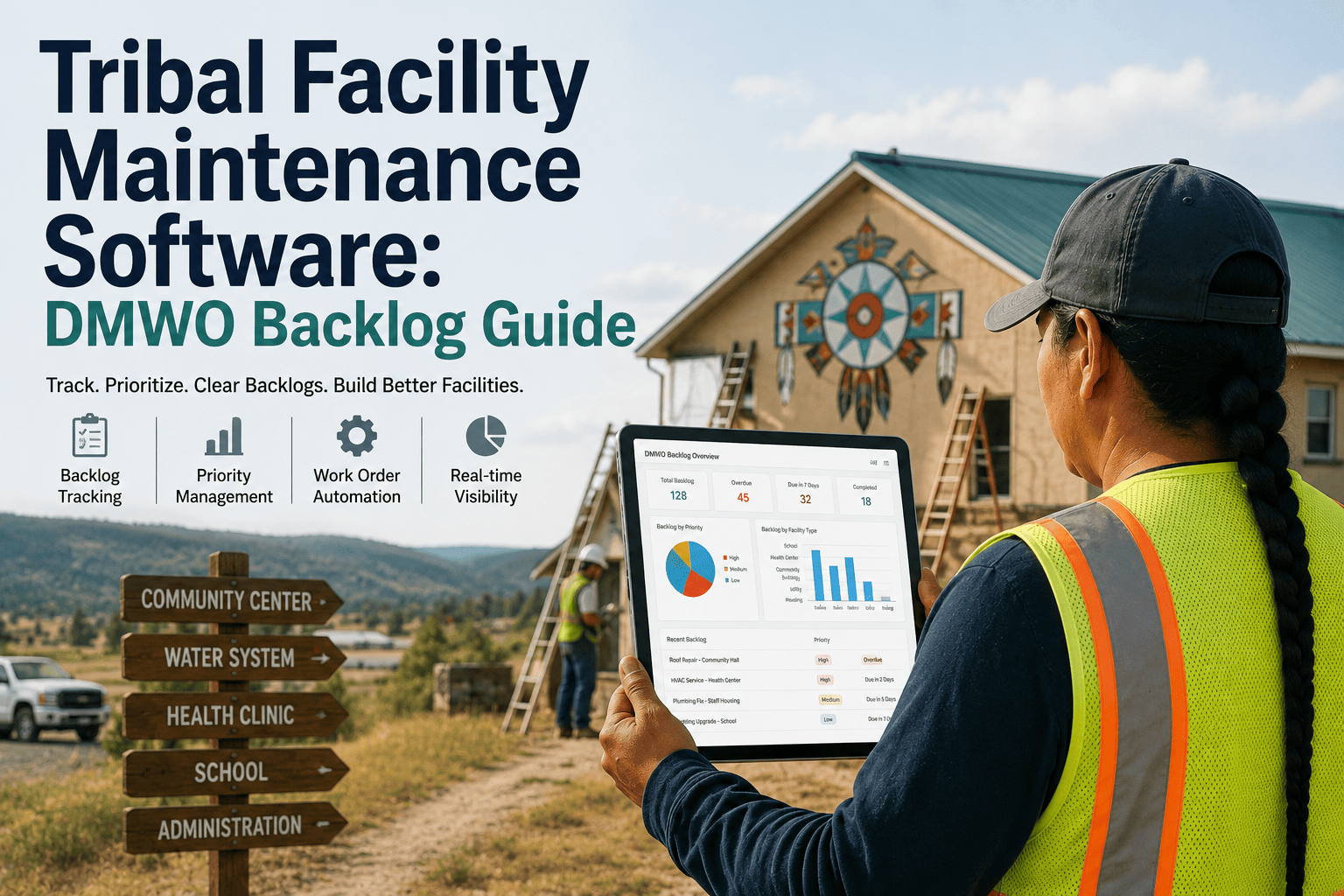
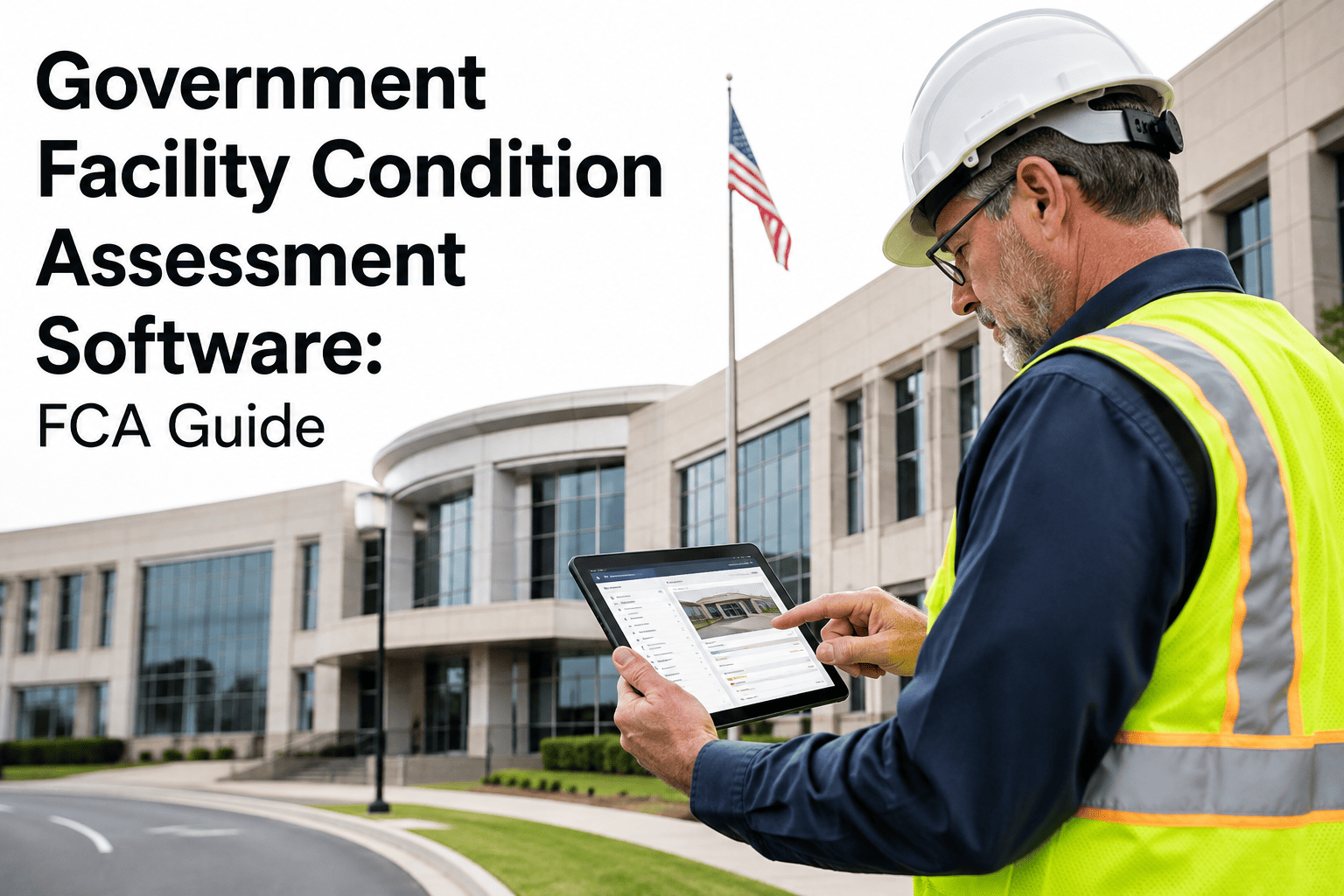
Every tribal facility that draws Bureau of Indian Affairs operations and maintenance funding gets judged, sooner or later, by one number: its Facility Condition Index. The Division of Facilities Management and Construction calculates FCI as deferred maintenance in dollars divided by current replacement value, and that ratio quietly decides which schools, detention centers, and government buildings move up the repair priority list and which get pushed to next year. Most tribes are not losing that competition because their buildings are in worse shape than anyone else's. They are losing it because their condition data is incomplete, months out of date, or scattered across spreadsheets nobody has touched since the last facility condition assessment. Fixing that is a data discipline problem, not a construction problem, and it starts with understanding exactly what DFMC's oversight process expects — and how software like OxMaint keeps that evidence current between assessments.
Facility Management · Tribal Programs · Condition Data
Tribal Facility Condition Data, Explained For The People Who Have To Report It
A practical breakdown of FCI, FCA, and deferred maintenance work order evidence — and the day-to-day data discipline that keeps a tribal facilities program ready for DFMC oversight instead of scrambling before the next site assessment.
183
Indian schools funded and overseen by BIA and BIE nationwide
FCI > 0.15
A DFMC ranking trigger used in PS&J site assessment prioritization
5
DFMC branches that touch condition data before a dollar moves
4
Core components in every DFMC site assessment package
What DFMC Actually Means By "Condition Data"
When facility staff hear "condition data," they usually picture a folder of inspection photos. DFMC means something narrower and more specific: a defined set of figures, tied to a specific building, that feed a formula and a report format the agency has used consistently across the BIA-funded and tribally-owned facility inventory operated under P.L. 93-638 self-governance and self-determination agreements. Get the terminology right first, because the terms below are exactly what shows up in a DFMC data request, and getting one of them wrong is the fastest way to have a submission bounced back.
The Core Formula
Facility Condition Index (FCI) = Deferred Maintenance (DM) in dollars ÷ Current Replacement Value (CRV) in dollars
DFMC generates this figure inside the IA Facilities Management System for every building in the inventory — it is the single number most repair-funding decisions trace back to.
Deferred Maintenance (DM)
Maintenance that was scheduled or should have happened but was postponed. Every DM item needs a dollar value and, ideally, a linked work order.
Current Replacement Value (CRV)
What it would cost to fully replace the building today. This figure anchors the FCI ratio and needs periodic updates as construction costs shift.
Facility Condition Assessment (FCA)
The multi-disciplinary report covering building age, use, gross square footage, DM items, CRV, and a site map for a single facility.
Deferred Maintenance Work Order (DMWO)
The individual work order record — safety, health, environmental, or structural — that documents each DM item feeding into the FCI calculation.
Program of Requirements (POR)
The document that defines the scope and cost of a proposed capital project once a facility is selected for funding.
Gross Square Footage & Site Map
Basic building geometry and location data that DFMC compiles as preliminary information before every onsite assessment.
Why This Isn't Optional: DFMC's Oversight Chain
DFMC's Branch of Asset Management is the office responsible for the nationwide operations and maintenance program, the asset inventory, facility condition assessments, and the technical oversight and policy that govern every Bureau-funded facility. It does not work alone. Four other branches — Planning and Design, Education Construction, Education Facilities Improvement and Repair, and Public Safety and Justice Construction and FI&R — all draw on the same underlying condition figures for their own funding and prioritization decisions. A gap in your building's data does not stay contained to one office; it follows the record through every branch that touches it.
The stakes are not abstract. A 2016 Department of the Interior Inspector General review of Indian school facilities found systemic weaknesses in how condition data was managed and communicated between BIA and BIE, alongside real health and safety findings — asbestos, structural concerns, damaged roofs, and electrical issues — at schools where oversight of inspections and fund tracking had broken down. Twenty-one corrective recommendations came out of that review. The common thread was not a lack of construction funding; it was a lack of consistent, current condition data that decision-makers could actually trust.
For detention and public safety facilities, the process is even more formalized. DFMC's site assessment framework runs on four primary components, starting with a preliminary information compilation for every building before staff ever set foot onsite. Ranking criteria then decide which eligible facilities actually get assessed in a given fiscal year, and an FCI above 0.15 is one of the specific triggers used to prioritize detention centers for that limited assessment capacity. A tribal program that cannot produce a current, defensible FCI on request is effectively opting out of that ranking process by default, regardless of how urgent its actual repair needs are.
Common Ways Tribal Condition Data Falls Apart
The gap between a tribe's real facility condition and what DFMC has on file rarely comes from one dramatic failure. It usually comes from a handful of small, repeated habits that compound over a few budget cycles.
A
DM work orders get closed in a paper log or a technician's notebook that never makes it back to the master FCI spreadsheet.
B
CRV figures are copied forward year after year without adjusting for construction cost changes in the region.
C
The one staff member who understood the condition file leaves, and the reasoning behind old numbers leaves with them.
D
Photo and inspection evidence sits in personal phones and email threads instead of attached to a specific asset record.
E
Preventive maintenance gets skipped when budgets tighten, which quietly inflates DM well before anyone reassesses FCI.
F
Multiple buildings share one spreadsheet tab, so a formula error in one row silently distorts several facilities' figures.
Stop Rebuilding Your FCI File Every Assessment Cycle
A tribal facilities team that tracks DM items, CRV, and work orders continuously has a DFMC-ready file on the day the request comes in — not six weeks of catch-up after it arrives. OxMaint keeps that record current automatically as your team closes work orders.
The Data File DFMC Expects For Every Building
Before an onsite assessment even begins, DFMC compiles a preliminary information package for each facility. If your team can hand over most of this list without a scramble, the assessment goes faster and the resulting FCA is more accurate. If you can't, the agency fills the gaps with estimates — and estimates rarely work in a tribe's favor when funding gets prioritized.
01
Building age, current use, and gross square footage
02
Current FCI and the DM and CRV figures behind it
03
Existing list of DM work orders by category
04
Latest facility condition assessment report on file
05
Site map or plot map with buildings identified
06
O&M funding history available for the facility
Spreadsheets Versus A Condition-Data CMMS
Most tribal facilities departments start condition tracking in a spreadsheet, and for a handful of buildings that can work for a year or two. The problem shows up at renewal: DM items get closed in a maintenance log that never syncs back to the FCI spreadsheet, CRV figures go stale, and nobody can say with confidence which number is current when the next data request lands. None of that is a reflection on the staff doing the work — a spreadsheet simply was not built to keep dozens of buildings, hundreds of work orders, and a rotating maintenance crew in sync automatically, so the gap between what happened in the field and what the file says just grows quietly until someone from DFMC asks a question nobody can answer with confidence.
| What DFMC Needs |
Spreadsheet Tracking |
CMMS Tracking |
| DM items linked to work orders |
Manual, easy to lose sync |
Automatic — closing a work order updates DM |
| Current FCI on demand |
Recalculated by hand, often stale |
Calculated live from DM and CRV records |
| Audit trail for each DM item |
Depends on file discipline of one person |
Timestamped history tied to the asset record |
| Photo and inspection evidence |
Scattered across email and phones |
Attached directly to the work order |
| Multi-building portfolio view |
Separate tabs, easy to miss a building |
Single dashboard across every facility |
| Handoff when staff turn over |
Knowledge often leaves with the person |
Stays with the record, not the individual |
| Setup effort |
Low upfront, high ongoing correction |
A short onboarding, low ongoing effort |
How OxMaint Builds The Condition Data Discipline
OxMaint was built as a maintenance and asset management platform, not a lease or space planning tool, which means the condition-data workflow tribal facility teams actually run every day is the center of the product rather than an afterthought bolted onto something bigger.
Asset Records Per Building
Every building becomes a single asset record holding gross square footage, CRV, current use, and building age — the same fields DFMC's preliminary information request asks for.
Work Orders That Feed DM Automatically
Field technicians close DMWO-style work orders from a phone, categorized as safety, health, environmental, or structural, and the dollar value rolls into the building's DM total.
Preventive Maintenance Scheduling
Scheduled PM reduces how much deferred maintenance accumulates in the first place, which keeps FCI lower between formal assessment cycles instead of spiking right before one.
Exportable, Audit-Ready Reports
Pull a current DM list, work order history, and asset condition summary for any building in minutes rather than reconstructing it from memory before a site visit.
A facilities team of any size can be logging work orders in OxMaint within days, not months — no IT project, no procurement committee, just
a free account to start with your first building.
From First Walkthrough To Audit-Ready Report
1
Load Your Building Inventory
Import existing buildings, gross square footage, and current use from a spreadsheet or your last facility condition assessment so nothing has to be re-typed from scratch.
2
Set Current Replacement Value
Enter or update the CRV for each building so the FCI denominator is accurate before any deferred maintenance is logged against it.
3
Log Deferred Maintenance As Work Orders
Every known DM item — safety, health, environmental, structural — becomes a categorized work order with a dollar value and, when available, a photo.
4
Track FCI As It Moves
As work orders close and new DM gets identified, the DM total — and therefore FCI — updates continuously instead of only at assessment time.
5
Export Before The Next Site Visit
When DFMC or a third-party contractor requests preliminary information, generate the report directly from current records instead of assembling it under deadline pressure.
Where Your FCI Puts You
FCI does not have an official BIA-published rating scale for general interpretation, but the wider facilities industry uses a consistent convention that helps explain why DFMC treats certain thresholds — like the 0.15 mark used in PS&J site assessment ranking — as a serious signal rather than a rounding concern.
Good — 0 to 0.05
Routine upkeep
Fair — 0.05 to 0.10
Plan repairs soon
Poor — 0.10 to 0.30
DFMC ranking trigger zone
Critical — 0.30 and above
Replacement often cheaper
Frequently Asked Questions
What exactly counts as deferred maintenance for FCI purposes?
DM is any maintenance that was scheduled or clearly needed but was postponed, typically sorted into safety, health, environmental, or structural categories. DFMC expects each item to carry a dollar estimate so it can be summed into the DM figure used in the FCI formula.
How often should a tribal facility update its CRV figure?
CRV should be reviewed at least as often as your facility condition assessment cycle, and sooner if construction costs shift significantly in your region. A stale CRV skews FCI in either direction and can misrepresent how urgent a building's repair need actually is.
Does a CMMS replace the need for a formal facility condition assessment?
No. An FCA is still a periodic, often third-party, evaluation. What a CMMS like
OxMaint does is keep the DM, CRV, and work order data current between assessments, so each new FCA starts from an accurate baseline instead of guesswork.
Why does FCI accuracy matter beyond just funding priority?
Past federal oversight reviews of Indian school facilities linked weak condition-data practices to real health and safety findings, not just funding delays. Accurate FCI tracking is as much a safety discipline as a budget one.
How long does it take to get a tribal facilities team running on OxMaint?
Most teams import their building list, set up asset records, and start logging work orders within the first week. You can
book a walkthrough to see the import and reporting process before committing to anything.
Your Next DFMC Data Request Doesn't Have To Be A Fire Drill
If your FCI figures live in three different spreadsheets, your DM work orders are on paper, or nobody is fully sure what your current CRV is, that is a data discipline gap OxMaint closes in days. Start with a free account and have your first building's condition record built out before your next site assessment.