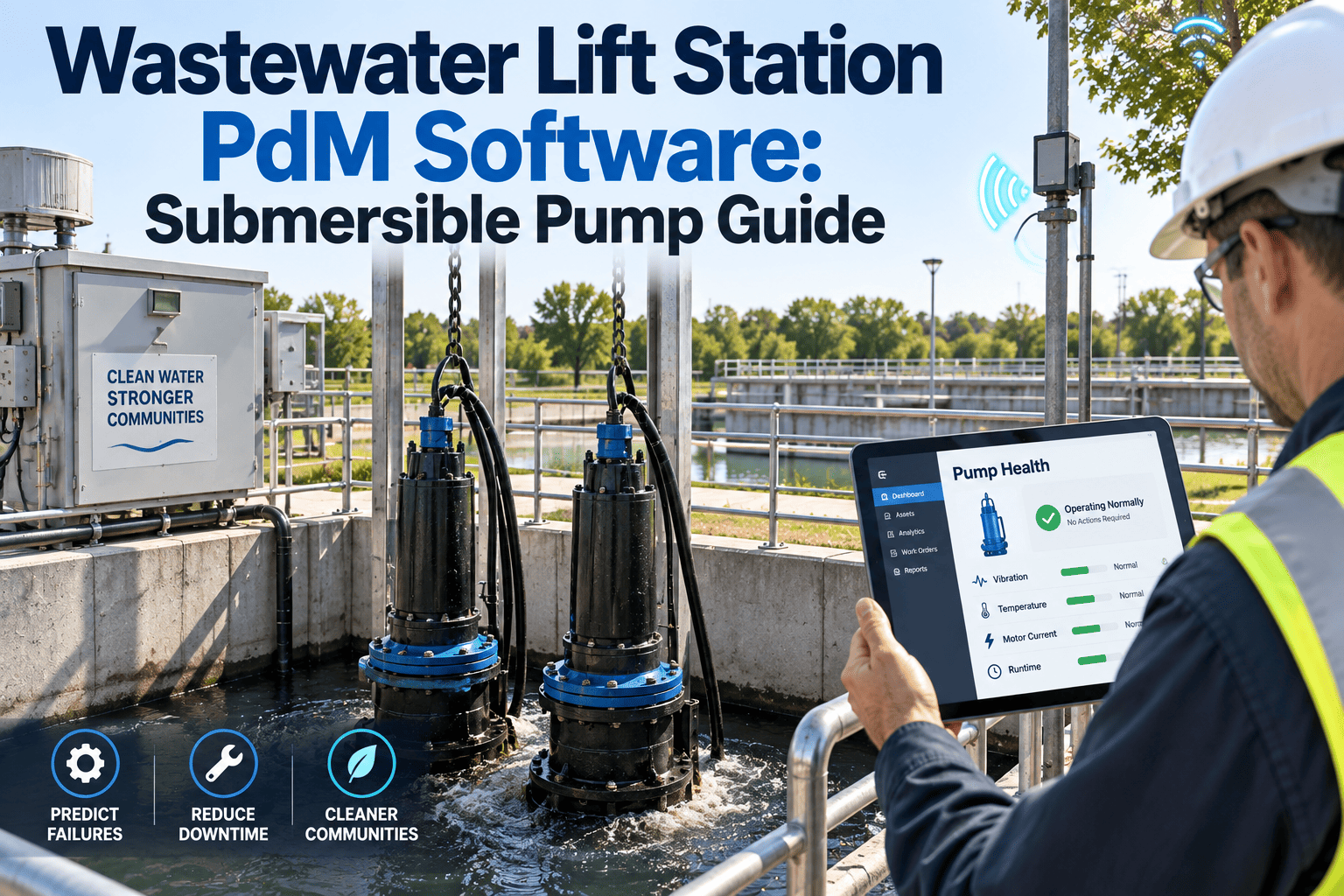
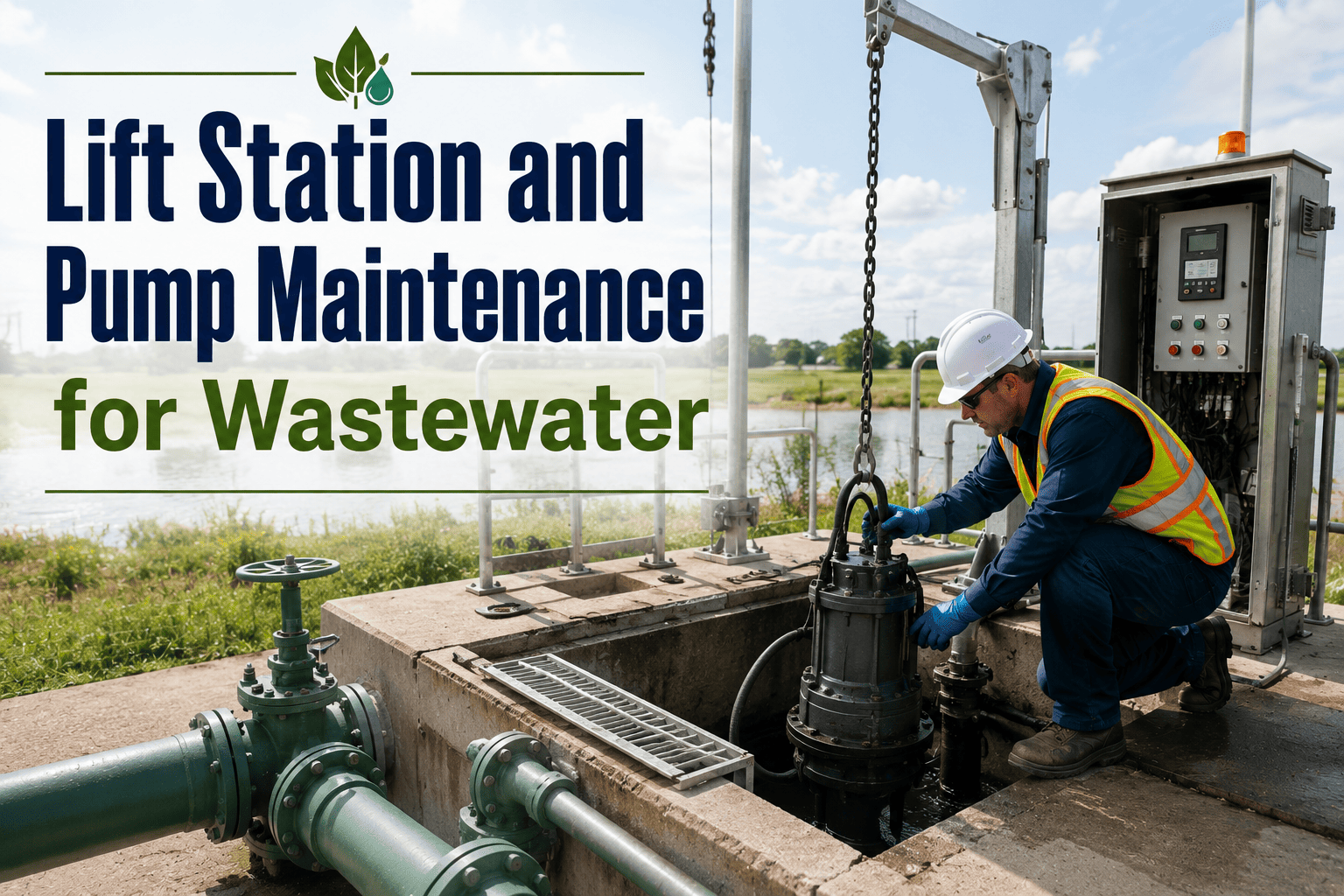
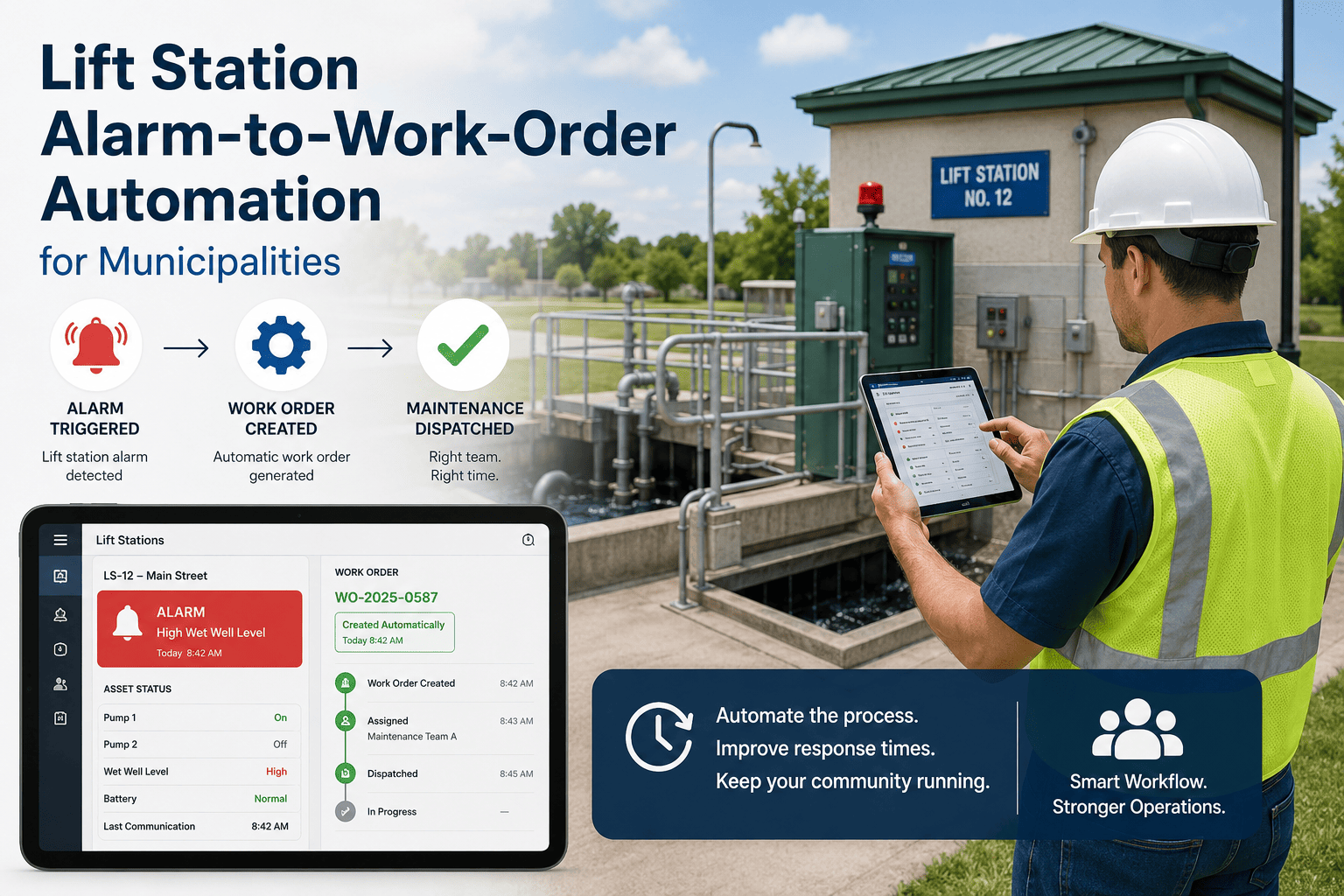
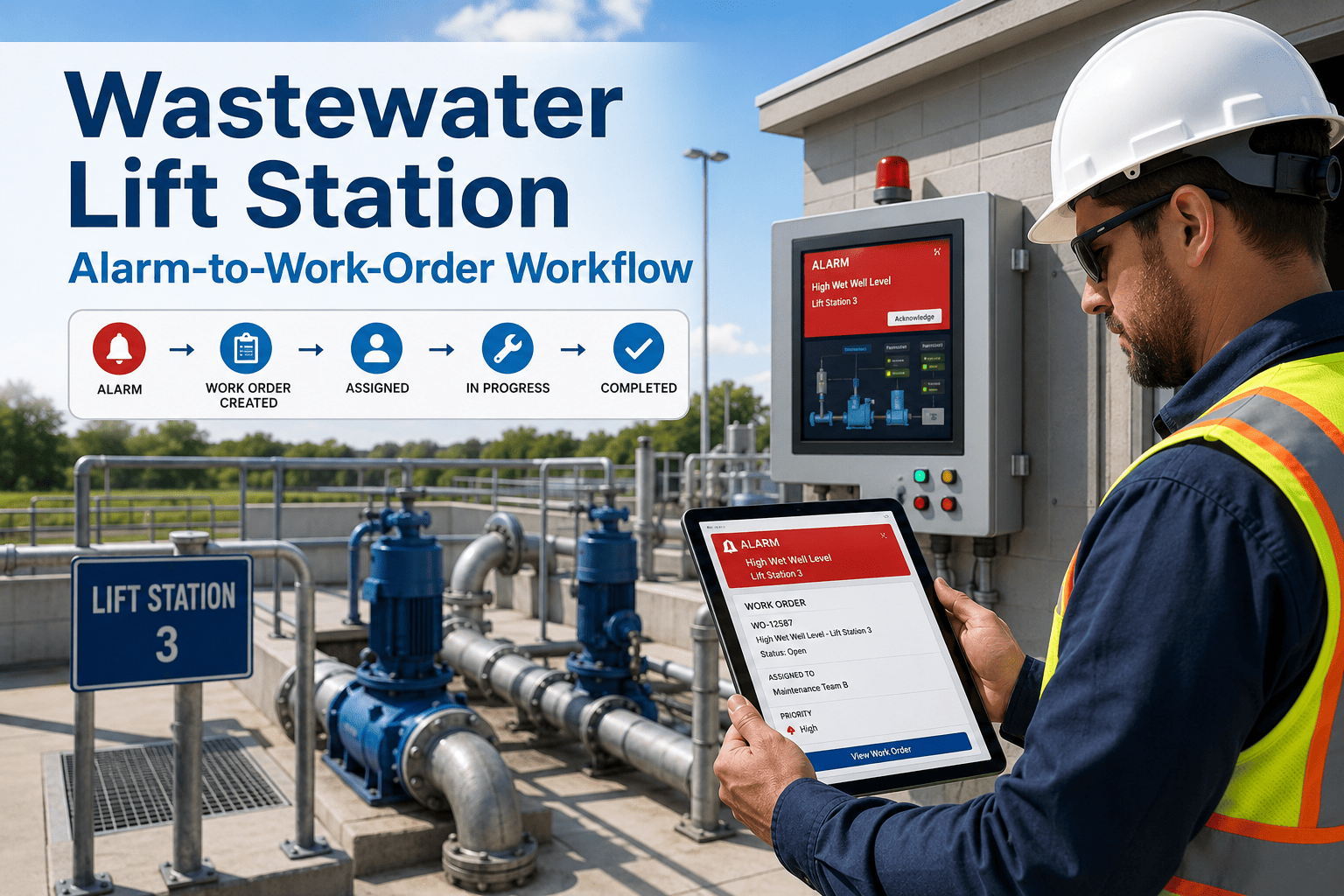
A wastewater lift station failure is not a maintenance inconvenience — it is a sanitary sewer overflow (SSO) event with immediate regulatory consequences, potential EPA enforcement, and public health liability that can cost a municipality far more than the cost of a decade of preventive maintenance. Lift stations operate continuously, often unmanned, with pump failures and wet well overflows giving very little warning when maintenance programs rely on fixed-schedule inspections and manual alarm response. Municipalities managing dozens to hundreds of lift stations need SCADA alarm data flowing directly into CMMS work orders, pump cycling analysis detecting early mechanical wear, and structured wet well PM programs that prevent the conditions that cause SSOs. See how Oxmaint connects SCADA alarms to CMMS work orders for wastewater utilities.
Blog · Wastewater · Lift Station Maintenance · SSO Prevention
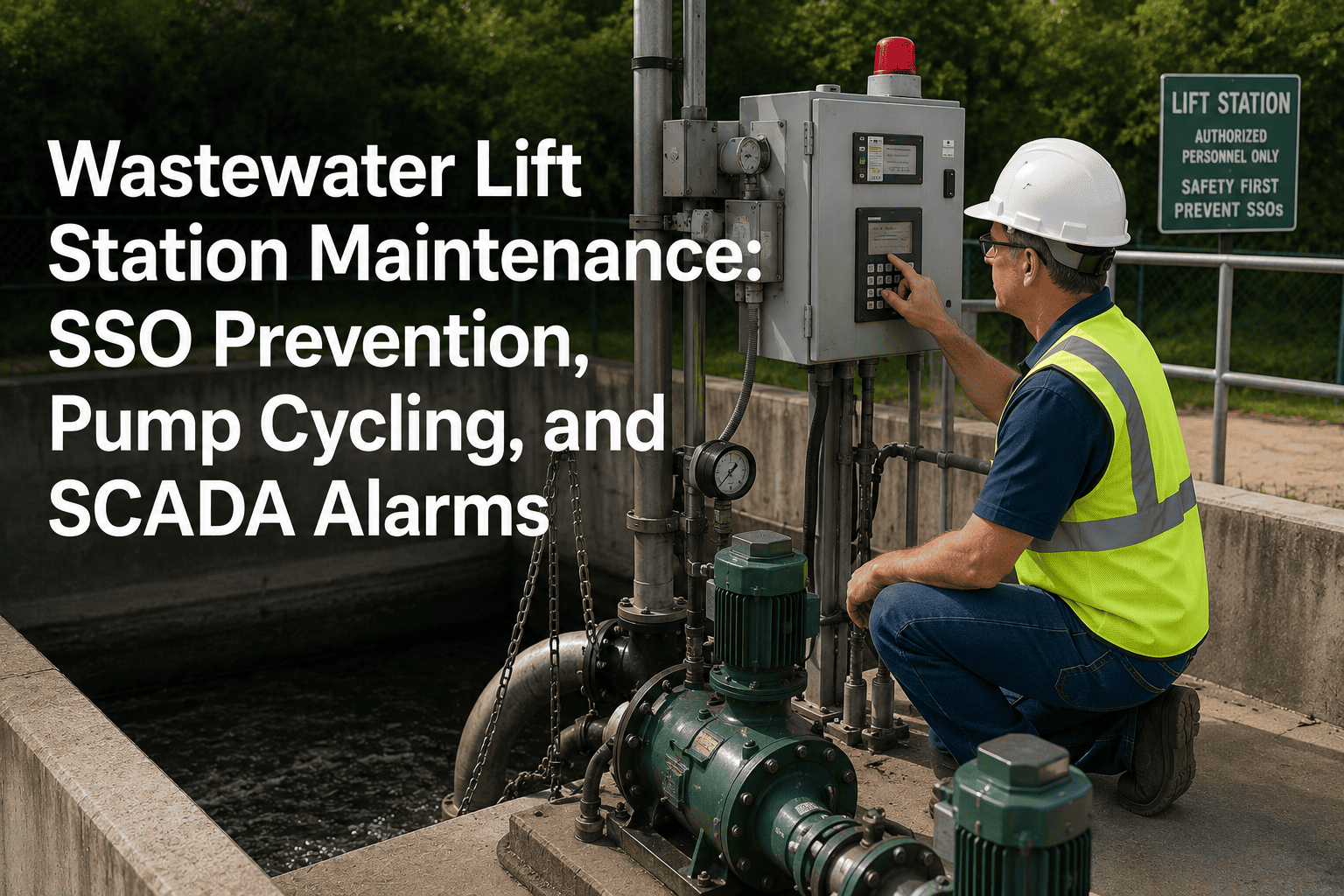
Wastewater Lift Station Maintenance: SSO Prevention, Pump Cycling, and SCADA Alarms
The complete CMMS-driven lift station PM program — pump cycling analysis, wet well cleaning schedules, SCADA-to-work-order automation, and the regulatory compliance framework that keeps your utility out of enforcement.
23,000+
SSO events reported to EPA annually in the US — most traceable to lift station failures
$25K–$50K
Average EPA fine per SSO event for municipal utilities without documented PM programs
78%
Of lift station SSOs are preceded by detectable warning signals in SCADA data 12–48 hrs before overflow
4.8×
Higher pump replacement rate at stations with reactive vs preventive maintenance programs
Lift Station Failure Modes and Their Early Warning Signals
Every major lift station failure mode produces detectable signals days to weeks before the failure becomes an SSO event. The difference between a utility that catches these signals and one that does not is whether SCADA data feeds into a CMMS that tracks trends — not just alarms.
Early Warning Signals
Rising motor current draw at same flow rate · Increased run time per cycle · Elevated winding temperature · Bearing vibration increase
Oxmaint tracks run-time-per-cycle and current draw trending — flags deviation before motor protection trips the pump offline
Early Warning Signals
Reduced flow per cycle at same runtime · Wet well level not dropping to expected setpoint · Increased cycle frequency · Pump curve deviation
CMMS tracks wet well drawdown rate per pump cycle — deviation from baseline triggers inspection work order before clog becomes failure
Early Warning Signals
Wet well level rising faster than inflow rate suggests · Back-cycling detected (pump runtime immediately after previous cycle) · Unusual pump starts per hour count
CMMS tracks pump starts per hour — back-cycling pattern from failed check valve produces distinctive spike detectable in SCADA data trending
Early Warning Signals
Erratic pump start/stop behavior · Level readings inconsistent with runtime data · Pump not starting at expected wet well level · High-level alarm activations without flow explanation
Float switch inspection is a scheduled PM task in Oxmaint — quarterly verification prevents the silent sensor failure that eliminates overflow protection
Early Warning Signals
Increasing cycle frequency without flow increase · Pump clogging frequency trending upward over time · Odor complaints from area · Grease thickness visible on CCTV or access ladder
Wet well cleaning interval is dynamic in Oxmaint — high-grease stations trigger shorter intervals based on cycle frequency deviation from baseline
Early Warning Signals
Intermittent data gaps in SCADA historian · Communication latency increasing · Alarm acknowledgment delays · Battery backup voltage trending downward
Telemetry equipment is a separately tracked asset in Oxmaint — battery, antenna, and communication hardware have independent PM schedules to prevent monitoring blackout
Connect Your SCADA Alarms to Automatic Work Orders
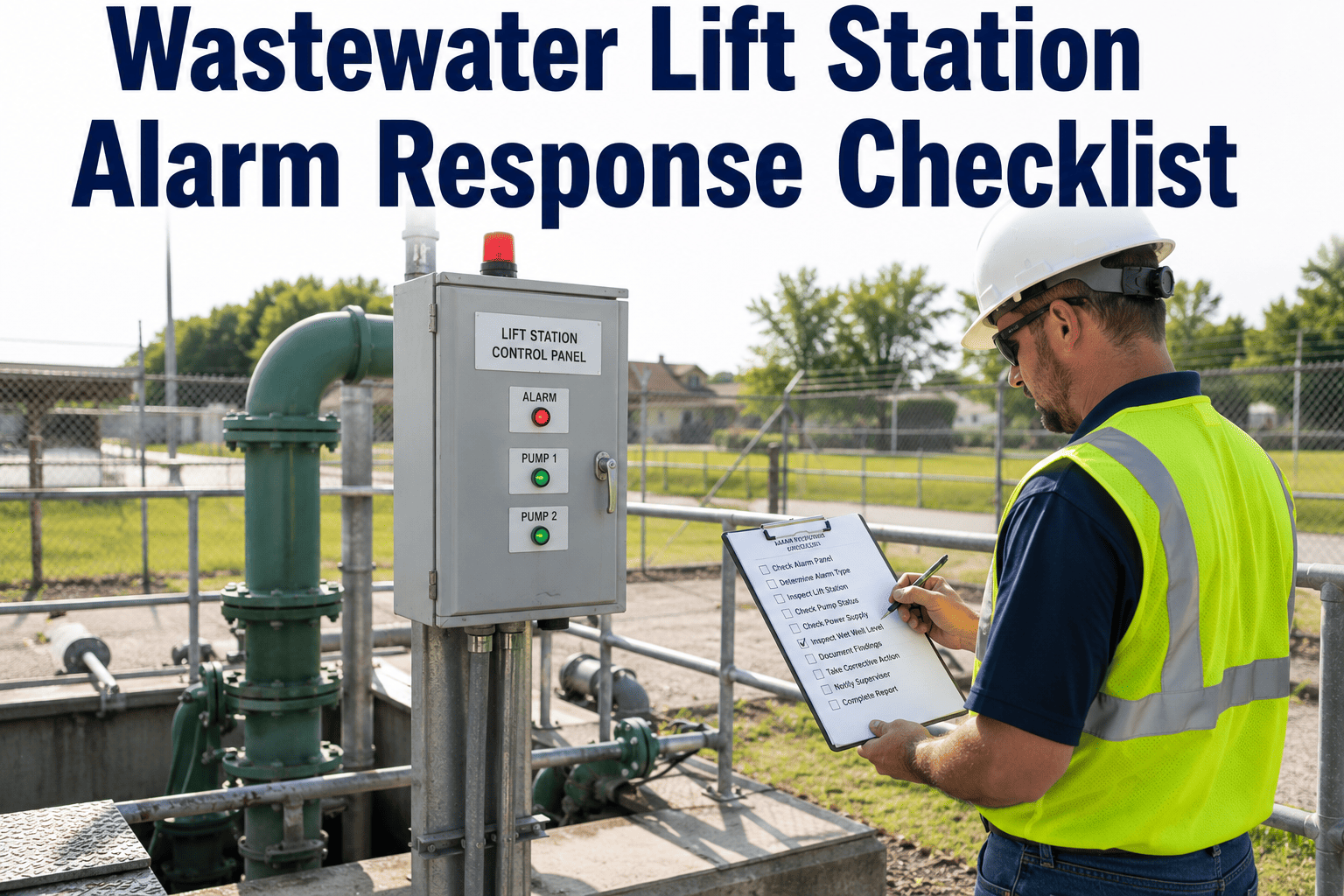
Oxmaint integrates with lift station SCADA systems to convert alarm events into structured, assigned CMMS work orders — so your team responds to a structured task, not a raw alarm notification at 2am.
Lift Station PM Schedule — CMMS Work Order Structure
A complete lift station PM program covers five maintenance disciplines, each requiring different intervals, different technician skills, and different data captured on work order completion. Oxmaint generates and routes each task independently while maintaining a unified asset history per station.
| PM Task |
Interval |
Trigger Type |
Key Data to Record |
SSO Prevention Value |
| Pump visual inspection + runtime log review |
Weekly |
Calendar |
Runtime hours, cycle count, last alarm type and date |
HIGH — catches cycling anomalies before pump failure |
| Float switch and level sensor function test |
Quarterly |
Calendar |
Switch activation levels, sensor reading vs manual measurement |
HIGH — failed float = no overflow protection |
| Wet well cleaning (vacuum truck) |
Semi-annual or condition |
Calendar + cycle frequency deviation |
Grease thickness estimate, debris volume, access hatch condition |
HIGH — grease accumulation leads to clogging chain |
| Pump motor current and temperature log |
Monthly |
Calendar |
Amperage per phase, winding temperature, vibration reading |
HIGH — early motor degradation detection |
| Check valve inspection |
Annual or after clog event |
Calendar + event trigger |
Valve condition, seating integrity, actuation test result |
MEDIUM — failed valve causes back-cycling overload |
| Telemetry and SCADA communication test |
Monthly |
Calendar |
Signal strength, alarm relay test results, battery voltage |
HIGH — blind station cannot alert on overflow |
| Discharge pressure and flow rate measurement |
Quarterly |
Calendar |
Discharge pressure (psi), flow rate (GPM), deviation from pump curve |
MEDIUM — pump curve deviation = impeller wear or clog |
| Emergency generator test run |
Monthly |
Calendar |
Startup time, load transfer time, runtime under load, fuel level |
HIGH — power outage without working gen = guaranteed SSO |
SCADA-to-CMMS Alarm Workflow — How It Works
The most common lift station management failure is the gap between a SCADA alarm firing and a work order being created and assigned. Manual alarm monitoring with phone calls and text messages creates response gaps — especially at night and on weekends. Automated alarm-to-work-order conversion closes that gap.
1
SCADA Alarm Fires at Lift Station
High wet well level, pump failure, power loss, or telemetry loss triggers an alarm in the SCADA system. The alarm type, station ID, timestamp, and alarm priority are captured in the SCADA historian.
2
Oxmaint API Receives Alarm Event
Oxmaint's SCADA integration receives the alarm event via API or OPC-UA connection. The alarm is matched to the station's asset record in Oxmaint using the station ID — no manual lookup required.
3
Work Order Created and Assigned Automatically
A priority work order is generated pre-populated with station location, alarm type, recent maintenance history, and the on-call technician's assignment. The technician receives a mobile push notification and the work order appears in their queue immediately.
4
Technician Responds and Closes Work Order
The technician acknowledges the work order on mobile, travels to the station, resolves the alarm, and closes the work order with findings, time to resolve, and corrective action taken — all logged against the station's asset record.
5
Compliance Record Created Automatically
Every alarm-to-resolution cycle generates a timestamped, technician-signed compliance record. For SSO-related events, this record is the documentation your utility needs for EPA reporting — generated without any additional paperwork.
Pump Cycling Analysis — What the Data Tells You
Pump cycle frequency is the single most informative metric available from lift station SCADA data. Significant changes in cycle frequency indicate changes in inflow, pump performance, or wet well condition — all detectable before they become failures.
Cycles per hour INCREASING, flow unchanged
Pump capacity declining — impeller wear, partial clog, or pump curve shift. Check valve back-cycling also produces this pattern.
Action: Inspect impeller, check valve, and pump curve data. Work order generated when cycles exceed baseline by 25%.
High SSO Risk if unaddressed
Cycles per hour DECREASING, flow unchanged
Pump output increasing per cycle — possible wet well grease accumulation affecting level sensor, or actual inflow reduction. Must distinguish between both.
Action: Manual wet well inspection to confirm grease level and sensor accuracy. Compare with upstream flow meter data.
Medium Risk — sensor failure masking real level
Cycle runtime INCREASING without flow increase
Pump is taking longer to empty the wet well to the off-setpoint — indicating reduced pump efficiency, partial clog, or discharge pressure increase from blockage in force main.
Action: Measure discharge pressure and compare to pump curve. Inspect for force main obstruction if pressure elevated.
High SSO Risk — pump capacity falling toward inflow rate
Short cycles at HIGH frequency (pump hunting)
Pump starts and stops within seconds — classic check valve failure pattern (backflow refills wet well immediately after pump stops) or float switch set-point gap too narrow.
Action: Emergency inspection — hunting cycling causes motor overheating and rapid failure. Check valve and float switch both must be inspected same day.
Critical — motor burnout risk within hours
Expert Review
TH
"The utilities I see with the lowest SSO rates are not necessarily the ones with the newest equipment — they are the ones who treat pump cycling data as a maintenance diagnostic, not just an operational readout. When we linked our SCADA cycle frequency data to CMMS trending, we identified three stations that were quietly developing pump capacity problems over four months — all three would have had SSO events within the next rainy season based on their trajectory. We caught them during scheduled maintenance windows instead. That data connection is worth more than any individual piece of equipment upgrade."
Thomas Huang, PE
Director of Wastewater Operations · Regional utility serving 340,000 connections · 18 years in municipal wastewater infrastructure and compliance management
SSO Regulatory Compliance — What Your CMMS Must Document
When an SSO occurs — or when your utility is audited for SSO prevention program adequacy — these are the specific documentation elements that EPA, state environmental agencies, and NPDES permit reviewers require. Every item below is generated automatically from Oxmaint work order data.
| Regulatory Requirement |
What Reviewers Look For |
Oxmaint Documentation Source |
| Documented PM program for all lift stations |
Written PM schedules with frequency, tasks, and completion records |
PM work order templates + completion history per station ID |
| Alarm response time records |
Time from alarm to technician arrival and resolution |
SCADA-generated WO timestamp + technician mobile close timestamp |
| Equipment failure and repair history |
Corrective maintenance records linked to specific equipment |
Corrective WO records with failure description, parts, and labor |
| Wet well cleaning documentation |
Cleaning frequency, method, contractor, and waste disposal records |
Cleaning WO with contractor, method, volume removed, and disposal manifest |
| Emergency generator test records |
Monthly test run logs with startup time and load performance |
Generator PM WO with startup time, load transfer, and fuel level recorded |
| Capacity analysis and overflow risk assessment |
Documentation that inflow is within station design capacity |
Pump cycle frequency trends vs design flow rate — CMMS dashboard report |
Frequently Asked Questions
How does Oxmaint integrate with existing lift station SCADA systems without replacing them?
Oxmaint integrates with SCADA systems via REST API, OPC-UA, or Modbus — reading alarm events and operational data from your existing SCADA historian without replacing or modifying the SCADA system itself. The SCADA system continues to operate as the primary operational control platform; Oxmaint receives alarm events, creates work orders, and feeds maintenance history back to the asset record. Most lift station SCADA integrations are completed in 2–4 weeks, and the integration does not require downtime to the SCADA system or the stations it monitors.
Book a demo to confirm compatibility with your SCADA platform.
What is the correct wet well cleaning interval for high-grease-loading stations?
Standard wet well cleaning intervals for municipal lift stations range from semi-annual to annual for typical residential catchment areas. Stations receiving significant food service or industrial grease loading require quarterly or monthly cleaning — and the correct interval is best determined by measuring grease accumulation rate over two or three cleaning cycles rather than applying a fixed schedule. Oxmaint supports dynamic interval adjustment: if a station's pump clogging frequency increases between cleaning cycles, the system shortens the next cleaning interval automatically based on the deviation from baseline cycling behavior.
Configure dynamic cleaning intervals in your Oxmaint free trial.
How do we use Oxmaint to document an SSO event for EPA reporting after it occurs?
When an SSO event occurs, Oxmaint generates a structured incident work order capturing the station ID, alarm time, technician response time, estimated overflow volume, overflow cause, corrective action taken, and containment measures. This record, combined with the station's maintenance history from Oxmaint, provides the documentation package required for EPA SSO 5-day notification and 30-day written report requirements under NPDES permits. The maintenance history is particularly important — it demonstrates whether the utility had an adequate PM program in place before the event, which directly affects whether EPA pursues enforcement action and the size of any penalty assessed.
Wastewater CMMS Platform
Every SSO Is a Documentation Failure Before It Is an Equipment Failure. Build the Program That Prevents Both.
Oxmaint connects SCADA alarms to structured work orders, tracks pump cycling trends, schedules wet well cleaning, and generates the SSO compliance documentation your utility needs — automatically from daily operations.