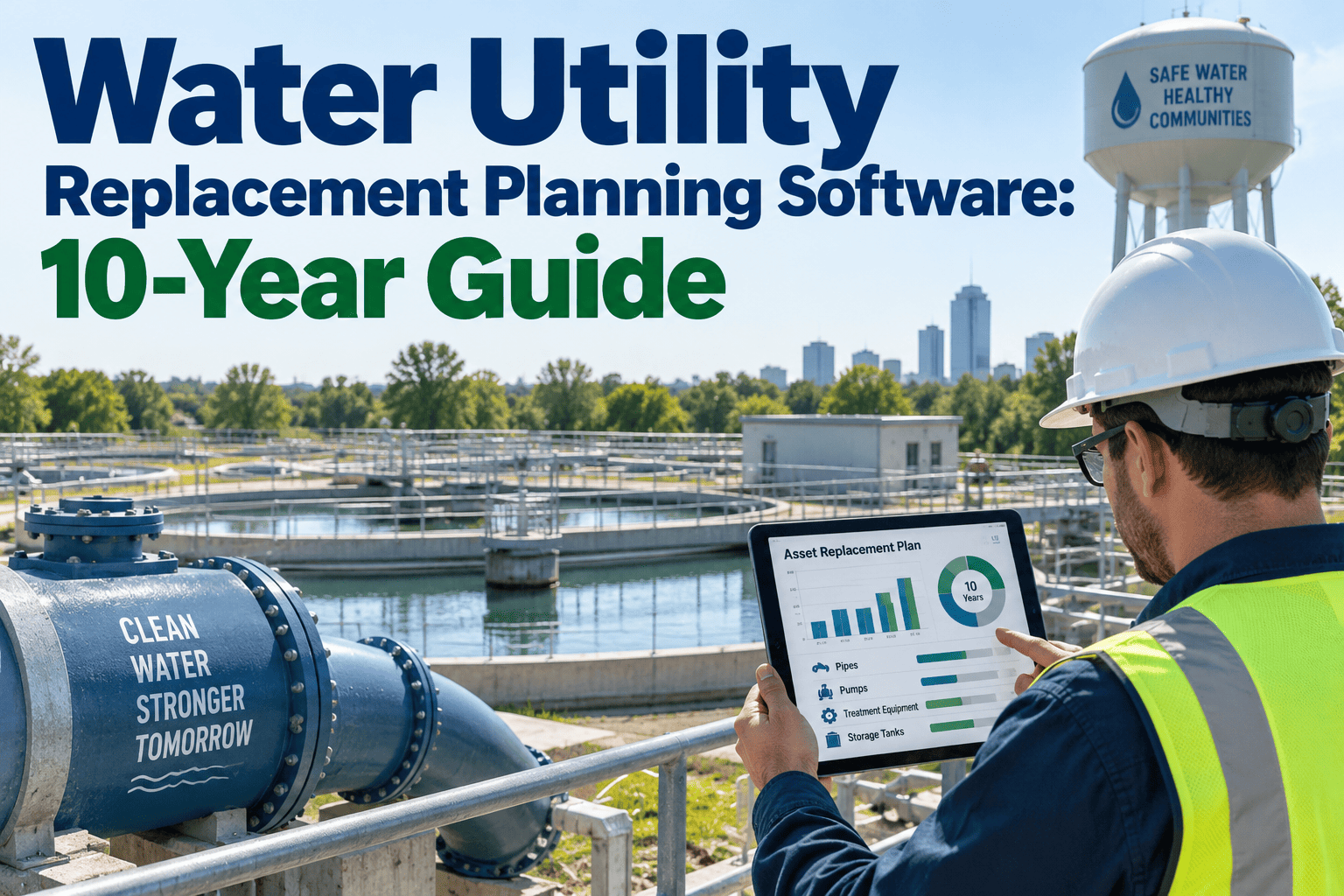
A mid-sized water authority in the Midwest raised rates 9% in a single year after a transmission main failed mid-winter and forced an emergency replacement — a project the utility's own asset registry had flagged as high-risk three years earlier but never funded. The pipe was 61 years old, well past its typical service life, and the capital plan had deferred it twice in favor of smaller, easier-to-justify projects. Deferred maintenance does not disappear; it moves downstream and compounds, resurfacing later as an emergency line item that ratepayers absorb all at once instead of gradually. Utilities that build a rolling multi-year capital plan tied to real asset condition data avoid exactly this kind of crisis-driven rate spike. See how asset-based capital planning works with a free trial of Oxmaint, or book a demo with our public works specialists.
Capital Planning & Rate Strategy for Utility Managers
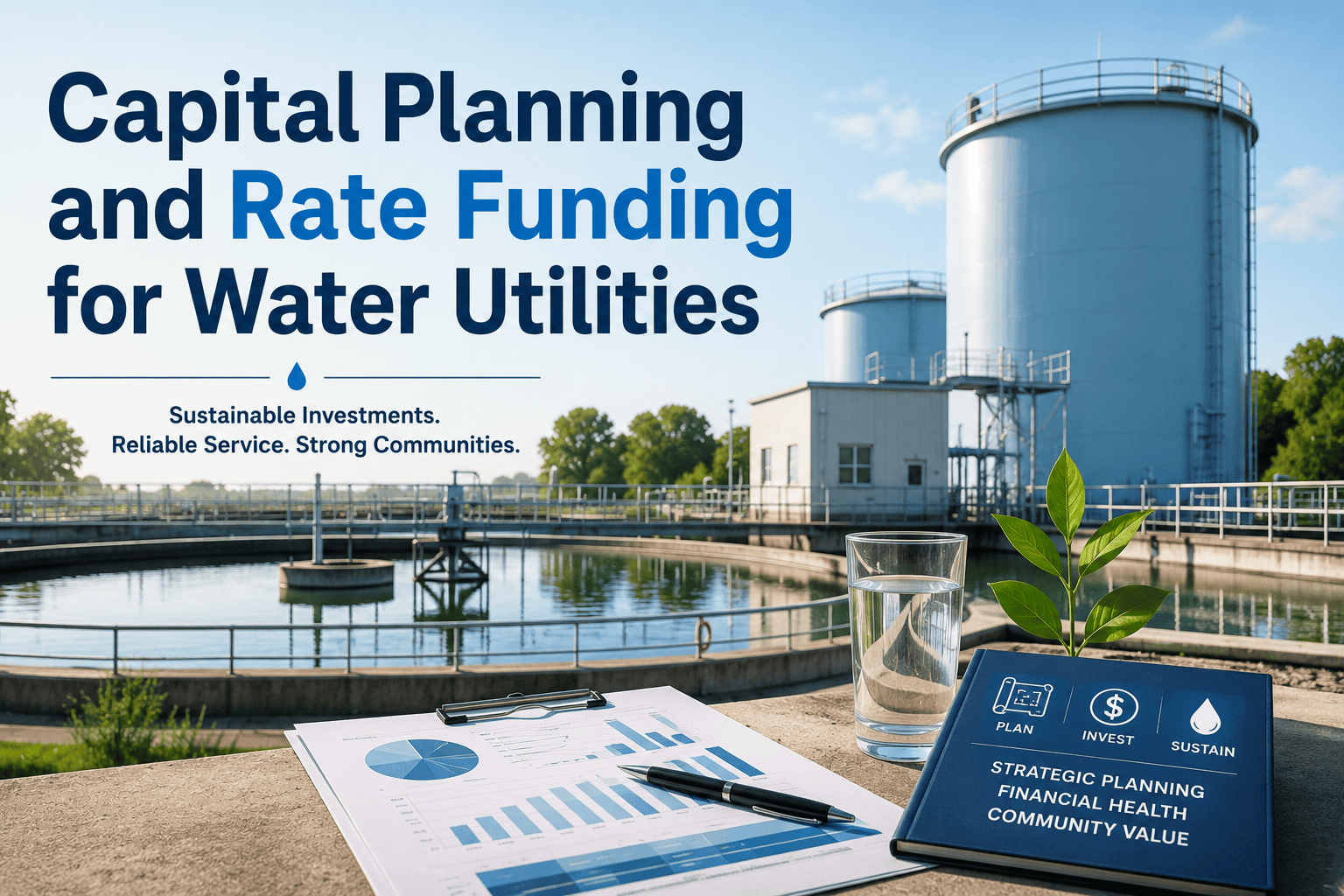
Capital Planning and Rate Funding for Water Utilities
Pipes outlast the budget cycles that fund them. Oxmaint helps utility managers build multi-year capital improvement plans grounded in real asset condition data — so renewal gets funded steadily, and rate increases stay predictable instead of crisis-driven.
$625B
in drinking water infrastructure investment needed nationwide over the next 20 years
C- to D+
average national grade for drinking water and wastewater systems
1 / 2 min
a water main break occurs somewhere in the country roughly this often
30%
of the annual funding wastewater and stormwater systems need is currently being met
Build a Fundable Plan
Turn Asset Condition Data Into a Capital Plan Your Rate Structure Can Support
Oxmaint tracks the true condition and remaining useful life of every water, sewer, and treatment asset, so your capital improvement plan is built on evidence instead of guesswork — and every rate conversation is backed by a defensible, data-driven case.
The National Funding Gap Is Landing on Local Rate Bills
Federal and state assistance covers only a portion of what water systems need. The rest falls to local ratepayers, and the gap between what utilities need to invest and what actually gets funded keeps widening every year it goes unaddressed. This is not an abstract national statistic — it is the reason your next rate hearing is harder than the last one.
Today
$99B / yr
needed annually for wastewater and stormwater systems nationwide, with only about 30% currently funded
Next 20 Years
$625B
in drinking water investment needed for pipe replacement, treatment upgrades, and storage renewal
By 2044
$690B+
projected shortfall if wastewater and stormwater investment gaps continue unaddressed at current pace
Local Impact
Your Rates
a widening federal and state gap means a growing share of every capital dollar is recovered through local rates
Why Utilities End Up With Emergency Rate Spikes
Rate shock rarely comes from a single bad decision. It is usually the end point of a repeating cycle that starts with a deferred project and ends with an emergency bill that ratepayers absorb all at once.
01
Renewal Gets Deferred
An aging asset is flagged in an inspection but competes for budget against more visible projects, and gets pushed to next year's plan again.
›
02
Condition Keeps Declining
Without continuous tracking, nobody notices the asset has crossed from "monitor" to "high failure risk" until it is too late to plan around.
›
03
The Asset Fails
A main break, pump failure, or treatment outage forces emergency contracting at premium rates, usually outside the approved budget year.
›
04
Rates Absorb the Shock
The emergency cost, plus financing penalties for unplanned borrowing, gets passed to ratepayers in one steep increase instead of years of gradual ones.
Two Paths to Fund a Capital Improvement Plan
Every utility blends these two funding paths differently, but the mix matters. Utilities that lean too heavily on pay-as-you-go funding strain current ratepayers; utilities that over-borrow push costs onto future ones with added interest. A defensible capital plan uses both deliberately, not by default.
Path A
Debt Financing
Bonds, state revolving fund loans, and WIFIA financing spread large project costs across the decades the asset will actually serve. This keeps any single year's rate impact manageable, but adds long-term interest and requires strong credit standing and reserve discipline.
Best fit: large treatment plants, major transmission mains, multi-year projects
Path B
Pay-As-You-Go (PAYGO)
Capital reserves funded directly through rates cover smaller, recurring renewal work without adding interest costs. Many utilities target a working ratio — commonly weighted more heavily toward debt for large projects, with PAYGO covering steady annual renewal.
Best fit: routine main replacement, equipment renewal, smaller recurring projects
How Oxmaint Supports a Rate-Ready Capital Plan
Oxmaint gives utility managers the asset-level visibility that capital planning and rate studies actually depend on — turning scattered inspection notes and spreadsheets into a defensible, continuously updated multi-year plan. Start a free trial or book a demo to see it applied to your own asset inventory.
1
Centralized Asset Condition Registry
Every pipe segment, pump, valve, and treatment asset gets a condition score built from inspection history, age, material, and failure records — replacing scattered spreadsheets with one source of truth.
2
Remaining Useful Life Forecasting
Assets are ranked by predicted remaining service life so renewal work can be sequenced years ahead, instead of discovered during a failure.
3
Multi-Year CIP Builder
Projects are grouped into a rolling five-to-ten-year capital plan with cost estimates, priority tiers, and funding source tagging for each line item.
4
Funding Scenario Comparison
Model debt versus PAYGO splits, grant timing, and phased financing side by side to see the rate impact of each approach before it goes to the board.
5
Rate Impact Estimates
Translate planned capital spending into estimated per-customer rate impact over time, giving finance teams and boards a clear, defensible narrative for rate hearings.
6
Budget vs. Actual Tracking
Track planned spend against actual project cost and schedule in real time, so next year's plan is built on this year's real performance, not last year's estimate.
Reactive Replacement vs. Planned Capital Renewal
| Category | Reactive Approach | Planned Capital Renewal | Business Impact |
| Timing of investment |
After failure occurs |
Sequenced years ahead by predicted remaining life |
Fewer emergency projects |
| Rate structure |
Steep, irregular spikes |
Gradual, predictable annual adjustments |
Easier board and public approval |
| Project cost |
Emergency contracting premiums |
Competitively bid, planned procurement |
Lower average project cost |
| Financing options |
Limited to what's available at the time |
Debt, PAYGO, and grants weighed deliberately |
Lower long-term interest cost |
| Grant readiness |
Rarely documented in time to apply |
Asset data ready for SRF and grant applications |
Stronger funding applications |
| Public trust |
Erodes after visible failures |
Reinforced by transparent, data-backed planning |
Smoother rate case hearings |
See Your Asset Data at Work
Give Your Next Rate Case a Defensible, Data-Backed Foundation
Boards and ratepayers accept increases far more readily when they can see exactly which assets are being renewed and why. Oxmaint turns your capital plan into that evidence.
What Proactive Capital Planning Delivers
3–6x
typical cost difference between planned renewal and emergency failure replacement
80/20
a common target debt-to-PAYGO ratio utilities use to balance financing cost and rate impact
5–10 yr
rolling planning horizon recommended for a defensible, board-ready capital improvement plan
Fewer
double-digit single-year rate increases when renewal is funded gradually instead of reactively
Frequently Asked Questions
What is a capital improvement plan for a water utility?+
A capital improvement plan (CIP) is a rolling multi-year schedule of infrastructure projects — pipe replacement, treatment upgrades, storage renewal — ranked by priority and tied to funding sources.
Start a free trial to see how asset condition data feeds directly into a CIP.
How do utilities decide between debt and PAYGO funding?+
Larger, long-lived projects are typically financed with debt so cost is spread across the years the asset serves, while smaller recurring renewal work is often funded directly through rate revenue. Most utilities target a working ratio between the two rather than defaulting to one option.
Book a demo to model funding scenarios for your own project list.
Why do rates spike even when a utility has a CIP on paper?+
A CIP built without current asset condition data tends to prioritize visible or politically easier projects, letting higher-risk assets get deferred until they fail. The plan looks complete on paper but doesn't reflect real failure risk, so emergencies still happen.
How far ahead should a capital plan look?+
Most utility finance and engineering teams plan five to ten years ahead, with the first one to two years budgeted in detail and later years adjusted annually as asset conditions and funding availability change.
Start a free trial to build a rolling plan on real asset data.
How does asset data strengthen a rate case?+
Boards and regulators respond better to rate requests backed by specific asset condition scores and remaining-life forecasts than to general appeals about "aging infrastructure." Documented data also strengthens applications for state revolving fund loans and grants.
Book a demo to see a sample rate-impact report.
Water & Wastewater Capital Planning — Oxmaint
Fund Renewal on Your Schedule, Not the Pipe's
Oxmaint gives utility managers a live, evidence-based capital plan — asset condition scoring, remaining-life forecasting, funding scenario modeling, and rate-impact estimates in one place — so your next rate conversation is backed by data instead of guesswork.
Steady
rate increases instead of crisis-driven spikes
Ranked
projects by real failure risk, not guesswork
Ready
asset data for SRF loans and grant applications
1 plan
connecting engineering, finance, and the board