When a ventilator fails mid-procedure, no clinical team wants to hear about scheduled maintenance intervals. The only question that matters is whether the device was properly monitored. AI asset health scoring answers that question — before the failure ever happens. This is how forward-thinking hospital biomedical and facilities teams are reshaping equipment management in 2026. Want to see it working on your own asset portfolio? start a free trial and explore the full platform for 30 days at no cost, or book a demo with our healthcare specialists and see what predictive asset intelligence looks like for a real hospital environment.
AI-Powered Asset Health Scoring
for Hospital Equipment
Real-Time Condition Monitoring | Predictive Failure Prevention | Evidence-Based Prioritization
Hospital equipment failures cost lives and millions of dollars annually — yet 78% of them are entirely predictable. AI asset health scoring gives biomedical engineers and facilities teams a continuously updated, data-driven condition rating for every device in the building, from infusion pumps to imaging systems. Your team stops chasing failures and starts preventing them. Ready to see it live? Start a free 30-day trial and experience the shift from reactive to predictive, or book a demo with our healthcare specialists today.
See AI Health Scoring in Action — No Commitment Required
Over 500 hospitals and healthcare facilities use Oxmaint to prevent equipment failures, streamline biomedical workflows, and cut emergency repair costs by up to 40%. Your first 30 days are completely free.
What Is AI Asset Health Scoring?
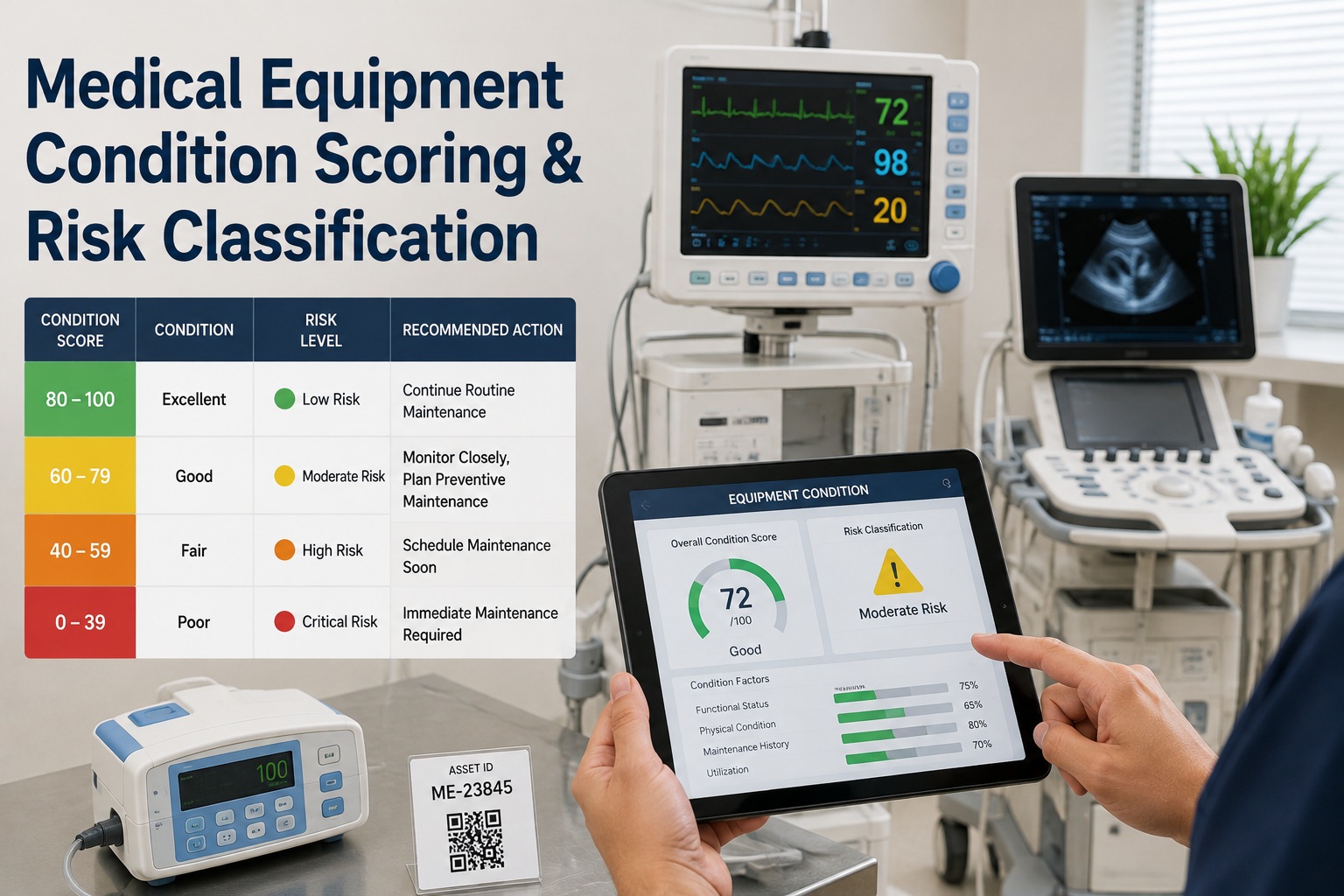
An AI asset health score is a continuously recalculated numerical rating — typically on a 0-to-100 scale — that reflects the real-time condition of a single piece of medical equipment. Unlike conventional CMMS platforms that simply log completed work orders, health scoring synthesizes live sensor telemetry, maintenance history, utilization patterns, and environmental data into one actionable number per device.
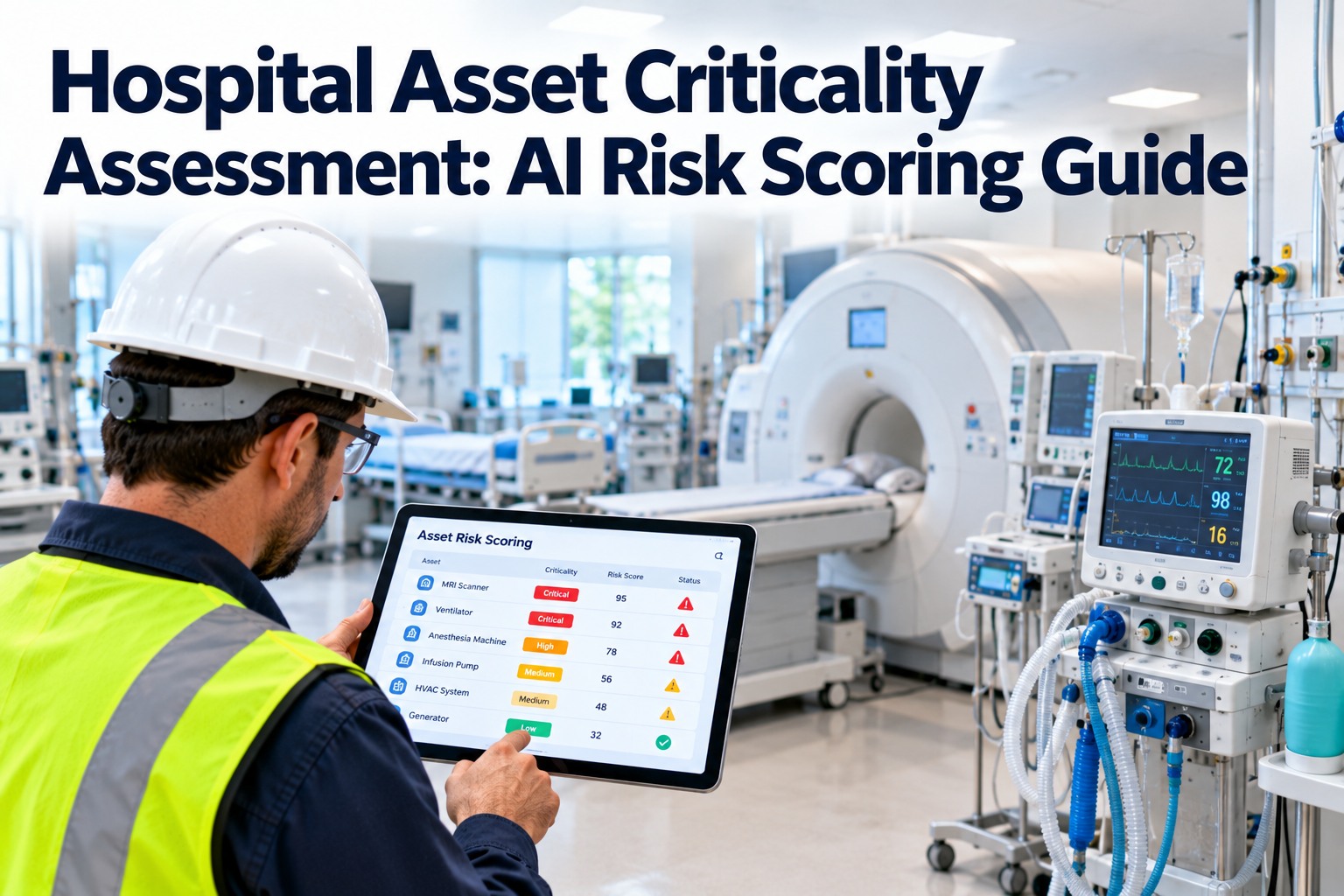
For hospital biomedical and facilities teams, this changes everything. A ventilator scoring 58 demands immediate attention, regardless of when it was last serviced on a calendar schedule. A CT scanner sitting at 91 can wait. Every maintenance decision becomes defensible, prioritized, and audit-ready. If your team is still operating on fixed PM intervals, you are already behind. Start a free trial with Oxmaint and explore the full health scoring dashboard across your actual asset portfolio, or book a demo and walk through a live hospital scenario with our team.
The 4 Data Layers Behind Every Health Score
Oxmaint's AI engine ingests multiple real-time streams and weights them dynamically to produce one continuously updated condition score per asset — no manual input required.
Sensor Telemetry
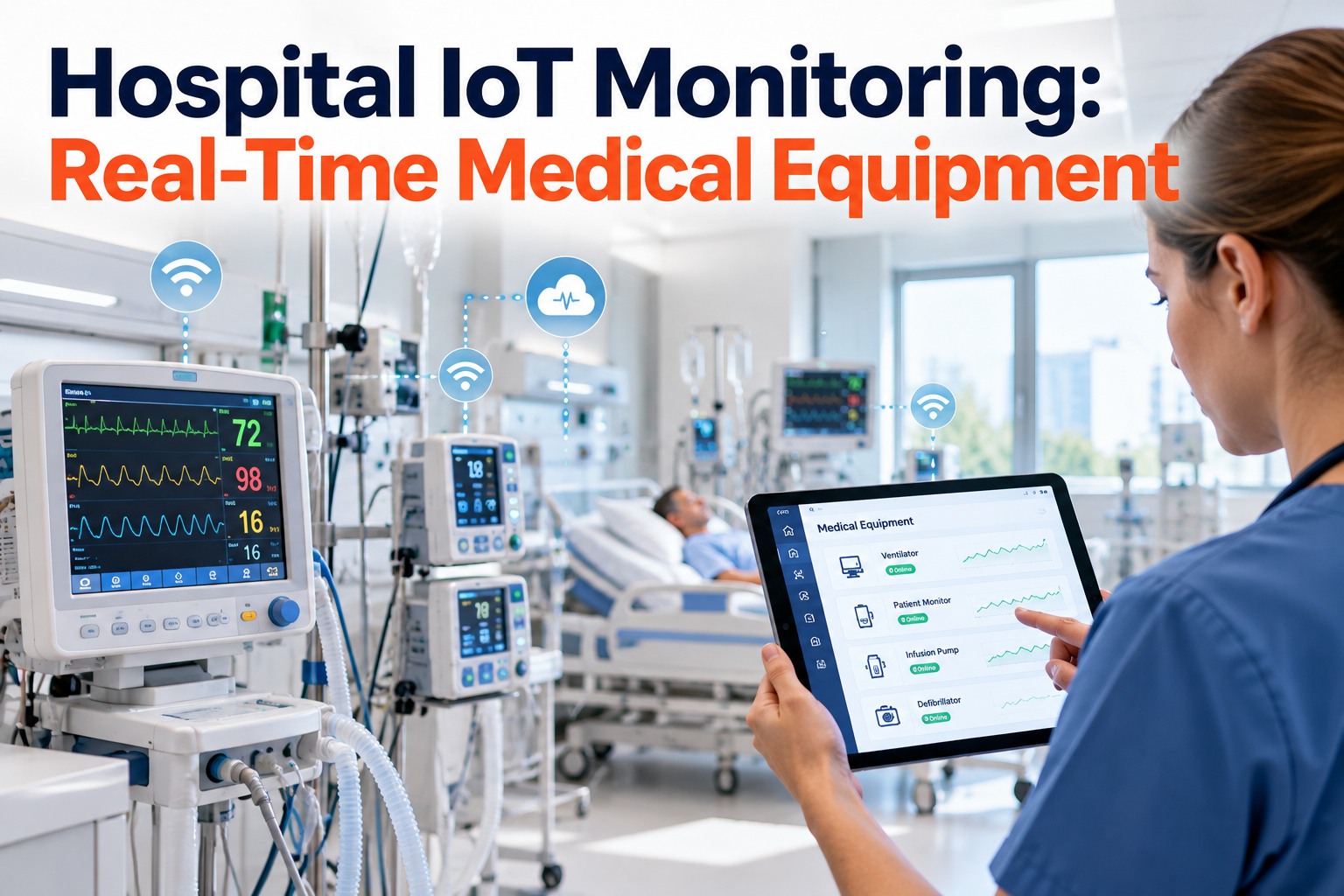
Vibration, temperature, current draw, pressure, and cycle counts streamed in real time from IoT sensors and SCADA systems. Deviations from established baseline trigger automatic score adjustments — no manual readings, no gaps between inspections.
Maintenance History
Every completed PM, technician note, part replacement, and work order close-out feeds the AI model. Missed preventive tasks automatically lower the score. Completed overhauls raise it. Your maintenance history becomes active predictive power.
Utilization Rates
A ventilator running 18 hours daily degrades far faster than one running 4 hours. Oxmaint tracks actual runtime hours, procedure cycles, and patient-load data so health scores reflect real-world wear — not just calendar age or manufacturer tables.
Environmental Conditions
Humidity spikes, ambient temperature extremes, and suboptimal storage conditions are captured and weighted in the scoring model. This input is especially critical for imaging equipment, sterile environment assets, and precision laboratory devices.
Why Reactive Hospital Equipment Management Fails
When biomedical teams rely on calendar-based PMs and incident reports alone, these four structural gaps remain open — and they are expensive in every sense of the word.
Silent Equipment Degradation
Devices deteriorate between scheduled PMs with no one aware. A failing infusion pump or defibrillator may appear compliant on paper while trending directly toward failure — putting patients at measurable clinical risk every hour it operates.
No Prioritization Framework
A mid-sized hospital manages 2,000 to 5,000 devices. Without condition scoring, there is no rational way to determine which asset needs attention first. Work orders are treated equally — meaning the most critical ones are routinely deprioritized.
CapEx Built on Age, Not Condition
Asset replacement budgets driven by manufacturer age tables misallocate millions every budget cycle. A 12-year-old device scoring 84 may easily outlast a 4-year-old device scoring 39 — but only condition data reveals which replacement to prioritize.
Compliance Gaps Under Audit
Joint Commission, FDA, and OSHA audits require complete, time-stamped maintenance documentation. Paper logs and disconnected spreadsheets create gaps that cost hospitals accreditation, regulatory standing, and in some cases, significant financial penalties.
How Oxmaint Delivers Real-Time Asset Health Intelligence
One platform connects sensor streams, maintenance records, and utilization analytics into a single live condition score per device — across every department and every site in your health system.
Live Health Score Dashboard
Every asset gets a 0–100 score updated continuously. Filter by department, device type, or risk tier. Identify the 5% of devices driving 80% of your failure risk in seconds — not hours of spreadsheet work.
AI Failure Prediction Engine
Trained on millions of equipment records, Oxmaint's AI identifies early warning patterns up to 30 days before a likely failure event — giving your biomedical team time to plan a maintenance window, not react to a clinical emergency.
Risk-Ranked Work Orders
Work orders are automatically sorted by health score and clinical criticality. Technicians start each shift with a clear, risk-ranked task list — eliminating FIFO queues and ensuring the most dangerous assets are always addressed first.
IoT and SCADA Integration
Native connectors for IoT sensors, SCADA platforms, and building management systems feed live data into the health scoring engine automatically. No manual data entry. No blind spots between readings. No integration consulting fees.
Lifecycle and CapEx Forecasting
Health score trends over time reveal when an asset is approaching end-of-life. Export 5–10 year CapEx replacement models built on actual condition data — not age tables — giving CFOs and board-level decision makers numbers they can trust.
Audit-Ready Documentation
Every inspection, PM, calibration event, and health score change is time-stamped and digitally signed. A complete asset audit trail is accessible in one click — fully aligned with Joint Commission, FDA QSR, and OSHA documentation requirements.
Reactive Maintenance vs. AI Health Score-Driven Maintenance
The operational and financial gap between these two approaches is structural — not marginal. Most hospitals are leaving millions on the table every year. Start a free trial and close that gap, or book a demo to see the numbers for your specific facility.
| Dimension | Reactive Maintenance | AI Health Score-Driven |
|---|---|---|
| Failure Detection | After equipment fails — or user reports the issue | Up to 30 days before failure — detected by AI model |
| Maintenance Scheduling | Fixed calendar intervals — time-based, not condition-based | Dynamic — triggered by live health score crossing thresholds |
| Technician Prioritization | FIFO queue — first reported, first fixed, regardless of risk | Risk-ranked — most critical assets addressed first, always |
| Emergency Repair Cost | 4.8x higher than planned maintenance spend | Reduced by up to 40% with predictive intervention cycles |
| Compliance Documentation | Manual logs — often incomplete or inconsistently formatted | Automated, time-stamped, digitally signed — audit-ready always |
| CapEx Planning Basis | Equipment age — frequently inaccurate by 2–4 years | Real condition trends — accurate 5–10 year replacement models |
| Asset Downtime Per Event | Unpredictable — averages 14 to 21 hours per incident | Planned windows reduce total downtime by 60% or more |
| Technician Productivity | Reactive fire-fighting — minimal time for strategic work | Planned workflows yield up to 35% more output per technician |
What Hospitals Achieve With Oxmaint
Hospitals using AI-driven health scoring achieve measurable reductions in total maintenance spend within the first 12 months of platform deployment — without reducing service quality.
Average lead time between an Oxmaint health score alert and an actual equipment failure event — giving biomedical teams a full month to plan the intervention on their terms.
Planned maintenance windows replace emergency shutdowns across the portfolio. Clinical departments experience less disruption and higher equipment availability for patient care.
Risk-ranked work order queues eliminate reactive fire-fighting. Biomedical and facilities technicians reclaim more time for planned, high-value maintenance work that extends asset life.
Frequently Asked Questions
How is an AI health score different from a traditional PM schedule?
A traditional PM schedule services equipment at fixed calendar intervals — every 90 days, for example — regardless of actual device condition. An AI health score recalculates continuously using live sensor data, maintenance history, utilization rates, and environmental inputs. A device degrading faster than expected triggers a work order immediately. A device in excellent condition is not serviced unnecessarily. The outcome is 30–40% lower maintenance costs, significantly fewer unexpected failures, and a defensible audit trail for every decision made.
What types of hospital equipment can Oxmaint monitor with health scoring?
Oxmaint supports health scoring across the full hospital asset spectrum: ventilators, infusion pumps, MRI and CT systems, digital X-ray, patient monitors, defibrillators, HVAC and BMS infrastructure, surgical equipment, sterilization systems, and laboratory analyzers. Any asset that generates sensor data, carries a maintenance history, or can be connected via IoT can receive a continuously updated health score inside the Oxmaint platform.
How quickly can Oxmaint be deployed across a hospital or multi-site health system?
Oxmaint is built for fast deployment — most hospital facilities are fully operational within 2 to 4 weeks. There are no heavy implementation fees or extended consulting engagements. Asset data can be imported via CSV, connected through existing CMMS exports, or entered directly into the platform. IoT integrations follow a standard connector setup process. Multi-site health systems can onboard department by department or system-wide, depending on operational preference and IT readiness.
Does AI health scoring directly support Joint Commission and FDA compliance audits?
Yes. Oxmaint automatically generates time-stamped, digitally signed records for every inspection, PM, calibration event, and work order completion. Health score histories are stored and accessible on-demand, creating a complete auditable asset timeline from day one. This directly supports Joint Commission medical equipment management standards, FDA Quality System Regulation requirements, and OSHA documentation obligations — reducing audit preparation time from days to a matter of hours.
Stop Managing by Guesswork. Score Every Asset in Real Time.
Oxmaint gives hospital biomedical and facilities teams a live, data-driven view of every device's condition — so maintenance decisions are always evidence-backed, never reactive, and always defensible under audit. Teams across the USA, UK, UAE, Australia, and Germany are already building smarter hospital asset management programs on Oxmaint. Your 30-day free trial is waiting.
No credit card required. No implementation fees. Live in under 4 weeks.