In 2024, the FDA logged over 4,200 adverse event reports tied to anesthesia delivery systems — vaporizer drift, circuit leaks, and flow calibration failures driving 61 percent of device-related intraoperative incidents. The Joint Commission found that 82 percent of preventable anesthesia equipment failures involved a maintenance step that was due but never documented as completed. The machine was not broken. The checklist was not done. That documentation gap is a direct line to malpractice exposure, accreditation risk, and patient harm — and it is exactly what Oxmaint eliminates. Schedule a strategic briefing to see how Oxmaint digitizes anesthesia equipment compliance across your surgical operation.
Anesthesia equipment compliance failures are a board-level risk — one undocumented vaporizer calibration or missed pre-use checkout creates simultaneous exposure across patient safety, malpractice liability, and Joint Commission accreditation. Oxmaint converts paper-based anesthesia maintenance into a digital system that enforces every checkout, tracks every calibration, and produces survey-ready documentation on demand — deployed in weeks, not months.
The Risk: Five Failure Points That Create Executive-Level Exposure
Each of these systems has a regulatory mandate, a documentation obligation, and a failure mode that escalates to the C-suite when it goes wrong.
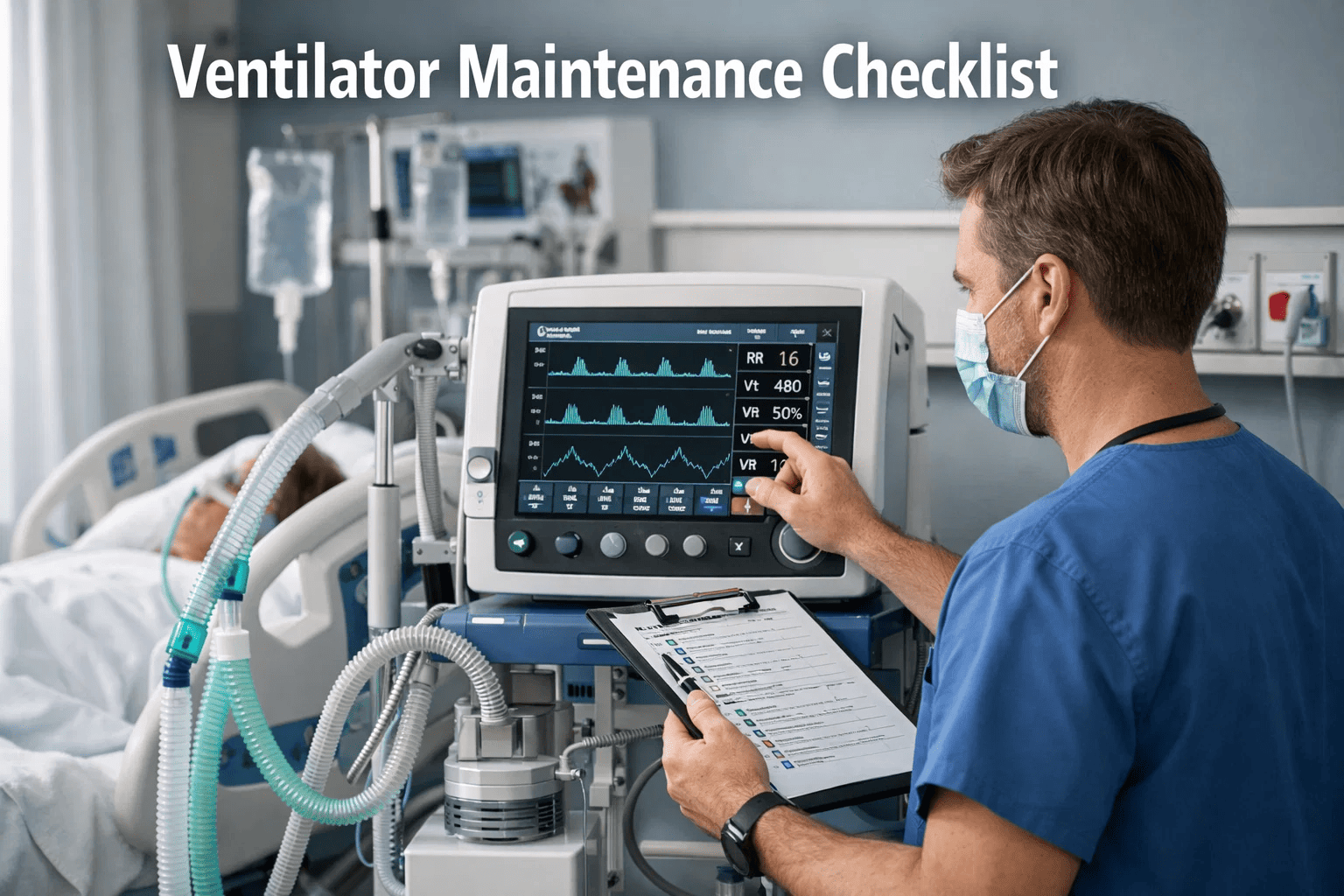
Every anesthesia machine requires a documented 15-step checkout before the first case — backup ventilation, circuit leak test, monitor calibration, scavenging verification. Industry completion rate with paper logbooks: 68%. One missed checkout on the day of an adverse event becomes exhibit A in litigation.
Missed or undocumented PM is an immediate Joint Commission deficiency finding and voids manufacturer warranty. PM includes seal inspection, flow sensor calibration, pressure regulator verification, battery backup, and software confirmation — typically every 6 to 12 months per manufacturer.
Sevoflurane and desflurane vaporizer output drifts beyond 15% of dial setting after 18 to 24 months without calibration — a documented failure mode. Uncalibrated vaporizers cause intraoperative awareness events, the single highest-value anesthesia malpractice claim category.
Circuit leak rates exceeding 150 mL/min at 30 cmH2O compromise tidal volume delivery and positive pressure ventilation reliability. Documentation rate for circuit leak test results in paper-based systems: 52%. Undocumented tests are, from a legal standpoint, tests that were never performed.
Quantify Your Current Documentation Gap in a 30-Minute Strategic Briefing
Oxmaint identifies your specific compliance exposure — expired calibrations, missed PM windows, incomplete checkout logs — in the first deployment session. Most hospitals discover six-figure risk in the initial gap analysis. Start your free trial now.
The Solution: What Oxmaint Replaces and What It Delivers
| Documentation Area | Current State (Paper / Spreadsheet) | With Oxmaint |
|---|---|---|
| Pre-use checkout records | Paper logbooks — incomplete, unsigned, 68% completion rate | Digital record per machine, per day, per provider — 100% completion within 60 days |
| Vaporizer calibration tracking | Single spreadsheet managed by one biomed tech — no automated alerts | Per-serial-number tracking with 30-day and 7-day advance alerts |
| PM documentation | Paper work orders filed in binders — hours to locate for surveyor | Digital PM record with task-level sign-off and photo evidence |
| Joint Commission survey prep | 2 to 3 weeks assembling records from multiple binders | Complete documentation exported in under 2 hours |
| Machine out-of-service visibility | Handwritten sign taped to machine — no scheduling visibility | Real-time status visible to biomed, anesthesia, and perioperative teams |
| Corrective maintenance response | Phone call to biomed — no priority routing, average 4.2 hours | Priority-routed work orders — average 1.4 hours with escalation |
| Failure trend analysis | No structured data — recurring issues found only after sentinel event | Failure type and frequency tracked per machine — trending dashboard |
Measured Outcomes — First 12 Months
Results from perioperative departments that replaced paper-based anesthesia equipment logs with Oxmaint.
PM Schedule — Manufacturer-Aligned Intervals Automated by Oxmaint
| Maintenance Task | Interval | Scope | Oxmaint Automation |
|---|---|---|---|
| Pre-use checkout | Daily — before first case | 15-step ASA/FDA checkout — high-pressure, low-pressure, circuit, ventilator, monitors, scavenging | Model-specific checklist auto-assigned via QR scan at machine |
| CO2 absorbent replacement | Weekly inspection / as indicated | Visual inspection of absorbent canister color indicator and channeling | Weekly task with photo capture — replacement logged with lot number |
| O2 sensor replacement | 12 to 18 months per manufacturer | Galvanic or paramagnetic sensor replacement with post-replacement calibration | Sensor age tracked per machine — work order auto-generated at interval |
| Vaporizer calibration | 12 to 24 months per manufacturer | Agent output accuracy verification across full dial range | Per-serial-number tracking — alerts at 30-day and 7-day intervals |
| Comprehensive PM service | Semi-annual or annual | Full functional verification — seals, flow sensors, regulators, battery, software, electrical safety | Machine flagged out-of-service until PM sign-off documented |
| Electrical safety test | Annual per NFPA 99 | Ground integrity, leakage current, power cord inspection per IEC 62353 | Annual inspection scheduled — results logged with pass/fail and tech ID |
| Scavenging system inspection | Monthly | WAGD vacuum flow, hose integrity, interface valve function | Monthly task linked to OR suite — vacuum flow captured as numeric field |
Never Miss a Vaporizer Calibration or PM Window Again
Oxmaint auto-schedules every anesthesia machine PM task, tracks every vaporizer calibration due date, and flags machines approaching service deadlines — before the Joint Commission surveyor finds them overdue. Schedule a strategic briefing to see PM scheduling for your fleet.
Competitive Position
Most CMMS platforms manage facility work orders. They do not manage anesthesia-specific pre-use checkout, vaporizer calibration by serial number, or Joint Commission EC chapter evidence.
| Capability | Oxmaint | MedMaint | Nuvolo | TMS (Accruent) | IBM Maximo HSE | Fiix | Limble |
|---|---|---|---|---|---|---|---|
| Anesthesia-specific pre-use checkout | Yes | Generic | Custom | Custom | Custom | No | No |
| Vaporizer calibration by serial number | Yes | Partial | Yes | Yes | Yes | Generic | No |
| Circuit leak test result capture | Yes | Partial | No | No | Custom | No | No |
| Joint Commission EC survey export | Yes | Yes | Yes | Yes | Partial | Partial | Partial |
| QR-scan machine access for checklists | Yes | No | Partial | No | Custom | Partial | Yes |
| Deploys in weeks without consultant | Yes | Varies | No | No | No | Yes | Yes |
Deployment: 4 to 6 Weeks, No IT Project
Every anesthesia machine, vaporizer, and monitoring component registered by serial number, manufacturer model, OR suite assignment, and PM interval. Vaporizer serial numbers linked to parent machine records. Existing paper forms used as templates for digital configuration.
Model-specific pre-use checklists configured for GE Aisys, Draeger Perseus, Mindray A-Series, or equivalent. Anesthesia technicians access checklists via QR-scanned machine tags. Completion captured with provider identity and timestamp. Schedule a briefing to see the mobile checkout workflow for your machine models.
Live dashboard showing PM currency, vaporizer calibration status, checkout completion rates, and overdue alerts. Role-based views for biomedical engineering, perioperative directors, and hospital leadership. Automated escalation when compliance rates drop below threshold.
Frequently Asked Questions
Your Next Survey or Malpractice Discovery Will Ask for These Records. Will You Have Them?
Digital pre-use checklists, vaporizer calibration tracking, PM scheduling, and survey-ready documentation — all operational in Oxmaint within 4 to 6 weeks. No IT project. No consultant engagement. Schedule a 30-minute strategic briefing and we will identify your specific compliance gaps in the first session.