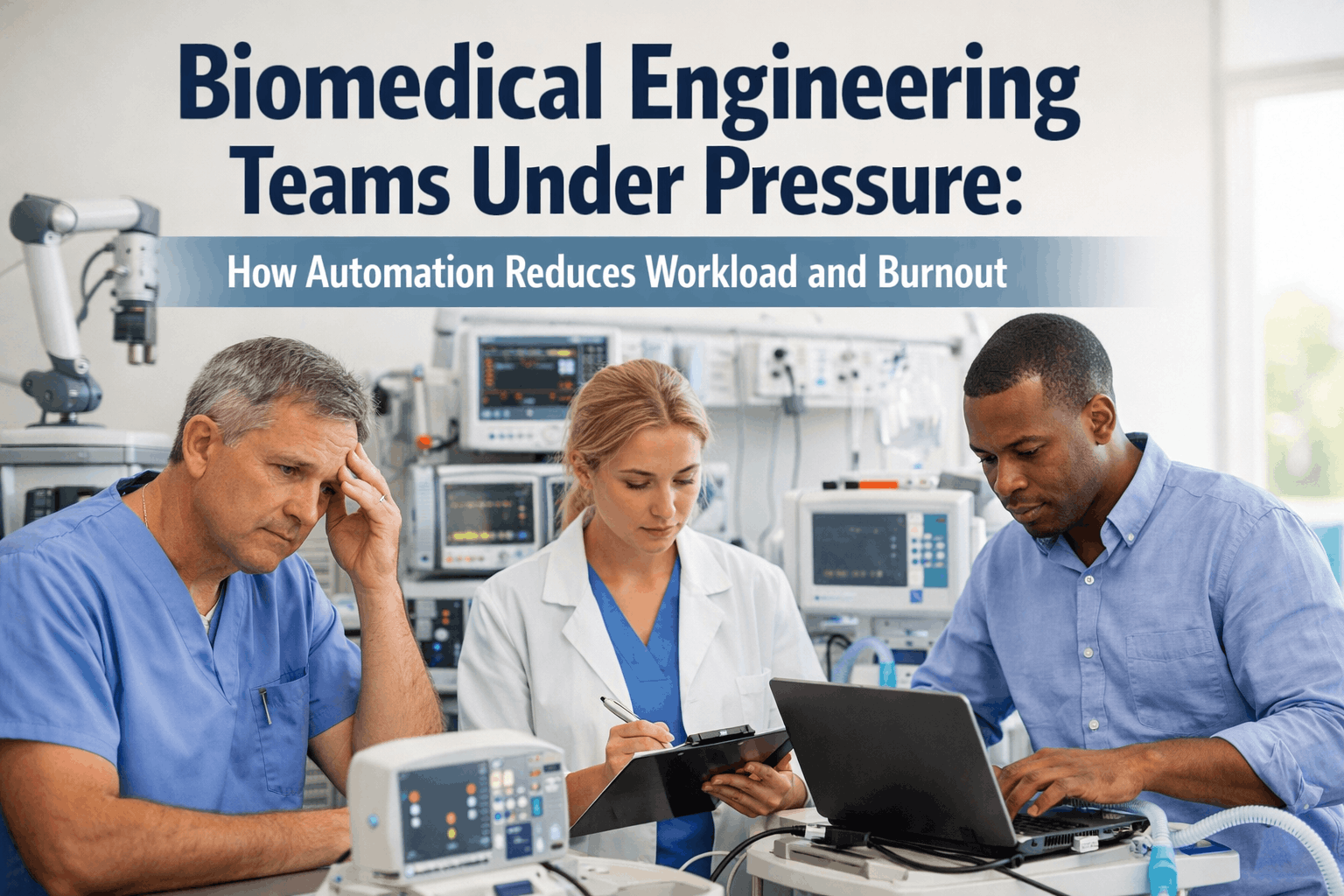
There are over 7,300 biomedical equipment technician positions opening up every year across hospitals in the United States, but fewer than 400 trained graduates enter the field annually. That is not a hiring challenge. That is a structural crisis quietly reshaping how hospitals maintain the equipment that keeps patients alive. Biomedical engineering teams are caught in an impossible squeeze: aging workforces approaching retirement, medical device inventories growing more complex by the year, and an educational pipeline that has lost nearly half its training programs in the last decade. The technicians who remain are working longer shifts, managing larger device fleets, and spending up to 30% of their time on non-technical tasks like tracking down equipment and filling out paperwork. The result is predictable but devastating: burnout, turnover, compliance gaps, and preventable equipment failures. This is the crisis automation was built to solve, and hospitals that recognize it early are already pulling ahead by implementing intelligent CMMS platforms like OxMaint (sign up free) to protect both their teams and their patients.
The Numbers Behind the Burnout Crisis
Before we talk about solutions, it is worth understanding just how acute the staffing problem has become. The data paints a picture of a profession being asked to do more with less every single year, while hospitals depend on these teams more than ever before.
These figures tell a story of a profession in demographic freefall. With nearly half the current workforce approaching retirement age and 23 states lacking any formal training pathway, hospitals cannot hire their way out of this problem. The only sustainable path forward is making existing teams dramatically more productive by removing the manual, repetitive work that drains their time and energy. That is exactly where booking a demo with OxMaint becomes the first step toward operational transformation.
Where Biomedical Technicians Actually Spend Their Time
One of the most striking findings in recent workforce studies is just how little of a biomedical technician's day is spent on actual technical repair and maintenance work. A significant portion gets consumed by administrative tasks, equipment searches, documentation, and reactive firefighting that could be automated or eliminated entirely.
When technicians spend less than a third of their day on the work they were actually trained for, the system is broken. Every hour spent searching for a portable ventilator or manually filling out a PM form is an hour not spent ensuring that life-critical equipment is safe and reliable. Hospitals using OxMaint's automated workflows (sign up here) are reclaiming those lost hours and redirecting them toward the high-value technical work that only skilled humans can do.
The Real Consequences When Teams Are Stretched Too Thin
The biomedical technician shortage is not an abstract workforce trend. It manifests in tangible, measurable ways that directly affect patient safety, hospital finances, and regulatory standing. When biomed teams are overwhelmed, the consequences cascade through every layer of hospital operations.
Critical imaging devices like MRI machines average 30 to 60 hours of unplanned downtime annually, costing hospitals between $60,000 and $120,000 per device in lost revenue and rescheduled procedures. When PM backlogs grow, these numbers multiply.
Joint Commission and CMS surveys require documented evidence of completed preventive maintenance. Overworked teams that skip documentation or defer PMs create audit trails full of gaps, putting accreditation at risk.
Chronic overwork drives experienced technicians out of the field entirely. Surveys show 52% of BMETs describe their workload as heavy, with 12% calling it excessive. Losing a senior technician means losing decades of institutional knowledge.
Hospitals fill staffing gaps by outsourcing repairs to third-party vendors at premium rates. A strained department has less time to evaluate cost-effective alternatives, leading to unnecessary supply-chain spending that compounds annually.
Your Team Deserves Better Tools
Reduce burnout, eliminate busywork, and let your biomed team focus on what they do best. OxMaint automates the manual workflows that drain technician time and energy.
Five Automation Strategies That Directly Reduce BMET Workload
Automation in healthcare maintenance is not about replacing biomedical technicians. It is about removing the low-value tasks that prevent skilled professionals from doing their best work. Here are five specific workflow automations that hospitals are implementing today to protect their teams from burnout while improving maintenance outcomes.
Automated Preventive Maintenance Scheduling
Instead of manually tracking PM due dates across spreadsheets and calendars, a CMMS auto-generates work orders based on manufacturer recommendations, regulatory intervals, or equipment usage data. Technicians receive mobile notifications with complete task checklists, eliminating the scheduling overhead that often falls on senior staff members who should be doing higher-level work.
Digital Work Order Completion with Photo Evidence
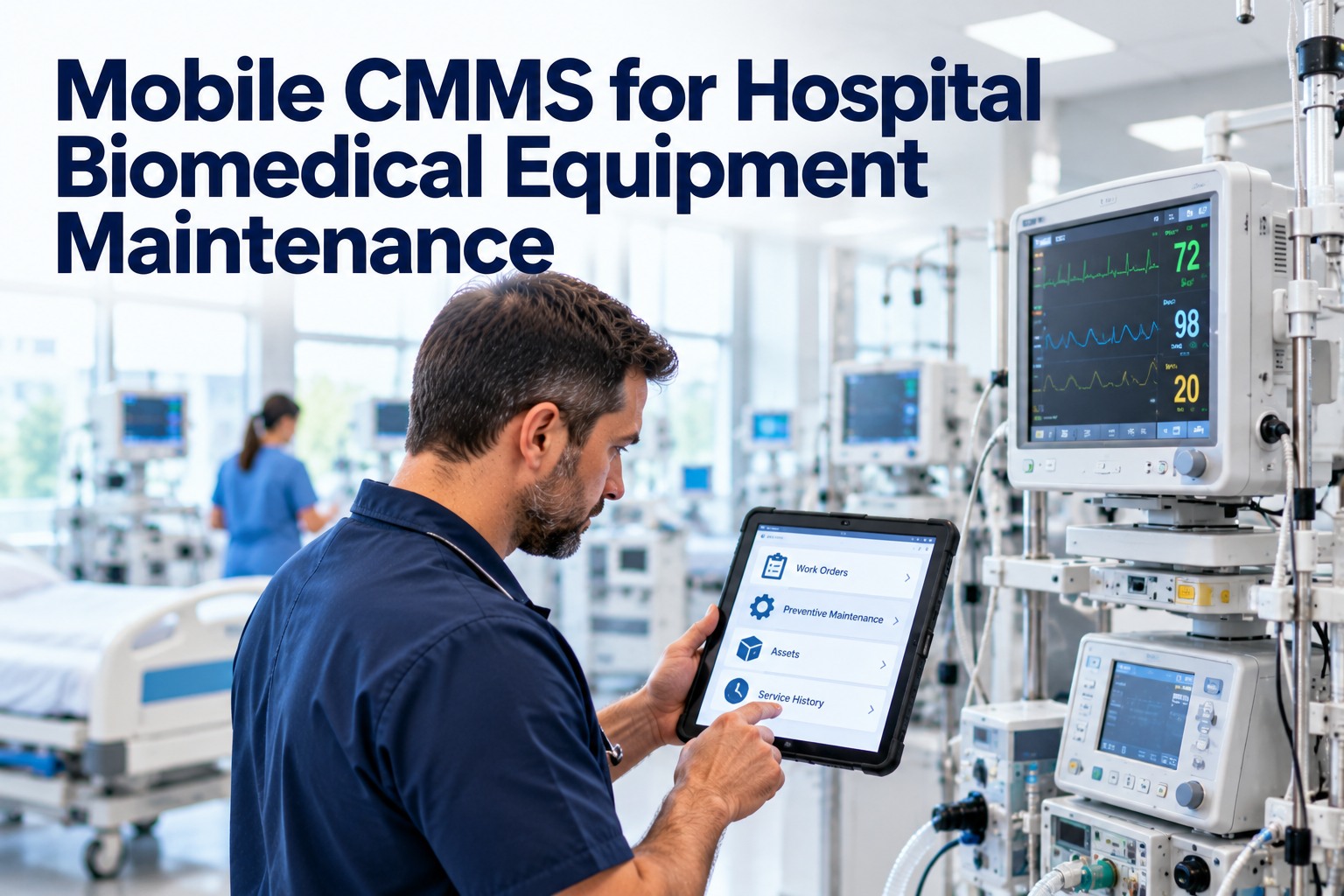
Paper-based documentation is one of the biggest time drains in biomedical departments. Mobile work order completion lets technicians log results, attach photos, record meter readings, and capture digital signatures directly from their phones. The system timestamps everything automatically, creating audit-ready records without any additional administrative effort.
Intelligent Work Distribution and Load Balancing
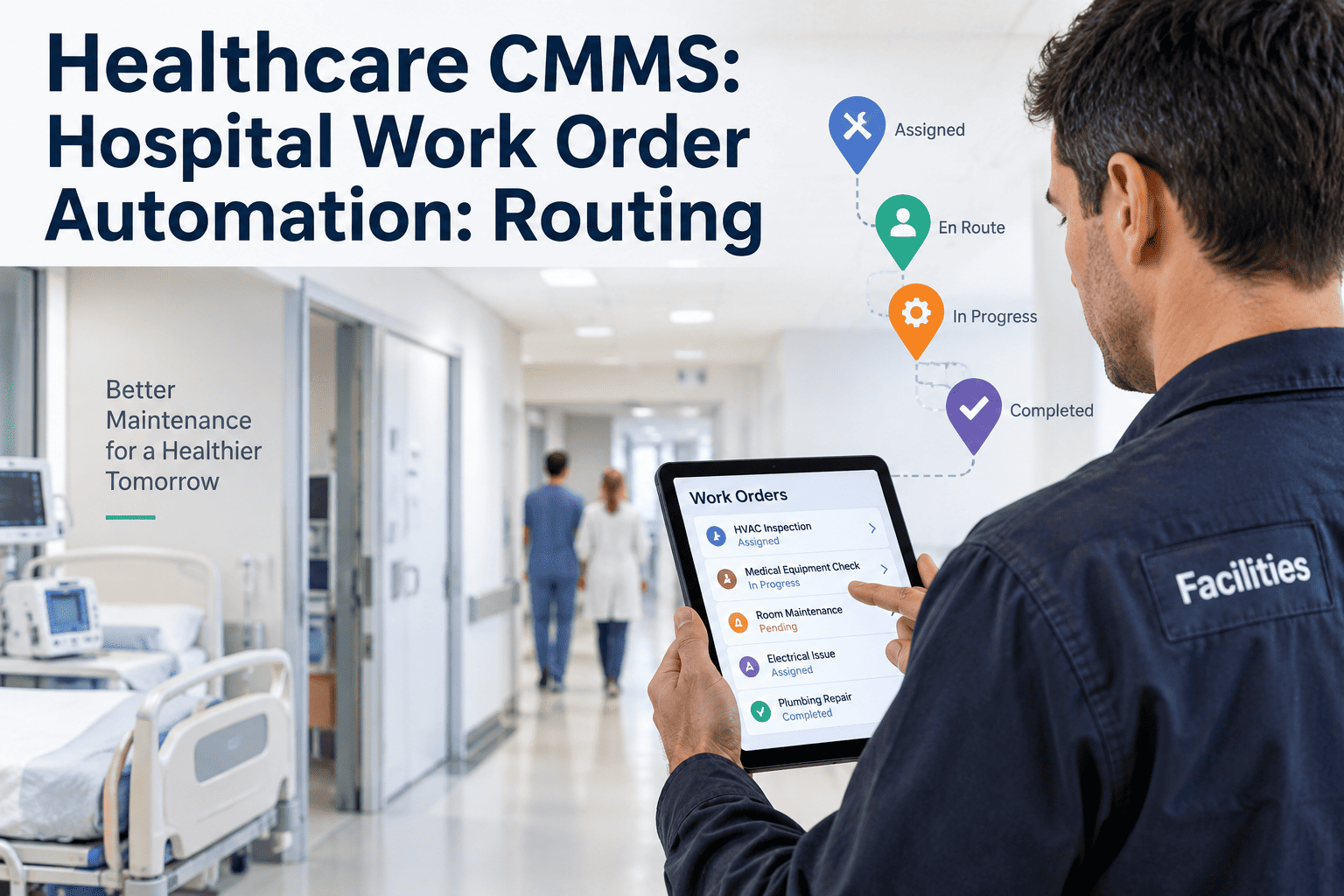
When work orders are assigned manually, workload distribution tends to be uneven, with the most capable technicians getting overloaded while others have capacity. Automated assignment engines distribute tasks based on technician skills, certification levels, current workload, and physical proximity to equipment, ensuring no single team member bears a disproportionate burden.
Centralized Asset Registry with Lifecycle Tracking
A single searchable database for every medical device in the hospital eliminates the equipment scavenger hunts that consume up to 30% of a technician's day. With location tracking, warranty status, service history, and recall alerts all in one place, technicians spend less time searching and more time servicing. Book a demo to see how OxMaint centralizes your entire device inventory.
Automated Compliance Reporting and Dashboards
Generating audit-ready reports for Joint Commission or CMS surveys used to mean hours of compiling data from multiple sources. Automated compliance dashboards provide real-time visibility into PM completion rates, overdue tasks, calibration status, and regulatory readiness, turning what was once a multi-day reporting exercise into a one-click export.
Before and After: The Impact of Workflow Automation
The difference between a manually managed biomedical department and one running on intelligent automation is not marginal. It is transformational. Here is what hospitals typically experience after implementing a purpose-built CMMS for their biomedical engineering operations.
| Operational Metric | Before Automation | After Automation |
|---|---|---|
| PM Completion Rate | 55–70% | 90–98% |
| Time to Generate Audit Reports | 2–5 days | Under 60 seconds |
| Equipment Search Time per Shift | 45–90 minutes | Near zero |
| Reactive vs Preventive Work Ratio | 60:40 reactive-heavy | 30:70 preventive-dominant |
| Work Order Documentation Time | 15–20 min per order | 3–5 min per order |
| Technician Overtime Hours | Frequent and escalating | Reduced by 40–60% |
These improvements are not aspirational targets. They represent the documented experience of hospitals that have moved from fragmented, paper-heavy maintenance operations to centralized digital platforms. The impact on technician wellbeing is equally significant: when the system handles scheduling, documentation, and reporting, biomed professionals can focus on the problem-solving and hands-on technical work that drew them to the profession in the first place. Ready to see these results at your facility? Sign up for OxMaint and start your transformation today.
Building a Sustainable Biomedical Department for the Next Decade
Technology alone will not solve the biomedical staffing crisis. But automation is the foundation that makes every other strategy, from apprenticeship programs to cross-training initiatives, actually viable. When your existing team is drowning in manual work, there is no capacity left for mentoring new hires, upskilling junior technicians, or participating in the professional development that keeps experienced staff engaged and retained.
A modern CMMS like OxMaint creates the breathing room hospitals need to build sustainable biomed departments. Automated scheduling frees senior technicians to mentor apprentices. Digital workflows reduce the administrative burden that drives burnout. Compliance dashboards eliminate the last-minute scrambles that make survey season dreaded rather than routine. And centralized asset data ensures that when a technician retires, their institutional knowledge about equipment histories and maintenance patterns does not walk out the door with them.
Automation Is Not the Future. It Is the Lifeline.
1,000+ hospitals trust OxMaint to reduce technician workload, improve PM completion, and keep their teams focused on patient safety instead of paperwork.
Frequently Asked Questions
Why is there a shortage of biomedical equipment technicians in hospitals
The shortage stems from an aging workforce (47% of HTM professionals are over 50), a shrinking pipeline of training programs (half have closed in the past decade, leaving 23 states without programs), and annual demand of 7,300+ positions against only 400 new graduates entering the field each year.
How does automation reduce burnout for biomedical engineering teams
Automation removes manual tasks like PM scheduling, paper documentation, equipment searches, and compliance report generation. This reclaims 2-4 hours per technician per shift for actual technical work, reducing overtime, frustration, and the cognitive overload that drives burnout and turnover.
What types of hospital maintenance tasks can be automated with a CMMS
Preventive maintenance scheduling, work order creation and assignment, mobile task completion with photo evidence, compliance reporting, asset inventory management, calibration tracking, parts procurement alerts, and real-time performance dashboards can all be automated through platforms like OxMaint.
How much time do biomedical technicians spend on non-technical tasks
Studies indicate BMETs spend 20-30% of their time locating equipment and another 15-20% on manual documentation, meaning up to half their shift may be consumed by tasks that do not require their technical expertise and could be automated or eliminated.
Can a CMMS help hospitals meet Joint Commission requirements with fewer staff
Yes. Automated audit trails, scheduled PM reminders, and one-click compliance reports ensure documentation standards are met consistently even with reduced headcount. Hospitals using OxMaint report 90%+ PM compliance rates, well above the thresholds Joint Commission surveyors look for.
What should hospitals look for in maintenance automation software for biomed teams
Key features include mobile-first work order management, automated PM scheduling tied to manufacturer specs, real-time compliance dashboards, asset lifecycle tracking, intelligent task assignment, and seamless integration with existing hospital systems. OxMaint provides all of these in a healthcare-purpose-built platform.

.png)