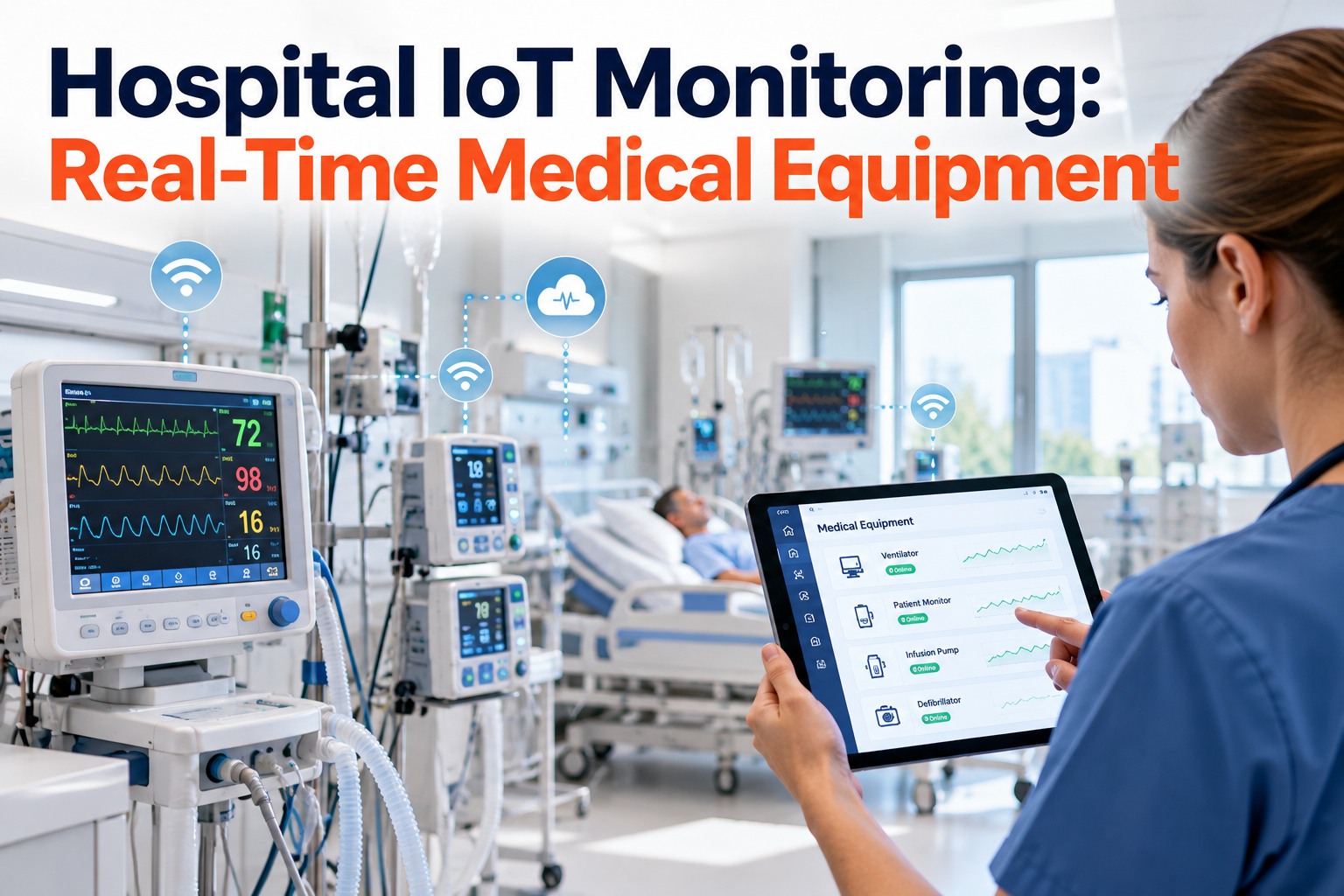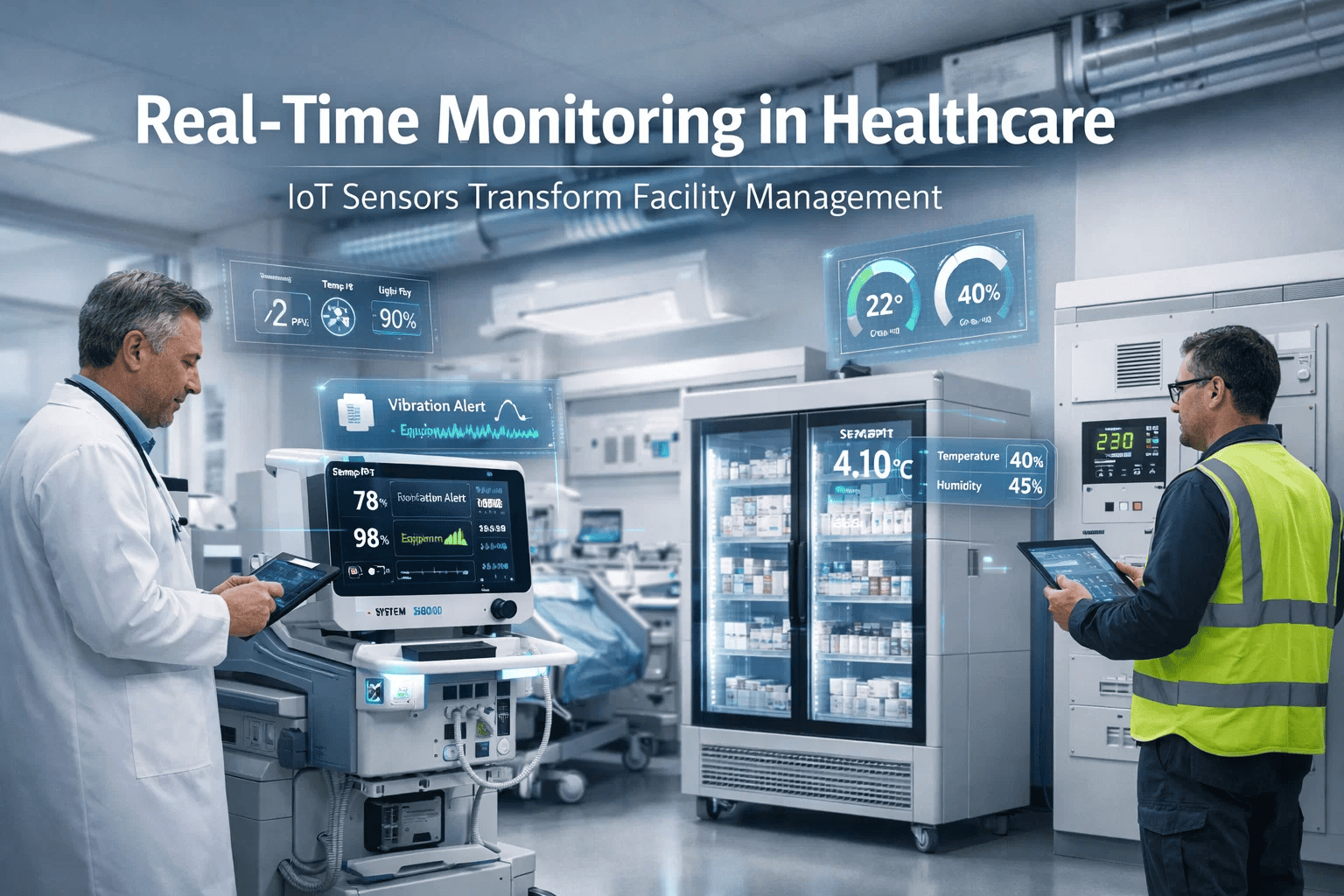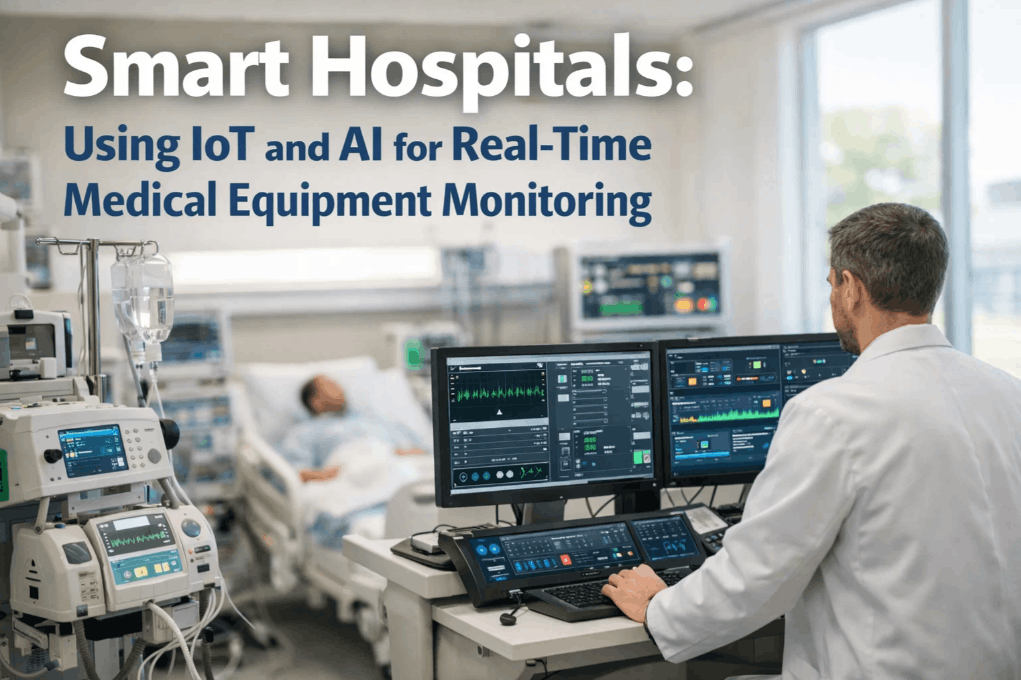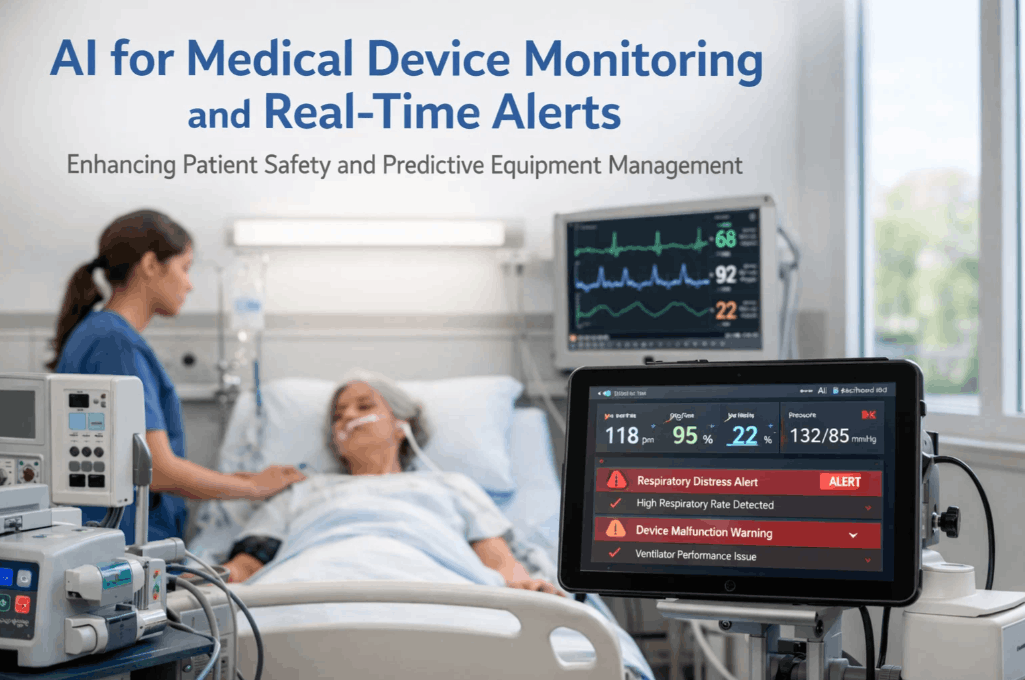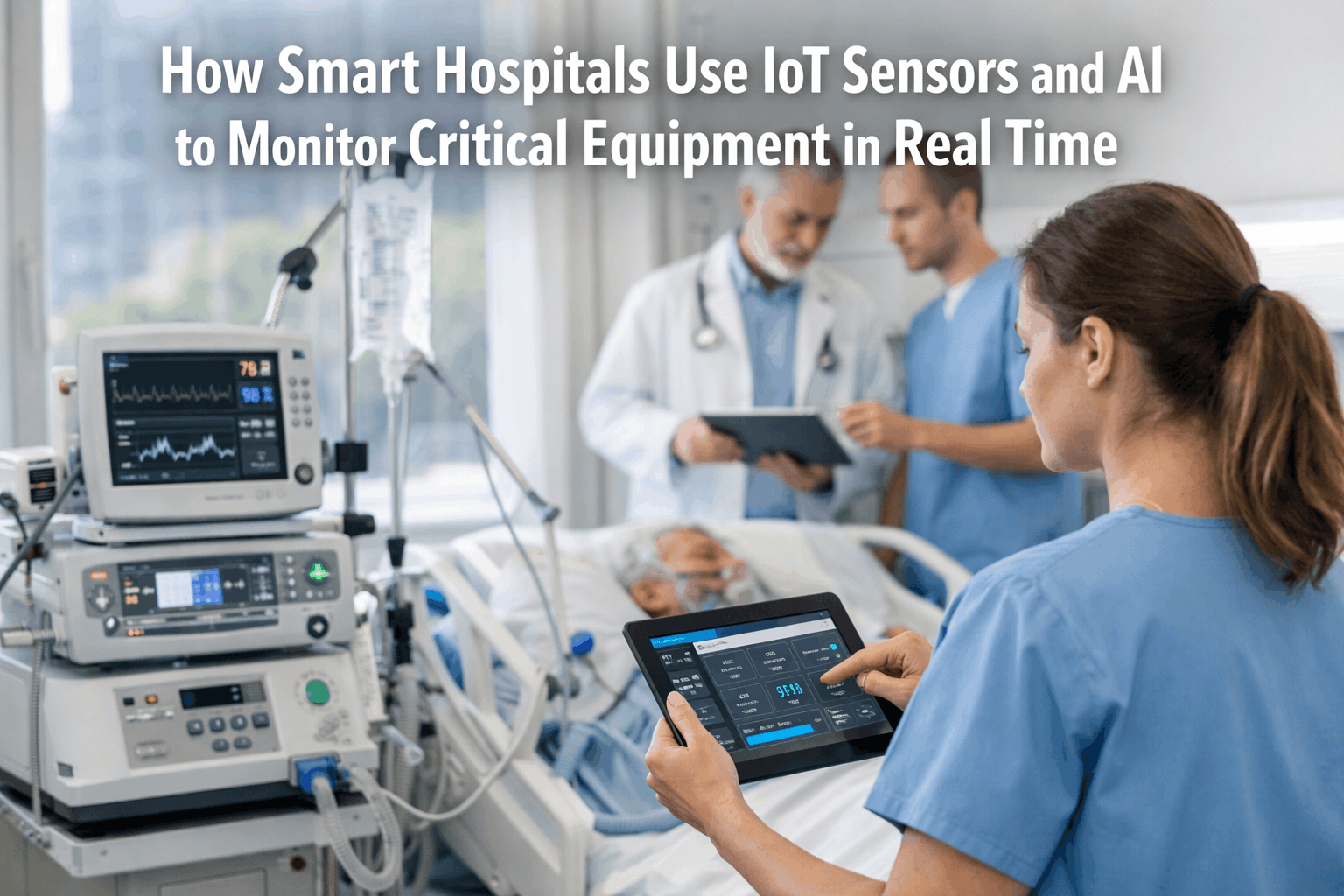
Imagine a hospital where every ventilator, MRI machine, and infusion pump communicates its own health status in real time. Where AI algorithms detect a failing compressor inside a CT scanner three weeks before it breaks down, automatically generating a maintenance work order and scheduling a technician during off-peak hours. This isn't a futuristic concept. It's happening right now in smart hospitals around the world. The convergence of IoT sensors and artificial intelligence is fundamentally reshaping how healthcare facilities monitor, maintain, and optimize their most critical equipment. The global IoT sensors in healthcare market reached $81.4 billion in 2023 and is projected to surge past $349 billion by 2033, driven by the urgent need for real-time monitoring and predictive capabilities. For hospitals still relying on scheduled inspections and reactive repairs, the cost of inaction grows every day. If your facility is ready to make the leap to intelligent equipment monitoring, sign up for OxMaint and start transforming your maintenance operations today.
Why Traditional Equipment Maintenance Is Failing Hospitals
For decades, hospitals have relied on two approaches to maintain medical equipment: preventive maintenance and reactive maintenance. Preventive maintenance follows a fixed calendar, replacing parts and servicing machines at set intervals regardless of their actual condition. Reactive maintenance waits until something breaks before taking action. Both approaches are deeply flawed in modern healthcare environments.
Preventive maintenance leads to over-servicing perfectly functional equipment while still missing failures that occur between scheduled checks. Reactive maintenance creates emergency situations where critical devices go offline during peak patient hours, forcing procedure cancellations and potentially endangering lives. Research indicates that hospitals typically experience 25 to 35 percent of their maintenance workload as emergency repairs, costing four to six times more than planned maintenance. One day of unexpected MRI downtime alone can result in dozens of canceled patient scans and substantial revenue loss.
How IoT Sensors Work Inside a Smart Hospital
The Internet of Things in healthcare refers to a network of interconnected sensors, devices, and software platforms that continuously collect, transmit, and analyze data from medical equipment and hospital infrastructure. Every piece of critical equipment, from ventilators and defibrillators to HVAC systems and sterilization units, can be embedded with or attached to IoT sensors that monitor specific performance parameters in real time.
These sensors track variables like vibration patterns, temperature fluctuations, electrical current draw, operating pressure, humidity levels, and usage cycles. The data flows wirelessly through secure hospital networks to a centralized cloud platform where it is stored, processed, and made available to maintenance teams, clinical engineers, and administrators. Modern AI-powered IoT systems consistently achieve 85 to 98 percent accuracy for critical infrastructure monitoring and patient safety compliance. Want to see how this technology integrates with a maintenance platform built for healthcare? Book a demo with OxMaint's team.
The IoT-to-Action Pipeline in Smart Hospitals
The AI Engine: From Raw Data to Predictive Intelligence
IoT sensors are only as valuable as the intelligence layer that interprets their data. This is where artificial intelligence transforms raw numbers into actionable maintenance decisions. AI-powered predictive maintenance systems use machine learning models trained on historical performance data, manufacturer specifications, and real-time sensor inputs to identify the early signatures of equipment degradation.
Unlike simple threshold-based alerts that only trigger when a reading exceeds a preset limit, AI models recognize subtle pattern shifts that human technicians would never catch. A slight change in vibration frequency, a gradual increase in operating temperature, or an unusual variation in power consumption can all signal an impending failure weeks or even months before it occurs. Research from the Deloitte Analytics Institute reports that AI-driven predictive maintenance results in 25 percent greater productivity, 25 percent lower maintenance costs, and 25 percent fewer accidents caused by equipment failures. GE HealthCare's OnWatch Predict system for MRI machines has demonstrated up to 60 percent reduction in unplanned downtime and a 35 percent decrease in customer-initiated service requests.
Transform Your Equipment Maintenance with AI-Powered Intelligence
OxMaint combines IoT data integration with AI-driven analytics to give your hospital real-time visibility and predictive control over every critical device. Join 1,000+ organizations already benefiting.
Real-World Impact: What the Numbers Reveal
The business case for IoT and AI in hospital equipment monitoring isn't theoretical. Hospitals and healthcare networks that have adopted these technologies are reporting measurable improvements across every operational dimension. These outcomes are consistent across facilities of different sizes and specialties, suggesting that the benefits of smart monitoring are universal rather than limited to large academic medical centers.
These are not marginal improvements. A 30 to 50 percent reduction in unplanned downtime means hundreds of additional patient procedures completed annually. A 25 percent decrease in maintenance costs translates to substantial budget savings that can be redirected toward patient care or new equipment acquisition. And extending equipment lifespan by 20 to 40 percent means delaying capital expenditures worth millions of dollars. To start achieving these results at your facility, sign up for OxMaint and put your equipment data to work.
Which Hospital Equipment Benefits Most from IoT Monitoring
While virtually any hospital asset can benefit from IoT-enabled monitoring, certain equipment categories deliver the highest return on investment due to their criticality, cost, and failure consequences. Smart hospitals prioritize sensor deployment on devices where unplanned downtime has the most severe clinical and financial impact.
How OxMaint Brings IoT and AI Together for Healthcare
OxMaint is purpose-built to serve as the command center where IoT sensor data meets AI-driven intelligence and operational action. Rather than requiring hospitals to piece together separate tracking, analytics, and maintenance systems, OxMaint integrates all three into a single cloud-based platform that any healthcare facility can deploy within weeks.
Ready to Build a Smarter, More Resilient Hospital
Discover how leading healthcare facilities are eliminating unplanned downtime, extending equipment life by decades, and saving millions with OxMaint's AI-powered CMMS platform.
Frequently Asked Questions
What types of IoT sensors are used in hospital equipment monitoring
Hospitals typically deploy vibration sensors, temperature and humidity sensors, pressure transducers, electrical current monitors, flow rate sensors, and environmental quality sensors. The specific combination depends on the equipment type. For example, MRI machines benefit from helium level and coil temperature sensors, while HVAC systems use air pressure and particulate sensors. Modern sensors are compact, low-power, and can communicate wirelessly via Wi-Fi, Bluetooth Low Energy, RFID, or cellular protocols.
How accurate is AI at predicting medical equipment failures
Modern AI-powered monitoring systems consistently achieve 85 to 98 percent accuracy for critical infrastructure monitoring, according to industry data. Machine learning models can predict equipment failures with over 85 percent accuracy when trained on sufficient historical data. These models improve continuously as they process more operational data, meaning accuracy increases over time as the system learns your facility's specific equipment behavior patterns.
Does OxMaint require specific IoT hardware or sensors
No. OxMaint is hardware-agnostic and can integrate with IoT sensor data from any manufacturer or protocol. Whether your facility uses RFID tags, Bluetooth beacons, Wi-Fi-enabled sensors, or direct equipment integrations, OxMaint's platform can ingest and analyze the data. For facilities that don't yet have IoT sensors, OxMaint also supports QR code-based asset tracking and manual condition reporting as a starting point, with IoT integration available as your infrastructure matures.
How long does it take to implement IoT-enabled monitoring with OxMaint
Most healthcare facilities can begin using OxMaint's core CMMS features within days. Full IoT sensor integration typically takes two to six weeks depending on the number of devices and the complexity of your existing infrastructure. OxMaint's onboarding team provides hands-on support throughout the process, including data migration from legacy systems, staff training, and sensor configuration to ensure a smooth transition.
Is IoT equipment monitoring compliant with healthcare data security regulations
Yes. OxMaint is built with healthcare compliance as a core requirement. All sensor data is encrypted in transit and at rest. The platform supports HIPAA-compliant data handling practices, role-based access controls, and complete audit trails for every maintenance action. IoT sensor data related to equipment performance does not typically contain protected health information, but OxMaint ensures all data pathways meet or exceed healthcare security standards.
What is the ROI of implementing IoT and AI for hospital equipment monitoring
Healthcare facilities implementing predictive maintenance with IoT and AI typically report 30 to 50 percent reductions in unplanned downtime, 25 percent lower overall maintenance costs, 20 to 40 percent longer equipment lifespans, and 25 percent fewer equipment-related safety incidents. For a mid-sized hospital managing hundreds of devices, these improvements can translate to millions of dollars in annual savings and significantly improved patient care continuity.
Can small hospitals and clinics benefit from IoT monitoring, or is it only for large systems
IoT and AI-powered monitoring benefits facilities of every size. While large hospital networks gain from cross-site analytics and fleet-wide intelligence, small hospitals and clinics benefit just as much from preventing costly emergency repairs on critical equipment. Cloud-based platforms like OxMaint eliminate the need for expensive on-premises infrastructure, making advanced predictive maintenance accessible to facilities of any size at a fraction of the traditional cost.