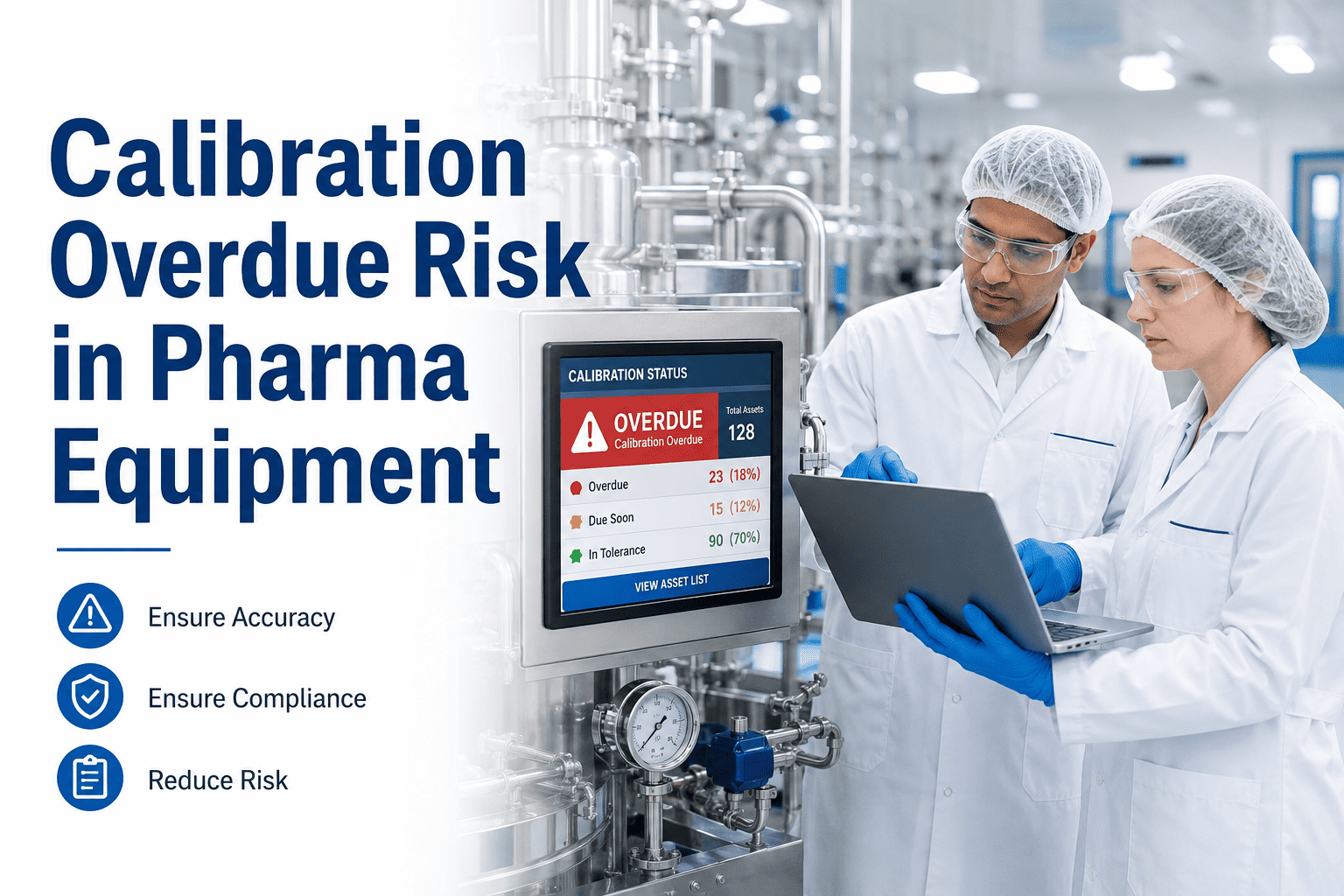
An overdue calibration on a critical instrument is not a scheduling inconvenience — it is a data integrity event. Every measurement taken after the calibration window closes is potentially unreliable, and every batch record referencing that data carries a compliance risk that grows with every day the instrument remains uncalibrated. OxMaint's pharma CMMS tracks every instrument's calibration status in real time, blocking out-of-calibration instruments from active use and generating the QA-ready certificates and compliance reports that FDA, MHRA, and EU GMP inspections require.
Calibration Overdue Risk in Pharma Equipment
Prevent overdue calibration on critical instruments with automated alerts, real-time asset status, certificate tracking, and QA-ready compliance reports — all in one validated CMMS platform.
What Overdue Calibration Actually Costs Pharma Operations
How OxMaint Eliminates Calibration Overdue Risk
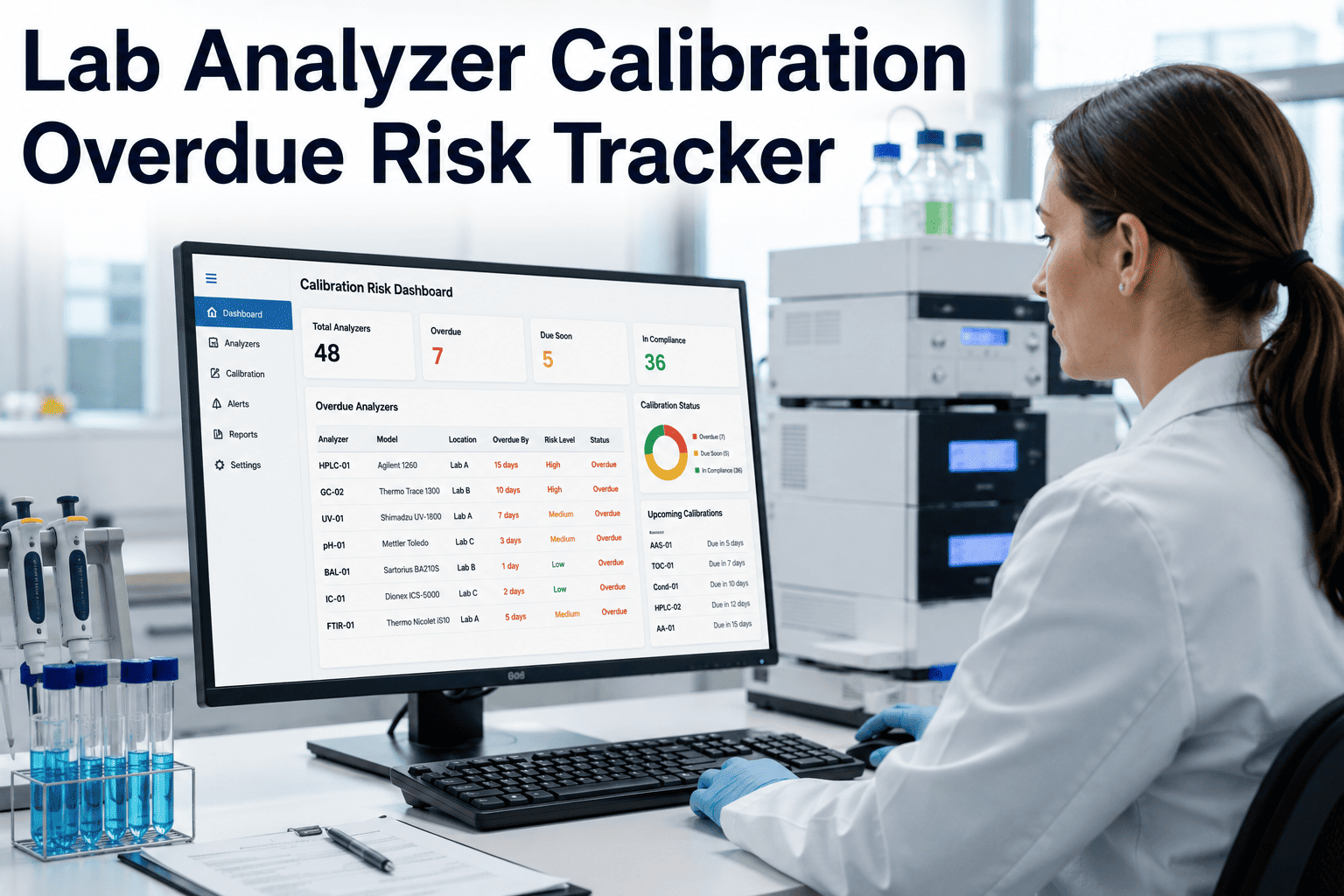
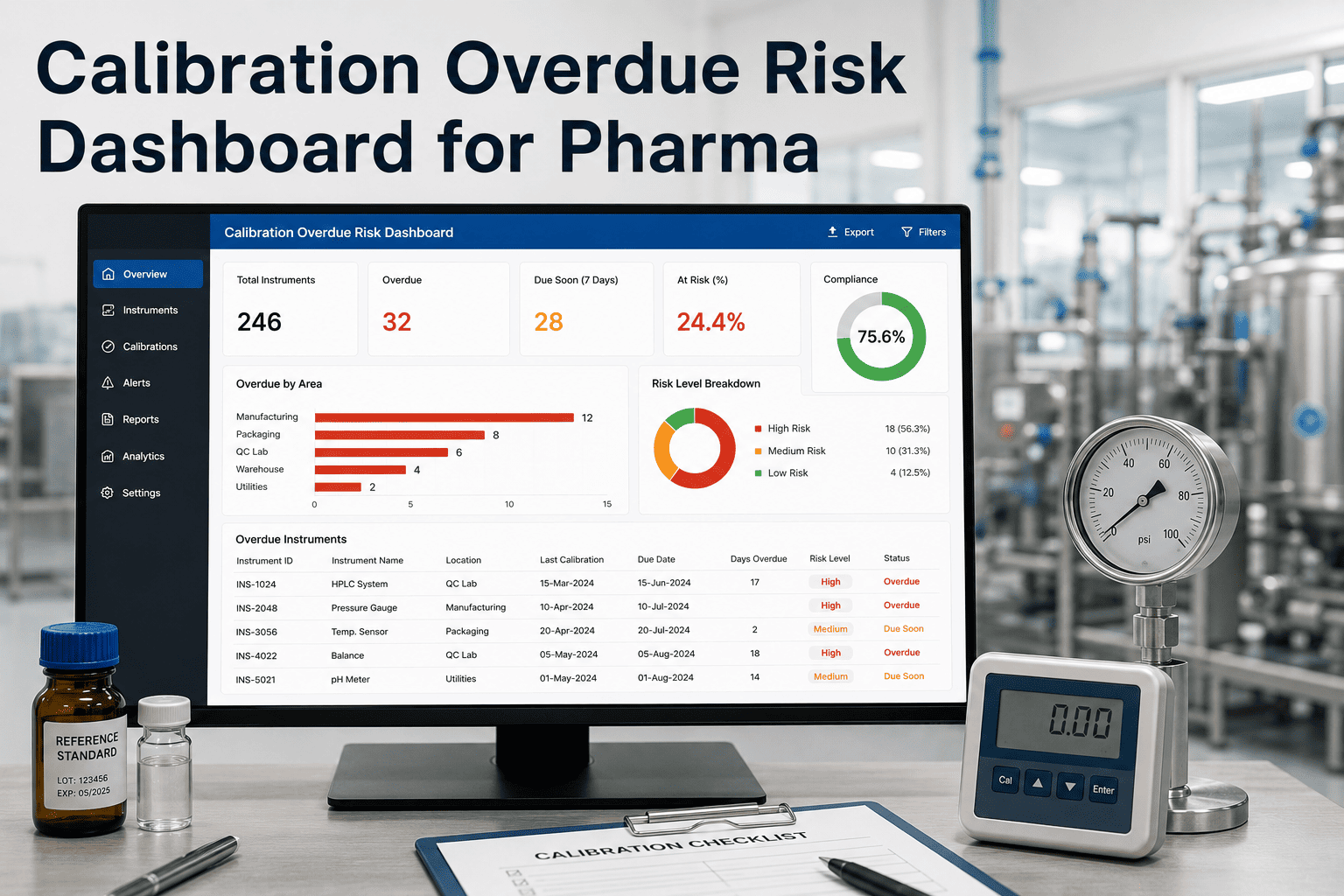
Every instrument in OxMaint carries a live calibration status — in-calibration, due soon, or overdue — visible in the asset register, the instrument's work order history, and the QA dashboard. Status updates the moment a calibration certificate is logged or a due date passes.
OxMaint sends configurable advance alerts — typically at 30, 14, and 7 days before calibration due — to the assigned calibration technician, area supervisor, and QA reviewer. Instruments that breach the due date trigger automatic escalation to QA Manager, preventing silent overdue accumulation.
Calibration certificates — including NIST-traceable reference standard details, tolerance data, test values, and technician sign-off — are attached directly to the instrument's calibration work order in OxMaint and retrievable in seconds for regulatory inspection or batch record review.
When a calibration result falls outside the defined tolerance range, OxMaint automatically flags the instrument as out-of-tolerance, opens a linked CAPA, and notifies QA to initiate a batch impact assessment. The instrument remains locked from active production use until the CAPA is resolved and re-calibration is confirmed.
OxMaint generates calibration compliance reports filterable by instrument type, area, due date, and calibration status — formatted for FDA inspection responses, annual product review packages, and metrology program audits. Reports include full certificate history, tolerance data, and technician records.
Configurable instrument lockout prevents production team sign-off on work orders that reference a specific overdue instrument. The instrument's status is visible in the production area asset list, and the lockout is only released when a new calibration certificate is logged and QA approves the return to service.
Critical Pharma Instruments by Calibration Risk Level
| Instrument Type | Typical Frequency | Regulatory Reference | Overdue Impact | OxMaint Alert Threshold |
|---|---|---|---|---|
| Analytical balance / mass measuring | Daily verification + annual calibration | 21 CFR 211.68 | All in-process weight data in question | 7 days advance + Day 0 lockout |
| pH meters (inline and benchtop) | Before each use + periodic calibration | USP <791> | Product pH specification compliance uncertain | 14 days advance + alert at overdue |
| Temperature / humidity loggers | Annual NIST-traceable calibration | 21 CFR 211.68 / ASHRAE 62.1 | Storage condition monitoring data unreliable | 30 days advance + escalation at breach |
| Pressure gauges (sterile processing) | 6-month or annual calibration | EU GMP Annex 1 | Autoclave and cleanroom differential data compromised | 30 days advance + QA flag at overdue |
| HPLC / spectrophotometer systems | Annual system suitability + calibration | USP <621> | All analytical test results potentially invalid | 30 days advance + batch hold flag |
A single overdue instrument in production can put every batch produced that day at risk.
OxMaint gives your QA and metrology teams real-time visibility into every instrument's calibration status — with automated alerts, certificate storage, and one-click compliance reports.
What Pharma Metrology Specialists Observe
Every calibration overdue event at a pharmaceutical site is a data integrity incident — not a maintenance lapse. The FDA's interpretation under 21 CFR 211.68 is clear: equipment not maintained in a calibrated state may produce data of unknown reliability, and any batch records referencing that data are subject to challenge. The operational cost of a missed calibration is not the re-calibration fee. It is the retrospective batch review, the investigation report, and in the worst case, the product rejection or recall.
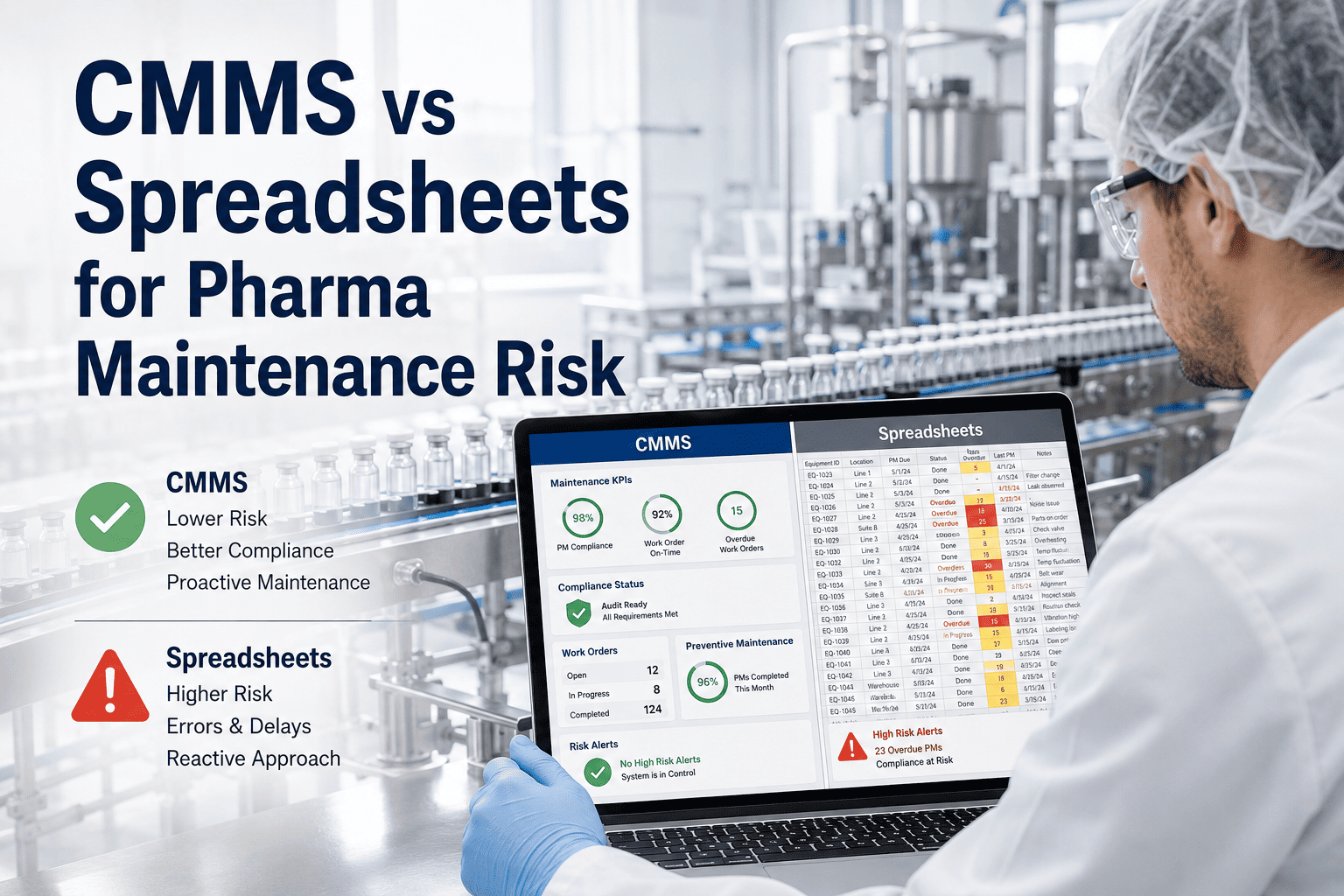
The FDA expects pharmaceutical sites to have a documented, systematic approach to calibration management — not reactive responses to overdue notices. Sites that run automated calibration programs with certificate tracking and NIST traceability consistently pass instrument-related inspection checkpoints with no observations. Those relying on manual tracking consistently generate findings.
Calibration Overdue Risk — Questions Pharma QA Teams Ask
What happens if an instrument is discovered to have been overdue during a batch production run?
How does OxMaint handle NIST-traceable calibration certificate storage?
Can OxMaint generate a calibration compliance report for all instruments by area or line?
How should pharma sites handle an out-of-tolerance calibration result?
Overdue calibration is preventable. Every single incident.
Give your metrology and QA teams the automated calibration management program that keeps every critical instrument current, documented, and audit-ready — with OxMaint.