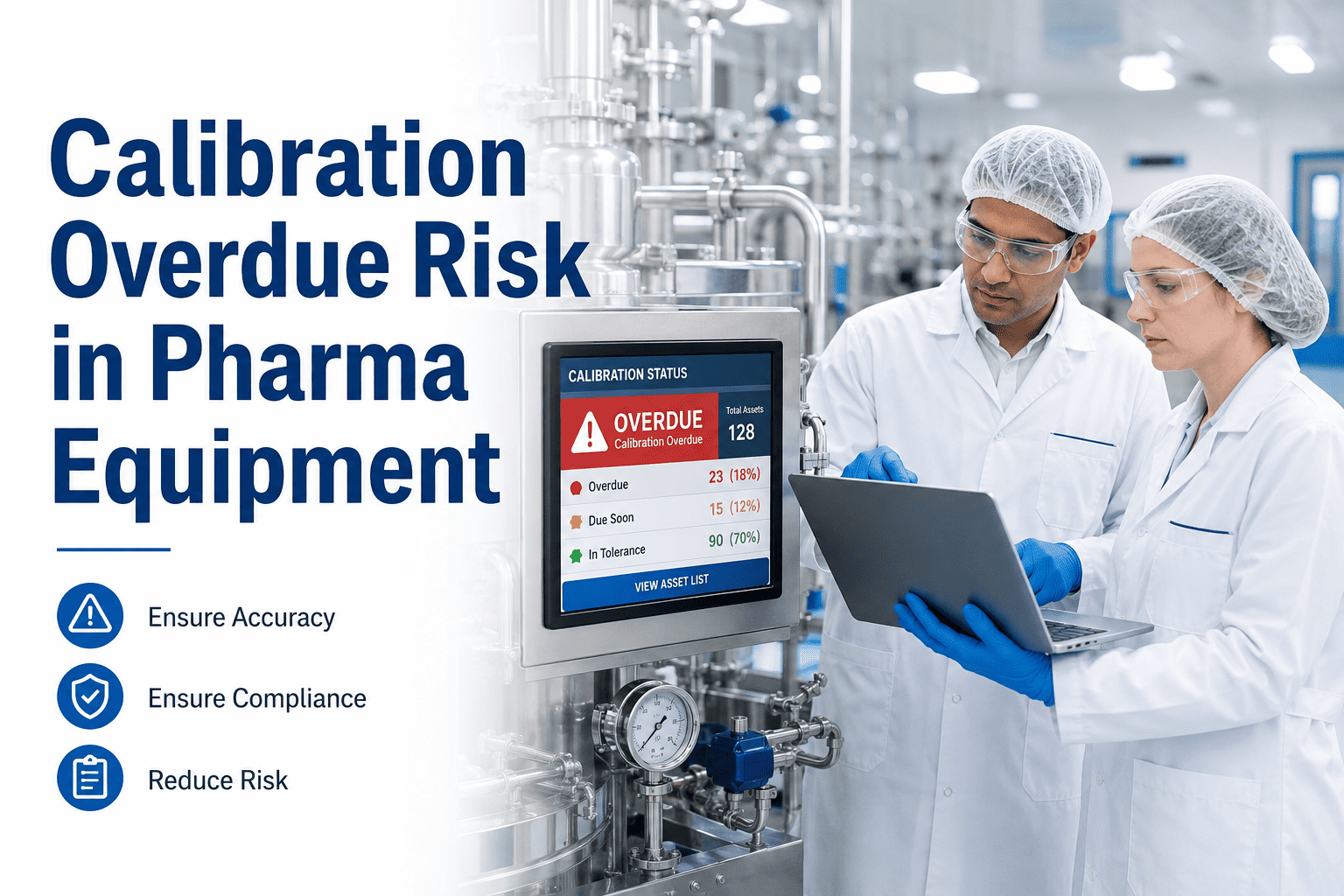
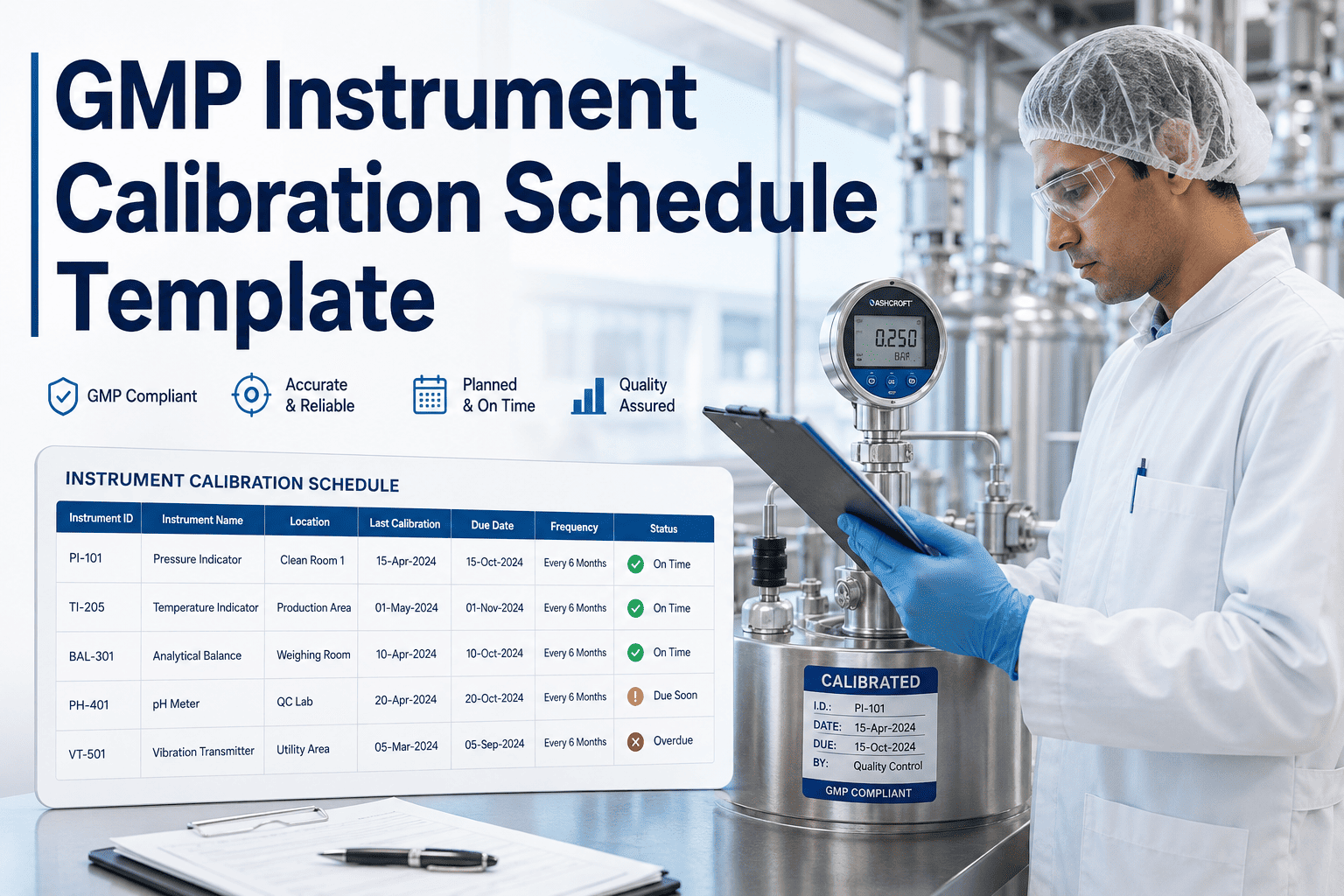
Pharmaceutical laboratory equipment failing validation audits, missing calibration records, and untracked maintenance histories cost US pharma firms an average regulatory citation of $89,000 per instrument — plus production delays that halt batch releases pending equipment qualification. In 2023, FDA warning letters to 47 pharmaceutical manufacturers cited inadequate equipment maintenance documentation and calibration record gaps. The equipment maintenance happened. The calibration was performed. The service records existed scattered across technician notes and supplier files. The failure was in the connection — between what happened in the lab and what was documented in a retrievable, auditable record. That gap is exactly what Oxmaint closes. Book a demo to see how Oxmaint digitizes pharma lab equipment maintenance, calibration records, and instrument qualification across your QA system.
Pharma laboratory compliance requires documented control of four instrument categories: HPLC systems with flow rate, wavelength, and column validation; dissolution apparatus with mechanical and thermal qualification; analytical balances with routine and periodic calibration records; and UV-Vis spectrophotometers with wavelength accuracy verification. Oxmaint digitizes every calibration event, maintenance action, and qualification record — connecting lab execution to auditable documentation automatically, without paper and without manual record reconstruction.
The Four Critical Equipment Systems Where Pharma Labs Face Regulatory Risk
Each system has its own validation requirement, its own documentation obligation, and its own failure mode when that documentation is managed across spreadsheets and supplier files. Book a demo to see how Oxmaint structures all four into a unified digital laboratory equipment management program.
High-performance liquid chromatography instruments require quarterly flow rate calibration, annual wavelength accuracy verification, column performance tracking, and solvent system qualification records. Each maintenance action and validation result must link to a specific HPLC method and batch release record. Oxmaint generates maintenance schedules per instrument, captures calibration readings with instrument serial number and technician identity, and archives the complete qualification record against the system's analytical method file.
Dissolution testing apparatus require monthly mechanical calibration (basket wobble, paddle positioning, vessel temperature control), quarterly basket and paddle performance checks, and annual hydrodynamic validation. Missing or incomplete calibration records trigger batch hold and re-test requirements that delay product release by weeks. Oxmaint schedules calibration per apparatus, captures mechanical test readings at the instrument, and maintains a 7-year archive linked to the batch record.
Analytical balances used in active pharmaceutical ingredient testing and tablet assay require annual external calibration and daily in-use verification using calibrated weights. Each weighing used in batch release or stability testing must have documented evidence that the balance was qualified at the time of use. Oxmaint tracks daily check-weight verification, schedules annual calibration, and links verification results to the batch record containing the weighing.
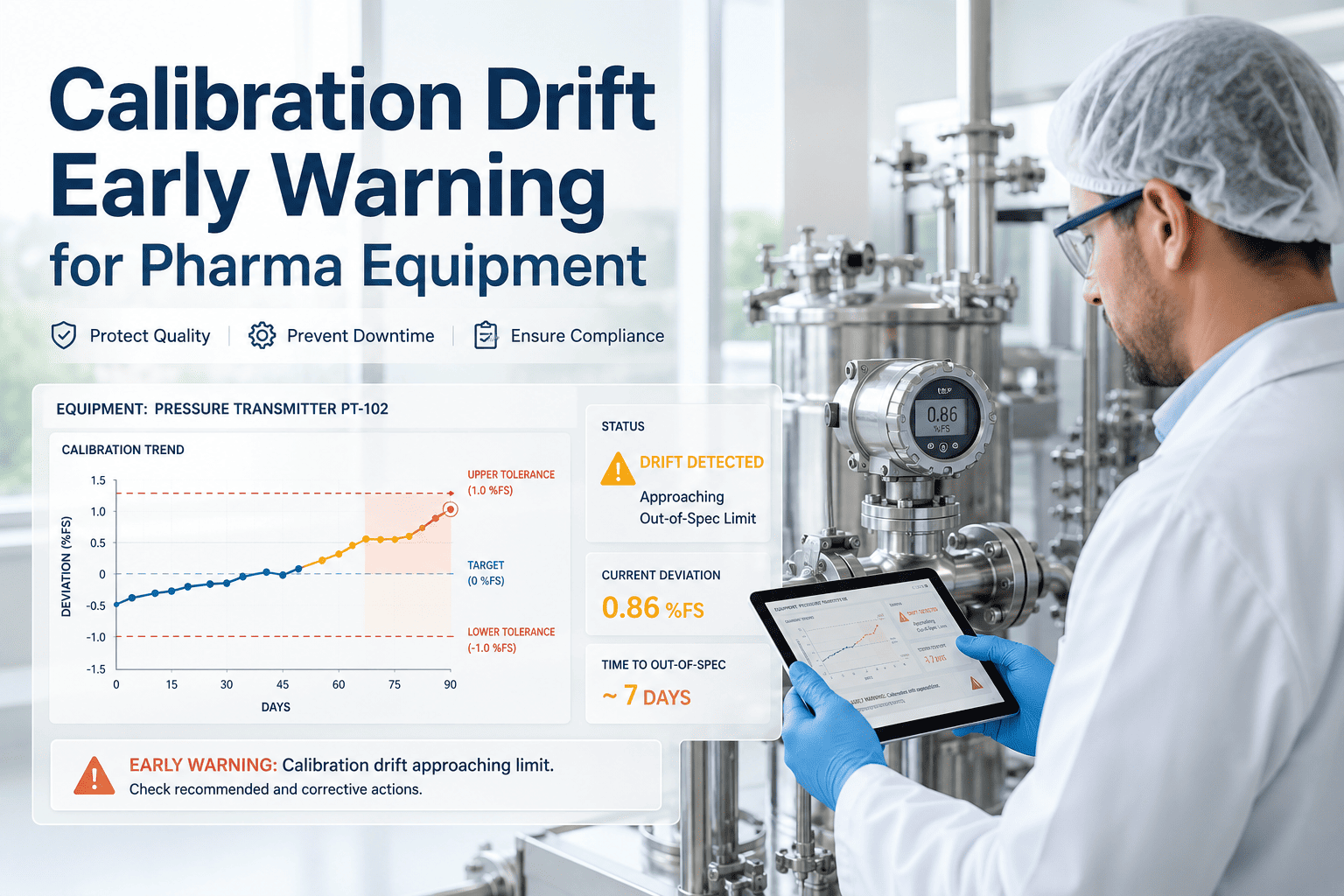
Spectrophotometers require monthly wavelength accuracy checks using standard reference solutions, quarterly absorbance linearity verification, and annual calibration by qualified service provider. Every analytical assay result depends on spectrophotometer qualification at the date of testing. Oxmaint schedules monthly wavelength verification, captures absorbance readings with control solution lot number, and flags any instrument showing drift toward out-of-specification condition.
Every Calibration. Every Maintenance Action. Every Verification. Captured at the Instrument — Not Reconstructed from Memory.
Oxmaint generates equipment maintenance schedules, calibration checklists, and qualification records on mobile or laboratory workstation — completing documentation at the time of work, not reconstructed at audit time. Book a demo to see the equipment qualification workflow for your HPLC, dissolution, and analytical instruments.
Oxmaint Pharma Lab Equipment Management — Implementation Workflow
A structured deployment moves your laboratory from scattered equipment files and spreadsheet tracking to a fully operational digital equipment qualification system — maintaining regulatory compliance through every batch release.
Every HPLC system, dissolution apparatus, analytical balance, and spectrophotometer registered in Oxmaint with its serial number, model, location, and analytical method assignments. Validation status per instrument recorded with OQ/PQ completion dates. Historical calibration records imported from supplier files and lab notebooks to establish baseline compliance status.
HPLC method suitability verification, dissolution apparatus mechanical calibration checklists, balance check-weight verification records, and spectrophotometer wavelength accuracy forms configured as digital checklists in Oxmaint. Lab technicians access calibration schedules via equipment QR codes — no paper logs, no manual record copying. Calibration readings entered at the instrument with timestamp and technician identity automatically captured. Book a demo to see digital calibration recording for your HPLC and dissolution systems.
Oxmaint equipment dashboard activated showing instrument qualification status, overdue calibrations, method suitability compliance, and batch release readiness. QA/QC views configured with equipment validation status alerts. Batch release workflow gated to prevent label approval until linked equipment calibrations are current and in-specification.
All equipment calibration records, maintenance logs, method suitability results, and qualification audit trails exportable in formats required for FDA 483 responses and pre-approval inspection evidence. Equipment maintenance history reports produced automatically from Oxmaint records — complete with electronic signatures and audit trails meeting 21 CFR Part 11 requirements. Seven-year record retention managed automatically per equipment and batch.
Pharma Lab Equipment Management KPI Benchmarks
Client Results — Pharmaceutical Laboratories Using Oxmaint Equipment Management
These outcomes are drawn from pharma lab deployments where Oxmaint's digital equipment management system replaced scattered spreadsheet tracking and supplier file archives within the first year of operation.
From 58% to 97% Equipment Compliance — in 60 Days
Pharmaceutical laboratories that move from spreadsheet equipment tracking to Oxmaint's digital calibration management close the compliance gap before the next FDA inspection — not during it. Book a demo to see your current equipment compliance gap identified in the first deployment session.
Oxmaint Pharma Lab Equipment Platform Features
HPLC method suitability, dissolution apparatus mechanical calibration, and spectrophotometer wavelength verification recorded on mobile at the instrument — calibration readings captured with timestamp, technician identity, and instrument serial number.
Installation qualification, operational qualification, and performance qualification status tracked per instrument with document links. OQ/PQ completion dates logged against instrument record with evidence attachment capability.
Calibration intervals defined per equipment type — daily balance verification, monthly spectrophotometer checks, quarterly dissolution apparatus qualification. Overdue maintenance flagged at 7-day and 1-day intervals before due date.
Batch release workflow gated to require current equipment calibration status. Equipment qualifications linked to analytical methods — batch cannot be released if method's required instruments are out-of-compliance.
Every calibration entry, modification, and deletion logged with user identity, timestamp, and reason. Electronic signatures captured per FDA requirement. Equipment records retained automatically for seven years with secure archive access.
Complete equipment validation history, calibration records, method suitability results, and maintenance audit trails assembled in under 1 hour. Exportable in FDA-compliant formats for 483 responses and pre-approval inspection evidence.
Equipment Documentation: Improved Outcomes
| Equipment Management Area | Spreadsheet Based | Oxmaint Digital |
|---|---|---|
| Overdue calibration identification | Identified during FDA inspection | Automatic alerts at 7 days and 1 day before due date |
| Equipment qualification record retrieval | 3 to 7 days searching supplier files and notebooks | Under 10 minutes from Oxmaint search by equipment serial number |
| Method suitability compliance at batch release | Manual verification — equipment status often unknown | Automated gate preventing batch release until equipment current |
| FDA inspection documentation assembly | 3 weeks of manual record consolidation | 1-hour automated export from Oxmaint with audit trail |
| Batch release delay due to missing equipment records | Average 11.4 days hold time | Average 0.9 days — equipment status known at release decision |
| 21 CFR Part 11 audit trail for calibration entries | No automated audit trail — manual log reviews | Complete electronic signature and user identity per entry |
| Equipment compliance visibility for QA/QC | Status unknown between supplier service visits | Real-time dashboard showing qualification status per instrument |
Frequently Asked Questions
Close the Equipment Compliance Gap Before the Next FDA Inspection
Digital HPLC method suitability verification, dissolution apparatus mechanical calibration tracking, analytical balance daily verification, and spectrophotometer wavelength accuracy management — all live in Oxmaint within 3 to 4 weeks, no IT project required. Book a demo with your QA/QC director and see the complete equipment qualification workflow configured for your analytical laboratory.