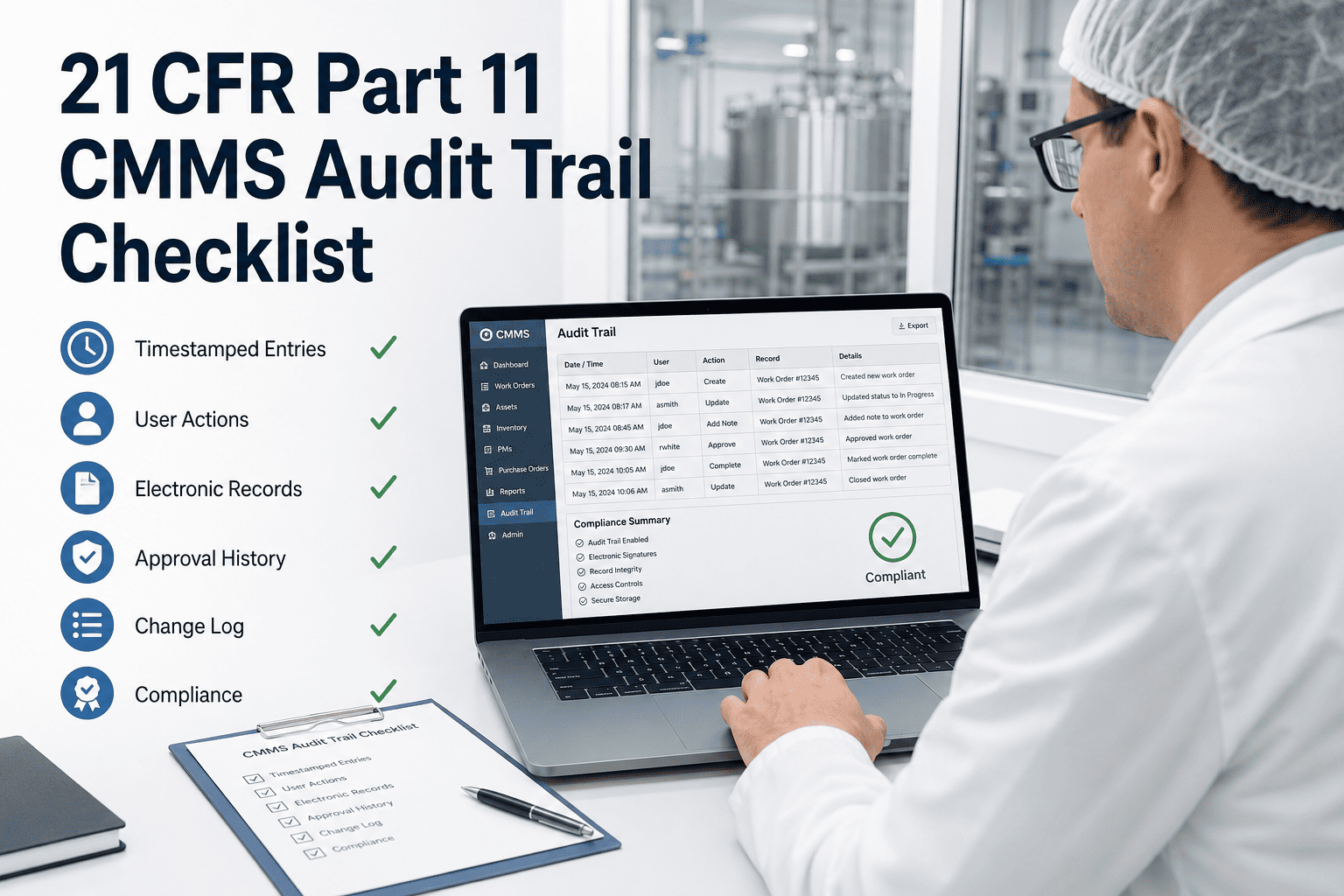
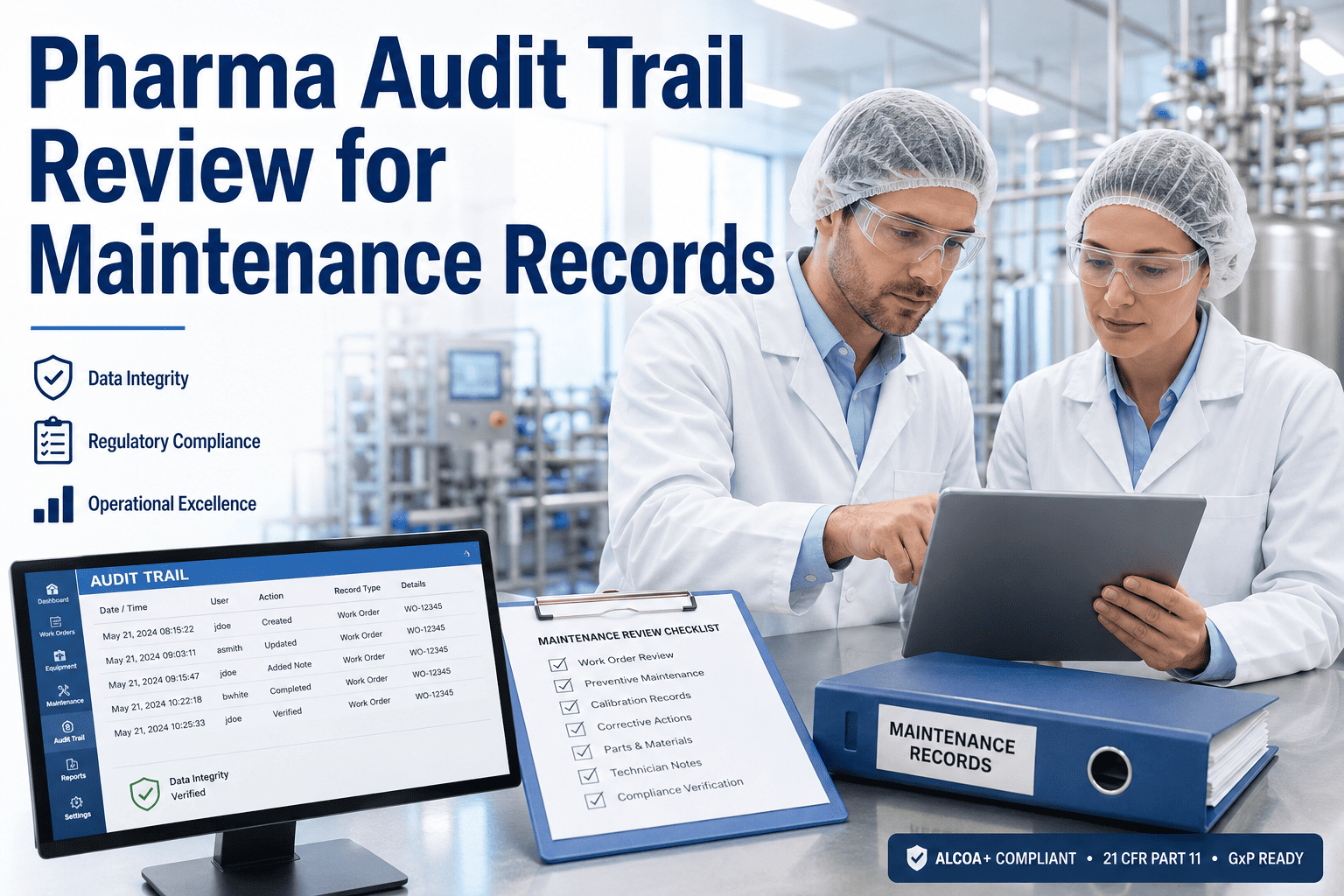
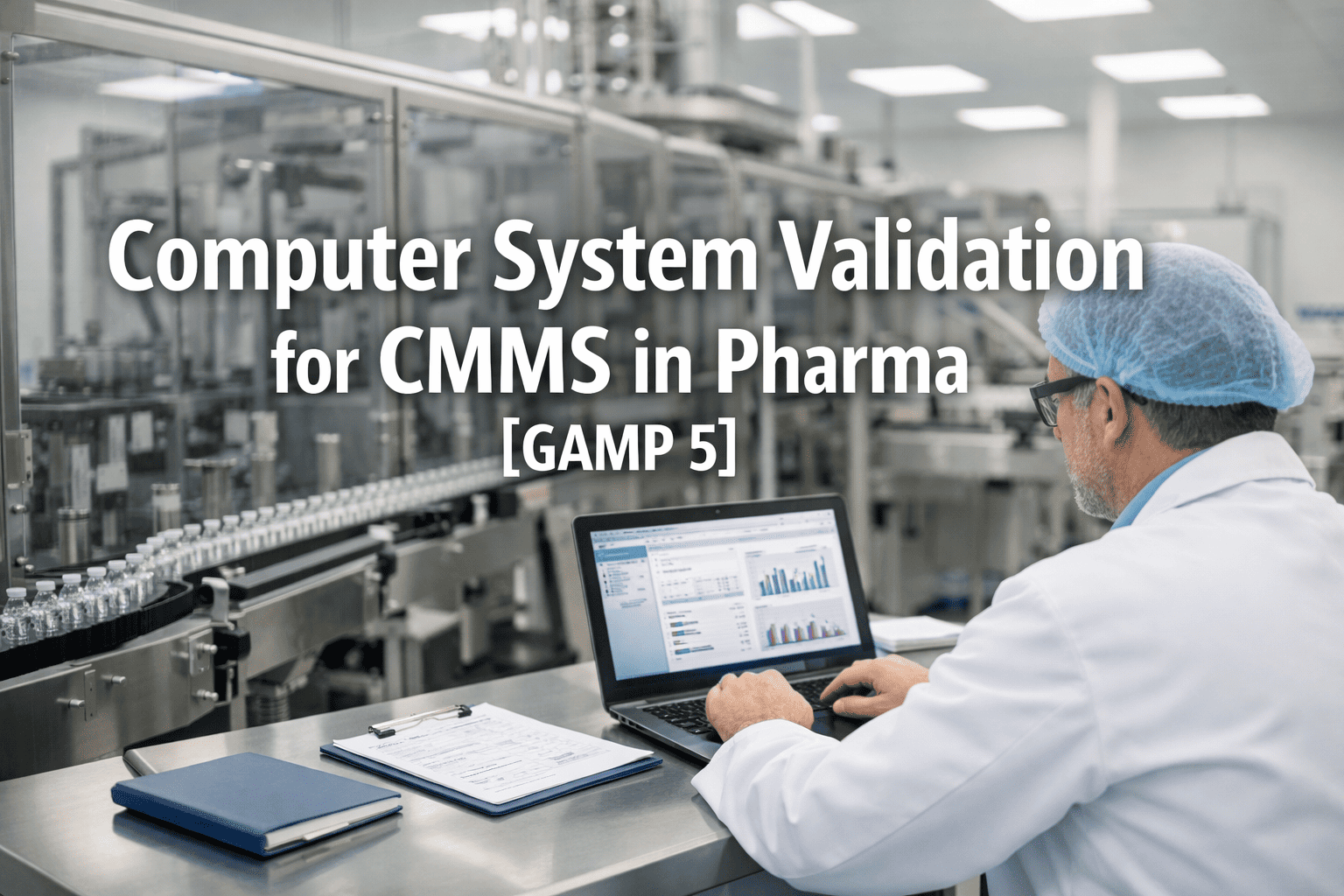
In a regulated pharmaceutical environment, a maintenance record is only as good as the system that created it. Electronic maintenance records must not only capture the right information — they must be created within a validated system with controlled workflows, approved electronic signatures, tamper-evident audit trails, and secure access controls that satisfy 21 CFR Part 11 and GMP requirements. Choosing the wrong platform means your maintenance records may not stand up to regulatory scrutiny, regardless of how diligently your team filled them out. OxMaint is a validated electronic maintenance records platform purpose-built for pharmaceutical manufacturing — with the documentation, controls, and audit support pharma teams need from day one.
VALIDATED PLATFORM
Electronic Maintenance Records for Pharma Validation
Controlled workflows. Approved e-signatures. Complete audit trails. Secure asset documentation. All in one validated CMMS built for pharmaceutical GMP.
Validated Electronic Record
Controlled Workflow
E-Signature
Audit Trail
Access Control
Secure Storage
Part 11 Compliant
What Makes a Maintenance Record "Validated" in a GMP Context
System Validation
The CMMS platform must be validated through IQ, OQ, and PQ protocols that demonstrate the system functions as intended. This means testing the actual software — not just documenting a vendor's claim. OxMaint provides IQ/OQ/PQ protocol templates and has been validated at regulated pharma sites globally.
Controlled Workflows
Records must move through defined, role-controlled approval steps. A technician cannot approve their own work for QA. Record routing, escalation, and closure must follow documented procedures that are enforced by the system — not reliant on individual compliance.
Access Controls
System access must be role-appropriate. Technicians should not be able to modify historical records or access other teams' work orders. Administrative access to change system settings must be restricted and audit-trailed. Account lifecycle management must be documented.
Change Control for System Changes
Any change to validated system configuration — adding a field, modifying a workflow, changing signature requirements — must be controlled through a formal change control process with documented impact assessment and re-validation where required.
OxMaint's Electronic Record Capabilities — Validation Mapping
| Validation Requirement |
Regulatory Reference |
OxMaint Feature |
Evidence Available |
| Controlled record creation workflow |
21 CFR 211.68 |
Configurable multi-step approval workflow per work order type |
Workflow configuration documentation |
| Electronic signature with meaning |
21 CFR Part 11.50 |
Per-signature meaning statement, user ID, system timestamp |
Signature audit trail export |
| Audit trail for all record changes |
21 CFR Part 11.10(e) |
Tamper-evident change log for every field edit, creation, and closure |
Audit trail report (PDF/CSV) |
| Role-based access control |
21 CFR Part 11.10(d) |
User roles defined with specific read/write/approve permissions |
User access report |
| Backup and disaster recovery |
21 CFR Part 11.10(c) |
Automated daily backups with documented recovery time objectives |
Infrastructure documentation |
| Data retention and archival |
21 CFR 211.180 |
Configurable retention policy, export to archival formats |
Data retention policy document |
Get the Full OxMaint Validation Package
IQ/OQ/PQ protocols, risk assessments, validation summary templates, and Part 11 gap checklist — all available at your first demo session.
Validation Documentation OxMaint Provides
IQ
Installation Qualification
Confirms the system is installed correctly in your IT environment with all required components present and configured. Includes server/cloud environment specifications, software version documentation, and network security configurations.
OQ
Operational Qualification
Tests that all system functions operate as specified — including e-signature workflows, audit trail capture, access controls, and work order routing. OxMaint provides pre-written test scripts covering all Part 11 and GMP-relevant functions.
PQ
Performance Qualification
Demonstrates the system performs correctly under actual use conditions with real users, representative data volumes, and your site's configured workflows. Typically conducted with a cross-functional team including maintenance, QA, and IT.
VSR
Validation Summary Report
Consolidates all qualification results, any deviations observed during testing, and the final QA sign-off confirming the system is validated for intended use. This document is the central artifact for regulatory submissions and inspector requests.
6–8 Weeks
Typical validated implementation timeline for pharma sites
4,400+
Monthly searches for electronic pharma validation records guidance
Zero
Part 11 findings at sites using OxMaint with full validation package
EXPERT REVIEW
Thomas Okafor
CSV and Computer System Validation Manager — 14 Years Pharmaceutical CMMS and LIMS Validation
The validation effort for a CMMS is often underestimated by sites that have validated laboratory instruments but never validated a maintenance platform. The difference is complexity — a CMMS has user management, multi-level workflows, report generation, and configurable fields, all of which must be tested against your specific configuration, not just the vendor's default setup. What makes OxMaint different for validation teams is that the documentation package is genuinely useful — it maps directly to the system's actual functionality, the OQ test scripts reflect what the system actually does, and the vendor audit questionnaire answers the questions that QA and regulatory agencies actually ask. That shortens the validation effort by four to six weeks compared to building documentation from scratch for a generic CMMS.
Frequently Asked Questions
How long does it take to fully validate OxMaint for use in a GMP pharmaceutical facility?
For most pharmaceutical sites, the validation process from kickoff to QA-approved Validation Summary Report takes between six and eight weeks. The timeline depends primarily on the complexity of your site's configured workflows, the availability of QA and IT team members for testing, and whether you are migrating historical data from a prior system. OxMaint's pre-written IQ/OQ/PQ protocols significantly reduce protocol authoring time. Sites with internal validation expertise typically complete the process in six weeks; sites using external validation consultants or handling complex multi-site configurations may take eight to twelve weeks.
Book a demo and we will walk through a realistic timeline for your site.
What happens when OxMaint releases a software update — does the system need to be re-validated?
Under a formal change control process, any software update to a validated CMMS requires an impact assessment to determine whether re-qualification is needed. OxMaint provides release notes for every update, categorizing changes as minor (no re-qualification required), moderate (targeted re-testing of affected functions), or major (broader OQ re-execution recommended). As a SaaS platform, OxMaint controls the update schedule and provides advance notice of significant changes to allow sites to plan their qualification activities. This is managed through OxMaint's periodic change notification process, which is documented in the vendor qualification file maintained by your site's QA team.
Sign up to access the change notification documentation.
Can OxMaint's electronic maintenance records be used as primary GMP records — not just a copy?
Yes, in a properly validated and Part 11-compliant implementation. FDA's Part 11 framework explicitly permits electronic records to serve as the authoritative primary records when the system meets all specified requirements — including access controls, audit trails, system validation, and electronic signature requirements. Once your site has completed the OxMaint validation and received QA approval of the Validation Summary Report, the electronic records in OxMaint are the primary GMP records. Paper backup copies are not required as long as the system's backup and disaster recovery procedures are validated and operational. The transition from paper-primary to electronic-primary records should be formally documented in a site procedure and communicated to all relevant personnel.