Hospital pharmacy cleanrooms are the only space in a healthcare facility where a maintenance failure — a HEPA filter leak, a failed pressure differential, a surface cleaning gap — can directly contaminate every sterile preparation compounded for patient administration during the exposure window. USP Chapter 797 became enforceable in November 2023 with revisions that significantly tightened environmental monitoring requirements, beyond-use dating rules, and certification frequency. USP Chapter 800 added worker protection requirements for hazardous drug handling that create a second layer of engineering control, pressure cascade, and documentation obligations. Both standards are enforced by State Boards of Pharmacy, CMS Conditions of Participation, OSHA for USP 800 violations, and the Joint Commission during accreditation surveys. Sign in to OxMaint to structure your cleanroom maintenance programme with USP 797 and 800 aligned PM schedules and certification tracking — or book a demo to see pharmacy cleanroom compliance documentation configured for your facility.
Maintenance Guide / Hospital Infrastructure
Cleanroom Maintenance & Inspection for Hospital Pharmacy: USP 797/800 Compliance
ISO classification verification, HEPA integrity testing, pressure differential monitoring, environmental sampling, and semi-annual certification — structured for hospital pharmacy compounding suites under USP 797 and USP 800.
6 months
certification interval
USP 797 requires all classified areas — hoods, buffer rooms, ante rooms — to be recertified every 6 months under operational conditions with compounding personnel present
ISO 5
primary zone standard
ISO 5 air quality required inside primary engineering controls — LAFWs, BSCs, isolators — where sterile preparations are compounded. ≤3,520 particles ≥0.5μ per cubic metre
Nov 2023
enforcement date
USP 797 revised chapter became enforceable — introducing stricter environmental monitoring frequency, new BUD categories, and enhanced documentation requirements
#1
inspection citation trigger
Missing or incomplete documentation — temperature logs, environmental monitoring results, certification records — is the most common Board of Pharmacy citation trigger
ISO Classification Zones in a Hospital Pharmacy Cleanroom Suite
A USP 797-compliant cleanroom suite has defined ISO classification zones with distinct maintenance, monitoring, and certification requirements for each. Applying a single PM template across all zones simultaneously produces both overservice and underservice simultaneously — and will not satisfy a surveyor reviewing zone-by-zone certification records. Understanding what each zone requires is the starting point for any structured maintenance programme. Sign in to OxMaint to configure zone-specific PM templates and certification tracking for each cleanroom area.
ISO 5
Primary Engineering Controls (PECs)
Laminar airflow workbenches (LAFWs), biological safety cabinets (BSCs), compounding aseptic isolators (CAIs), and compounding aseptic containment isolators (CACIs). This is the critical zone — where sterile preparations are compounded and where contamination has direct patient harm potential. Certification every 6 months is mandatory under USP 797.
Particle limit: ≤3,520 particles ≥0.5μ/m³
Pressure: Positive for non-hazardous; negative for CACIs
Cert interval: Every 6 months — operational state required
ISO 7
Buffer Room
The room housing the primary engineering controls. For non-hazardous sterile compounding, the buffer room maintains positive pressure relative to the ante room. For hazardous drug compounding (USP 800), the buffer room maintains negative pressure relative to the ante room — with the ante room positive relative to the corridor. HEPA-filtered air, minimum 30 air changes per hour (ACPH).
Particle limit: ≤352,000 particles ≥0.5μ/m³
Pressure differential: ≥0.02" w.c. vs. adjacent room
ACPH: Minimum 30 ACPH
ISO 8
Ante Room / Airlock
The gowning and transition zone between the unclassified corridor and the buffer room. The ante room must be positive pressure relative to the unclassified corridor — and for hazardous drug suites, positive relative to the negative-pressure buffer room, creating the required directional airflow cascade. Hands-free access where possible per current USP 797 guidance.
Particle limit: ≤3,520,000 particles ≥0.5μ/m³
Pressure: Positive vs. corridor
ACPH: Minimum 20 ACPH recommended
HD
Hazardous Drug Suite (USP 800)
Facilities handling drugs on the NIOSH hazardous drug list (primarily oncology pharmacies) must maintain negative-pressure buffer rooms vented to the exterior, with CACIs that maintain negative pressure at the ISO 5 work zone. The pressure cascade — positive ante room → negative buffer room → exterior exhaust — is the engineering control that protects pharmacy staff from hazardous drug aerosol exposure.
Buffer room pressure: Negative vs. ante room
Exhaust: Dedicated to exterior — no recirculation
Standard: USP 800 + NIOSH list compliance
One Platform for Every Cleanroom PM, Test Record, and Certification Document
OxMaint structures cleanroom maintenance with zone-specific PM templates, semi-annual certification tracking, environmental monitoring records, and Board of Pharmacy audit-ready documentation — all linked to the specific room asset records in your compounding suite.
Critical Monitoring Parameters — What USP 797 and 800 Require
USP 797 (November 2023 revision) requires continuous or minimum twice-daily monitoring of temperature and humidity, documented environmental monitoring with trend analysis, and operational-state certification every 6 months. Missing or incomplete documentation is the most common Board of Pharmacy citation trigger — the records tell the story of compliance during an inspection. Sign in to OxMaint to configure mandatory sign-off monitoring templates for each zone with automatic escalation when readings fall outside specification.
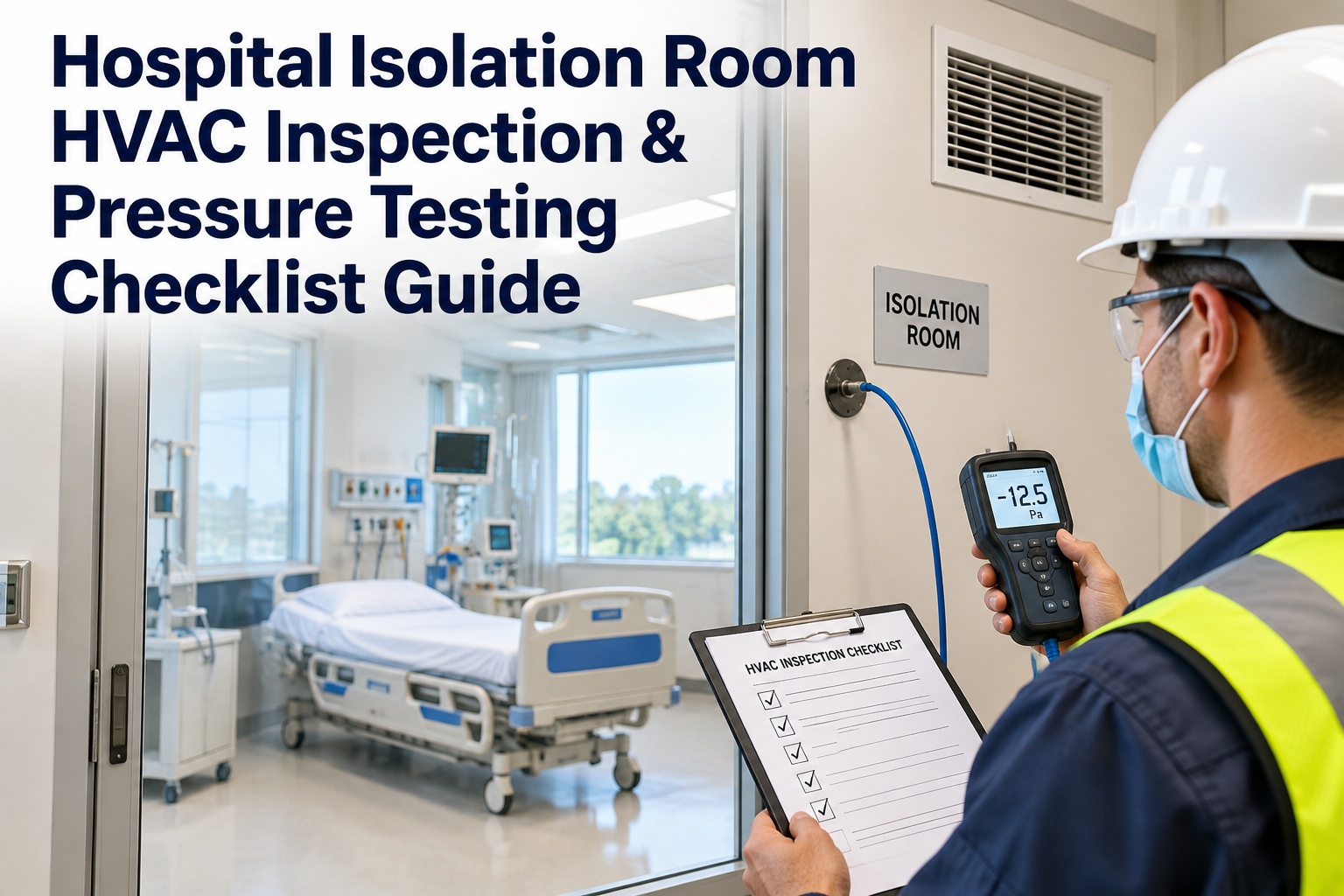
Continuous pressure differential monitoring between each classified zone and its adjacent space is mandatory. The cascade must be verified and documented — not assumed from design specifications. USP 797 requires continuous monitoring with alarm capability when pressure falls outside specification limits.
Monitoring Points
Buffer room vs. ante room: ≥0.02" w.c. (positive or negative per suite type)
Ante room vs. unclassified corridor: positive differential
Continuous monitoring with alarm at setpoint deviation
Log minimum twice daily if continuous monitoring not installed
Detects
HVAC system degradation before pressure cascade fails
Door-open transients that persist — indicating HVAC balance issue
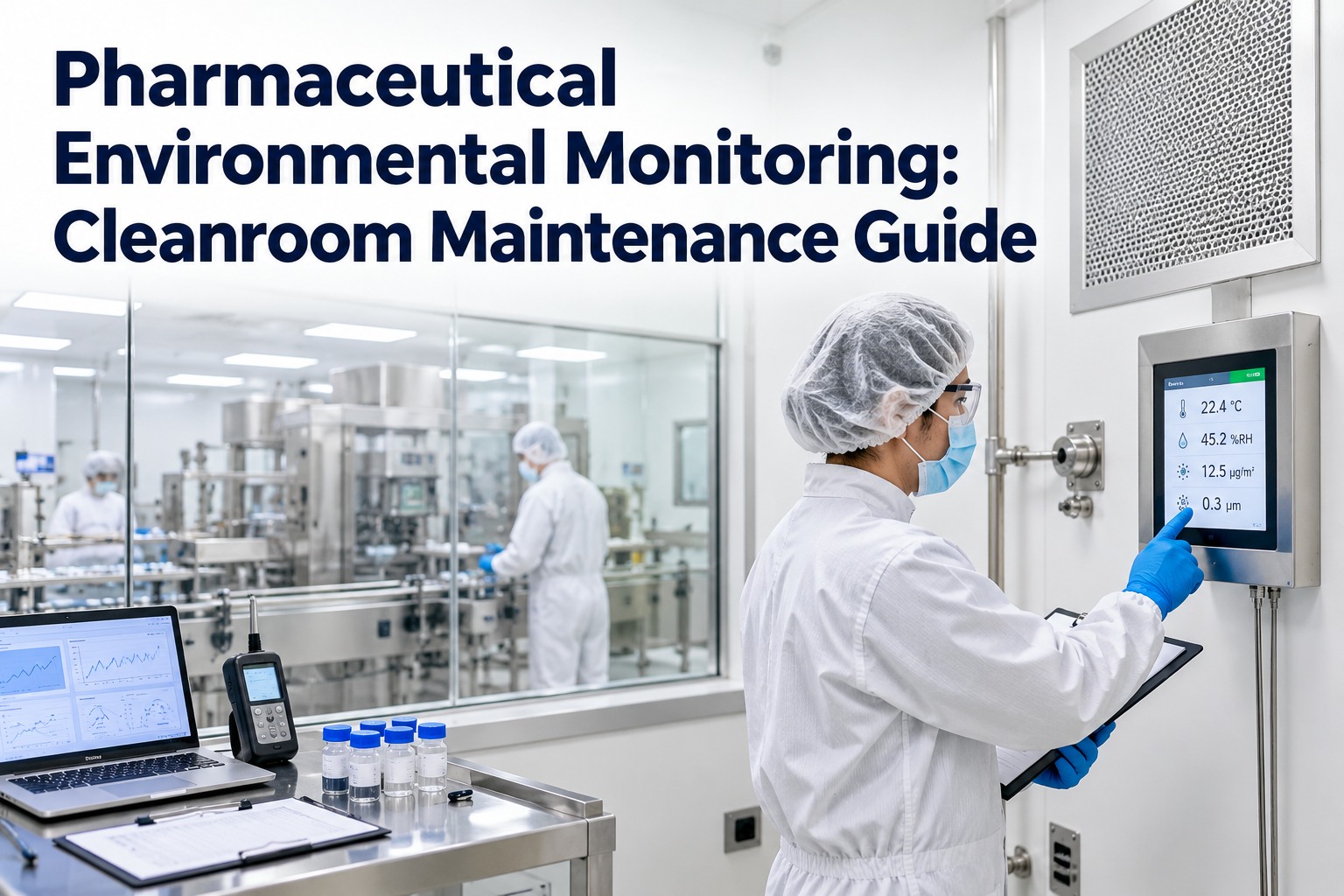
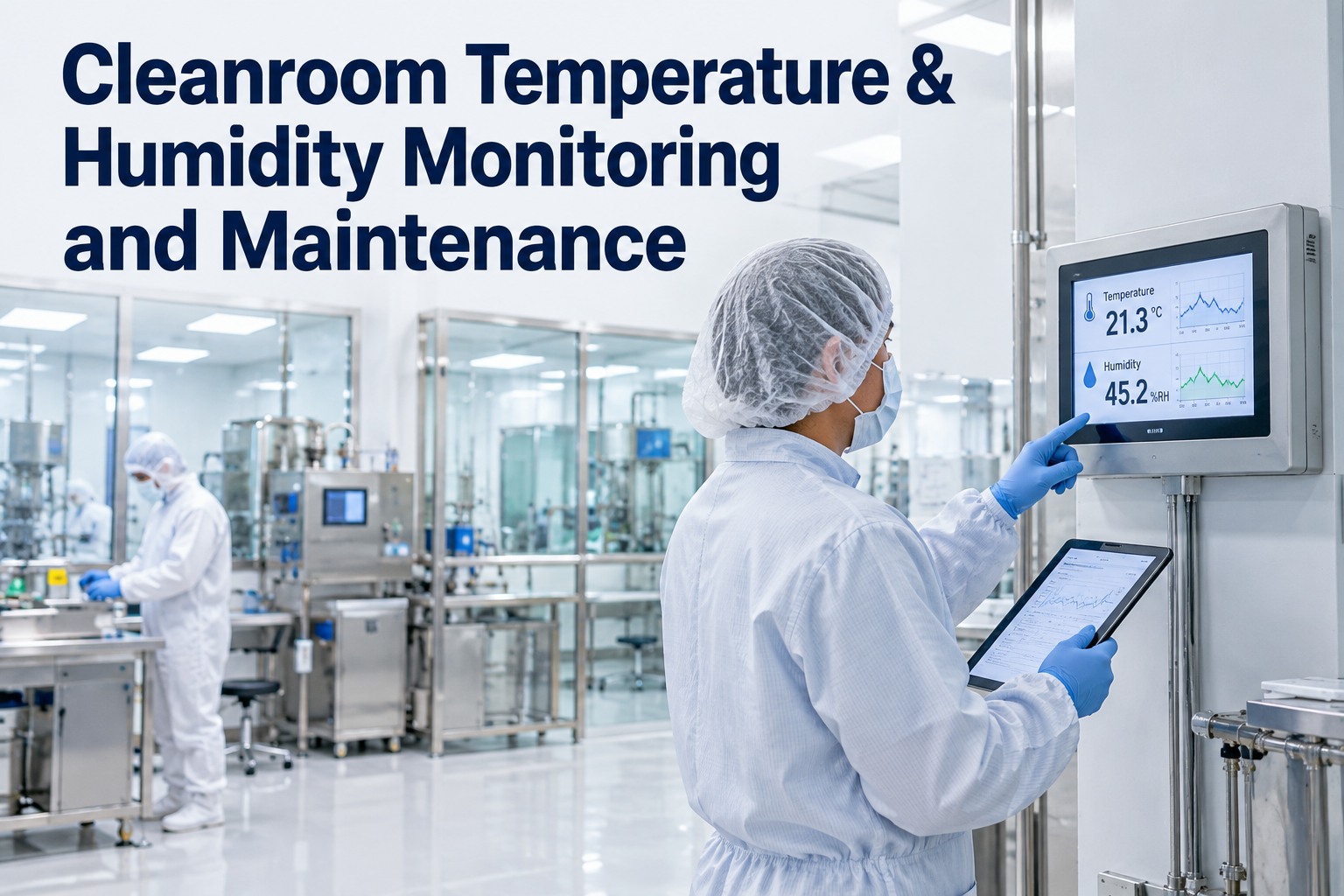
USP 797 requires temperature and humidity to be monitored continuously or at minimum twice daily for all storage and compounding areas. Temperature affects drug stability. Humidity above 60% promotes microbial growth and compromises packaging integrity. Both must be within specification before compounding commences each shift.
Monitoring Points
Buffer room temperature: ≤20°C (68°F) for staff comfort and contamination control
Relative humidity: ≤60% in all classified areas
Cold storage temperature logs — refrigerator and freezer records
Twice-daily minimum if continuous monitoring not installed
Detects
HVAC cooling failure before compounding environment exceeds spec
Humidity spike from personnel or process — early contamination risk indicator
USP 797 (2023 revision) requires viable air sampling during dynamic compounding conditions — with personnel present performing typical compounding activities. Sampling during at-rest conditions is insufficient for certification. Most facilities sample monthly for cleanroom suites. Results must be trended — exceedance of ISO action levels triggers investigation of work practices, cleaning, and filtration.
Monitoring Points
Air sampling at ISO 5 PEC work zone — during compounding operations
Buffer room air sampling at defined representative locations
Ante room air sampling — quarterly minimum
CFU action levels: ISO 5 ≤1 CFU/m³; ISO 7 ≤10 CFU/m³; ISO 8 ≤100 CFU/m³
Detects
Microbial exceedance before contaminated preparations reach patients
Garbing deficiency or cleaning failure patterns in trend data
Regular surface sampling of work surfaces, walls, and floors in compounding areas verifies that cleaning and disinfection procedures are effective. USP 797 requires documentation of sampling locations, methods, and results with trend analysis. Locations that repeatedly exceed action levels prompt investigation of cleaning procedures and materials.
Monitoring Points
ISO 5 PEC interior surfaces — work zone, walls, and pass-through openings
Buffer room floor at gowning transition area
High-touch surfaces — door handles, pass-through interiors
Document location, contact plate or swab method, and result per sample
Detects
Cleaning agent efficacy gaps at specific surfaces or zones
Contamination sources traceable to location patterns in trend data
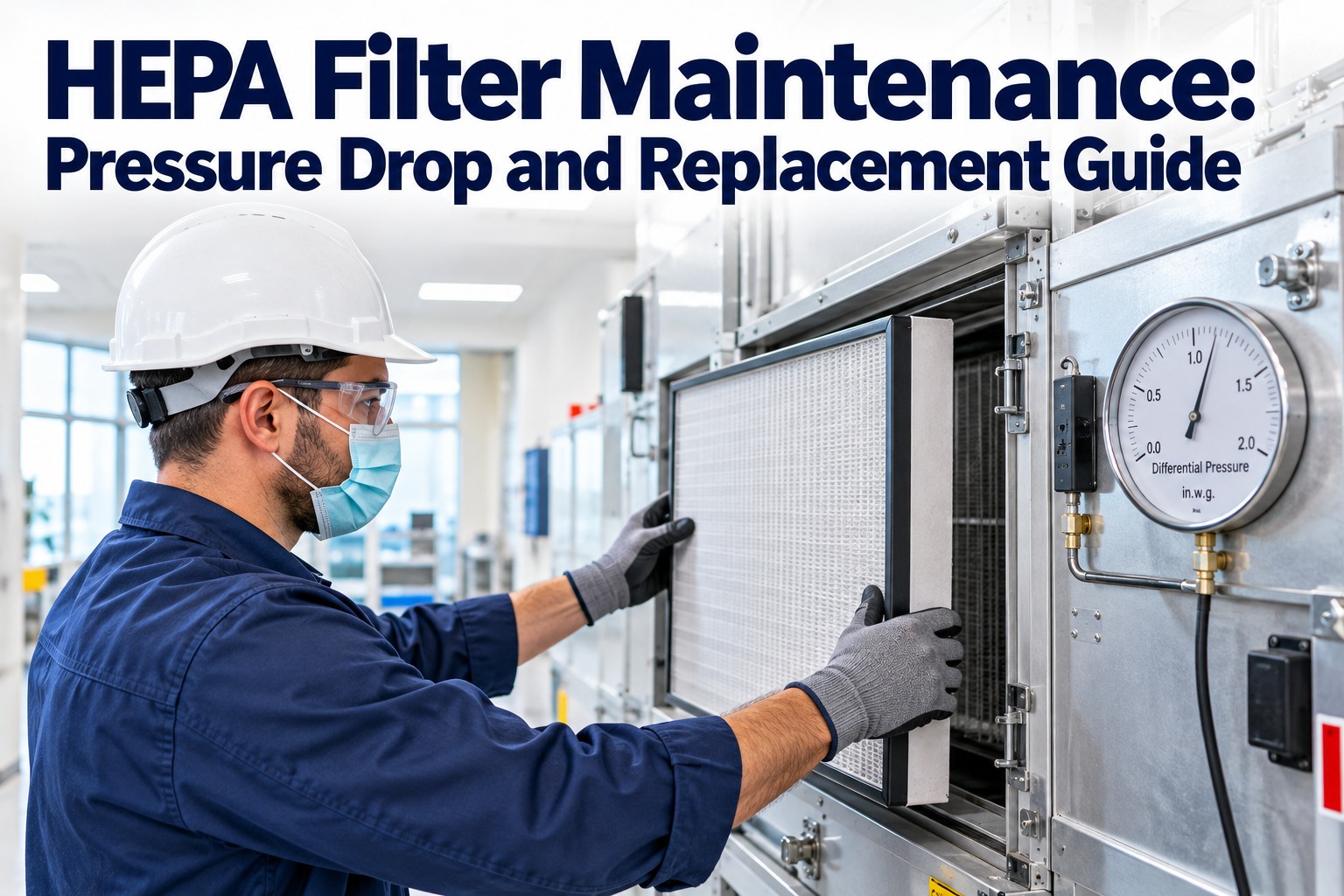
HEPA filter integrity testing using DOP or PAO aerosol challenge verifies that filters are intact and installed without bypass leaks. A HEPA filter that passes visual inspection can have a pinhole leak sufficient to compromise ISO classification. Filter integrity is part of the mandatory semi-annual PEC and room certification under USP 797 — and must also be performed after any filter replacement or maintenance event that could disturb filter seating.
Inspection Points
DOP/PAO challenge testing of all ceiling HEPA units in classified areas
PEC HEPA filter testing — hood or isolator internal HEPA
Filter face velocity measurement — confirm airflow within specification
Scan for bypass leaks at filter housing perimeter and gasket
Detects
Filter media defects invisible to visual inspection
Installation bypass leaks at housing or gasket seal failure
USP 797 requires cleaning and disinfection logs documenting who cleaned what, when, and with which agents. Both sporicidal agents and a second disinfectant with different mechanism of action are required at defined intervals — the rotation is specified in the cleaning SOP and must be documented as executed. Cleaning logs that show uniform timing suggest completion at convenience rather than compliance.
Required Documentation
Cleaning agent used — agent name, concentration, and lot number
Areas cleaned — specific surfaces and locations, not "buffer room"
Date, time, and identity of person who performed the cleaning
Sporicide rotation — documented per SOP schedule
Detects
Documentation gaps before Board of Pharmacy inspection
Sporicide rotation compliance — critical for resistant organism control
Cleanroom PM Schedule by Frequency
Hospital pharmacy cleanroom maintenance operates across four frequency bands — daily operational checks, monthly environmental monitoring, semi-annual certification (mandatory under USP 797), and annual programme review. The semi-annual certification must be performed under operational conditions — with compounding personnel present performing typical activities. At-rest certification is insufficient. Book a demo to see USP 797 PM templates pre-built in OxMaint for each frequency band.
Pressure differential log — verify and record buffer/ante differential and ante/corridor differential before compounding commences. Any reading below specification: halt compounding, investigate HVAC, contact facilities. Log every shift minimum — continuously monitored systems still require daily confirmation of alarm function.
Temperature and humidity log — minimum twice daily per USP 797. Record actual readings with time and operator identity. Readings outside specification must be flagged with immediate notification to pharmacy supervisor. Log retained as part of the daily operational compliance record.
PEC pre-use inspection — inspect laminar airflow workbench or BSC before first use of each day. Verify HEPA airflow is active, work zone is unobstructed, and interior surfaces are clean and free of damage. Run PEC for minimum 30 minutes before compounding commences. Log pre-use check completion with operator identity.
Viable air sampling — sample during active compounding operations per USP 797 environmental monitoring programme. Settle plates or active air sampling at ISO 5 PEC zone and buffer room representative locations. Results submitted to accredited laboratory. Laboratory results logged against the room asset record with date of sampling and compounding conditions at time of sample.
Surface sampling — contact plate or swab sampling of defined surfaces per facility environmental monitoring plan. High-risk surfaces: LAFW work surface, BSC sash interior, buffer room floor at gowning transition. Trend results month-over-month — action level exceedance triggers investigation SOP within 48 hours of result receipt.
Log sampling results and trend data in OxMaint.
Gloved fingertip and thumb sampling — compounding personnel competency verification component. Log each sample with personnel identifier, date, and result. Any exceedance of action level requires documented corrective action and resampling before personnel resume compounding.
Pressure monitoring system calibration check — verify that pressure gauges and continuous monitoring sensors are reading accurately against a calibrated reference instrument. Log calibration check result. Any sensor reading more than 0.005" w.c. from reference — remove from service and recalibrate before next shift.
Book a demo to track calibration records in OxMaint.
HEPA filter integrity test (DOP/PAO) — mandatory every 6 months per USP 797. Also required after any filter replacement, relocation, or maintenance event that may disturb filter seating. Performed by CETA-registered certification professional. Certificate stored against each PEC and room HEPA unit asset record in OxMaint with next-due date alert.
Airflow velocity and ACPH verification — measure supply air velocity at HEPA face and calculate actual ACPH delivered. Must meet minimum requirements: ISO 7 buffer room ≥30 ACPH, ISO 8 ante room ≥20 ACPH. Smoke studies to verify unidirectional airflow at ISO 5 PEC zone — visualisation confirms no turbulence in the compounding work zone.
Store certification reports in OxMaint against each zone asset.
ISO particle count verification — particle counter sampling at required locations during operational state (compounding personnel present). Results must confirm ISO classification for each zone. Operational state is harder to pass than at-rest — personnel are the largest contamination source, and garbing deficiencies become visible in particle count results.
Pressure cascade verification — formal measurement and documentation of pressure differentials at all zone boundaries under static and door-open transient conditions. Certification report must confirm cascade is maintained. Any finding of inadequate pressure differential requires immediate investigation and HVAC adjustment before suite returns to compounding operations.
Book a demo to track semi-annual certification deadlines in OxMaint.
Semi-Annual Certification Deadlines Never Miss Themselves. Yours Shouldn't Either.
OxMaint generates semi-annual certification due-date alerts for every PEC and classified room in your pharmacy suite — with amber warnings 30 days before the deadline and red alerts at the deadline, visible to the pharmacy director and facilities team simultaneously.
The Documentation Problem — Why Most Cleanroom Inspections Fail on Records, Not Performance
Both USP 797 and USP 800 require extensive documentation. During a Board of Pharmacy inspection, the records tell the story of compliance — and missing or incomplete records are the most common citation trigger even when the physical environment is functioning correctly. A cleanroom whose pressure differential has been continuously maintained within specification for 180 days but whose pressure monitoring logs have gaps of more than one shift cannot demonstrate compliance for the gapped periods.
#1
Documentation failure is the most common Board of Pharmacy citation trigger in cleanroom inspections — temperature logs with gaps, environmental monitoring results without trend analysis, cleaning records that show uniform timing suggesting backdating, and HEPA certification certificates filed separately from the compounding suite's maintenance record. A CMMS that links every record to its specific asset and timestamps it at the point of completion eliminates the documentation architecture problem before the inspector arrives.
"
I have conducted pharmacy cleanroom compliance assessments for hospital systems across four states since the November 2023 USP 797 enforcement date. The facilities that struggle most are not the ones with poor HEPA filters or inadequate pressure cascades. They are the facilities whose engineering controls are performing correctly but whose documentation does not prove it. Temperature logs that show every reading at exactly the same time twice a day — suggesting the log was filled in at shift end rather than at the readings. Environmental monitoring results that exist in a laboratory binder with no corresponding trend analysis. HEPA certification certificates in a filing cabinet that nobody can locate during an inspection because they are stored separately from the compounding room's maintenance programme. OxMaint's approach of linking every monitoring result, every certification report, and every cleaning record directly to the specific room or PEC asset record — timestamped at completion — is exactly the documentation architecture that survives a Board of Pharmacy inspection.
What OxMaint Delivers for Hospital Pharmacy Cleanroom Compliance
PM Templates
Zone-Specific USP 797/800 PM Schedules
Separate PM templates per zone — ISO 5 PEC, ISO 7 buffer room, ISO 8 ante room, hazardous drug suite — each with the specific task lists, monitoring parameters, and documentation requirements per frequency band. Mandatory sign-off fields prevent incomplete submissions at daily shift close.
Sign in to configure cleanroom PM templates.
Certification
Semi-Annual Certification Tracking
Every PEC and classified room registered as an asset in OxMaint with semi-annual certification due dates. Amber alert 30 days before deadline; red alert at deadline. Certification reports (HEPA integrity, particle count, ACPH, pressure cascade) stored against each asset record — retrievable in seconds for Board of Pharmacy inspection.
Book a demo to see certification tracking.
Monitoring
Environmental Monitoring with Trend Analysis
Environmental sampling results — viable air, surface sampling, gloved fingertip — logged per sample with location, method, result, and sampler identity. Trend analysis built from accumulated data. CFU exceedance of action level generates automatic corrective action work order with 48-hour investigation requirement. Records accessible per inspection without manual compilation.
Cleaning
Cleaning Log with Timestamp and Attribution
Cleaning records captured at point of completion with automatic timestamp and operator identity — not reconstructed at shift end. Cleaning agent, concentration, surfaces cleaned, and sporicide rotation logged per cleaning event. Logs exportable per room per date range for inspection without assembly from paper binders.
Sign in to digitise your cleaning log programme.
Escalation
Out-of-Specification Alert and Corrective Action
Pressure differential, temperature, or humidity readings outside specification trigger immediate alert to pharmacy supervisor. Environmental monitoring action level exceedances auto-generate corrective investigation work orders. Every finding linked to corrective action — no gap in the compliance chain that an inspector can identify as incomplete.
Book a demo to see escalation workflows.
Audit-Ready
Board of Pharmacy Inspection Export
Complete compliance export per room and per standard — temperature and humidity logs, pressure differential records, environmental monitoring results with trend, HEPA certification certificates, and cleaning logs — all retrievable in minutes for Board of Pharmacy, TJC, or CMS survey review without manual document assembly.
Sign in to see your compliance export.
Your Cleanroom Is Performing. Your Records Should Prove It.
OxMaint links every temperature log, pressure reading, environmental sample, and HEPA certificate to the specific room or PEC asset — timestamped at completion and audit-ready for Board of Pharmacy, TJC, or CMS review without manual assembly.
Frequently Asked Questions
How often must hospital pharmacy cleanrooms be certified under USP 797?
USP 797 requires all classified areas — including primary engineering controls (LAFWs, BSCs, isolators), buffer rooms, and ante rooms — to be recertified every 6 months. Certification must be performed under operational conditions with compounding personnel present performing typical activities. At-rest certification is not acceptable as the primary certification for USP 797 compliance. Certification is also required after any maintenance event that could disturb HEPA filter seating or room pressurisation.
Sign in to configure semi-annual certification tracking in OxMaint.
What ISO classification is required for different areas of a hospital pharmacy cleanroom?
USP 797 maps to ISO 14644-1 classifications: ISO 5 (≤3,520 particles ≥0.5μ/m³) is required inside primary engineering controls where sterile preparations are compounded. ISO 7 (≤352,000 particles ≥0.5μ/m³) is required in the buffer room housing the PECs. ISO 8 (≤3,520,000 particles ≥0.5μ/m³) is required in the ante room. All three classifications must be verified during operational-state certification every 6 months.
Book a demo to see ISO classification tracking per zone in OxMaint.
What is the difference between USP 797 and USP 800 cleanroom requirements?
USP 797 governs sterile compounding for all preparations — focusing on patient safety through contamination control via positive pressure, HEPA filtration, and ISO classification maintenance. USP 800 governs handling of hazardous drugs on the NIOSH list — adding worker protection requirements through negative-pressure buffer rooms vented to exterior, negative-pressure CACIs, and a pressure cascade that directs airflow away from personnel. Both became enforceable in November 2023. Facilities handling NIOSH hazardous drugs must comply with both standards simultaneously.
Sign in to configure both USP 797 and USP 800 compliance programmes in OxMaint.
What documentation does a Board of Pharmacy inspection require for cleanroom compliance?
Inspectors review: temperature and humidity logs (continuous or twice-daily minimum), pressure differential logs, environmental monitoring results with trend analysis, viable air and surface sampling data, HEPA filter certification reports (semi-annual), PEC certification reports (semi-annual), cleaning and disinfection logs, personnel training and competency records, and media fill test results. Missing or incomplete records — particularly gaps in temperature logs or environmental monitoring without trend analysis — are the most common citation triggers.
Book a demo to see how OxMaint generates a complete inspection-ready compliance export.
How frequently must environmental monitoring (viable air and surface sampling) be performed?
USP 797 (2023 revision) requires viable air sampling during dynamic compounding conditions. Monthly sampling is the standard practice for cleanroom suites — at-rest sampling alone is not sufficient. Surface sampling is required at regular intervals defined by the facility's environmental monitoring programme. Ante room quarterly minimum is typical. Results must be trended and any exceedance of ISO action levels requires documented investigation within a defined timeframe. The investigation and corrective action must be logged and traceable.
Sign in to configure environmental monitoring schedules and trend analysis in OxMaint.