
Every morning across America, hospital maintenance directors open Excel spreadsheets that contain the fate of million-dollar MRI machines, life-support ventilators, and surgical robots. They scroll through rows of outdated data, hoping that today isn't the day a critical calibration expires or an emergency repair brings the OR to a standstill. This isn't just inefficient—it's dangerous. With nearly 90% of Excel spreadsheets containing errors and nurses spending over an hour daily searching for equipment, the hidden costs of spreadsheet maintenance management are bleeding hospitals dry. The solution isn't more complex formulas or better-trained staff. It's a fundamental shift to AI-powered CMMS platforms designed specifically for healthcare's unique demands.
Ready to Eliminate Spreadsheet Chaos?
Hospital maintenance teams waste 25-35% of their productivity on administrative tasks caused by Excel limitations. Every delayed work order, every missed calibration, every equipment failure traced back to a spreadsheet error puts patient safety at risk and exposes your facility to regulatory citations. Modern CMMS platforms automate compliance tracking, eliminate manual data entry errors, and ensure 100% equipment availability through intelligent preventive maintenance scheduling.
Join over 500 healthcare facilities that have replaced Excel with intelligent automation. Sign up for free today and discover how Oxmaint transforms your maintenance operations from reactive firefighting to proactive clinical excellence, or book a personalized demo to see exactly how our platform addresses your specific compliance and workflow challenges.
The Seven Deadly Sins of Excel-Based Hospital Maintenance
The Error Epidemic
Studies reveal that nearly 90% of operational Excel spreadsheets contain critical errors—from formula miscalculations to copy-paste disasters. In a hospital setting, a single wrong cell could mark a life-support device as "calibrated" when it's actually expired, creating liability exposure that no insurance policy can fully cover.
The Version Control Nightmare
When multiple departments share equipment data via email attachments, "version chaos" destroys accountability. Biomedical engineering uses one file, facilities management another, and compliance a third. No one knows which spreadsheet holds the truth, creating gaps that auditors—and patient safety officers—dread discovering.
The Automation Void
Excel cannot send automatic notifications when a defibrillator needs inspection or an MRI requires calibration. Technicians must remember to check logs manually, and in high-stress hospital environments, critical maintenance windows slip through the cracks, leading to emergency breakdowns during critical procedures.
The Compliance Trap
Regulatory bodies now demand 100% traceability of critical equipment. Excel offers no secure audit trail, no timestamped changes, and no user accountability. When Joint Commission surveyors ask "Who changed this calibration date and when?", spreadsheet users can only shrug—an answer that triggers immediate citations.
The Hidden Cost Drain
Hospitals lose $4,000 to $5,000 worth of equipment per bed each year due to misplacement and poor tracking. With 500 beds, that's $2 million annually vanishing into the spreadsheet abyss. Add 10-20% inventory shrinkage and the cost of emergency repairs from missed PMs, and Excel becomes the hospital's most expensive "free" software.
The Scalability Wall
As hospitals grow and equipment inventories expand into the thousands, Excel files slow to a crawl, crash unexpectedly, or hit row limits. Splitting data across multiple spreadsheets creates fragmentation that makes holistic asset management impossible. The tool that worked for 100 assets becomes a liability at 1,000.
The Patient Safety Gap
When assets aren't tracked digitally, nurses waste over an hour daily searching for wheelchairs, monitors, and infusion pumps. Delayed treatments, cancelled surgeries, and equipment failures at critical moments directly impact patient outcomes. In healthcare, spreadsheet maintenance isn't just inefficient—it's a patient safety failure.
What Modern Hospital Maintenance Looks Like with Oxmaint
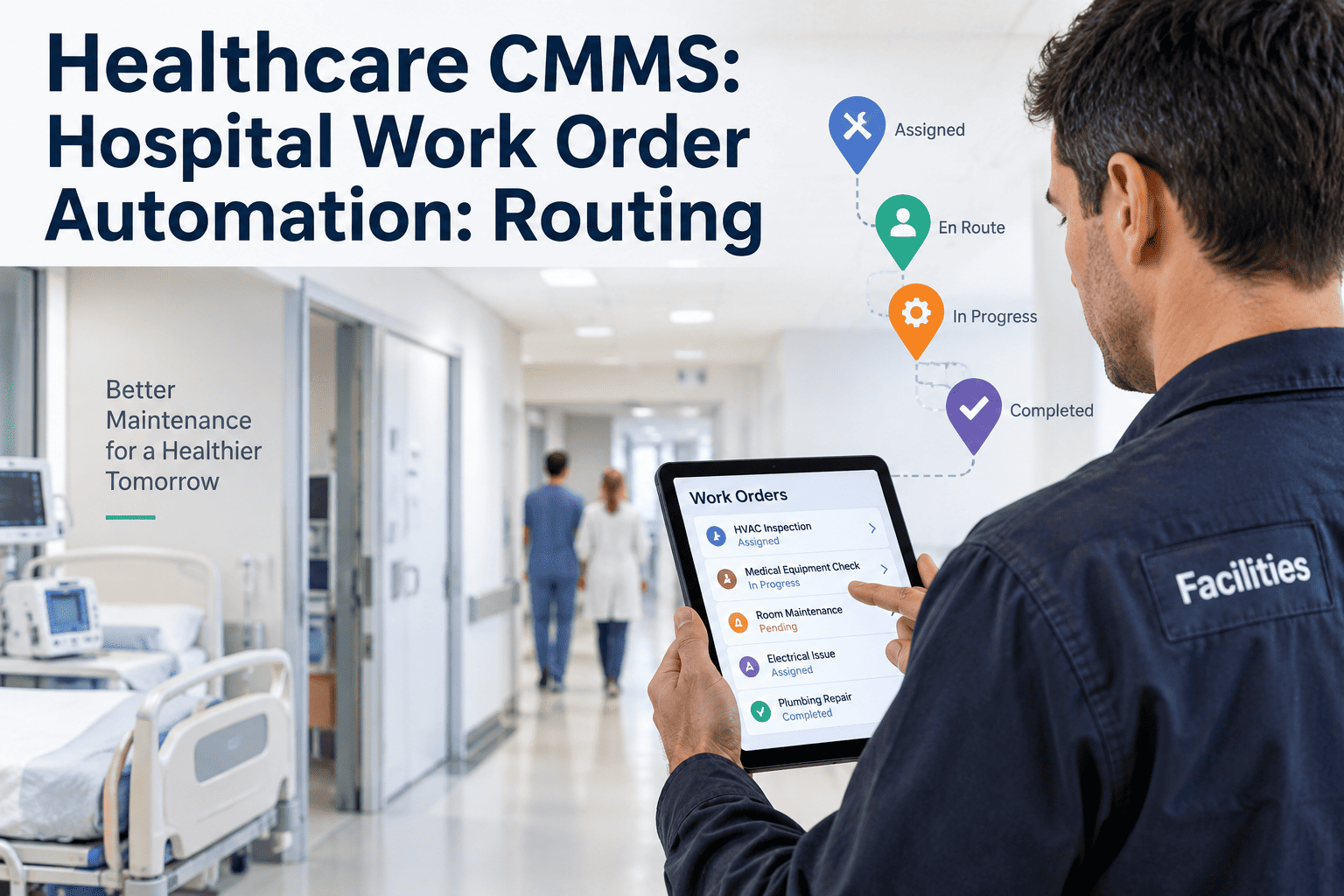
Zero-Touch Work Order Automation
Unlike Excel's manual entry requirements, Oxmaint's AI monitors equipment conditions in real-time, automatically generating work orders when vibration, temperature, or runtime thresholds indicate maintenance needs. Start automating today and eliminate the 25-35% productivity drain caused by administrative overhead.
- Condition-based triggers eliminate calendar guessing
- Automatic technician assignment by skill and availability
- Mobile access for instant status updates and photo documentation
Audit-Ready Compliance Without the Panic
Every action in Oxmaint is timestamped, user-identified, and immutable. When surveyors arrive, generate comprehensive compliance reports in seconds instead of scrambling through scattered spreadsheets. Book a demo to see how we reduce audit preparation time by 30-40%.
- Digital SOP checklists ensure consistent procedures
- Automated regulatory reporting for Joint Commission readiness
- Complete maintenance history accessible in three clicks
Measurable ROI in Six Months
Hospitals implementing comprehensive work order automation achieve 40-60% improvements in maintenance efficiency while reducing administrative errors by 85-95%. With Oxmaint, the typical 500-bed hospital sees full ROI within 14 months through operational savings alone—not counting the incalculable value of prevented patient safety incidents.
Facilities report signing up and discovering 25-35% more maintenance capacity within existing staff levels, simply by eliminating spreadsheet chaos.
The Critical Difference: Excel vs. Oxmaint CMMS
Don't Let Another Quarter Pass with Equipment in Limbo
While you are reading this, critical medical equipment across your facility may be operating without valid calibration certificates, preventive maintenance may be overdue on life-support systems, and your team is likely spending hours reconciling conflicting spreadsheet versions instead of performing actual maintenance. This is the hidden cost of Excel that doesn't appear on budget reports but manifests as emergency repairs, regulatory findings, and compromised patient care.
The transition from Excel to Oxmaint takes less than 30 days and requires zero disruption to your daily operations. Our healthcare specialists understand Joint Commission requirements, CMS Conditions of Participation, and the unique pressures of hospital maintenance. Join thousands of facilities that have eliminated maintenance chaos, or schedule a personalized walkthrough to see exactly how Oxmaint fits your hospital's specific workflow and compliance needs.
Implementation Without Disruption
Data Migration
Our team imports your existing Excel inventories, cleans the data, and establishes your asset hierarchy without disrupting daily operations.
Workflow Configuration
Customize preventive maintenance schedules, compliance requirements, and approval workflows to match your hospital's specific protocols.
Team Training
Role-based training sessions ensure technicians, managers, and compliance officers are proficient in their specific Oxmaint functions.
Go Live
Parallel operation ensures confidence, then Excel is retired. Most hospitals are fully operational within 30 days.
Stop the Spreadsheet Madness Today
Every day you rely on Excel for critical equipment maintenance is a day you gamble with patient safety, regulatory compliance, and operational budget. The hospitals winning in today's environment have already made the switch to intelligent automation.
No credit card required. Full access for 14 days.
Frequently Asked Questions
How long does it take to migrate from Excel to Oxmaint?
Most hospitals complete full migration within 2-4 weeks. We handle the heavy lifting—importing your existing spreadsheets, cleaning data inconsistencies, and configuring your preventive maintenance schedules. Your team can continue using Excel during the transition, ensuring zero downtime in maintenance operations.
Will our older biomedical equipment work with Oxmaint?
Absolutely. While modern IoT-enabled devices can feed real-time data directly into Oxmaint, our platform works seamlessly with legacy equipment through manual entry workflows that are still 85% more efficient than Excel. Technicians use mobile apps to scan barcodes or QR codes, updating maintenance records in seconds rather than minutes.
How does Oxmaint help with Joint Commission and CMS compliance?
Oxmaint creates an immutable digital trail for every maintenance action—who performed the work, when it was completed, what parts were used, and how long it took. This satisfies Joint Commission's Environment of Care standards and CMS Conditions of Participation requirements. Our automated reporting generates the exact documentation surveyors expect to see, reducing audit anxiety and citation risk.
What is the typical ROI timeline for a 300-bed hospital?
Hospitals typically see operational ROI within 12-18 months. Immediate savings come from reduced equipment loss (averaging $4,000 per bed annually), elimination of emergency repairs through better preventive maintenance (30-45% reduction), and productivity gains of 25-35% in maintenance staff efficiency. One mid-sized hospital reported saving $600,000 in the first year through operational improvements alone.
Can Oxmaint integrate with our existing hospital ERP or asset management systems?
Yes. Oxmaint offers standard integrations with major healthcare ERP systems, building automation systems, and financial platforms. Our API allows custom connections to specialized hospital systems, ensuring your maintenance data flows seamlessly between departments without the manual exports and imports that plague Excel-based workflows.
How do we justify the cost to hospital administration?
Calculate your current "Excel tax": Add equipment loss per bed ($4,000 annually), cost of emergency repairs (typically 3-5x preventive maintenance cost), administrative hours spent on manual scheduling and data entry, and potential regulatory fines. For a 200-bed hospital, this usually exceeds $800,000 annually. Oxmaint typically costs less than 15% of that amount while eliminating the risk of patient safety incidents that carry both human and legal costs.


.png)

.jpeg)
