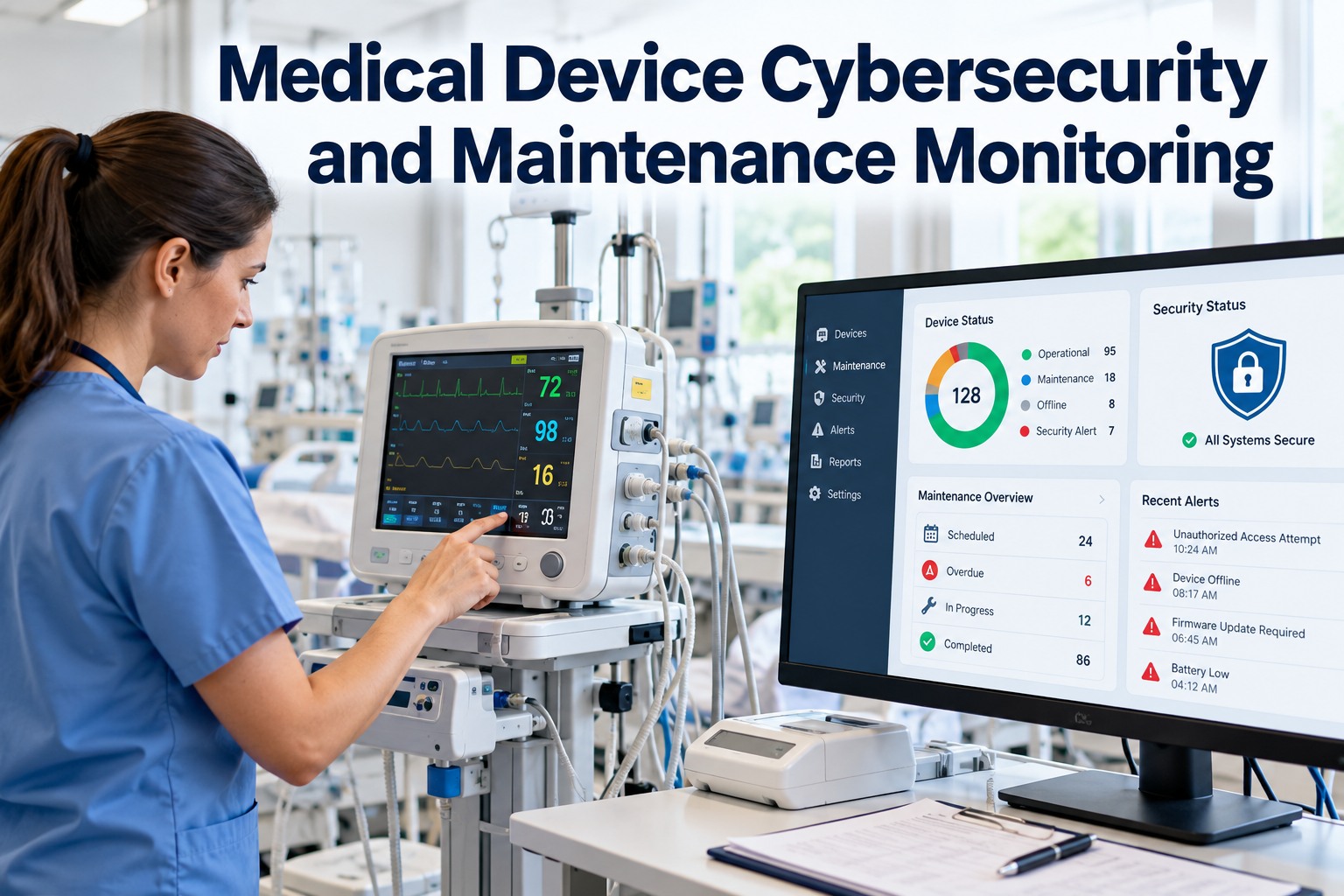
A delivery robot glides through a hospital corridor carrying sealed medication containers. It connects to the hospital Wi-Fi to receive navigation updates, transmits delivery confirmations to the pharmacy system, and logs patient-linked transaction data to the cloud. Now imagine a ransomware payload intercepting that connection — locking the robot's operating system, encrypting its delivery logs, and holding patient health information hostage. This is not hypothetical. Healthcare ransomware attacks surged 30% in 2025, with 455 incidents tracked globally. 93% of U.S. healthcare organizations experienced at least one cyberattack in the past year. And 89% of healthcare facilities have high-risk IoMT devices with known exploitable vulnerabilities on their networks. Connected healthcare robots — from surgical systems to AMR fleets to inspection quadrupeds — are now part of this attack surface. Cybersecurity maintenance is no longer optional; it is as critical as replacing a motor or calibrating a sensor. Sign up for OxMaint CMMS to track cybersecurity tasks alongside your physical maintenance schedules.
The Cybersecurity Attack Surface of Hospital Robots
Every connected robot in a hospital environment exposes multiple entry points that attackers can exploit. Unlike a standalone medical device, a mobile robot moves through the network — physically and digitally — connecting to different access points, communicating with multiple backend systems, and carrying data across zones.
Network Communication
Wi-Fi, Bluetooth, 5G connections between robots and hospital IT infrastructure. Vulnerable to man-in-the-middle attacks, eavesdropping, and unauthorized access if traffic is unencrypted.
Operating System & Firmware
Robot controllers running Linux, ROS 2, or proprietary firmware. Unpatched vulnerabilities in the OS or middleware allow privilege escalation, remote code execution, and persistent backdoors.
Application & API Layer
Fleet management APIs, cloud dashboards, and integration endpoints with hospital EHR, pharmacy, and logistics systems. Each API is a potential breach vector if authentication is weak or tokens expire.
Data at Rest & In Transit
Patient health information (PHI), delivery logs, location data, and operational telemetry stored on robot storage or transmitted to cloud servers. Subject to HIPAA protection requirements.
The 5 Cybersecurity Threat Categories
Healthcare robots face threats that combine traditional IT attack methods with physical-world consequences unique to robotics. A compromised robot does not just leak data — it can physically endanger patients, staff, and operations.
Ransomware
Encrypts robot OS or fleet management systems, halting all deliveries and inspections until ransom is paid. Healthcare is the most targeted sector, representing 32% of all ransomware incidents in late 2025. 96% of attacks now include data exfiltration alongside encryption.
Unauthorized Access
Attackers gain control of robot functions — navigation, payload access, sensor feeds — through stolen credentials, unpatched remote access services, or compromised vendor accounts. In surgical robots, this could mean direct manipulation of instruments during procedures.
Data Interception
Man-in-the-middle attacks on unencrypted robot communication channels capture PHI, delivery manifests, location tracking data, and system credentials. ROS 2 traffic between nodes is plaintext by default unless SROS2 security is explicitly enabled.
Firmware Tampering
Malicious firmware injected during updates or through supply chain compromise alters robot behavior — changing navigation paths, disabling safety systems, or installing persistent backdoors that survive reboots.
DDoS & Disruption
Distributed denial-of-service attacks flood robot communication channels with traffic, preventing fleet coordination, blocking navigation updates, and forcing robots into emergency stop states across the campus.
Every one of these threats can be mitigated through systematic cybersecurity maintenance. Book a demo to see how OxMaint structures cybersecurity work orders alongside physical servicing tasks.
Cybersecurity Is Maintenance — Not Just IT's Problem
OxMaint CMMS tracks firmware patching, certificate renewals, network audits, and security policy updates on the same platform as your physical robot maintenance. One system. Complete visibility.
The 6 Cybersecurity Maintenance Domains
Cybersecurity maintenance for healthcare robots spans six domains. Each domain requires scheduled tasks, verification procedures, and documentation — just like mechanical maintenance.
Firmware & Software Patching
Every robot runs firmware on its motor controllers, navigation modules, and sensor processors, plus higher-level software on its main computer. Vendors release security patches to fix discovered vulnerabilities, but patches do not apply themselves. Healthcare organizations must test patches in staging environments before deploying to production robots — a delayed patch is a known vulnerability sitting in your hospital corridors.
SSL/TLS Certificate Renewal
Robots communicate with fleet management servers, cloud platforms, and hospital systems over encrypted connections secured by SSL/TLS certificates. When certificates expire, robots lose their secure communication channels — either falling back to unencrypted traffic (a massive vulnerability) or failing to connect entirely (a service outage). Certificate expiration is entirely preventable with proper tracking.
Network Segmentation Verification
Hospital robots should operate on a dedicated network segment (VLAN) isolated from the general hospital network, guest Wi-Fi, and clinical systems. This limits the blast radius if a robot is compromised. But network configurations drift — new access points get added, firewall rules get modified, and VLANs get bridged during troubleshooting. Regular verification ensures segmentation remains intact.
ROS 2 SROS2 Security Policy Updates
Robots built on ROS 2 can use SROS2 — a security toolkit that adds authentication, encryption, and access control to the ROS 2 communication graph. SROS2 uses DDS security plugins with certificates and governance files to control which nodes can publish or subscribe to which topics. As the robot software evolves — new nodes added, topics renamed, navigation stacks updated — the SROS2 security policies must be updated to match, or new nodes will either be blocked (causing failures) or allowed without proper security (creating gaps).
Access Control & Authentication
Every robot has user accounts, API keys, service credentials, and potentially physical access panels. In 2026, HHS has proposed mandatory multi-factor authentication (MFA) for all systems handling ePHI — and robots carrying patient data qualify. Weak credentials are the number one entry point for unauthorized access to connected medical devices.
Vulnerability Scanning & Penetration Testing
Even with patching, certificate management, and segmentation in place, unknown vulnerabilities may exist. Regular vulnerability scanning identifies known weaknesses, while penetration testing simulates real attack scenarios against your robot fleet. Together they provide the assurance that your defenses actually work — not just on paper, but against active exploitation attempts.
Tracking six cybersecurity domains across an entire robot fleet demands the same rigor as tracking physical maintenance. Sign up for OxMaint and unify your cyber and physical maintenance on one platform.
Cybersecurity Maintenance Schedule
| Frequency | Domain | Cybersecurity Task |
|---|---|---|
| Daily | Monitoring | Review robot security logs for authentication failures, anomalous traffic, and alerts |
| Weekly | Patching | Check vendor advisories for new firmware/software security patches |
| Weekly | Certificates | Verify certificate expiration dates; escalate any within 30-day window |
| Monthly | Network | Verify robot VLAN segmentation; scan for unauthorized cross-network traffic |
| Monthly | Scanning | Run automated vulnerability scan on robot network segment |
| Quarterly | Access | Audit all robot user accounts, API keys, and service credentials; rotate keys |
| Quarterly | SROS2 | Audit ROS 2 security policies, DDS certificates, and access control lists |
| Bi-Annual | Testing | Conduct penetration testing against robot fleet communication and control systems |
| Annual | Full Audit | Comprehensive cybersecurity audit: all domains, HIPAA compliance review, documentation |
| After Event | Incident | Full security assessment after any suspected breach, anomaly, or vendor-reported vulnerability |
OxMaint auto-generates cybersecurity work orders on schedule and after trigger events. Book a demo to see how cyber tasks integrate with your physical PM calendar.
How OxMaint Unifies Cyber & Physical Maintenance
Unified Maintenance Calendar
View firmware patching deadlines, certificate renewals, vulnerability scan schedules, and physical servicing tasks on a single calendar per robot. No more siloed IT and facilities spreadsheets.
Patch Compliance Tracking
Log every firmware and software patch with version numbers, deployment dates, staging test results, and post-deployment verification. Track your 30-day patch window compliance across the entire fleet.
Certificate Expiration Alerts
OxMaint monitors SSL/TLS and DDS certificate expiration dates and auto-generates renewal work orders at 60 and 30 days before expiry. No more surprise outages from expired certificates.
HIPAA-Ready Audit Trails
Every cybersecurity action — patching, scanning, access reviews, incident responses — is logged with timestamps and technician IDs. Generate audit-ready reports for HIPAA compliance reviews and HHS OCR inquiries.
Incident Response Work Orders
When a security event occurs, OxMaint triggers a full incident response checklist — isolate affected robots, assess scope, preserve evidence, remediate, and verify before redeployment. Sign up free and be prepared before the breach happens.
Secure Robots Start with Secure Maintenance
From firmware patching to SROS2 policy audits to HIPAA compliance documentation, OxMaint gives your team the tools to treat cybersecurity with the same rigor as physical maintenance. Start free or talk to our healthcare specialists.
Frequently Asked Questions
Why do healthcare robots need cybersecurity maintenance
Healthcare robots connect to hospital networks, carry patient data, and integrate with clinical systems. They are part of the IoMT attack surface. Without regular patching, certificate renewal, and security audits, they become entry points for ransomware, data theft, and unauthorized access.
What is SROS2 and why does it matter for hospital robots
SROS2 is the security toolkit for ROS 2 that adds authentication, traffic encryption, and access control to robot communication. Without SROS2 enabled, all ROS 2 topic traffic is plaintext — meaning anyone on the network can read sensor data, commands, and patient-linked information.
How often should robot firmware be patched
Check vendor security advisories weekly. Deploy critical patches within 14 days. All patches should be tested in a staging environment first and deployed to production within a 30-day maximum window. Document every patch in your CMMS.
What happens when an SSL certificate expires on a robot
The robot either loses its encrypted connection to fleet management servers (causing a service outage) or falls back to unencrypted communication (creating a massive security vulnerability). Both outcomes are preventable with proper certificate tracking and renewal alerts.
Are hospital robots subject to HIPAA requirements
Yes. Any robot that processes, stores, or transmits protected health information (PHI) falls under HIPAA security requirements. This includes delivery robots that log patient-linked transactions, surgical robots with patient records, and inspection robots capturing clinical environment data.
What is network segmentation and why does it matter for robots
Network segmentation places robots on a dedicated VLAN isolated from clinical systems, EHR databases, and guest Wi-Fi. If a robot is compromised, segmentation prevents the attacker from pivoting to the broader hospital network.
Can OxMaint track both cybersecurity and physical maintenance
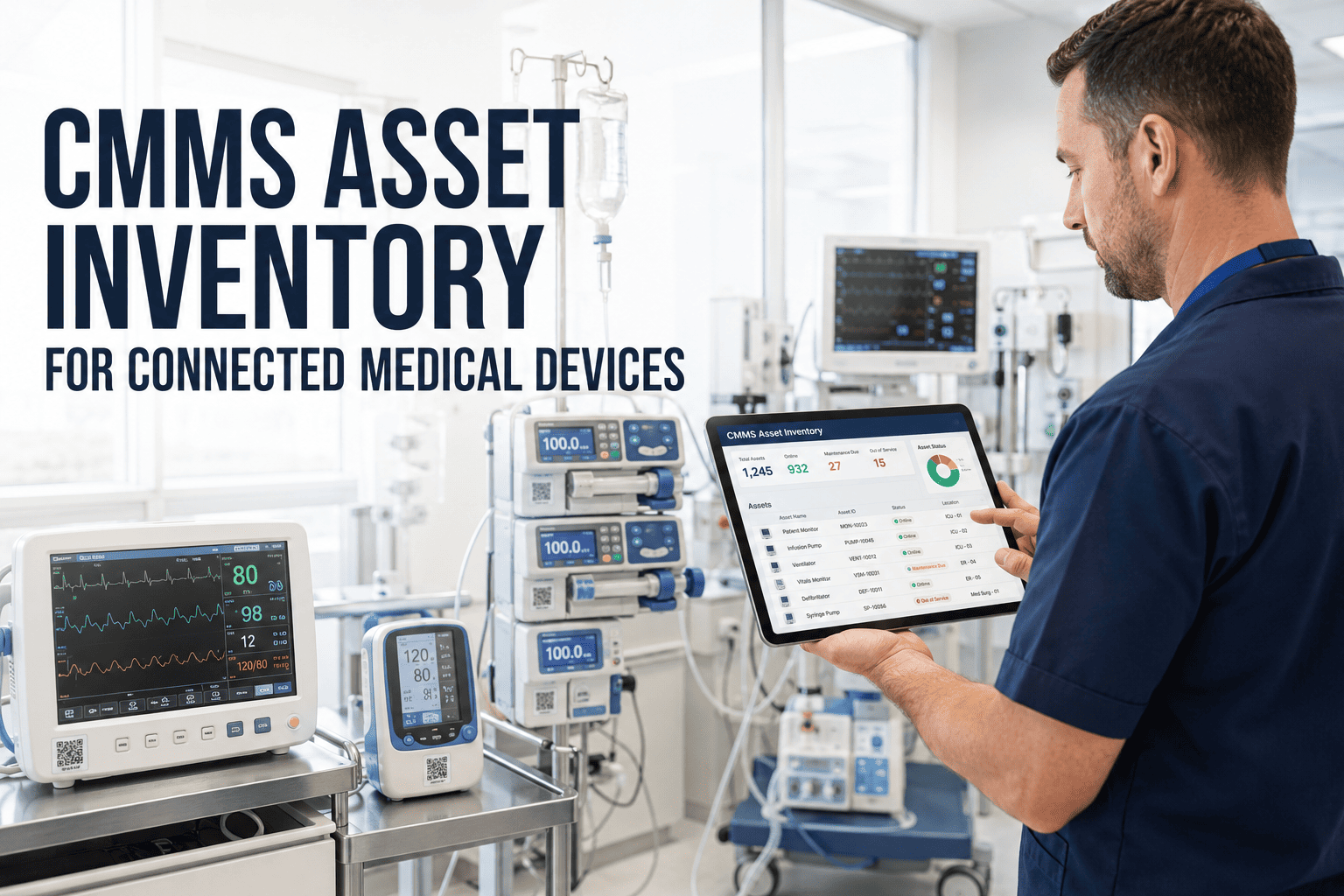
Yes. OxMaint lets you schedule firmware patches, certificate renewals, and security audits alongside actuator servicing, sensor calibration, and battery checks — all on the same robot asset record with a unified calendar and audit trail.
What should we do if a robot is suspected of being compromised
Immediately isolate the robot from the network. Trigger an incident response checklist: assess scope, preserve logs, scan for malware, verify other fleet robots, remediate the affected system, and verify security before redeployment. OxMaint automates this workflow.