A contractor walking into a hospital isn't walking into an ordinary job site. Patients are a few metres away and can't be moved; the dust from a simple ceiling access can carry infection risk; the wall being opened may hold a fire or smoke barrier that keeps a whole wing compliant. Managing contractor work in a hospital isn't about chasing invoices — it's about making sure every outside worker is qualified, permitted, supervised and documented, before, during and after the job. This guide lays out that control model and the healthcare-specific permits behind it. OXMAINT AI — the AI-powered maintenance management software — ties the work order, the permit and the compliance record into one controlled flow.
Healthcare · Hospital Contractor Management · Work Orders, Permits & Compliance · 2026
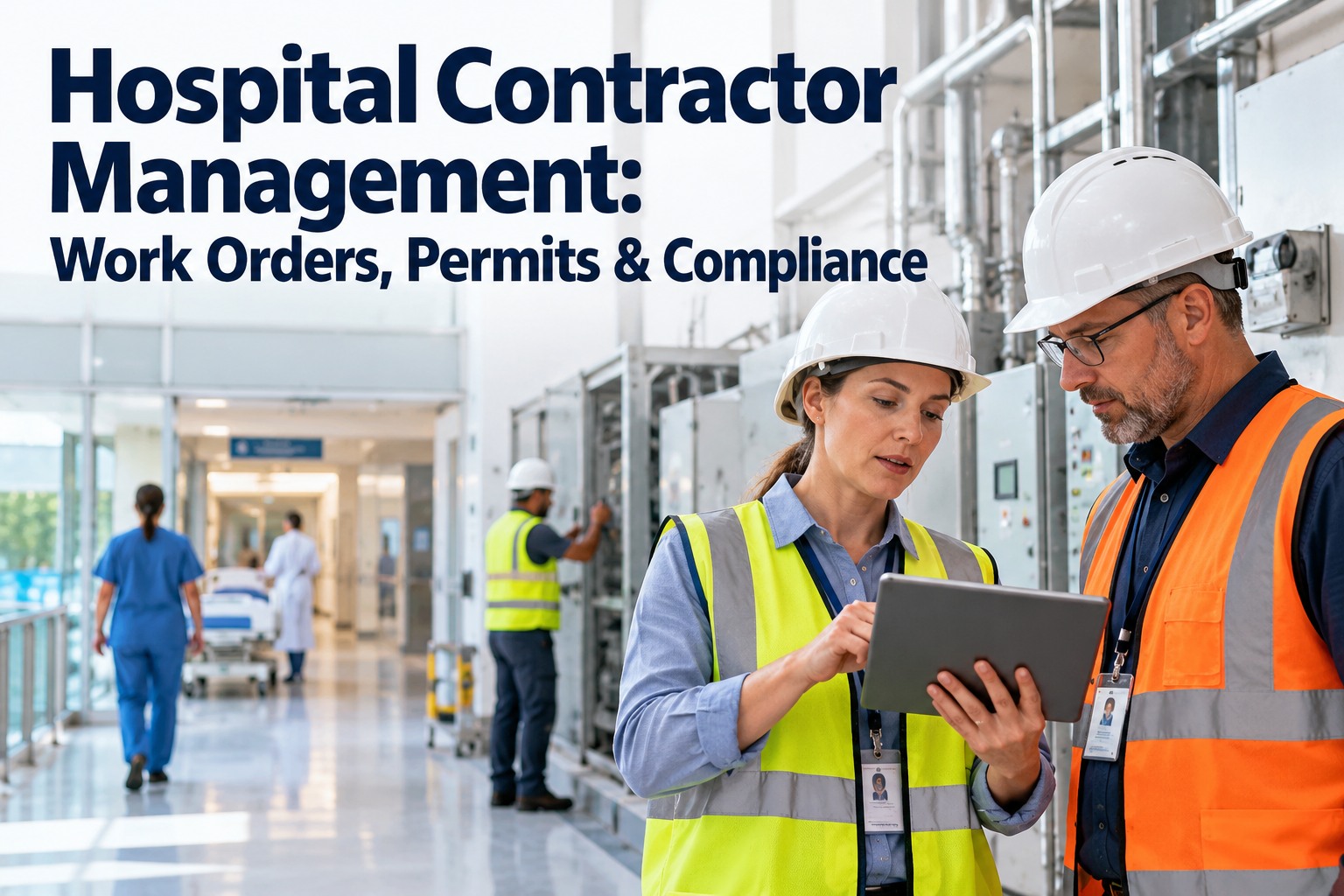
Hospital Contractor Management: Work Orders, Permits & Compliance
Qualified, permitted, supervised, documented — every contractor, every job, before the work, during it and after. The OXMAINT AI maintenance management software binds the work order, the permit and the record together so nothing happens outside the controls.
Qualify
Permit
Supervise
Document
Patients present
work happens in a live facility that can't be cleared or paused
Permit-led
hot work, infection control and life-safety permits gate the job
Supervised
presence, PPE and permit conditions checked while work is live
Documented
a full record per job for the Joint Commission and your AHJ
Why Hospital Contractor Control Is Different
The same contractor job that's routine in an office is high-stakes in a hospital, because the environment itself raises the risk. Four things make healthcare contractor management its own discipline; book a demo to see contractor control in OXMAINT AI.
Patients can't move
Work happens around people receiving care — the area can't simply be cleared, so the work must be controlled instead.
Infection risk
Dust from the simplest job can carry pathogens to vulnerable patients — which is why infection-control review gates the work.
Life-safety systems
A breached fire or smoke barrier, or an impaired sprinkler zone, compromises life safety until interim measures are in place.
Many vendors
Dozens of contractors and vendors move through a hospital — each has to meet the same standard without a supervisor at every door.
The Contractor Control Model: Before, During, After
Good contractor management isn't a single approval — it's a set of controls that run across the whole job. Here it is in three phases, each with the controls that belong to it; start free and run this model in OXMAINT AI.
BeforeQualify & authorize
Nobody starts work until they're vetted, scoped and permitted.
Licenses, insurance and certifications verified and current
Scope agreed and a work order raised for the job
Required permits identified — hot work, isolation, more
Infection-control risk assessment done for the area
Interim life-safety measures set if systems are affected
Site induction and safety briefing booked
DuringControl & supervise
While work is live, the controls stay active and checked.
Contractor signed in and badged, presence tracked
Permit active, displayed and its conditions met
Dust and infection barriers in place and intact
Isolation verified before any work on live systems
Work-order progress and scope changes captured
Spot checks against PPE and permit conditions
AfterVerify & record
The job isn't done until it's proven and documented.
Work inspected and signed off against the scope
Affected systems tested and returned to service
Permit formally closed and the area restored
Certificates, test results and as-fitted info filed
Contractor signed out and performance logged
Compliance record kept and retrievable for audit
The Permits That Gate Hospital Work
In a hospital, the permit is what authorizes work to begin and sets the conditions it runs under. These are the ones that most often gate contractor jobs; book a demo to see permits tied to work orders in OXMAINT AI.
Hot work permit
For welding, cutting or anything producing heat, sparks or flame — with fire watch and precautions set before and after.
Infection control (ICRA)
An infection-control risk assessment sets containment, barriers and cleaning for work in or near patient-care areas.
Interim life safety (ILSM)
When fire or life-safety systems are impaired, interim measures keep the building protected until they're restored.
Isolation / energy control
Lockout and isolation of electrical, mechanical or medical-gas systems proven before work begins on them.
Confined space
For tanks, pits and plant voids — with atmosphere testing, entry control and rescue arrangements in place.
General work permit
The baseline authorization tying the contractor to a scope, an area and a set of site conditions for the job.
Follow your program and the standards. Hospital contractor controls, infection-control risk assessment (ICRA) and interim life-safety measures (ILSM) are shaped by Joint Commission requirements, NFPA life-safety codes, OSHA and your facility's own policies. Which permits apply, and their conditions, depend on the work and your authority having jurisdiction — this model is a planning aid, carried out by qualified staff under your program.
A Permit on Paper and a Work Order in Another System Don't Talk to Each Other.
When the approval, the permit and the job live in separate places, gaps open — work starts before a permit is active, or closes without the record filed. The OXMAINT AI maintenance management software binds them into one flow, so a job can't proceed outside its controls and the documentation assembles itself.
How OXMAINT AI Manages Hospital Contractors
Contractor control holds only when the work order, the permit and the record are one connected system, not three disconnected ones. Here's what the OXMAINT AI maintenance management software brings; start free and keep every contractor job controlled in OXMAINT AI.
Credential tracking
Licenses, insurance and certifications held against each contractor, with expiry flags, so lapsed cover is caught early.
Work orders for vendors
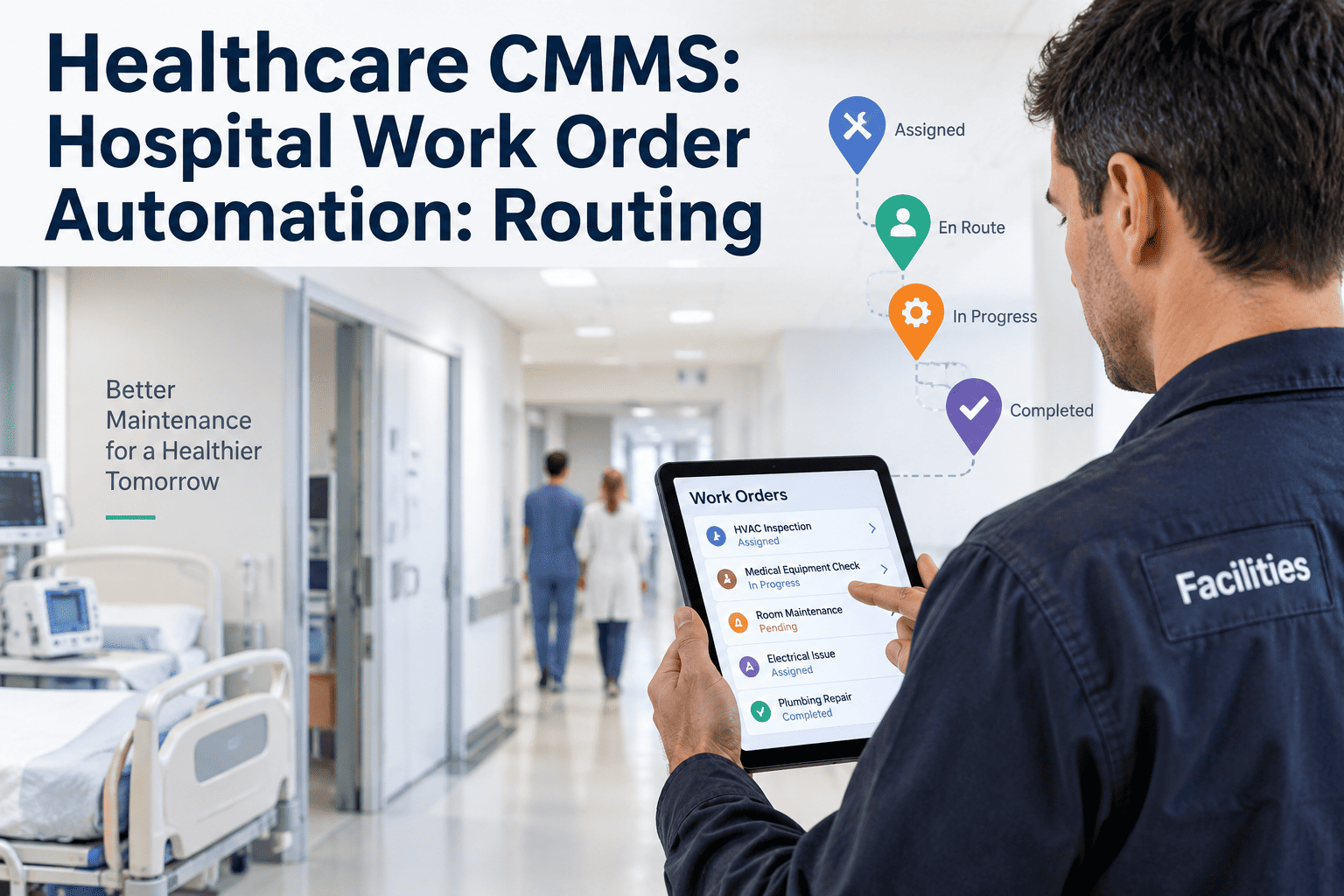
Every contractor job raised, scoped and tracked as a work order, so nothing happens off the books.
Permits tied to the job
Hot work, ICRA, ILSM and isolation permits linked to the work order, so work can't proceed without the right one active.
Sign-in & induction
Contractor sign-in, badging and induction status recorded, so presence and briefing are proven, not assumed.
Compliance record
Certificates, sign-offs and permit closures filed against the job, ready for Joint Commission and AHJ review.
Performance tracking
Response, quality and compliance scored per contractor, so renewals and awards rest on the record, not a hunch.
“
Our contractor control was a patchwork — permits on paper in one office, work orders in the CMMS, insurance certificates in someone's inbox, and a sign-in sheet at the door that was half-filled. During a survey we spent two days reconstructing who did what, where, and under which permit. Pulling it all into one flow — the work order carrying its permits, the sign-in, the sign-off and the certificates — ended that. Now a contractor job is either fully controlled and documented or it hasn't started, and the audit trail is just there.
Director of Facilities · Acute Care Hospital
Frequently Asked Questions
What does hospital contractor management involve?
Controlling outside work across its whole life: qualifying and credentialing the contractor, scoping the job as a work order, issuing the right permits, assessing infection-control and life-safety impact, supervising the live work, then verifying, signing off and documenting it. In a hospital the controls are tighter because patients, infection risk and life-safety systems are all in play.
Start free to run it.
What is ICRA and why does it matter?
An Infection Control Risk Assessment evaluates how a job could spread dust and pathogens to patients and sets the containment, barriers and cleaning needed to prevent it. Because even minor work can disturb contaminants dangerous to vulnerable patients, ICRA gates contractor work in and around patient-care areas.
Book a demo to see it tied to the job.
What are Interim Life Safety Measures (ILSM)?
ILSM are temporary measures that keep a building protected when construction or maintenance impairs fire or life-safety systems — an impaired sprinkler zone, a breached fire barrier, a blocked exit. They might include extra fire watches, additional signage or temporary barriers, applied until the permanent systems are restored, under your Joint Commission program.
Why tie permits to work orders?
Because when permits and work orders live in separate systems, work can start before a permit is active or close without its record filed. Linking them means a job can't proceed without the right permit attached and conditions met, and the closure and documentation happen together — closing the gaps that surveys and incidents expose.
How does a CMMS help with contractor compliance?
It holds contractor credentials with expiry flags, raises every job as a work order, links the required permits so work can't proceed without them, records sign-in and induction, files certificates and sign-offs against the job, and scores contractor performance — turning a patchwork of paper, inboxes and sign-in sheets into one controlled, audit-ready flow.
No Job Starts Outside the Controls — and None Closes Without the Record.
Bring hospital contractor work into one controlled flow with the OXMAINT AI maintenance management software — credential tracking, work orders, permits tied to the job, sign-in and induction, and an audit-ready compliance record. Stop reconstructing who did what under which permit and start having it there by default.

.jpg)
