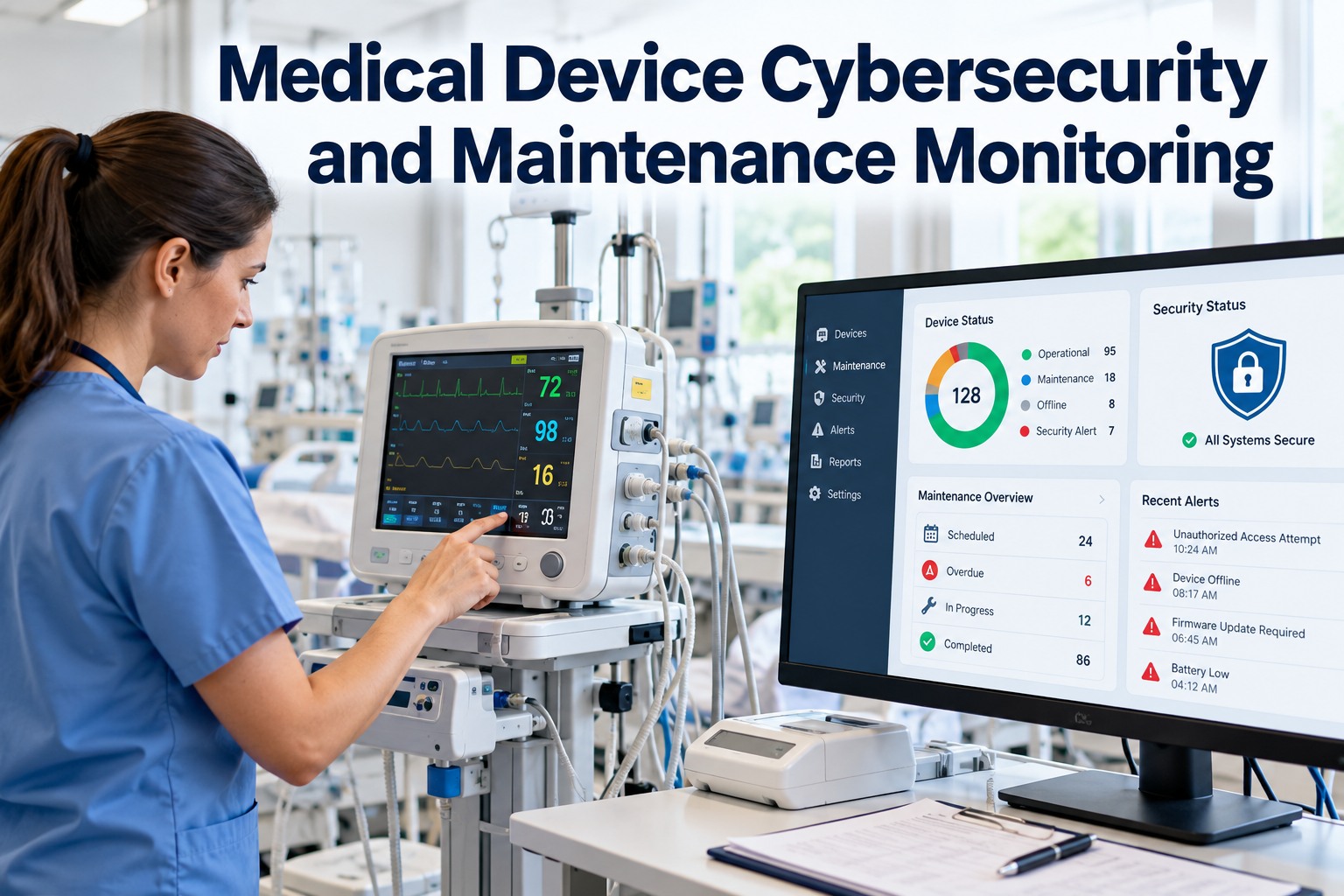
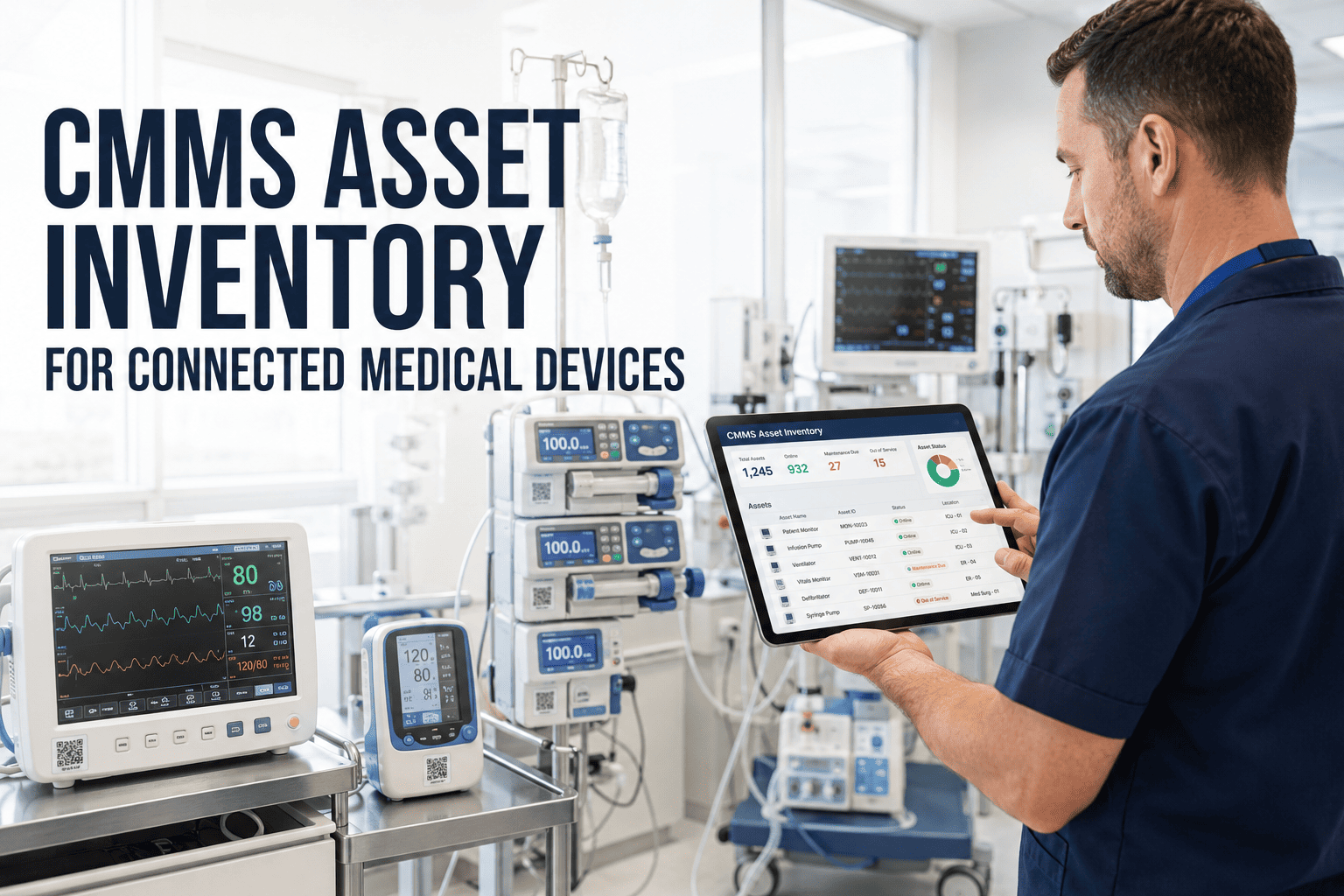
A single compromised connected medical device on a hospital network can cascade into a full-scale breach — exposing patient data, disabling clinical systems, and triggering HIPAA enforcement actions that average $1.9 million per incident. In 2024, 78 percent of healthcare organizations reported at least one IoMT security incident linked to an unpatched or unmonitored connected device. The vulnerability is not the device. It is the absence of a managed, auditable record of what is connected, what firmware version it runs, and when it was last assessed. Oxmaint closes that gap — delivering a centralized device registry, vulnerability tracking, and compliance documentation that security and clinical operations teams can act on. Book a demo to see how Oxmaint structures IoMT device security management across your hospital network.
Hospital cybersecurity for connected medical devices requires four managed capabilities: a complete IoMT device registry with firmware and OS version tracking, network segmentation documentation per device category, structured vulnerability assessment and patch management records, and HIPAA-aligned incident response documentation. Oxmaint delivers all four in a single platform — giving CISOs, VPs of Operations, and Compliance Officers auditable visibility across every connected device on the clinical network.
Four Security Domains Where Hospital IoMT Programs Carry the Highest Risk
Each domain has a distinct regulatory obligation and a specific documentation failure mode when managed without a structured platform. Book a demo to see how Oxmaint structures all four into a unified hospital device security program.
Infusion pumps, patient monitors, imaging systems, ventilators, and building automation devices all require a documented asset registry with manufacturer, model, firmware version, OS, IP address, and network zone assignment. Without a live registry, vulnerability scans are incomplete and patch compliance cannot be verified. Oxmaint maintains a continuously updated device record, auto-flagging end-of-life OS status and overdue firmware assessments against each asset.
Clinical devices, administrative systems, and building IoT must operate on isolated network segments with documented access control rules per device category. Flat networks connecting infusion pumps to EHR servers represent a single-failure-point exposure that auditors flag as a systemic HIPAA violation. Oxmaint documents network zone assignments per device, tracks access control rule changes, and links segmentation status to each device's compliance record for audit export.
The FDA's 2023 cybersecurity guidance requires hospitals to maintain documented patch management processes for all networked medical devices — including a risk-ranked vulnerability register and evidence of remediation timelines. For devices where manufacturer patches are unavailable, compensating control documentation is required. Oxmaint tracks CVE exposure per device, logs patch application with technician identity and timestamp, and documents compensating controls where patching is not possible.
HIPAA requires a documented incident response capability with defined detection, containment, and notification procedures — and evidence that those procedures were executed when an incident occurs. Device-level incident records must link to specific assets, affected patient data scope, and response timeline. Oxmaint logs security events against device records, timestamps each response action, and generates the incident documentation package required for HHS breach notification submissions.
Every Device. Every Firmware Version. Every Vulnerability — Tracked and Audit-Ready.
Oxmaint gives hospital security and operations teams a single platform for IoMT inventory, vulnerability tracking, and HIPAA-aligned documentation — without spreadsheets, without manual assembly, and without the 3-week audit scramble. Book a demo to see the connected device security workflow for your hospital network.
IoMT Security Program — Implementation Roadmap
A structured Oxmaint deployment moves a hospital from fragmented device spreadsheets to a fully operational IoMT security management program — without disrupting clinical operations or existing IT infrastructure.
Every networked medical device, building IoT endpoint, and administrative system registered in Oxmaint with manufacturer, model, firmware version, OS status, network zone, and responsible owner. End-of-life OS devices flagged automatically. Device categories assigned per clinical function for segmentation mapping.
CVE exposure mapped per device against current firmware and OS versions. Risk-ranked vulnerability register activated in Oxmaint with remediation owner assignments, target dates, and compensating control documentation for unpatched devices. Patch application workflow deployed for field technicians on mobile. Book a demo to see vulnerability tracking configured for your device fleet.
Oxmaint security dashboard activated showing device compliance rates, overdue patch tasks, open vulnerabilities by risk tier, and network segmentation coverage. HIPAA incident response workflows configured with detection-to-notification documentation templates. CISO and VP Operations views configured with role-appropriate scope and escalation routing.
All device records, vulnerability logs, patch history, and incident documentation exportable in formats required for HIPAA audits, OCR investigation responses, and cyber insurance renewal submissions. Automated alerts when device firmware assessment intervals are exceeded or when new critical CVEs affect registered device models.
Security KPI Benchmarks — Hospital IoMT Programs
Oxmaint vs Competing Platforms — Hospital IoMT Security Management
General-purpose CMMS and IT asset tools manage tickets — they do not manage device-level CVE tracking, HIPAA incident documentation, or FDA post-market cybersecurity compliance configured for hospital environments.
| Security Capability | Oxmaint | ServiceNow | Medigate | Armis | Claroty | IBM Maximo | UpKeep | Nuvolo |
|---|---|---|---|---|---|---|---|---|
| IoMT-specific device registry | Yes | Generic | Yes | Yes | Yes | Custom | No | Partial |
| CVE tracking per device asset | Yes | Partial | Yes | Yes | Yes | Custom | No | Partial |
| HIPAA incident response documentation | Yes | Generic | No | No | Partial | Custom | No | Yes |
| FDA post-market cybersecurity records | Yes | No | Partial | Partial | Partial | Custom | No | Partial |
| Network segmentation documentation | Yes | Partial | Yes | Yes | Yes | Custom | No | Partial |
| HIPAA audit export — under 2 hours | Yes | Partial | No | No | Partial | Yes | No | Yes |
| Deployment in weeks without IT project | Yes | No | Varies | Varies | Varies | No | Yes | No |
| Compensating control documentation | Yes | No | Partial | No | Partial | Custom | No | Partial |
Measured Outcomes — Hospitals Using Oxmaint IoMT Security
From 44% to 91% CVE Closure — in 90 Days
Hospitals that move from spreadsheet vulnerability tracking to Oxmaint's IoMT security platform close the compliance gap that regulators and insurers are measuring — before the next OCR inquiry, not during it. Book a demo to see your current device security gap identified in the first deployment session.
Oxmaint Platform Capabilities for Hospital IoMT Security
Centralized device registry with firmware version, OS status, network zone, and clinical function — auto-flagging EOL devices and overdue assessment intervals across the full connected device fleet.
Risk-ranked vulnerability register per device — CVE assignments, remediation owner, target date, and compensating control documentation for devices where vendor patches are unavailable.
Detection-to-notification documentation templates aligned to HIPAA §164.308(a)(6) — incident events logged against device records with timestamped response actions and HHS submission-ready exports.
CISO and VP-level dashboard showing device compliance rates, open CVEs by severity, patch currency, and segmentation coverage — with automated escalation when remediation deadlines are missed.
Complete HIPAA security rule audit package — device records, vulnerability logs, patch history, and incident documentation — exportable in under 2 hours for any OCR inquiry or cyber insurance renewal.
Vendor and contractor device access tracked separately from employee-managed devices — with security assessment currency verified in Oxmaint before network access is authorized at the device level.
Frequently Asked Questions
Close the IoMT Security Gap — Before the Next OCR Inquiry
Complete device inventory, CVE tracking, HIPAA incident documentation, and audit-ready exports — all operational in Oxmaint within 6 to 8 weeks, no IT project required. Book a demo with your CISO or VP of Operations and see the full IoMT security workflow configured for your device fleet.