A hospital medical gas system failure during a surgical procedure is not a maintenance event — it is a sentinel event. NFPA 99 mandates documented inspection, testing, and alarm verification for every zone valve, pressure alarm, and master alarm panel across the oxygen, medical air, vacuum, and nitrous oxide systems serving patient care areas. The documentation gap — between the inspection that occurred and the auditable record that proves it — is where Joint Commission citations originate and where patient safety liability compounds. Oxmaint closes that gap with digital inspection workflows, automated compliance schedules, and audit-ready export built specifically for healthcare facility operations. Book a demo to see how Oxmaint digitizes NFPA 99 medical gas compliance across your hospital or health system.
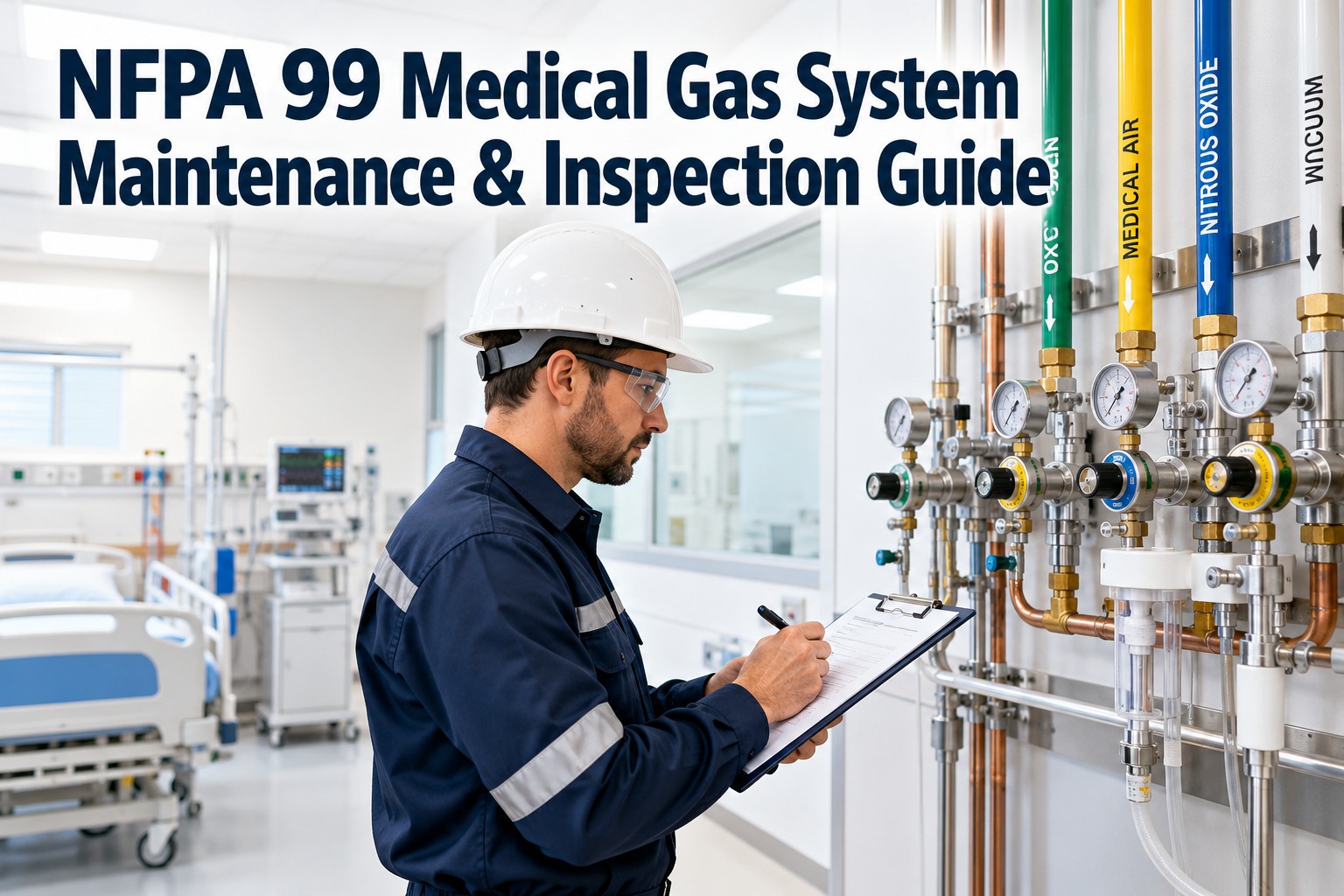
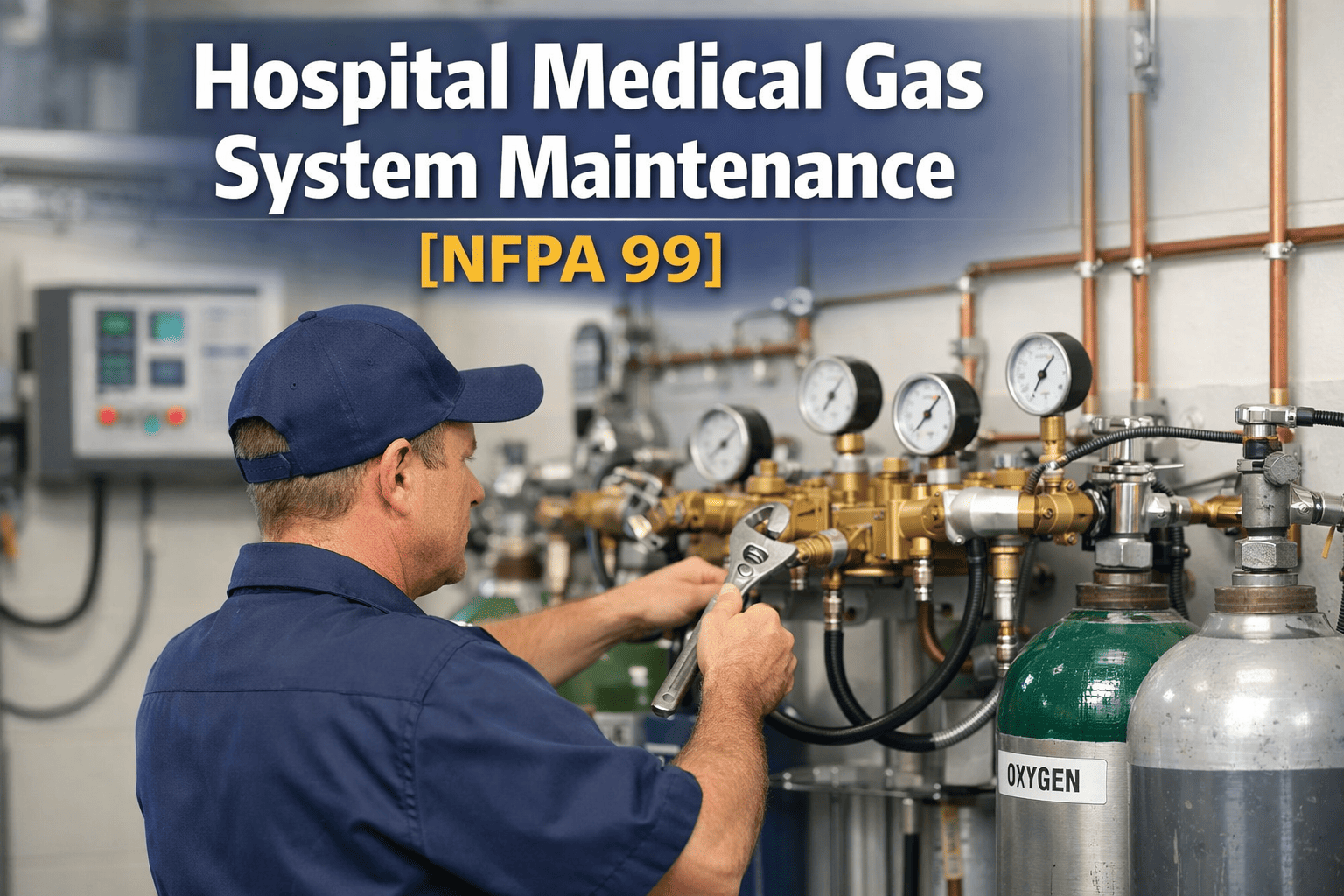
Hospital medical gas system maintenance requires documented control of four critical gas systems — oxygen, medical air, medical vacuum, and nitrous oxide — across zone valve testing, master alarm panel verification, pressure monitoring, and source equipment inspection. NFPA 99 Chapter 5 and Chapter 6 define the inspection frequency and documentation standard. Oxmaint digitizes every inspection task, alarm verification record, and corrective action — connecting field execution to auditable compliance evidence automatically.
Four Medical Gas Systems Requiring NFPA 99 Documented Maintenance
Each system carries a distinct regulatory obligation, inspection frequency, and documentation requirement under NFPA 99. Book a demo to see how Oxmaint structures all four into a unified healthcare compliance program.
Bulk liquid oxygen storage, pressure regulation, manifold systems, zone shut-off valves, and area alarm panels all require documented inspection and testing intervals. Zone valve testing must be documented per location with pressure verification. Master alarm panel testing requires witnessed sign-off. Source equipment checks — including pressure gauges, relief valves, and line pressure regulators — must be completed at defined intervals with records retained for Joint Commission review.
Medical air compressor systems require documented dew point monitoring, carbon monoxide testing, and oil content verification at defined intervals. Intake filter inspection, desiccant dryer performance checks, and receiver tank inspection records are all required. Alarm system testing — including high-temperature, high-pressure, and carbon monoxide alarms — must be verified and documented at each inspection. Oxmaint schedules all tasks automatically and captures readings at point of inspection.
Medical vacuum pump inspection, inlet filter maintenance, bacterial filter replacement records, and vacuum receiver inspection all require documentation under NFPA 99. Zone valve vacuum level testing per care area and alarm panel verification must be completed and recorded. Waste anesthetic gas disposal system inspections in surgical areas must be documented separately. Each pump motor, coupling, and exhaust routing requires a current inspection record linked to the asset in a retrievable format.
Nitrous oxide manifold systems, cylinder storage area inspections, pressure regulators, and zone valve testing follow the same documentation standard as oxygen but with additional OSHA occupational exposure monitoring obligations for surgical and procedure areas. Waste gas scavenging system verification and ambient N2O sampling records must be maintained per OSHA action level thresholds. Oxmaint manages manifold inspection scheduling, cylinder change records, and OSHA exposure monitoring compliance in a single asset-linked record.
Every Zone Valve Test. Every Alarm Verification. Every Pressure Check — Captured at the Point of Inspection.
Oxmaint generates NFPA 99 inspection tasks on mobile — gas readings entered in the field, alarm verification signed off at the panel, records archived against the asset automatically. No paper. No transcription. No documentation gap. Book a demo to see the medical gas compliance workflow for your facility.
NFPA 99 Compliance Deployment — Implementation Phases
A structured deployment moves your hospital from paper-based gas system maintenance logs to a fully operational digital compliance program — without disrupting clinical operations or existing Joint Commission preparation cycles.
Every medical gas source, zone valve, alarm panel, and distribution component registered in Oxmaint's asset hierarchy with NFPA 99 chapter reference, inspection frequency, and documentation retention period. Inspection task types configured per system — oxygen, medical air, vacuum, nitrous oxide — with field data capture forms matching existing paper checklists.
Technicians access inspection tasks via QR-tagged equipment — no paper forms, no manual scheduling, no missed sign-offs. Pressure readings, alarm test results, and corrective action flags entered at the equipment. Zone valve test results captured per location with technician identity and timestamp. Book a demo to see mobile NFPA 99 inspection completion for your gas zone layout.
Oxmaint compliance dashboard activated showing inspection currency per system, overdue task alerts, open corrective actions, and alarm verification status by care area. Automated escalation when inspection intervals approach overdue status. Joint Commission EC standard evidence packages exportable in under 2 hours — no manual record assembly before survey.
Medical Gas Compliance — Regulatory Framework by Region
| Region | Primary Standards | Key Hospital Requirements | Oxmaint Coverage |
|---|---|---|---|
| USA | NFPA 99 Health Care Facilities Code, Joint Commission EC.02.05.07, CMS CoP §482.41, OSHA 1910.1000 (N2O) | Zone valve annual testing, master alarm verification, medical air CO testing, N2O ambient monitoring, 3-year documentation retention | NFPA 99-aligned inspection templates, alarm verification workflows, Joint Commission audit export, OSHA N2O monitoring schedules |
| UK | HTM 02-01 Medical Gas Pipeline Systems, CQC Fundamental Standards, NHS Estates guidance, COSHH 2002 (N2O) | Authorised Person (Medical Gas) involvement in major works, Competent Person inspection records, pipeline testing documentation per HTM 02-01 | HTM 02-01 task scheduling, AP/CP sign-off capture, CQC evidence packages, NHS Estates-aligned asset register |
| Australia | AS 2896 Medical Gas Systems, ACHS EQuIP Standards, State Health Department facility regulations, Safe Work Australia WHS Regulations | AS 2896 verification testing, accreditation audit evidence for ACHS EQuIP, plant inspection registration for pressure vessels | AS 2896 inspection templates, ACHS EQuIP evidence export, registered plant inspection scheduling, state-specific compliance records |
| Middle East | NFPA 99 (adopted), Joint Commission International (JCI) FMS standards, local Civil Defence medical gas requirements, OSHAD-SF (UAE) | JCI FMS.04 facility management documentation, Civil Defence gas system certification, OSHAD-SF hazard identification for medical gas areas | JCI FMS-aligned inspection workflows, Civil Defence certification tracking, multilingual mobile forms, OSHAD-SF hazard register |
Oxmaint vs Competing CMMS — Hospital Medical Gas Compliance
| Compliance Capability | Oxmaint | MaintainX | UpKeep | Fiix | Limble | IBM Maximo | Hippo CMMS | Infor EAM |
|---|---|---|---|---|---|---|---|---|
| NFPA 99 inspection templates per system | Yes | Generic | No | No | No | Custom | No | Custom |
| Zone valve test records per location | Yes | Generic | Generic | Partial | Generic | Yes | Generic | Yes |
| Master alarm panel verification workflow | Yes | No | No | No | No | Custom | No | Custom |
| Joint Commission audit export — under 2 hrs | Yes | Partial | Partial | Partial | Partial | Yes | Partial | Yes |
| OSHA N2O monitoring schedule and records | Yes | No | No | No | No | Custom | No | Custom |
| Deployment without IT project — weeks | Yes | Yes | Yes | Varies | Yes | No | Yes | No |
Medical Gas Compliance KPI Benchmarks — Hospital Industry
Operational Results — Hospitals Using Oxmaint Medical Gas Compliance
From 58% to 97% NFPA 99 Inspection Compliance — Within 60 Days
Healthcare facilities that move from paper maintenance logs to Oxmaint's digital compliance program close the documentation gap before the next Joint Commission survey — not in response to it. Book a demo to see your current NFPA 99 compliance gap assessed in the first session.
Oxmaint Platform Features for Hospital Medical Gas Compliance
Inspection tasks scheduled automatically per NFPA 99 interval for each system — zone valves, source equipment, alarm panels, and pressure gauges — with overdue alerts before compliance gaps occur.
Zone valve pressure test results and master alarm panel verification captured per location with technician sign-off, timestamp, and pass/fail status — archived against the care area asset automatically.
CO concentration test scheduling, dew point recording, and oil content verification managed per compressor with automated reminders at interval approach and readings logged against the source asset record.
Complete EC standard evidence package — all inspection records, alarm verification logs, corrective actions, and gas test results — exportable in under 2 hours for any survey or CMS review.
Gas system deficiencies flagged at inspection trigger CAPA workflow automatically — with assigned owner, due date, escalation at day 20, and closure evidence captured for audit documentation.
Compliance status across all facilities in a single health system — inspection currency, overdue tasks, and open findings visible at system level for VP Facilities and compliance leadership review.
Frequently Asked Questions
Close the NFPA 99 Documentation Gap Before the Next Joint Commission Survey
Digital NFPA 99 inspection scheduling, zone valve test records, alarm verification workflows, and Joint Commission audit export — all live in Oxmaint within 4 to 6 weeks, no IT project required. Book a demo with your Director of Facilities Engineering and see the full medical gas compliance workflow configured for your hospital's gas system layout.