Hospitals today face an unprecedented financial crisis. With operating costs rising faster than reimbursement rates and labor shortages straining already thin margins, healthcare executives are desperately seeking sustainable cost reduction strategies that don't compromise patient care. While many focus on staffing cuts or supply chain negotiations, a hidden goldmine exists in facility and equipment maintenance operations. Maintenance automation through modern CMMS (Computerized Maintenance Management System) platforms represents one of the highest-ROI opportunities available to hospitals in 2024, delivering documented savings of 35% or more while simultaneously improving patient safety and regulatory compliance. This comprehensive guide explores how forward-thinking healthcare organizations are transforming their financial performance through intelligent maintenance automation.
The $2.1 Million Question: What's Draining Your Hospital's Budget?
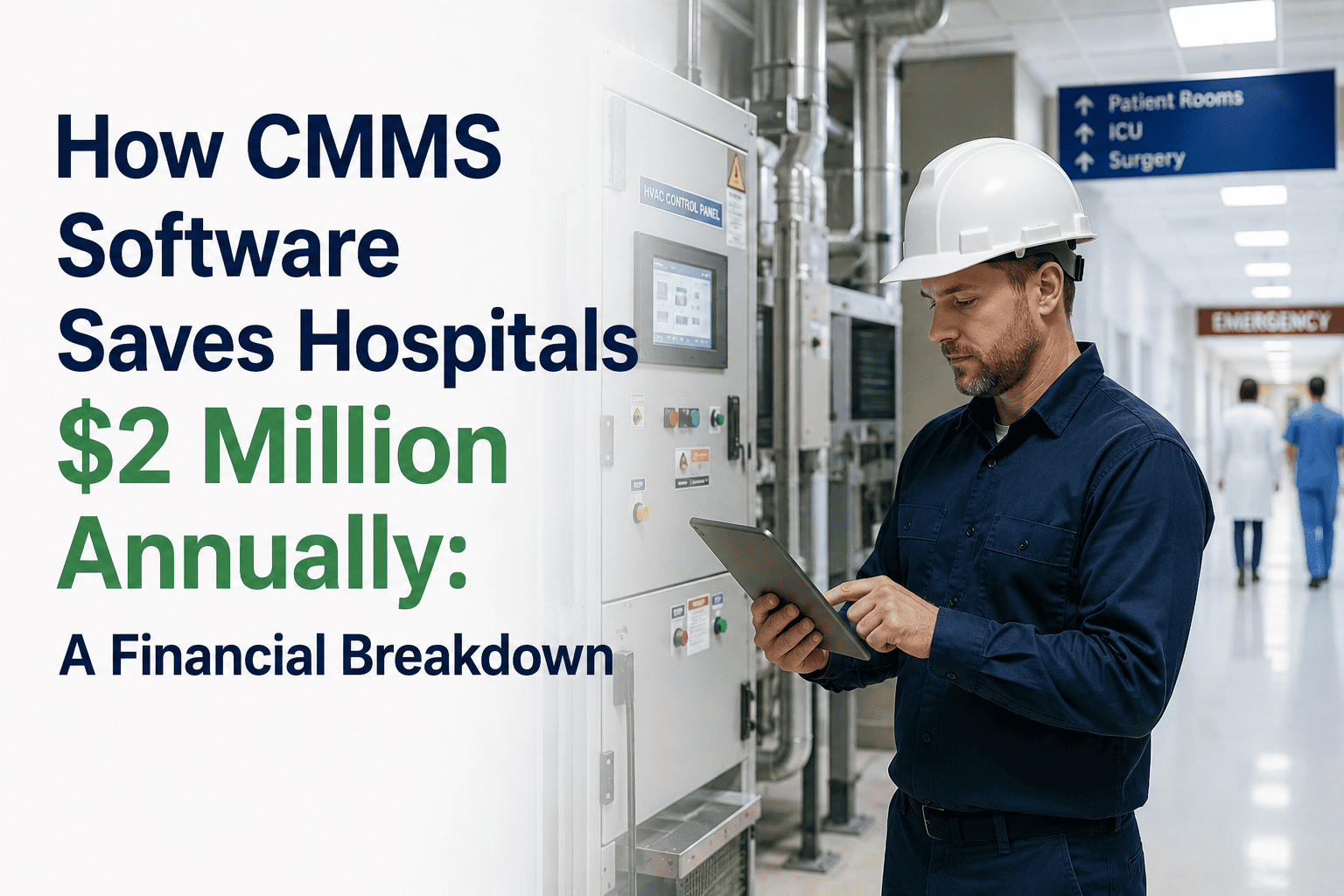
Discover how St. Mary's Hospital slashed maintenance costs by 35% using predictive automation—saving $2.1M annually while improving equipment uptime to 98.7%.
See your personalized ROI calculation in under 5 minutes
Book Your Free ROI AssessmentThe Hidden Financial Crisis in Hospital Maintenance
Healthcare facilities operate on razor-thin margins, with the average hospital margin hovering between 1-3%. Yet beneath these numbers lies a shocking reality: most hospitals are bleeding millions annually through inefficient maintenance operations. According to recent industry surveys, reducing operating costs ranks as the #4 priority for Healthcare Technology Management (HTM) leaders in 2024, yet many organizations lack the visibility to identify where these costs originate.
The traditional reactive maintenance model—fixing equipment only after it breaks—creates a cascade of hidden expenses:
- Emergency repair premiums costing 3-4x more than scheduled maintenance
- Revenue loss from OR delays and patient room unavailability
- Accelerated asset depreciation due to poor maintenance histories
- Compliance penalties from missed inspections and documentation gaps
- Energy waste from poorly calibrated HVAC and medical systems
A comprehensive case study of St. Mary's Regional Medical Center revealed they were spending $6.88 million annually on facility maintenance before automation—money that was largely preventable. Sign up today to access our cost calculator and see your potential savings.
The Automation Advantage: Real Numbers from Real Hospitals
Why Manual Maintenance Is Killing Your Margins
Despite living in the digital age, approximately 60% of hospitals still rely on paper-based or spreadsheet-driven maintenance tracking. This manual approach creates invisible costs that compound monthly:
The True Cost of Maintenance Gaps
Asset Blindness: Without centralized tracking, hospitals purchase redundant equipment while existing assets sit underutilized. One mid-sized health system discovered they owned 30% more infusion pumps than necessary simply because visibility was fragmented across departments.
Compliance Roulette: Joint Commission, FDA, and CMS documentation requirements demand meticulous record-keeping. Manual systems result in an average of 40 hours monthly spent on compliance documentation alone, with error rates exceeding 15%.
Reactive Spiral: Emergency repairs don't just cost more—they disrupt patient care. Operating room delays due to equipment failure average $1,200 per hour in lost revenue, not including the clinical impact on surgical schedules.
The global healthcare CMMS market, valued at $706.4 million in 2024, is projected to reach $2 billion by 2034, growing at 10.9% CAGR. This explosive growth reflects a fundamental shift: automation is no longer optional for financial survival. Schedule a demo to see how automation eliminates these costly gaps.
The Five Pillars of Maintenance Automation ROI
Modern CMMS platforms like Oxmaint deliver financial returns through five interconnected mechanisms. Understanding these pillars helps CFOs and COOs build the business case for automation investment.
Predictive Maintenance Intelligence
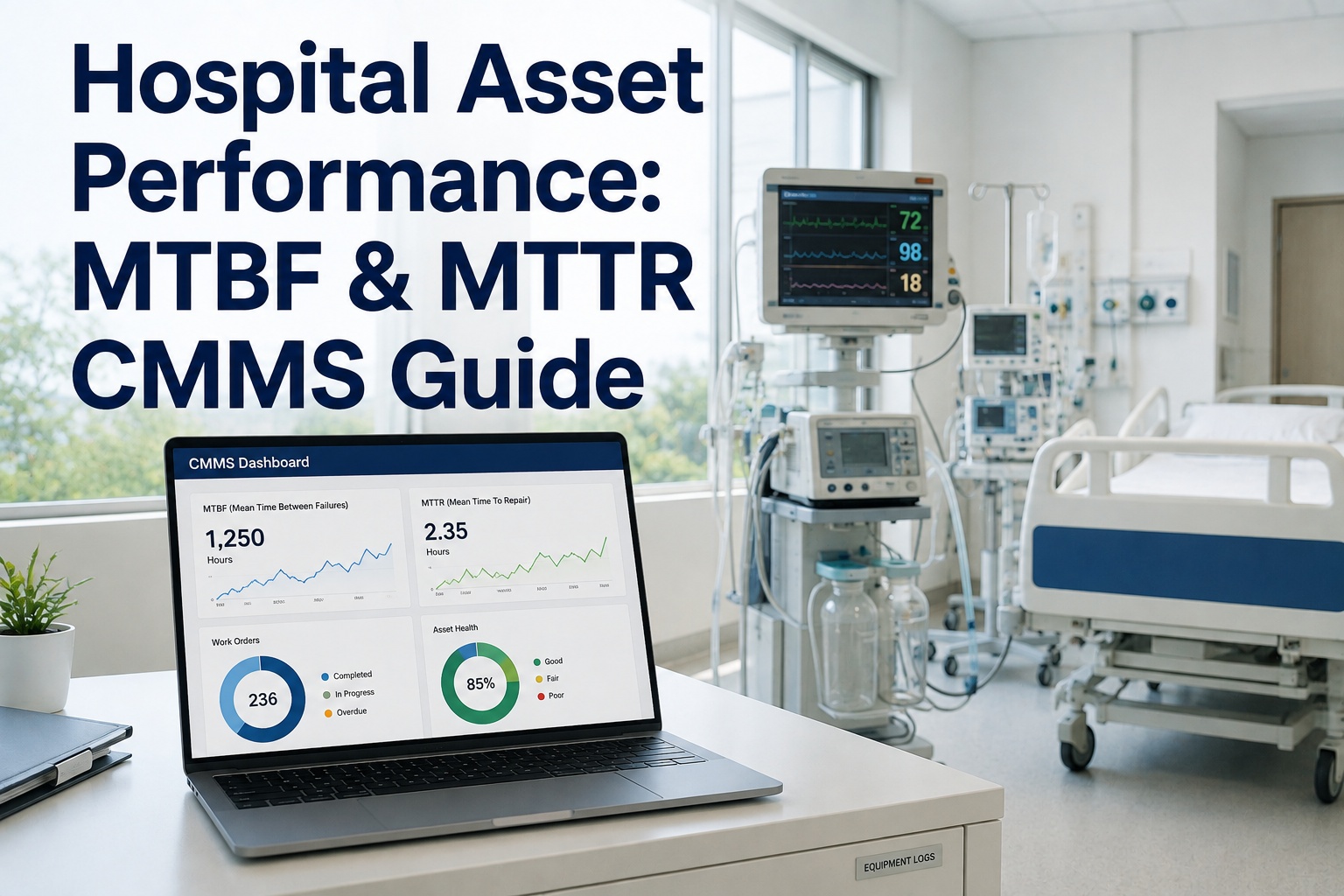
IoT sensors and AI algorithms analyze equipment performance patterns to predict failures 2-4 weeks in advance. St. Mary's Hospital increased Mean Time Between Failures (MTBF) from 180 to 285 days while reducing Mean Time to Repair (MTTR) from 4.2 hours to 2.1 hours. This proactive approach eliminates the premium costs of emergency repairs.
Energy Optimization
Automated systems monitor HVAC, lighting, and medical equipment energy consumption in real-time. Poorly maintained equipment can consume 20-30% more energy. One facility achieved a 28% reduction in energy costs ($470,000 annually) simply by ensuring equipment operated at optimal efficiency through automated calibration alerts.
Asset Lifecycle Extension
Properly maintained medical equipment lasts 30-40% longer. With MRI machines costing $1-3 million and CT scanners $500,000-$1 million, extending asset life by even 2 years generates massive capital savings. Automated maintenance schedules ensure manufacturer protocols are followed precisely, preserving warranties and optimizing performance.
Labor Efficiency Multiplication
Maintenance staff spend 40% of their time on administrative tasks—filing paperwork, searching for asset histories, or coordinating with vendors. Automation reduces this to 10%, effectively giving you 30% more productive capacity without hiring. Mobile CMMS apps allow technicians to receive work orders, access manuals, and close tickets while in the field.
Revenue Protection
Equipment downtime directly impacts revenue. An idle operating room costs $15-20 per minute. Automated systems maintain 98.7% equipment availability compared to 94.2% with manual processes. For St. Mary's, this translated to $380,000 annually in protected revenue from reduced cancellations and delays.
Ready to Calculate Your Hospital's Savings Potential?
Join 200+ healthcare facilities already using Oxmaint to automate maintenance and reduce costs. See how much your facility could save with our interactive ROI calculator.
From Crisis to Profit: The Implementation Roadmap
Transitioning from reactive to automated maintenance doesn't require massive upfront capital or years of implementation. Modern cloud-based CMMS platforms deploy in weeks, not months, with ROI typically visible within the first quarter.
Phase 1: Asset Digitization (Weeks 1-4)
The foundation of automation is accurate asset inventory. Using QR codes and barcode scanning, facilities can catalog thousands of assets rapidly. This phase typically reveals 15-20% of "ghost assets"—equipment still on books but physically missing or decommissioned—immediately improving balance sheet accuracy.
Phase 2: Workflow Automation (Weeks 5-8)
Automated work order generation replaces phone calls and sticky notes. Preventive maintenance schedules based on manufacturer recommendations and regulatory requirements are programmed into the system. Sign up now to access our pre-built healthcare maintenance templates.
Phase 3: Predictive Intelligence (Months 3-6)
Integration with building management systems and medical equipment IoT sensors enables condition-based monitoring. The system learns normal operating parameters and alerts teams to anomalies before failures occur.
Phase 4: Advanced Analytics (Months 6-12)
Comprehensive dashboards provide CFOs with capital planning insights, showing exactly which assets need replacement versus refurbishment. Vendor performance analytics identify which service contracts deliver value and which should be renegotiated.
Compliance as a Cost Center Transformation
Regulatory compliance typically drains resources, but automation transforms it from a cost center to a risk mitigation engine. Automated CMMS platforms maintain complete audit trails, ensuring Joint Commission readiness 365 days a year rather than during frantic pre-survey preparation.
Key compliance benefits include:
- Automated documentation: Every maintenance action is time-stamped and logged, reducing compliance preparation from weeks to hours
- Calibration tracking: Medical device calibration schedules are monitored automatically with escalation alerts
- Environment of Care standards: HVAC and life safety system testing documentation is generated automatically
- CMS reporting: Required maintenance data for cost reports is compiled without manual intervention
One health system reported saving $150,000 annually in compliance labor costs while simultaneously improving their survey scores. Book a demo to see our compliance automation features.
The Competitive Advantage of Automated Maintenance
In an era of healthcare consolidation and value-based care, operational efficiency directly impacts competitiveness. Hospitals with automated maintenance operations achieve:
Patient Satisfaction
98.7% equipment uptime ensures rooms are ready and comfortable
Staff Retention
Maintenance teams focus on skilled work rather than paperwork
Capital Planning
Data-driven replacement schedules optimize cash flow
Risk Mitigation
Zero critical system failures affecting patient care
Frequently Asked Questions
How quickly can we expect ROI from maintenance automation?
Most hospitals see measurable cost reductions within 90 days of full implementation. The complete ROI of 300-400% typically materializes within 18-24 months. Immediate savings come from reduced emergency repairs and labor efficiency, while long-term gains accrue from asset lifecycle extension and energy optimization.
Will automation replace our maintenance staff?
No. Automation augments your team's capabilities by eliminating tedious administrative work. With healthcare facing severe maintenance technician shortages, automation allows you to do more with existing staff. Technicians focus on high-value repairs and preventive work rather than paperwork and emergency firefighting.
How does CMMS integration affect our existing IT systems?
Modern CMMS platforms like Oxmaint offer API-first architecture that integrates seamlessly with existing ERP, EHR, and building management systems. Cloud-based deployment requires minimal IT resources, and most integrations are completed within 2-4 weeks without disrupting operations.
What size hospital benefits from maintenance automation?
Facilities with 100+ beds typically see the strongest ROI, though smaller critical access hospitals benefit significantly from compliance automation. The break-even point usually occurs around $500,000 in annual maintenance spend. Multi-site health systems gain additional value through centralized visibility and vendor management.
How does automation improve patient safety specifically?
Automated maintenance ensures critical equipment like ventilators, infusion pumps, and surgical equipment receive preventive care before failures occur. Life safety systems including medical gas, emergency power, and fire suppression are monitored continuously. Real-time alerts ensure no critical maintenance is missed due to human oversight.
What is the total cost of implementation?
Cloud-based CMMS solutions operate on subscription models ranging from $3,000-$8,000 monthly depending on facility size and asset count. Implementation services typically cost 1-2 months of subscription fees. With average savings of $2+ million annually for mid-sized hospitals, the payback period is usually under 6 months.
Stop the Financial Bleeding. Start Automating Today.
Your hospital cannot afford another year of reactive maintenance costs. Join the 200+ healthcare facilities using Oxmaint to transform maintenance from a cost center into a strategic advantage. See exactly how much you could save with a personalized 10-minute demo.
No credit card required. Full access for 14 days. Implementation support included.

.png)