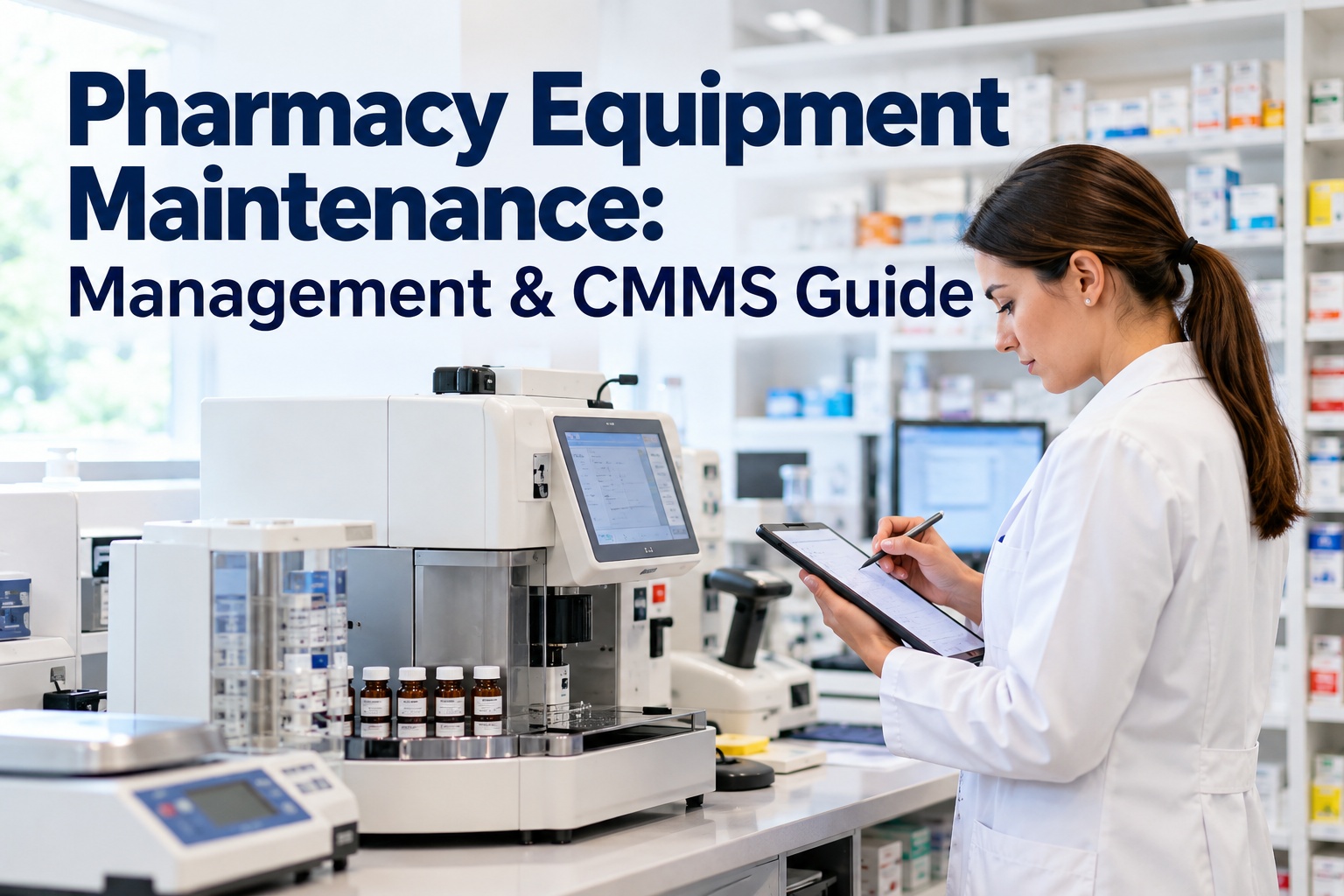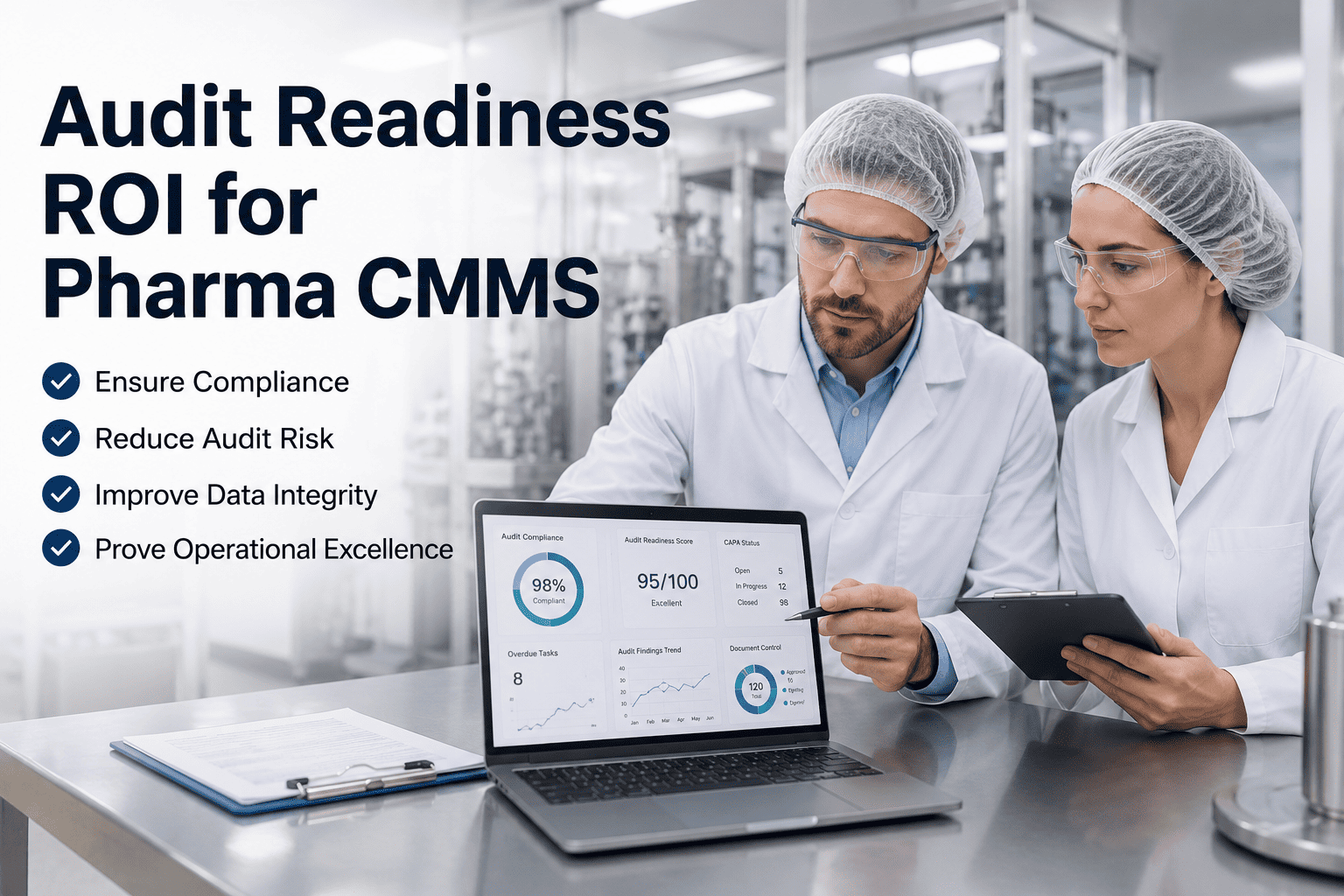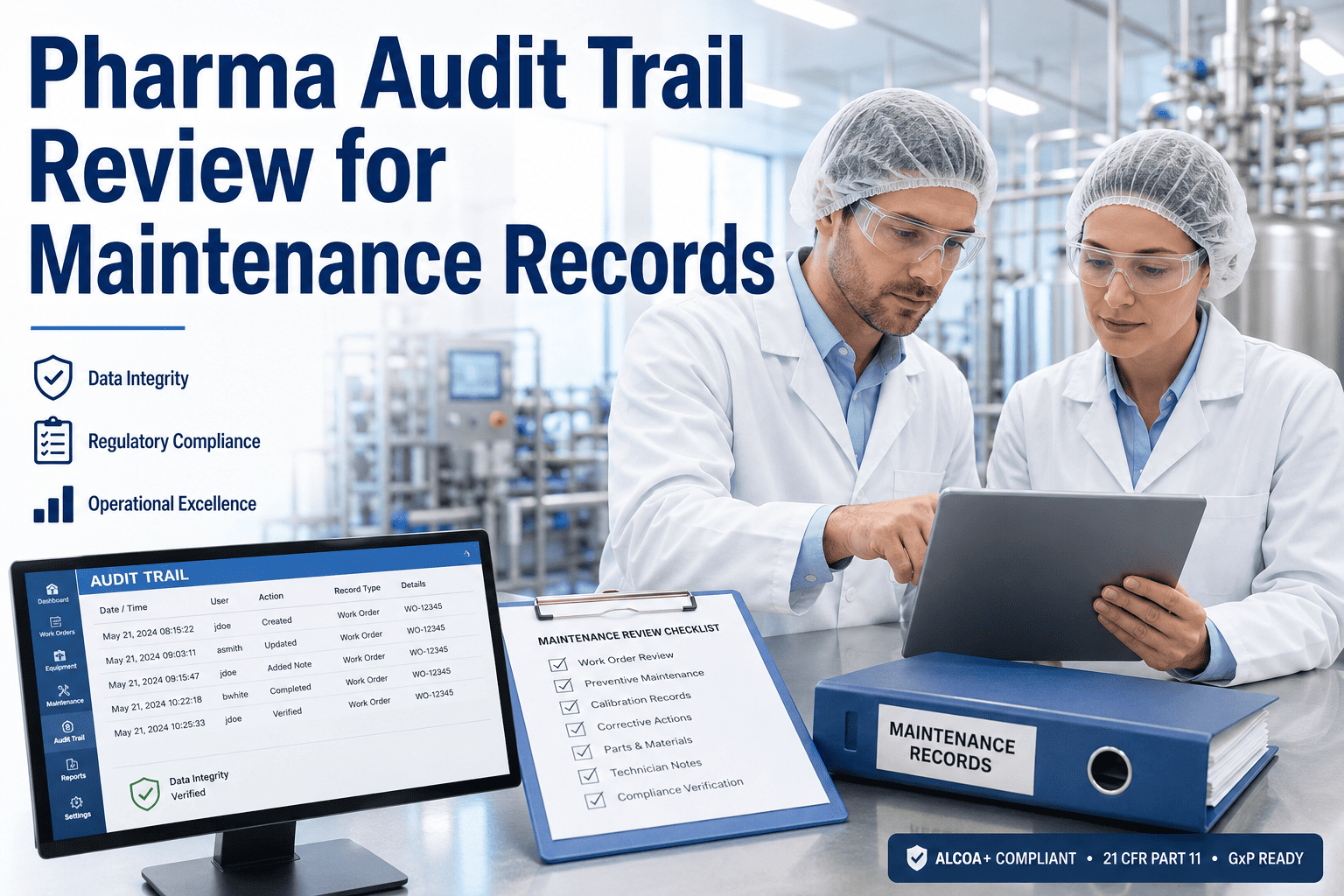
When an FDA investigator walks through your facility's front door, the clock starts — and every minute your team spends hunting for maintenance records, calibration logs, or open deviation reports is a minute that erodes inspector confidence. OxMaint's pharma CMMS acts as your inspection war room backbone, surfacing complete equipment histories, open deviations, and GMP-compliant documentation in seconds — so your quality team answers every question before the inspector finishes asking it.
Build Your Maintenance Inspection War Room Before the Inspector Arrives
Instant asset history. Zero scramble for records. Complete deviation visibility. The guide for pharma QA and maintenance teams who want to walk into every FDA inspection with total confidence.
What the FDA Is Actually Looking For in Your Maintenance Records
FDA investigators follow a predictable script when they reach the maintenance area. They want three things: proof that preventive maintenance happened on schedule, evidence that deviations were identified and resolved, and a clean equipment history that shows the asset has been controlled — not just serviced when it breaks. Under 21 CFR 211.67, failure to demonstrate adequate equipment cleaning and maintenance is consistently among the top three 483 citations for sterile and solid oral facilities.
The War Room Setup: How Top Pharma Sites Structure Their Inspection Support
The audit support room — known as the war room — is where your team fields every investigator request in real time. According to FDA inspection management best practice, the war room leader (typically QA Director) and subject matter experts must be able to retrieve any requested document within minutes. Here is how OxMaint structures that capability.
483 Citation Risk Map: Where Maintenance Records Fail During Inspections
| FDA CFR Section | Common Citation Trigger | Risk Level | OxMaint Defense |
|---|---|---|---|
| 21 CFR 211.67(b) | PM overdue, no documentation of maintenance performed, wrong interval | High | Automated PM scheduling with digital sign-off and timestamp |
| 21 CFR 211.68 | Out-of-calibration instrument used in production, missing calibration record | High | Calibration due-date alerts, status dashboard per instrument |
| 21 CFR 211.182 | Gaps in equipment use/cleaning log, missing operator sign-offs | High | Digital use log with mandatory operator field, audit trail |
| 21 CFR 211.192 | Uninvestigated discrepancies, deviations not linked to CAPA | Medium | Deviation-to-CAPA link in work order, open item dashboard |
| 21 CFR 211.100(b) | Written procedure deviation not recorded or justified | Medium | SOP attachment on work order, mandatory deviation field |
| 21 CFR Part 11 | Electronic records without audit trail, shared login credentials | High | 21 CFR Part 11 compliant audit trail, individual user authentication |
Inspection Readiness Score: Where Does Your Site Stand?
Before your next FDA visit, run this five-dimension readiness check. Each dimension maps directly to the areas investigators examine when reviewing maintenance operations.
The single most common failure I see during FDA inspections is not a technical maintenance failure — it is an information retrieval failure. The PM was done. The calibration was performed. The deviation was investigated. But when the investigator asks for the record, the team spends 25 minutes searching spreadsheets, email threads, and binder archives. That delay alone communicates a quality culture problem that no clean record can undo. A CMMS that makes any maintenance record retrievable in under two minutes is not a luxury for a pharmaceutical manufacturer — it is the operational foundation of inspection readiness. I have watched facilities receive 483 observations for gaps that did not actually exist, simply because they could not produce evidence fast enough to satisfy the investigator's timeline.
Frequently Asked Questions
What maintenance records does the FDA most commonly request during an inspection?
Investigators most frequently request PM completion records for critical equipment, calibration logs for all GMP instruments, equipment cleaning and use logs (21 CFR 211.182), and any open deviations or CAPAs linked to maintenance failures. Equipment history files — the full chronological record of every repair, PM, calibration, and qualification event for an asset — are the single most scrutinized document type. OxMaint generates complete equipment history reports in seconds, formatted and ready for investigator review without manual compilation.
How do you set up an inspection war room for a pharmaceutical facility?
The war room requires a dedicated room away from the investigator's space, with the QA Director as war room leader, a maintenance SME, a validation engineer, and a dedicated scribe logging every request and response time. Pre-load your CMMS to filter by equipment tag, deviation status, and calibration currency — so any document can be retrieved by asset ID, date range, or CFR section within two minutes. Book a demo to see OxMaint's inspection-mode view, which surfaces the exact data structure your war room team needs during an active FDA inspection.
Does OxMaint comply with 21 CFR Part 11 for electronic records?
Yes. 21 CFR Part 11 compliance is a core architecture requirement, not an add-on. Every record change in OxMaint is logged with individual user authentication, timestamp, and reason for change — creating the unalterable audit trail that FDA investigators validate during data integrity reviews. Shared login credentials, which are among the most-cited Part 11 violations, are structurally prevented by the platform's access control model. Start your free trial to review the audit trail architecture before your next inspection window.
How far in advance should a pharma site prepare its war room before an FDA inspection?
Inspection readiness is a continuous state, not a pre-inspection sprint. FDA inspections can be unannounced, and the facilities that consistently achieve clean outcomes are those whose CMMS records are current every day — not the ones who spend three weeks before a scheduled inspection scrambling to close open items. OxMaint builds inspection readiness into daily operations: PM alerts fire before intervals expire, calibration dashboards flag due-date risk weeks in advance, and open deviations are tracked with live CAPA status. Book a demo to see how continuous readiness works in a pharma deployment.
Every FDA Inspection Starts With the Same Question: Where Are Your Records?
OxMaint gives your war room instant access to complete equipment histories, live calibration status, open deviation tracking, and 21 CFR Part 11-compliant audit trails — so the answer is always ready before the question is fully asked.