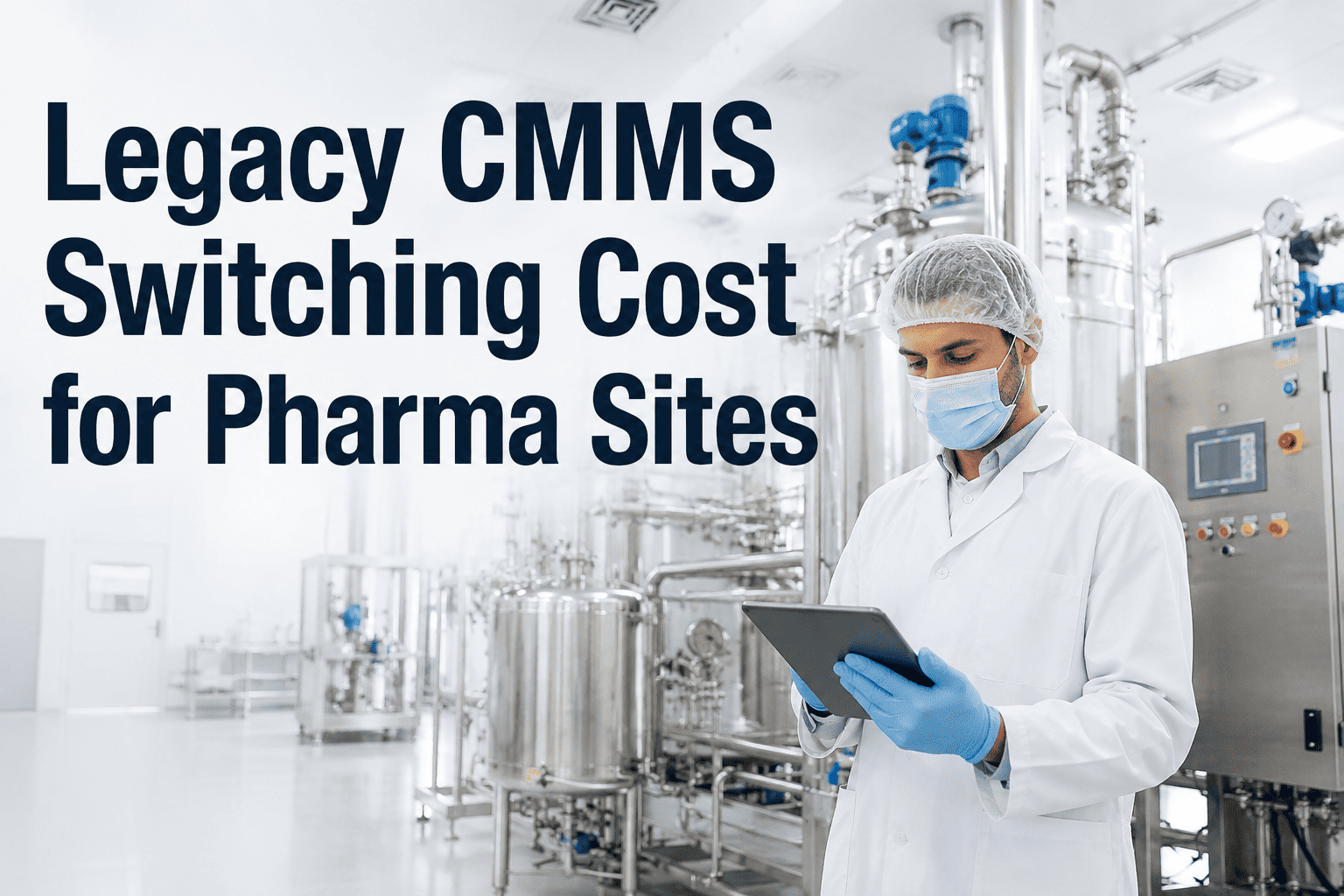
Most pharmaceutical maintenance teams know their legacy CMMS is holding them back — audit gaps, paper trails that fail FDA reviews, and technicians working around broken mobile workflows. Yet the switch keeps getting delayed, not because the new system is unproven, but because the true switching cost is misunderstood. This page breaks down the real financial and operational burden of staying on legacy CMMS versus the structured, predictable cost of moving to a modern GMP-compliant platform — with data drawn from pharma maintenance benchmarks, regulatory guidance, and real transition outcomes.
Pharma CMMS Comparison
The Hidden Price of Keeping Your Legacy CMMS
Audit gaps, validation overhead, mobile failure, and data debt — quantified for pharma sites making the switch decision.
68%
of pharma CMMS users report audit-related work order gaps
3.2x
longer validation cycles on legacy platforms vs modern CMMS
$1.4M
average annual hidden cost of legacy CMMS in mid-size pharma
Why Pharma Sites Stay Too Long on Legacy Systems
The inertia is real. Legacy CMMS was validated once — changing it means re-validation, data migration, retraining, and weeks of parallel running. But this logic is backward when you measure what staying actually costs. Every year on a system that fails mobile use, generates audit findings, or requires manual data exports is a year of hidden tax on your maintenance budget.
Annual Hidden Cost Accumulation — Legacy CMMS in Pharma
Year 1
$280K
Audit prep labor, manual reporting, mobile workarounds
Year 2
$510K
+ Integration failures, data cleanup cycles begin
Year 3
$890K
+ Validation drift, regulatory findings, staff turnover cost
Year 4+
$1.4M+
+ Compounding technical debt, API failure, audit exposure
The Five Real Costs of Legacy CMMS in Pharma
01
Audit Gap Exposure
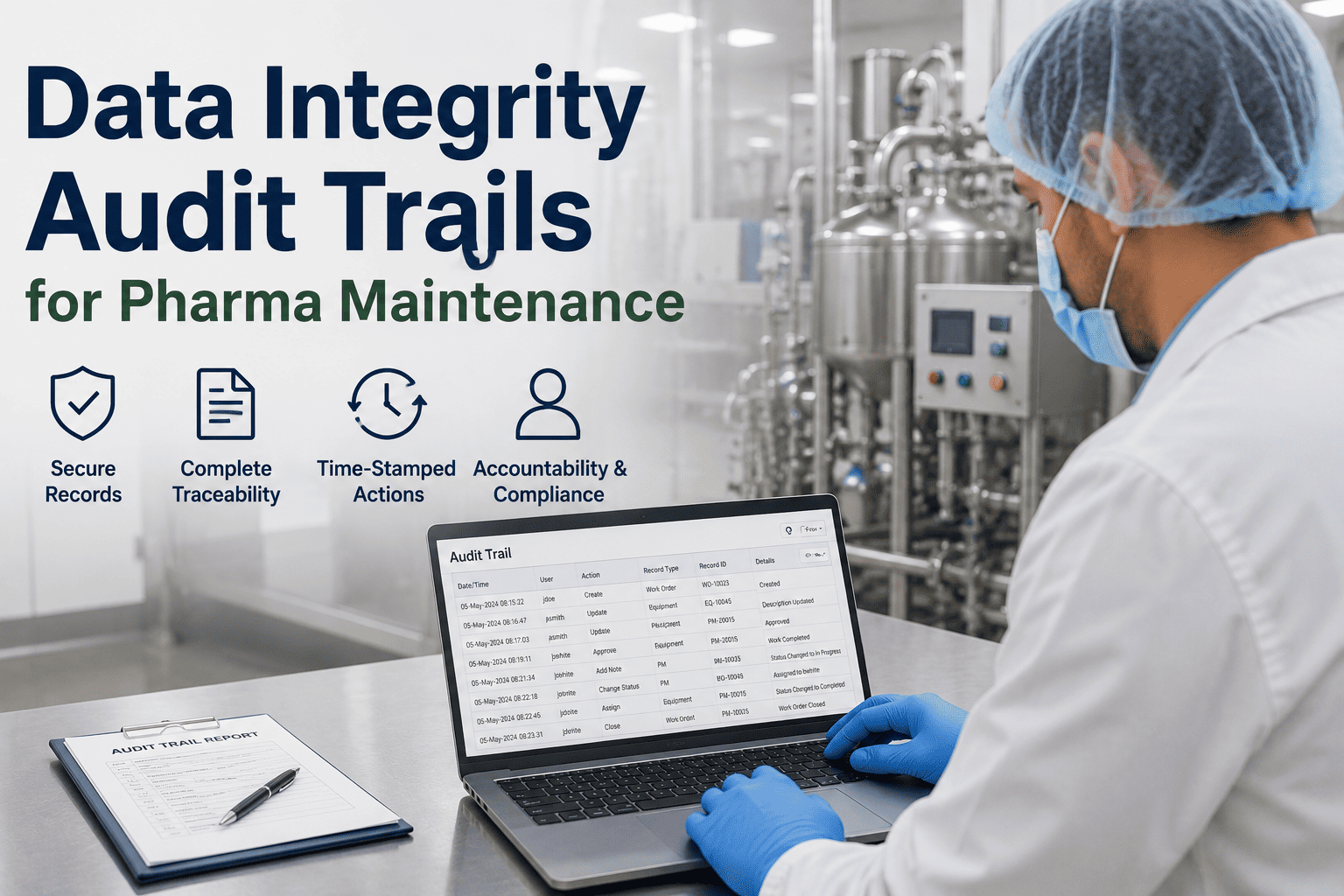
FDA 21 CFR Part 11 and EU Annex 11 require complete electronic records with audit trails. Legacy systems generate partial trails, require manual supplements, and create findings during inspections. A single FDA Form 483 observation tied to maintenance records can cost $200K–$800K in remediation and delayed product approvals.
Average remediation: $350K per finding
02
Mobile Failure Rate
Legacy CMMS mobile apps — where they exist — fail to sync in cleanroom and controlled-environment zones. Technicians revert to paper, creating dual data entry on the back end. Studies of GMP maintenance teams show 40–55% of work orders touched by paper at some stage when mobile tools are inadequate.
40–55% paper re-entry rate in GMP environments
03
Data Cleanup Burden
Asset records built over 10–15 years in legacy systems contain duplicate entries, inconsistent nomenclature, missing PM schedules, and orphaned work orders. A 500-asset pharma facility typically requires 800–1,200 hours of data cleanup before migration — labor that is often underestimated by 60% in initial project scoping.
800–1,200 hours cleanup per 500-asset site
04
Integration Failures
Legacy CMMS platforms predate modern API architecture. Connecting to ERP, historian, or IoT sensor feeds requires custom middleware that breaks with every version update. IT teams in pharma spend an average of 14% of their CMMS-related hours maintaining these connectors rather than building new capability.
14% of IT CMMS hours on connector maintenance
05
Validation Overhead
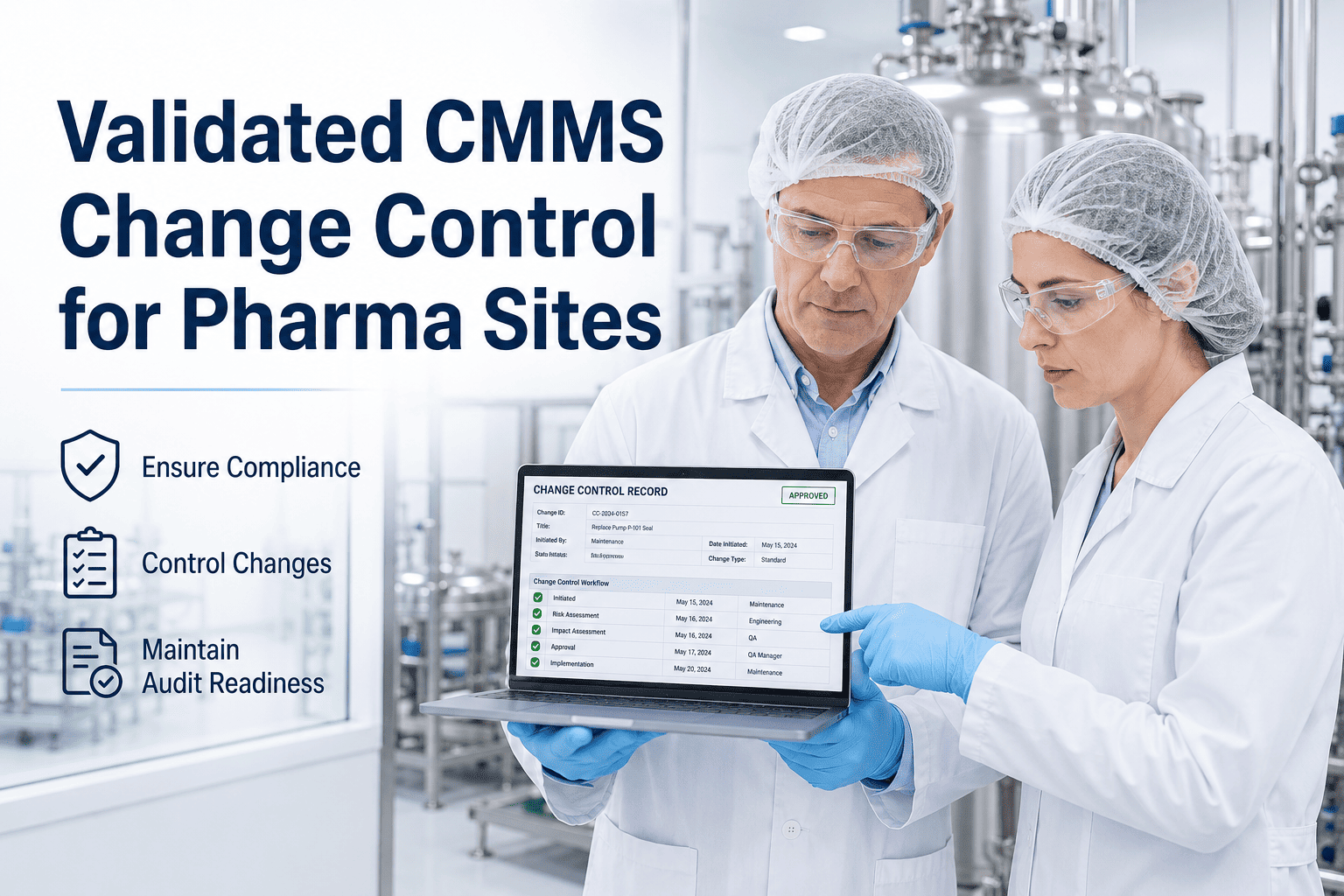
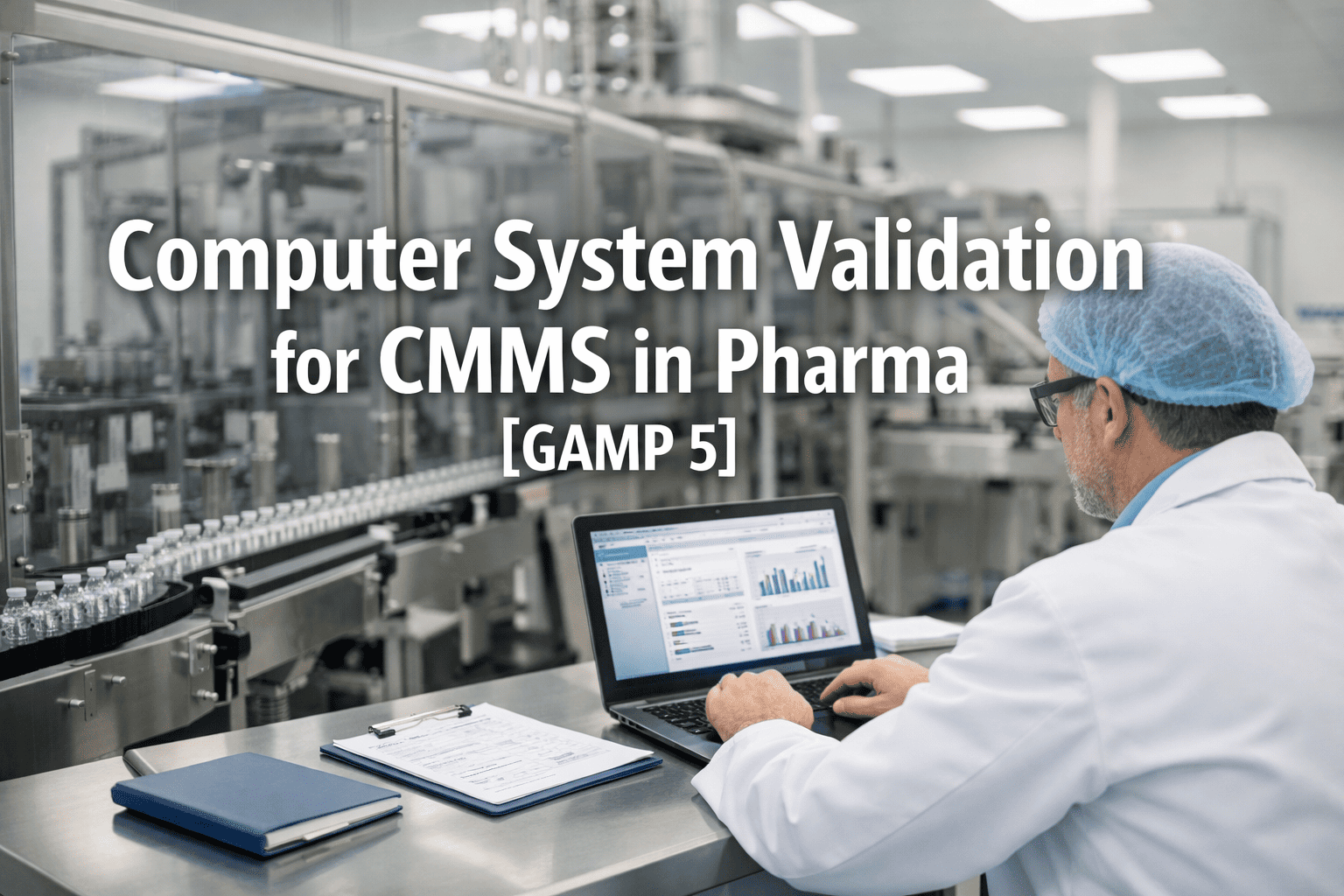
Computer System Validation (CSV) for legacy platforms requires IQ/OQ/PQ documentation that must be re-executed with every patch. Modern GMP CMMS vendors provide pre-built validation packages — reducing validation cycle time from 12–18 weeks to 3–5 weeks per update. Legacy platforms never reach that baseline.
12–18 weeks validation vs 3–5 weeks modern
See How OxMaint Handles GMP Validation
OxMaint ships with pre-built IQ/OQ/PQ documentation, 21 CFR Part 11 audit trails, and mobile-first work order flows designed for cleanroom environments. Book a live walkthrough for your site.
Legacy vs Modern CMMS — Head-to-Head for Pharma
| Capability |
Legacy CMMS |
OxMaint (Modern GMP CMMS) |
Pharma Impact |
| 21 CFR Part 11 Audit Trail |
Partial / manual supplements |
Full automated trail per record |
Eliminates audit gap findings |
| Mobile in GMP Zones |
App instability, sync failures |
Offline-capable, cleanroom ready |
Eliminates paper re-entry |
| CSV / Validation Package |
Manual IQ/OQ/PQ per update |
Pre-built, vendor-supplied docs |
12–15 week cycle reduction |
| ERP / IoT Integration |
Custom middleware required |
Native API connectors |
Eliminates connector maintenance |
| Data Migration Support |
Self-managed, no tooling |
Guided migration + data mapping tools |
Reduces cleanup hours 60% |
| PM Compliance Reporting |
Manual exports to spreadsheets |
Real-time dashboards, auto-reports |
Audit-ready at any time |
| Vendor Support SLA |
End-of-life / limited patches |
Active roadmap, pharma-specific updates |
Reduces regulatory drift risk |
What a Structured Switch Actually Costs
The fear of switching is often based on worst-case estimates from unstructured migrations. A structured switch to OxMaint for a 500-asset pharma site involves four stages — each with defined scope, timeline, and deliverables. The total investment is predictable and recoverable within 18 months from audit and labor savings alone.
Phase 1
Data Assessment and Cleanup
Asset record audit, duplicate removal, PM schedule verification. OxMaint migration tools reduce manual effort by 60%. Typical duration: 3–4 weeks.
$8K–$15K
Phase 2
System Configuration and Validation
IQ/OQ/PQ execution using pre-built OxMaint validation package. Parallel running period. Typical duration: 4–6 weeks.
$12K–$25K
Phase 3
Integration and Go-Live
ERP connection, IoT sensor mapping, mobile deployment to technicians. User acceptance testing in GMP zones. Typical duration: 2–3 weeks.
$6K–$12K
Phase 4
Training and Handover
Role-based training, SOP documentation, first-audit support. OxMaint support team remains on-call for 90 days post-go-live.
$4K–$8K
Return on Switch Investment — 500-Asset Pharma Site
$280K
Annual audit prep labor saved
$190K
Mobile re-entry elimination
$140K
Validation cycle reduction
18 mo
Typical full ROI payback
Expert Review
"
The cost of staying on a legacy CMMS in a regulated environment is rarely visible in a single budget line. It shows up as audit finding remediation, CSV re-execution overhead, and the invisible labor of technicians working around broken mobile tools. Organizations that quantify this burden properly find that the switch pays for itself within 12–18 months — and the regulatory risk reduction alone justifies the project before the first dollar of labor savings is counted.
Frequently Asked Questions
Does switching CMMS require a full re-validation under GMP regulations?
Yes — any new computerized system in a GMP-regulated environment requires Computer System Validation (CSV) per FDA 21 CFR Part 11 and EU Annex 11. However, modern platforms like
OxMaint provide pre-built IQ/OQ/PQ documentation packages that reduce validation effort from the 12–18 weeks typical for legacy systems down to 3–5 weeks. The validation burden is real but significantly lower with a platform designed for regulated environments from the ground up.
What happens to historical work order data during a CMMS migration?
Historical work order records are required for equipment maintenance history under GMP regulations — they cannot simply be archived and ignored. OxMaint's migration process includes a guided data mapping phase where records are cleaned, deduplicated, and imported with full audit trail integrity preserved. Most 500-asset sites complete this phase in 3–4 weeks using OxMaint's migration tooling.
Book a demo to see the migration workflow for your specific data structure.
How does OxMaint handle mobile work order completion in cleanroom and controlled environments?
OxMaint is built with offline-first mobile architecture — technicians complete work orders on mobile devices without requiring active network connectivity inside controlled zones. Records sync when the device re-enters a connected area, with full timestamp integrity preserved for audit trail purposes. This eliminates the dual data entry problem that causes 40–55% paper re-entry rates in legacy CMMS environments. See the
mobile workflow in action with a free trial.
Can OxMaint integrate with existing ERP and historian systems without custom middleware?
OxMaint provides native API connectors for major ERP platforms and industrial historian systems. Unlike legacy CMMS integrations that require custom middleware, OxMaint's integration layer is maintained by the vendor and updated alongside the core platform — eliminating the 14% of IT CMMS hours that pharma teams typically spend maintaining custom connectors. Integration scope and available connectors for your specific environment can be reviewed in a
live demo session.
Ready to Quantify Your Legacy CMMS Cost?
OxMaint's team will walk through your current system, audit exposure, and validation burden — and build a site-specific switching cost comparison. No generic estimates. Book a 30-minute session with a pharma CMMS specialist.