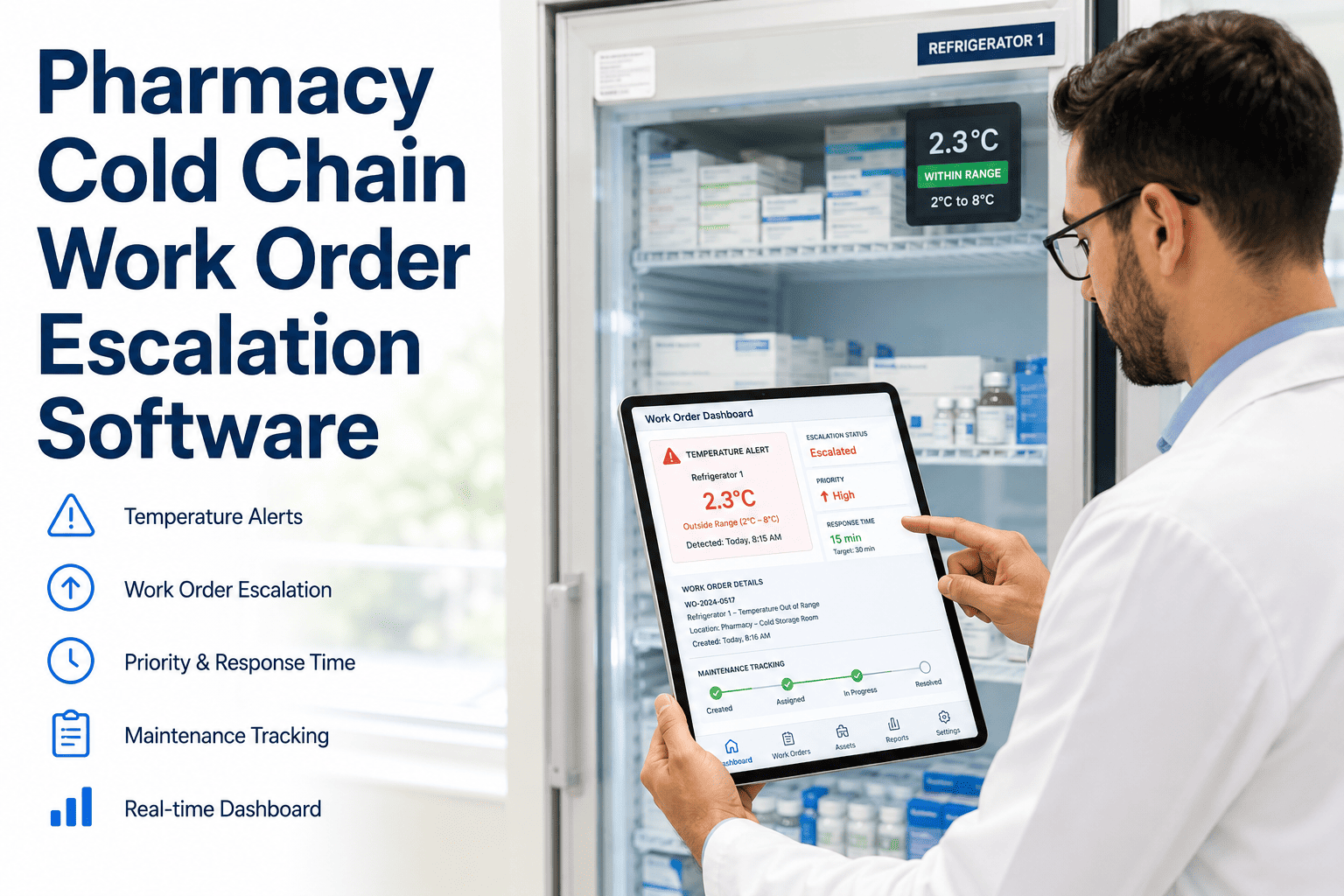
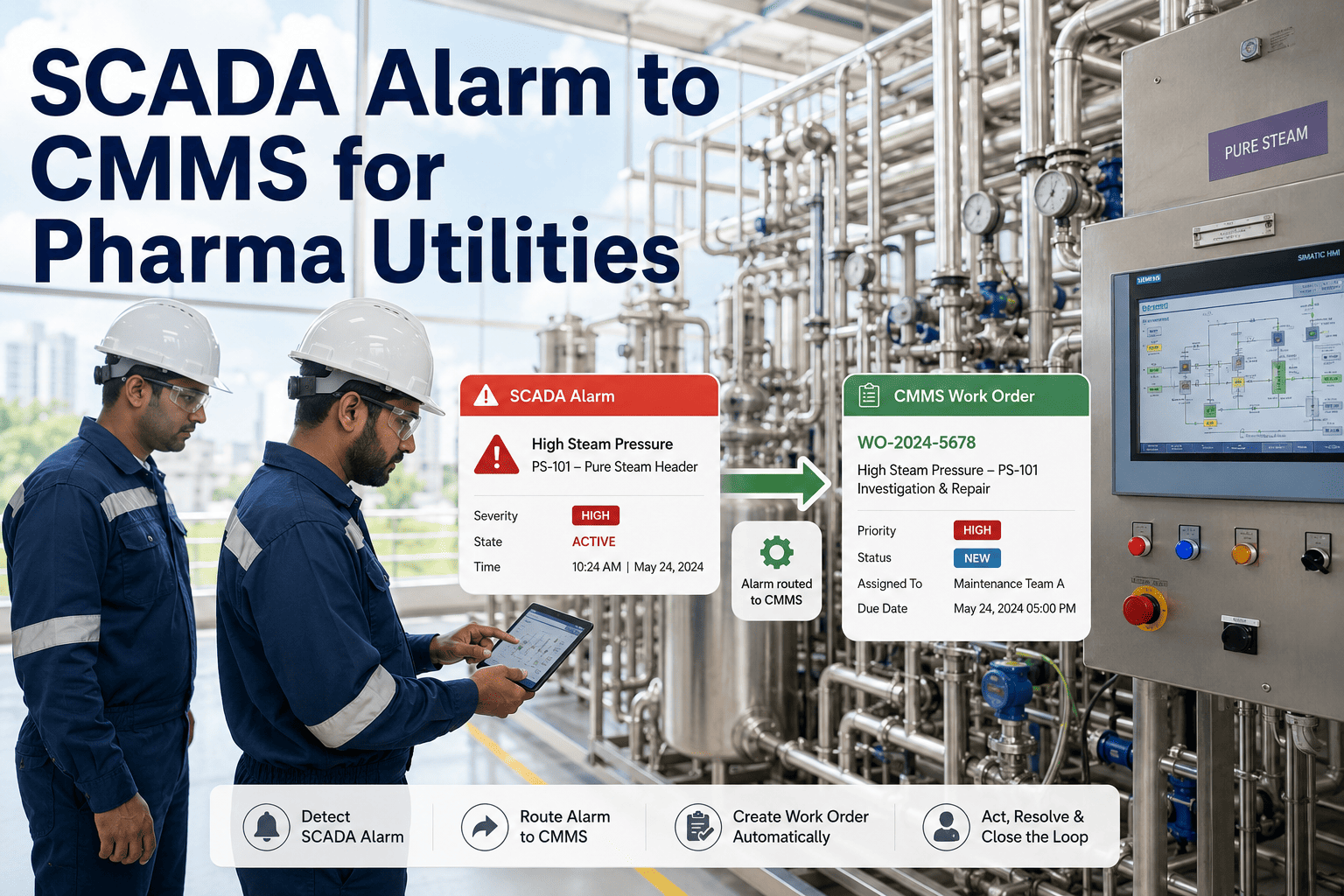
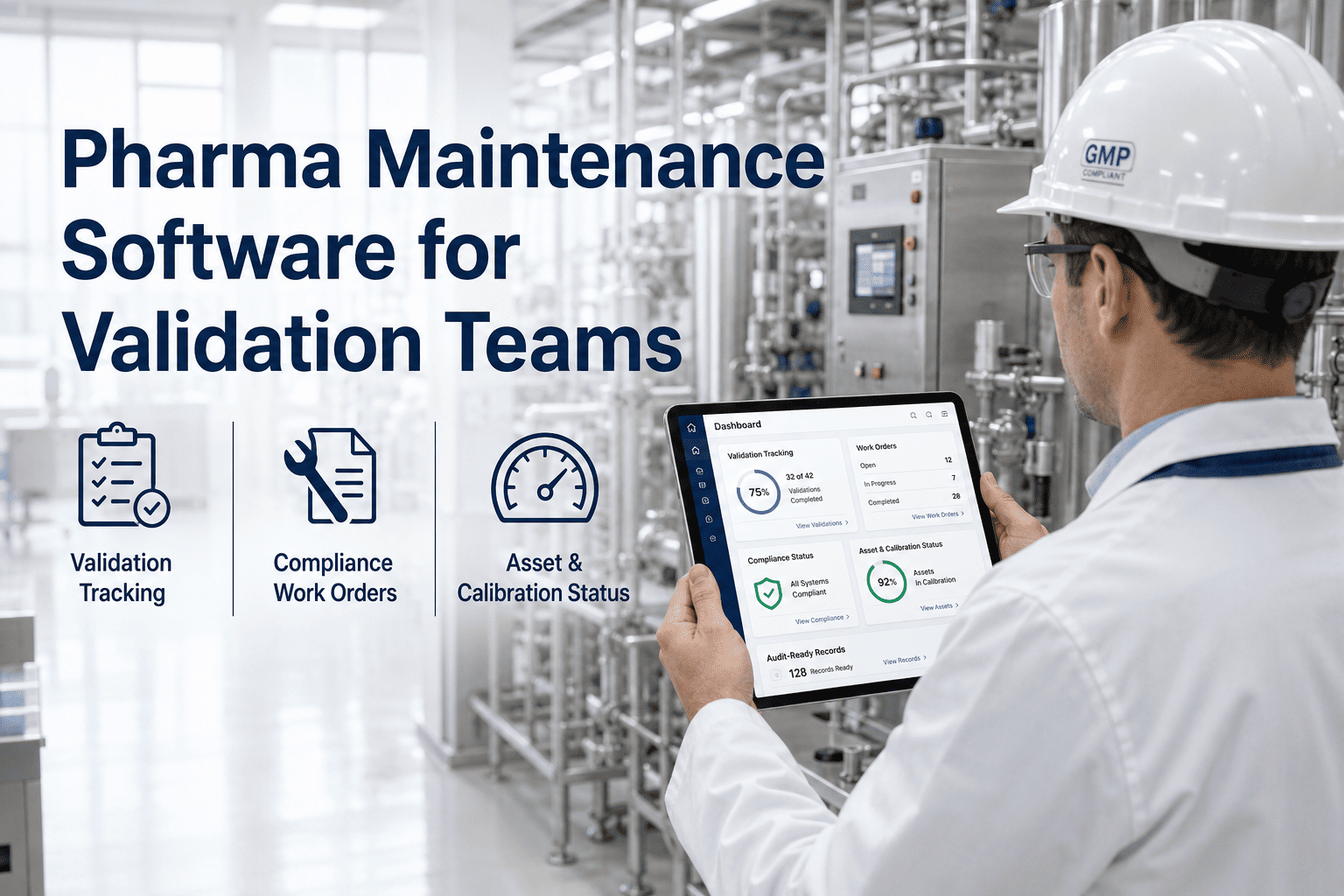
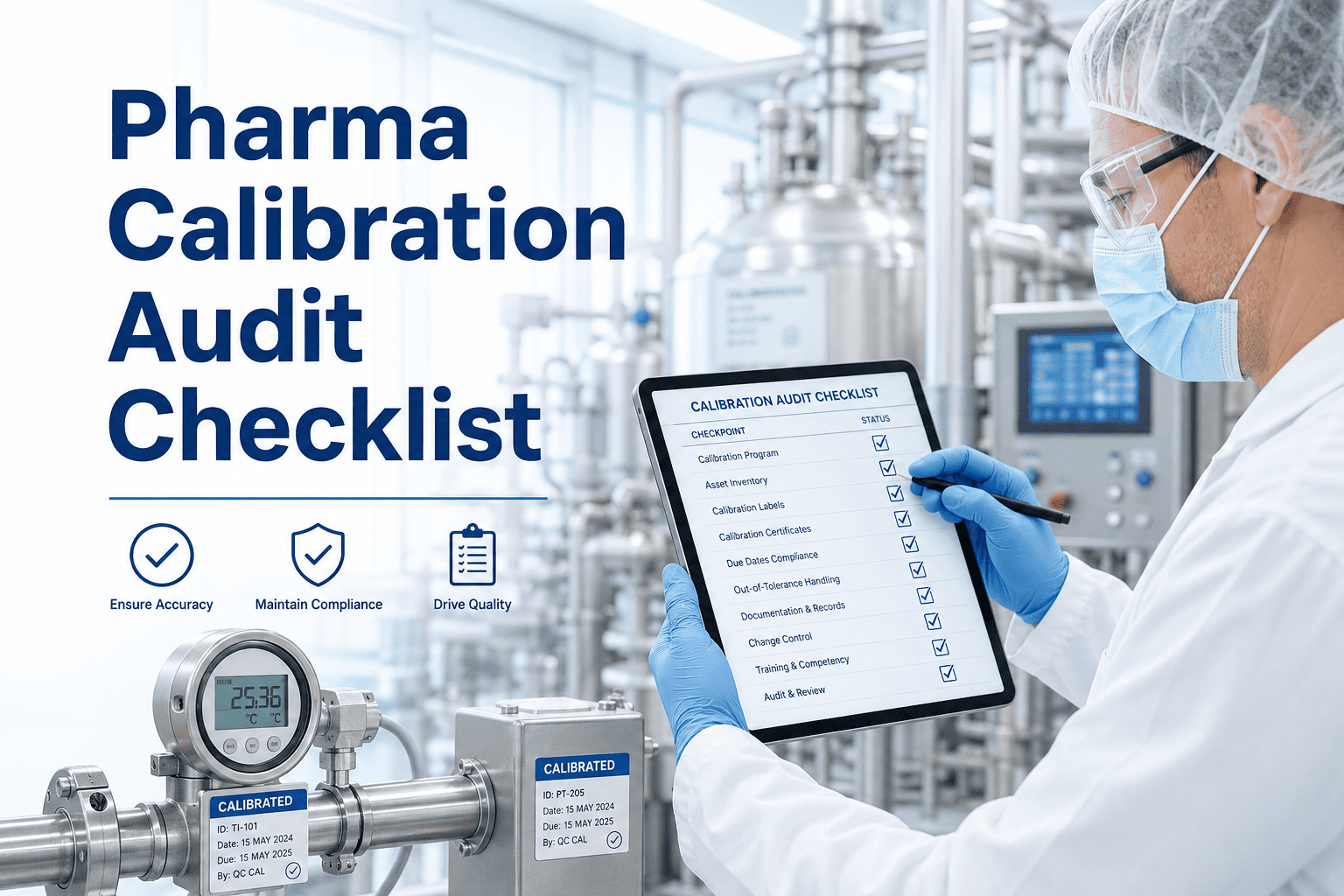
Pharmaceutical engineering teams carry a maintenance scope that no generic CMMS was designed for. Assets, utilities, work orders, calibration schedules, planned shutdowns, and audit-ready records all need to live in a single system that can produce traceable evidence on demand and survive a GAMP 5 validation review. Most engineering teams at FDA-inspected sites are managing this across three or four disconnected tools, losing an estimated 1,200 hours per year in manual record reconciliation and inspection prep. OxMaint gives pharma engineering teams one validated platform for the complete maintenance lifecycle, from asset registry to calibration log to shutdown planning to audit export. Book a demo to see how your engineering scope fits the OxMaint framework, or start a free trial and configure your first asset hierarchy in the same session.
Engineering teams manage all of this. OxMaint puts it in one system.
Asset Registry
Utilities
Work Orders
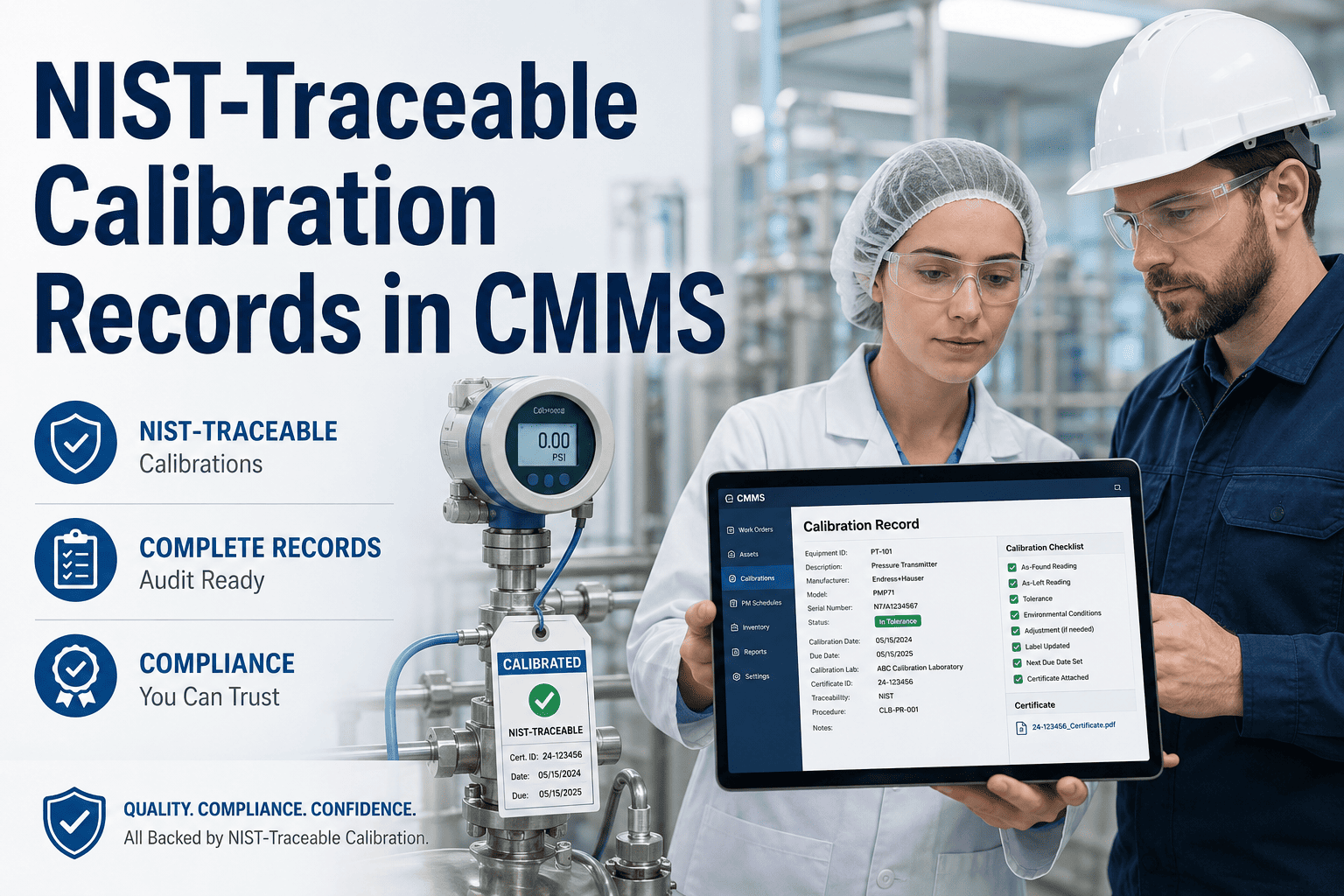
Calibration
Shutdown Planning
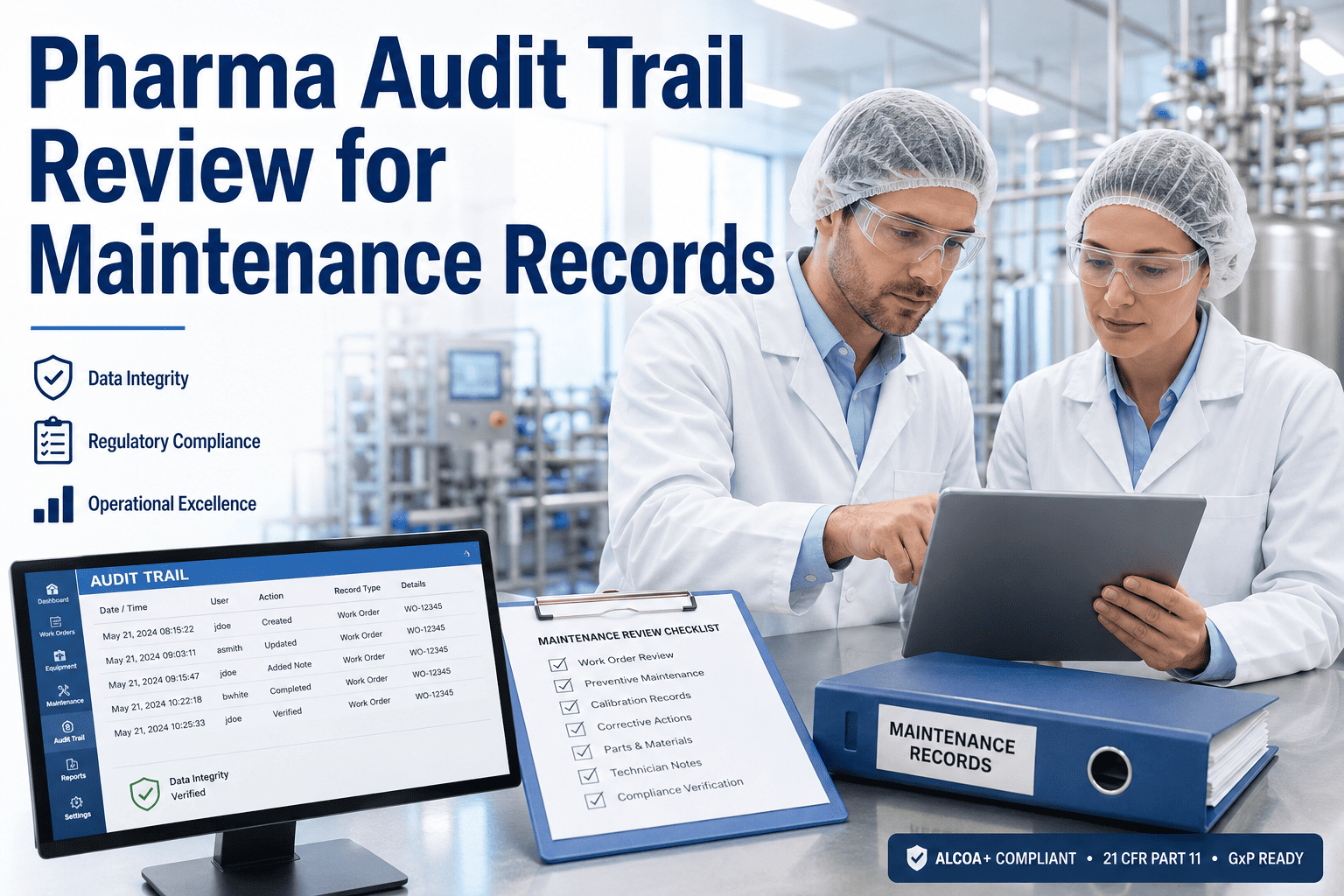
Audit Records
IQ/OQ/PQ Tracking
Spare Parts
Change Control
The engineering team's system problem
Why pharma engineering teams run four systems to do one job
The average pharmaceutical engineering team runs on a combination of a legacy CMMS for production assets, a separate calibration management tool, a spreadsheet for utilities, a shared drive for shutdown documentation, and a paper-based system for work authorisations. Each tool answers one question. None of them answer the question an FDA investigator or a plant manager asks, which is: what is the complete maintenance and compliance state of this facility right now?
Typical Fragmented State
Legacy CMMS for production assets only
Separate calibration tracking tool or spreadsheet
Manual shutdown planning in shared drives
Paper work authorisations with manual transcription
Utility PMs tracked separately from production
Audit prep taking 1,200+ hours per year
IQ/OQ/PQ status tracked in a spreadsheet
OxMaint Unified State
All assets, utilities, instruments in one hierarchy
Integrated calibration log with OOT escalation
Shutdown planning module with sequenced task lists
Mobile work orders with e-signatures, Part 11 locked
Utility PMs on same schedule and dashboard
Inspection export in under 10 minutes, any asset
IQ/OQ/PQ status as a first-class asset attribute
Module breakdown
Every module pharma engineering teams use in OxMaint
| Engineering Scope Area |
OxMaint Module |
Key Capability |
Regulatory Relevance |
| Production asset management |
Asset Registry |
Full hierarchy, criticality class, OEM spec linkage |
21 CFR 211.67 equipment records |
| Utility systems |
Utility Asset Library |
HVAC, WFI, compressed air, chilled water PMs |
GMP Annex 11, environmental monitoring |
| Preventive maintenance |
PM Scheduler |
OEM-frequency PMs, SLA-enforced queues |
21 CFR 211.68 PM records |
| Calibration management |
Calibration Module |
Digital logs, OOT alerts, certificate storage |
21 CFR 211.68 calibration records |
| Shutdown and turnaround |
Shutdown Planner |
Sequenced task lists, resource allocation, gate sign-offs |
Change control, return-to-service records |
| Equipment qualification |
IQ/OQ/PQ Tracker |
Qualification status as asset attribute, protocol linkage |
GAMP 5, 21 CFR 211.68 |
| Work authorisation |
Work Order Engine |
Mobile WOs, e-signatures, Parts 11-compliant records |
21 CFR Part 11 electronic records |
| Spare parts management |
Inventory Module |
Min/max thresholds, auto-reorder, work order linkage |
Supports equipment availability records |
One system for every engineering scope area
Stop reconciling four tools. Get one validated platform that covers your full engineering remit.
Book a 30-minute demo and bring your current asset count, calibration instrument list, and utility scope. The OxMaint engineering team will show you how the full scope maps to a single validated platform, with a realistic go-live timeline for your site.
Calibration deep dive
How OxMaint handles pharmaceutical calibration management
Calibration management is where most engineering teams feel the sharpest pain in a fragmented system. A calibration exceedance on a process instrument needs to trigger a deviation, generate a root cause investigation, notify QA, and produce a certificate record, all without manual handoffs. OxMaint handles the complete calibration workflow in one system with no manual copy-paste between tools.
A
Calibration schedule auto-generated
Calibration intervals set per instrument, triggered by calendar or use cycle. No instrument falls off the schedule silently. Due dates visible to the entire engineering team.
B
Results captured on mobile, Part 11 locked
Calibration technician records as-found and as-left values on mobile. Result is timestamped, user-signed, and locked against editing under 21 CFR Part 11 the moment it is saved.
C
OOT event triggers deviation and QA alert
Out-of-tolerance results automatically open a linked deviation record and notify the QA team. Root cause template is assigned. The engineering team does not need to manually escalate.
D
Certificate stored and searchable on asset record
Calibration certificate is attached to the instrument's asset record. Full calibration history is searchable and exportable in FDA inspection format for any date range, in under four minutes.
Expert review
What pharma engineering leads say about unified maintenance platforms
TK
The engineering team at a pharmaceutical site is the operational backbone of GMP compliance, but they are usually working with the most fragmented toolset in the facility. The calibration team has its own system. The utilities team has a spreadsheet. The production maintenance team has a legacy CMMS that has not been validated against current Part 11 standards. The result is that when an investigator asks for the complete maintenance history of a critical piece of equipment, the engineering manager spends three days pulling records from four places. A unified system is not a convenience for engineering teams. It is a prerequisite for efficient, inspection-ready operations.
Thomas Kaur
Director of Engineering, Global Pharmaceutical Manufacturing — Former VP Maintenance, two MHRA and FDA dual-inspected facilities — 19 years pharma engineering leadership
Shutdown planning
How OxMaint supports planned shutdowns and turnarounds
Planned shutdowns in a pharmaceutical facility involve hundreds of sequenced tasks, multiple vendor sign-offs, equipment return-to-service authorisations, and post-shutdown qualification records. Managing this in a shared spreadsheet introduces version control risk, missed tasks, and incomplete return-to-service evidence. OxMaint's shutdown planning module runs the full sequence in one system with role-based sign-offs at each gate.
Pre-shutdown scope lock
All tasks, resources, spare parts, and vendor access requests are approved and locked before shutdown start. Change requests after lock require a QA-authorised scope amendment, creating a traceable change control record.
Sequenced task execution
Tasks are executed in defined sequence on mobile. Dependencies are enforced, meaning a downstream task cannot be started until its upstream gate is signed off. No step is skipped, no sign-off is skipped.
Return-to-service sign-off
Each asset has a mandatory return-to-service sign-off step before it can be returned to GMP-controlled status. The authorisation is captured as a Part 11-compliant electronic signature with role and timestamp.
Post-shutdown audit package
Complete shutdown record, including all task completions, sign-offs, deviations raised, and return-to-service authorisations, is automatically assembled into an exportable audit package at shutdown close.
Frequently asked questions
Questions from pharma engineering teams
Can OxMaint manage both production equipment and utility systems in the same asset hierarchy?
Yes. OxMaint supports multi-level asset hierarchies that include production equipment, utility systems, instrumentation, and facility systems in a single unified structure. Each asset type carries its own PM library, calibration schedule, and qualification status. Utility assets appear on the same PM compliance dashboard as production assets, giving engineering leads one view of the complete facility maintenance state.
Start a free trial to build your first hybrid asset hierarchy in a sandbox environment.
How does OxMaint handle IQ/OQ/PQ qualification status for equipment that has been maintained or modified?
IQ/OQ/PQ status is a first-class attribute on every asset record in OxMaint. When a maintenance event or modification is logged that meets configured change control thresholds, the system flags the asset's qualification status as requiring re-assessment, notifies the validation team, and links the maintenance record to the re-qualification workflow. This prevents equipment running in a GMP-controlled process with an invalidated qualification status without a documented risk assessment.
Book a demo to see the qualification workflow configured for your asset classes.
Does OxMaint come with a GAMP 5 validation package that engineering can use directly?
Yes. OxMaint ships with a pre-built GAMP 5 IQ/OQ/PQ validation package that covers all GxP-relevant modules. The package is provided to the engineering and validation team during onboarding, reviewed in a structured walkthrough with an OxMaint pharma specialist, and customised to the specific site configuration during the validation phase. Pre-built validation packages reduce CMMS validation timelines from 18 months to 6 weeks for most pharma sites.
Start a free trial to access the validation package index and review scope before committing to deployment.
How does OxMaint support change control when engineering modifies a PM procedure or maintenance SOP?
All changes to PM procedures, maintenance SOPs, asset attributes, and configuration settings in OxMaint are subject to the system change control workflow. A change request must be raised, reviewed by the configured approver role, and electronically approved before the change takes effect. The full change history, including original value, new value, change requester, approver, and timestamp, is stored in the immutable audit trail and is exportable in inspection format.
Book a demo to walk through the change control configuration options with the OxMaint pharma team.
Built for pharma engineering teams
One validated platform for every scope area your engineering team owns
Pharma engineering teams that replace four fragmented tools with OxMaint recover an estimated 1,200 hours per year in manual reconciliation, produce inspection-ready calibration and maintenance records in under 10 minutes, and go live in a structured 75-day deployment that does not disrupt ongoing production. A 30-minute demo will show you exactly how your engineering scope maps to the OxMaint framework.