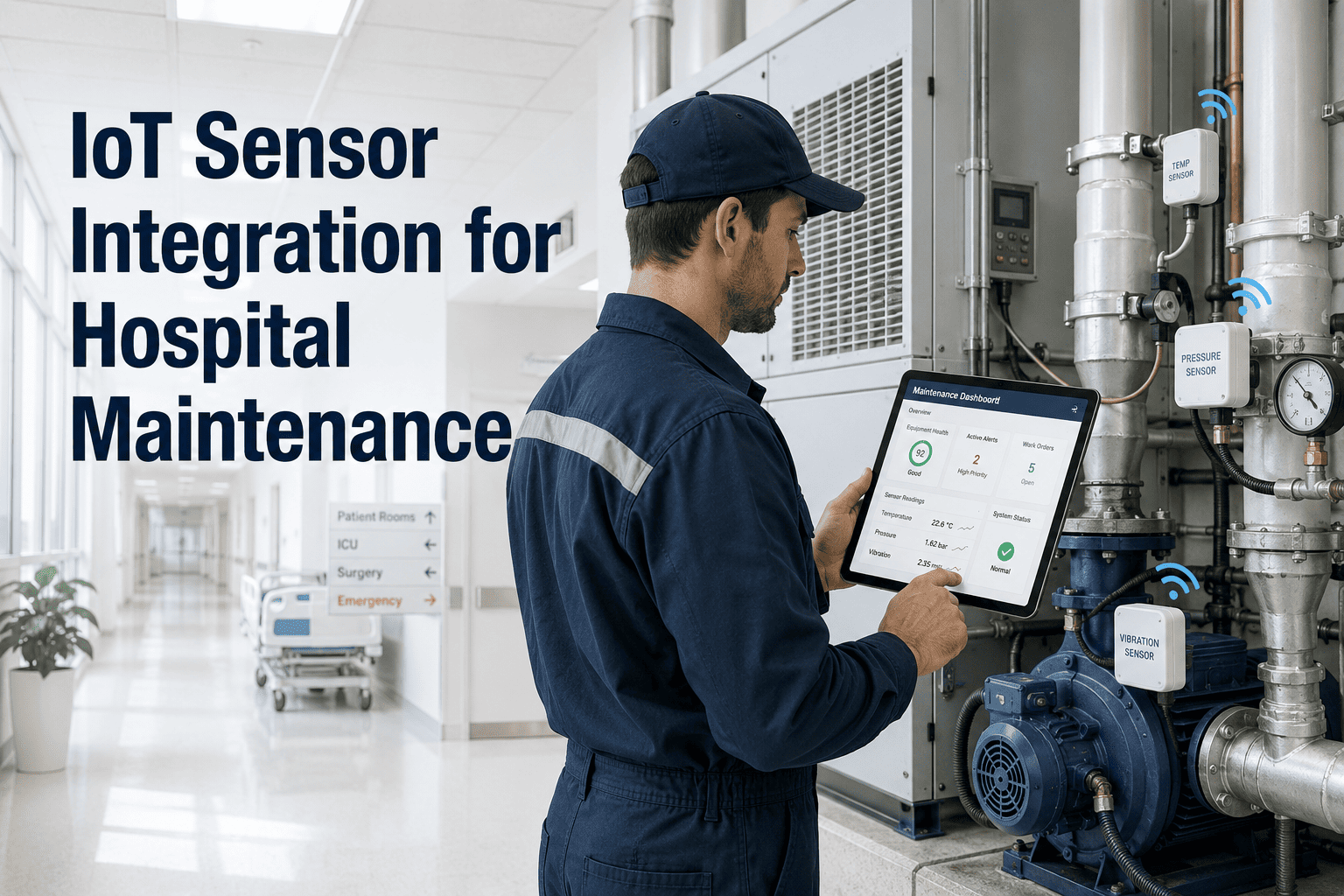
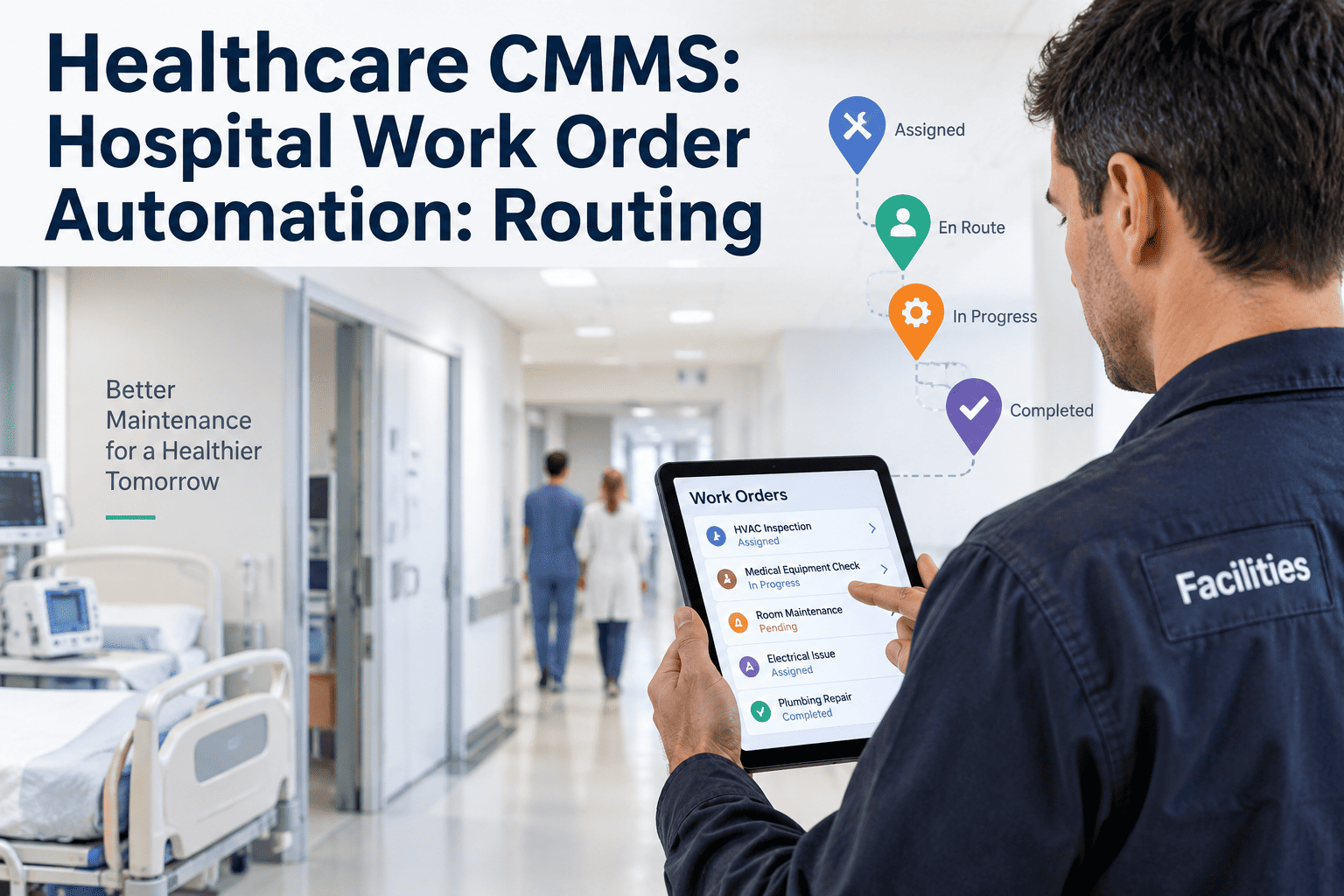
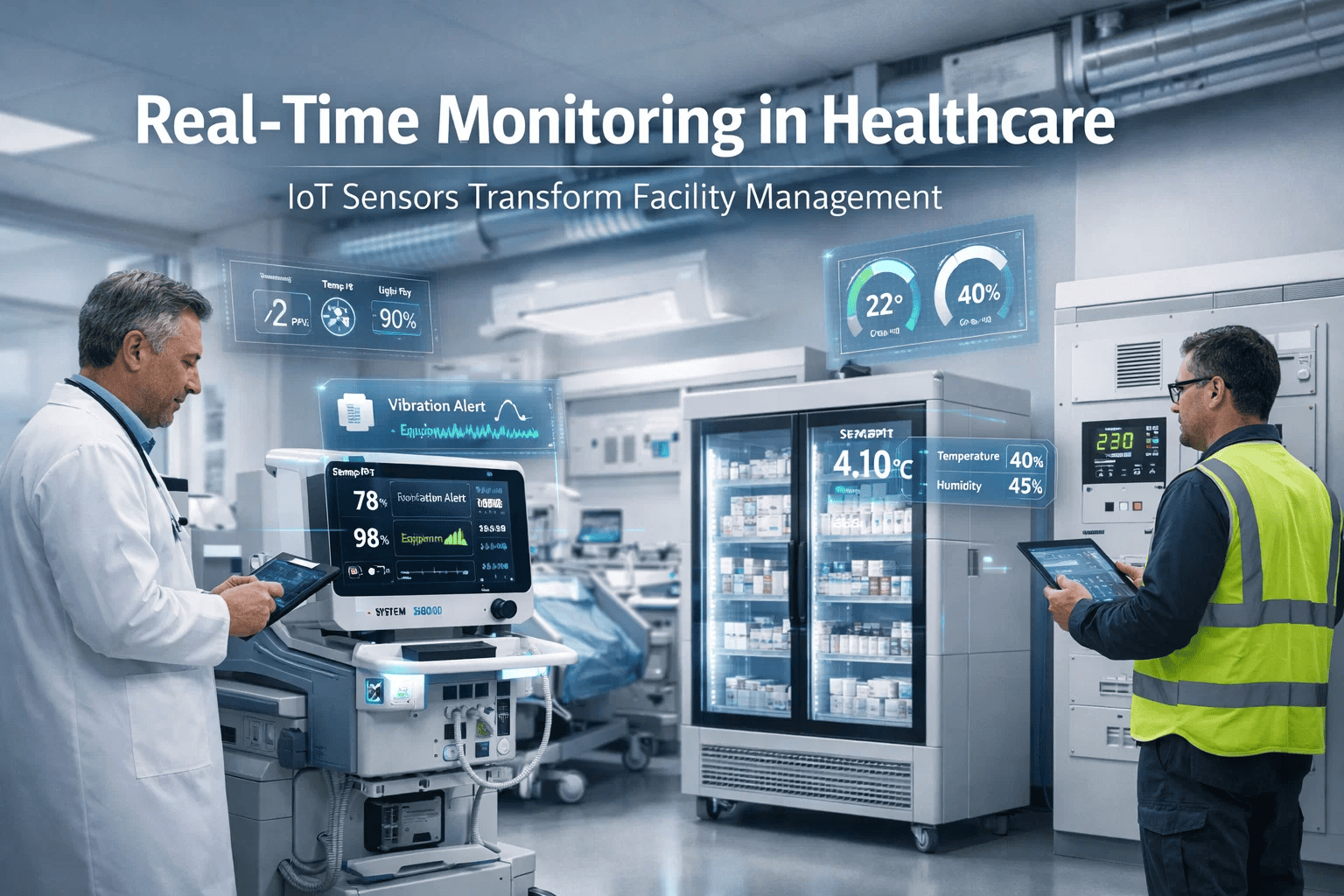
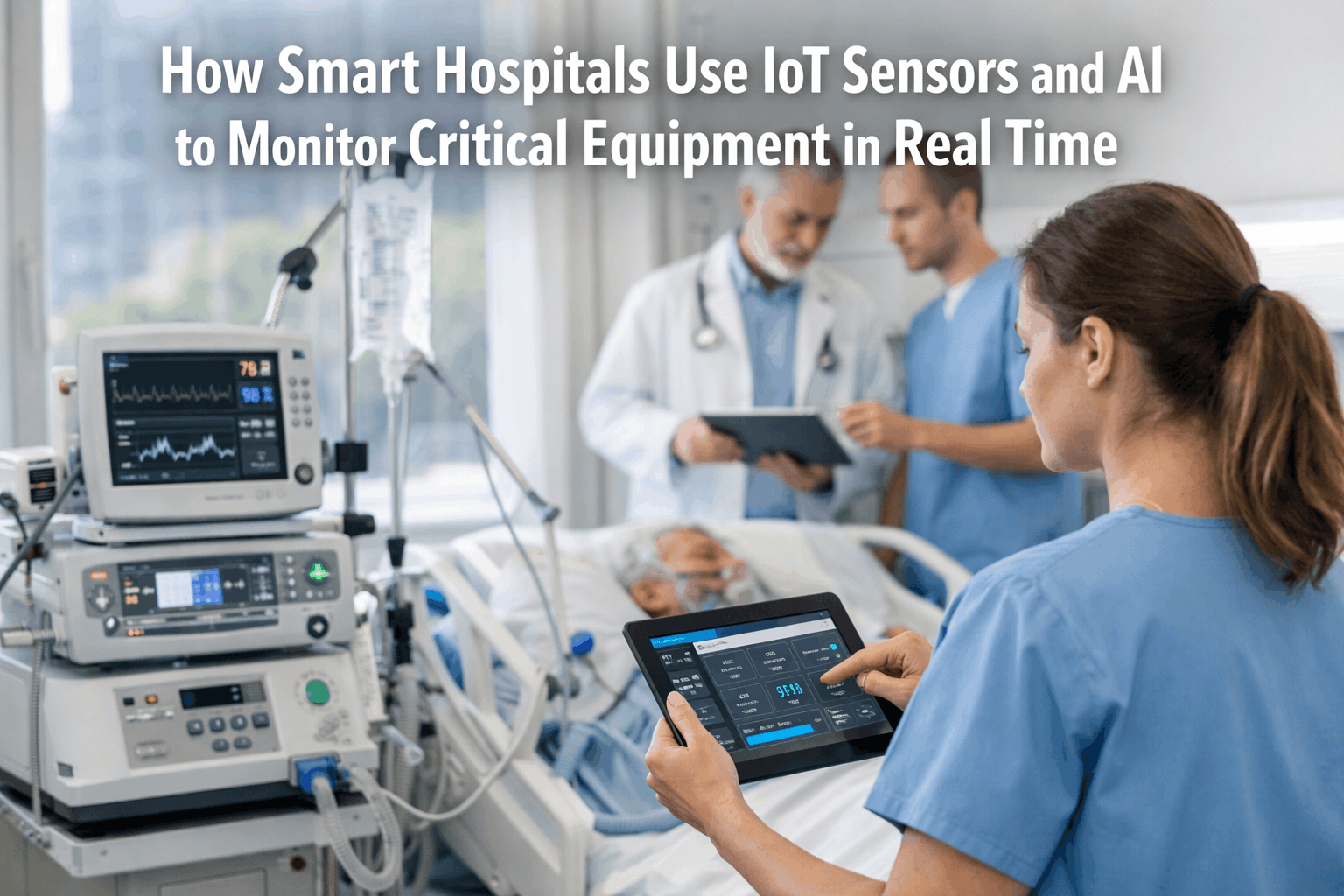
Most hospitals already have the sensors. Temperature probes on vaccine refrigerators, vibration sensors on chiller motors, pressure gauges on medical gas lines — these devices generate a fresh reading every few minutes, every day of the year. The problem is where that data goes. In most facilities it lands in a standalone monitoring dashboard that the maintenance team never opens, so a reading that crosses a critical threshold sits unread until the asset fails outright and a technician finds out the hard way. Book a free OxMaint walkthrough and see a threshold breach turn into an assigned, trackable work order in the same minute it happens.
IoT Integration · Hospital Maintenance · Asset Health · CMMS
Turn Every Sensor Reading Into a Tracked Maintenance Action
Connect temperature probes, vibration sensors, electrical monitors, and building automation feeds straight into OxMaint, so a threshold breach creates a work order instead of sitting unread in a separate dashboard.
Reading To Resolution
1
Sensor Reading
Chiller 2 vibration, 0.32 in/s
2
Threshold Check
Limit set at 0.30 in/s
3
OxMaint Alert
Asset record flagged instantly
4
Work Order Assigned
HVAC technician notified on mobile
The Disconnection Problem
Sensor Data and Maintenance Work Are Running on Two Different Tracks
A monitoring dashboard that nobody on the maintenance team checks in real time is functionally the same as having no sensor at all. Here is what changes once the same reading reaches OxMaint directly.
Dashboard Only
- Threshold breach logged in a system the maintenance team rarely opens
- No work order exists until someone manually reviews the dashboard
- Asset history shows the failure, never the early warning before it
- Facility engineer pieces together what happened after the fact
Connected to OxMaint
- Threshold breach pushes an alert into OxMaint within seconds
- Work order generates automatically with asset and reading attached
- Technician receives the assignment on mobile before reaching the floor
- Asset record carries the full timeline from reading to resolution
What Gets Connected
Six Sensor Categories Hospital Maintenance Teams Should Be Watching
01
Cold Chain & Pharmacy Temperature
Signal: refrigerator and freezer temperature drift
Action: alert and work order before stock is compromised
02
HVAC & Chiller Vibration
Signal: bearing wear signatures on chillers, AHUs, pumps
Action: predictive work order before unplanned shutdown
03
Electrical Panel & UPS Health
Signal: load, battery health, panel temperature
Action: escalation to electrical team ahead of failure
04
Medical Gas Line Pressure
Signal: oxygen and medical air pressure drop
Action: critical alert to biomed and facilities together
05
Water Leak Detection
Signal: moisture near MRI suites, server rooms, pharmacy
Action: emergency work order with exact location attached
06
Building Automation & BMS
Signal: humidity, airflow, pressure in sterile zones
Action: compliance-linked record for Joint Commission review
OxMaint · IoT Integration · Hospital CMMS
Every Sensor Is Already Installed. It Is Just Missing the Connection.
OxMaint connects directly to the monitoring hardware your facility already runs and turns a threshold breach into an assigned, mobile-ready work order — no new sensors, no rip and replace.
How It Plays Out
From Sensor Alert to Closed Work Order
1
Reading Drifts
Vibration on Chiller 2 trends upward across a six hour window.
2
Threshold Breached
Reading crosses the configured alert limit for that asset.
3
OxMaint Alert Fires
Asset record flags the breach with reading and timestamp.
4
Work Order Assigned
HVAC technician gets the task with sensor history attached.
5
Closed and Logged
Resolution and post-repair reading recorded on the asset.
What the Data Shows
Facilities Running Connected Sensors See the Difference Across Every Metric
| Metric |
Disconnected Monitoring |
Connected to OxMaint |
| Unplanned downtime |
Reactive response, only after failure |
30 to 50% lower across connected facilities |
| Annual maintenance cost |
Full-price emergency repairs and rentals |
Up to 25% lower with early intervention |
| Equipment lifespan |
Shortened by repeated unmanaged stress |
20 to 40% longer with condition-based service |
| Safety-related incidents |
Tracked only after the event occurs |
Roughly 25% fewer reported incidents |
| Audit and compliance prep |
Days spent assembling logs across systems |
Under one hour for a filtered export |
Expert Review
What a Facilities IT Lead Sees Once Sensors Connect to Work Orders
RK
We had sensors on our chillers and cold storage for two years before they were ever connected to a work order. Once OxMaint started turning threshold breaches into assigned tickets, biomed and facilities stopped finding out about problems from a dashboard nobody had time to watch.
R. Kapoor
IT Director, multi-facility hospital network
Frequently Asked Questions
IoT Sensor Integration for Hospital Maintenance — Common Questions
How does OxMaint connect to sensors we already have installed?
OxMaint integrates with sensor gateways and building management platforms through standard API and MQTT-based connections, pulling readings directly into the relevant asset record. Most hospitals connect existing temperature, vibration, and electrical monitoring hardware without replacing any sensor hardware.
Start a free trial and connect your first feed.
Do we need to replace our current monitoring dashboard to use this?
No. OxMaint sits alongside the monitoring software your team already trusts and ingests the same readings through integration, so nothing about the dashboard changes. It simply adds the maintenance action layer that was previously missing.
See a live integration walkthrough.
What actually happens the moment a sensor reading crosses a threshold?
The reading triggers an alert against the linked asset record, and OxMaint automatically generates a work order carrying the reading, timestamp, and asset history. The assigned technician receives the task on mobile, often before walking onto the floor.
Can this data support Joint Commission or OSHA monitoring documentation?
Yes. Every sensor-triggered alert, work order, and resolution is timestamped and stored against the asset record, producing an exportable history that matches Environment of Care and OSHA monitoring documentation requirements.
Run a sample compliance export free.
OxMaint · IoT Connected Maintenance · Free to Start
Stop Letting Sensor Data Sit in a Dashboard Nobody Watches
Connect the sensors you already have to the maintenance team that actually responds to them, and give every reading a clear path to a closed work order.