Hospital supply chains handle thousands of SKUs, manage millions in annual procurement, and operate with zero tolerance for stockouts when patient care is on the line. Machine learning is fundamentally changing how healthcare facilities predict demand, automate inventory decisions, and eliminate both waste and shortfalls — converting reactive procurement into predictive, data-driven operations. If your operations team is still managing inventory on static par levels and spreadsheets, see what a modern approach looks like — start a free trial for 30 days and book a demo with Oxmaint to explore what data-driven procurement looks like at scale.
$25B+
Annual Supply Chain Waste
Lost across US hospitals each year to procurement inefficiency
30%
Inventory Cost Reduction
Average saving achievable with ML-optimised demand planning
35%
Of Hospital Operating Budgets
Consumed by supply chain and procurement operations globally
60%
Hospitals Face Weekly Stockouts
Causing delayed procedures and emergency procurement at premium cost
OVERVIEW
What Is Machine Learning in Hospital Supply Chain Management?
Machine learning (ML) applies algorithms trained on historical procurement data, patient census records, and usage patterns to predict future inventory needs with precision. Unlike static par-level systems, ML models continuously learn and improve — delivering demand forecasts that adapt to seasonal surges, procedure volumes, and supplier lead-time variability. The practical result is automated reorder decisions, reduced carrying costs, and a supply chain that never gets caught off-guard. Hospitals using ML-powered inventory management report procurement efficiency improvements of 20–40%, with significant reductions in expired stock write-offs. If your facility is still relying on manual counts and gut-feel reorder points, start a free trial for 30 days and book a demo to experience the operational difference firsthand.
KEY CONCEPTS
Core Capabilities of ML-Driven Inventory Management
Understanding the building blocks helps operations teams identify where ML delivers the most immediate value — from forecasting accuracy to full procurement automation.
FORECASTING
Demand Prediction
ML models analyse procedure schedules, patient census trends, and seasonal patterns to generate accurate consumption forecasts — reducing forecast error by up to 50% versus manual methods.
PROCUREMENT
Predictive Purchasing
Algorithms trigger purchase orders based on predicted demand, supplier lead times, and safety stock rules — eliminating reactive emergency orders that cost 3–5x standard procurement prices.
AUTOMATION
Automated Reordering
Dynamic reorder points replace static par levels, automatically adjusting thresholds based on consumption velocity and supply variability — reducing manual intervention by 60–70%.
ANALYTICS
Waste and Expiry Intelligence
ML tracks item expiry dates against predicted consumption rates and flags at-risk stock before it becomes a write-off — cutting pharmaceutical and consumable waste by 20–30%.
PAIN POINTS
Why Hospital Inventory Management Keeps Failing
Most hospital inventory systems were not designed for today's supply complexity — and the gaps are costing facilities millions in waste, emergency spend, and operational disruption every year.
!
Critical Stockouts During Procedures
Static par levels fail to account for procedure volume spikes. When stock runs out, facilities face emergency procurement at 3–5x standard cost — or worse, delayed patient care and clinical risk.
!
Overstock and Expiry Write-Offs
Over-ordering to avoid stockouts creates $5B+ in annual pharmaceutical and consumable waste across US hospitals. Expired stock write-offs typically consume 2–4% of total supply budgets.
!
Manual, Error-Prone Processes
Inventory teams spend 40–60% of their time on manual counts, spreadsheet updates, and reactive fire-fighting — leaving no bandwidth for strategic procurement or demand analysis.
!
Zero Cross-Department Visibility
Siloed systems across wards, surgical suites, and storage rooms mean one department is overstocked while another is short — with no visibility at the facility or portfolio level.
See How Oxmaint Eliminates These Supply Chain Gaps
Oxmaint brings predictive inventory intelligence, automated reordering, and multi-site visibility into one unified CMMS — purpose-built for healthcare and industrial operations.
OXMAINT SOLUTION
How Oxmaint Solves Hospital Supply Chain Complexity
Oxmaint is a unified CMMS and asset management platform built for multi-site healthcare and industrial operations. Its inventory and maintenance modules deliver ML-ready data intelligence across the full supply chain — from demand forecasting to audit-ready procurement records. Healthcare operations teams that move to data-driven supply management cut emergency procurement spend significantly and eliminate the manual overhead that consumes frontline staff time. To see these capabilities in your own environment, start a free trial for 30 days and book a demo with one of our operations specialists.
01
Predictive Demand Forecasting
Asset usage data feeds directly into demand models — ensuring procurement is triggered by actual consumption velocity, not static assumptions or outdated par levels.
02
Automated Reorder Triggers
Dynamic reorder points adjust in real time based on consumption data, supplier lead times, and safety stock rules — no manual recalculation or spreadsheet maintenance required.
03
Multi-Site Inventory Visibility
Full portfolio-level stock visibility across all departments, wards, and facilities — enabling transfers between locations before emergency procurement is ever needed.
04
Spare Parts and MRO Procurement
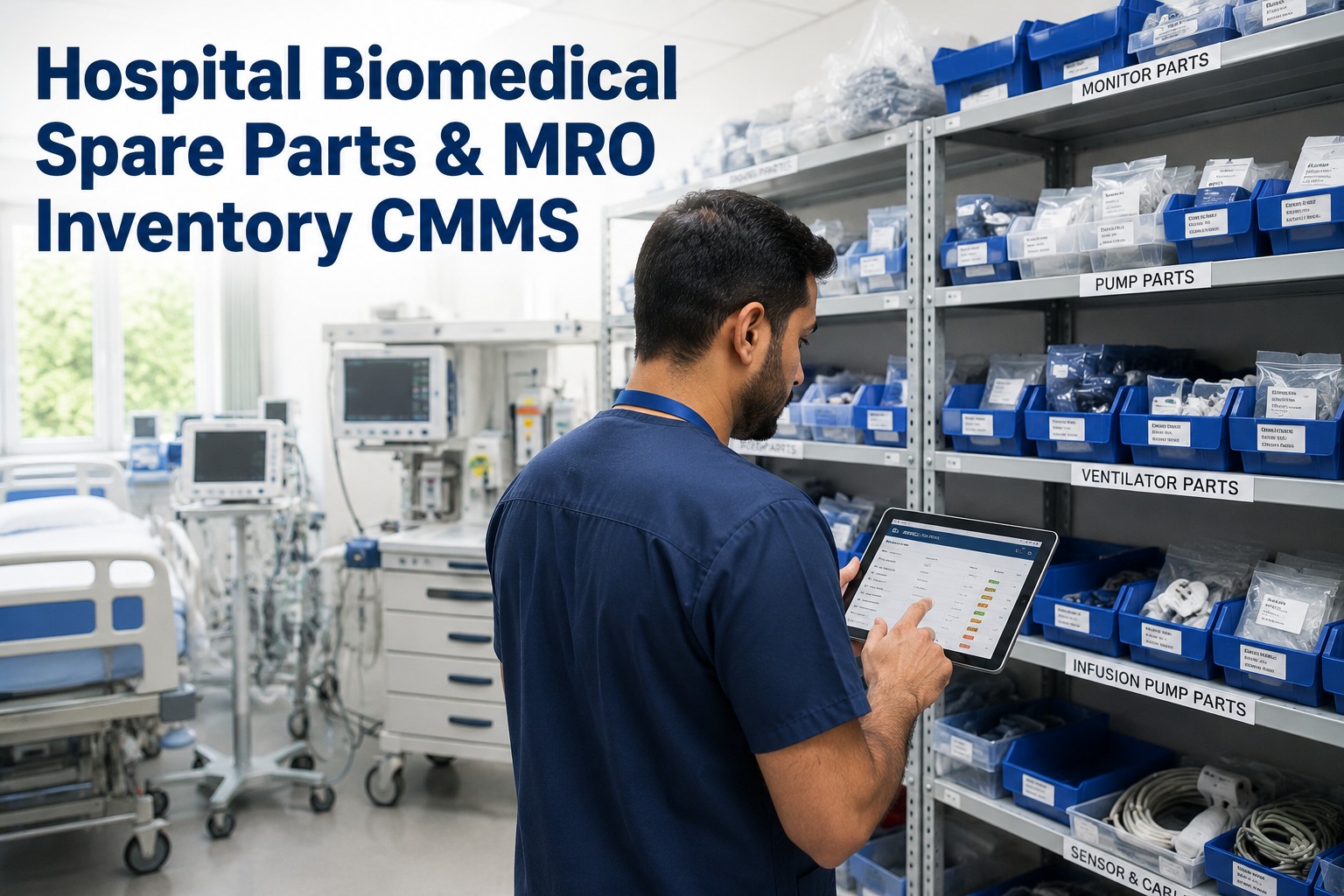
Maintain optimal spare parts inventory for critical equipment with usage-based replenishment tied directly to maintenance schedules and open work orders.
05
Expiry and Waste Tracking
Track expiry dates against consumption forecasts. Flag at-risk stock automatically and rotate inventory using FEFO (First Expired, First Out) logic to eliminate write-offs.
06
Audit-Ready Documentation
Every procurement transaction, inventory adjustment, and stock count is logged with digital signatures — providing GMP-compliant, audit-ready records at all times.
Ready to Move Beyond Manual Inventory Management?
Join healthcare and industrial operations teams who have replaced reactive procurement with data-driven inventory intelligence using Oxmaint. No heavy implementation. No lengthy onboarding.
COMPARISON
Manual Inventory Management vs ML-Powered Operations
The operational and financial gap between traditional and ML-driven supply chain management is significant. Here is how the two approaches compare across the dimensions that matter most to healthcare operations teams managing real budgets and real patients.
| Dimension |
Manual / Traditional |
ML-Powered with Oxmaint |
| Demand Forecasting |
Static par levels, manually updated quarterly |
Dynamic ML forecasts updated in real time from usage data |
| Reorder Process |
Manual count and reactive purchase orders |
Automated triggers based on consumption velocity and lead time |
| Stockout Risk |
High — 60% of hospitals face weekly stockout events |
Low — predictive alerts flag shortfalls 7–14 days in advance |
| Overstock and Waste |
2–4% of supply budget lost to expiry write-offs annually |
FEFO logic and expiry tracking reduce waste by up to 30% |
| Staff Time on Inventory |
40–60% of team time on manual counts and data entry |
60–70% reduction in manual inventory tasks through automation |
| Audit Readiness |
Fragmented paper or spreadsheet records, inconsistent logs |
Digital signatures, full audit trail, GMP-compliant documentation |
| Cross-Site Visibility |
Siloed by department or facility, no consolidated view |
Portfolio-level view across all sites and departments in one dashboard |
| Emergency Procurement |
Frequent, at 3–5x standard procurement cost |
Near-eliminated with predictive replenishment and early warning alerts |
ROI RESULTS
What ML-Driven Inventory Delivers in Numbers
30%
Inventory Cost Reduction
Average reduction in total inventory carrying costs within 12 months of ML deployment across hospital operations
50%
Lower Forecast Error
ML demand models outperform manual forecasting by 50% on average for high-volume consumables and pharma SKUs
70%
Less Manual Inventory Work
Automation reduces the staff hours consumed by counts, data entry, and reactive emergency procurement significantly
4.8x
Emergency Procurement Premium
The cost multiplier of emergency vs planned procurement — eliminated with predictive restocking and automated reorder triggers
FREQUENTLY ASKED QUESTIONS
Common Questions About ML in Hospital Supply Chain
What data does machine learning need to forecast hospital inventory accurately?
ML models for hospital inventory typically require 12–24 months of historical consumption data, procedure schedule records, patient census trends, and supplier lead time data. Seasonal adjustment factors and budget cycle patterns also improve accuracy significantly. Most facilities already have this data in their ERP or CMMS — it simply needs to be structured and cleaned before model training begins. Oxmaint's data capture tools ensure this information is collected consistently from day one, so your forecasting models improve continuously over time.
How does ML-powered inventory management reduce stockouts without increasing overstock?
Traditional systems solve stockouts by increasing safety stock — which drives overstock and waste. ML solves the same problem by improving forecast accuracy, so less buffer stock is needed to cover demand uncertainty. The model accounts for demand variability, supplier reliability, and consumption velocity to set optimal safety stock levels dynamically — typically achieving a 20–30% reduction in both stockout events and carrying costs simultaneously without compromising availability.
Is machine learning in supply chain suitable for smaller or regional hospitals?
Yes. ML-powered inventory management is increasingly accessible to facilities of all sizes. Modern platforms like Oxmaint do not require a dedicated data science team — the intelligence is embedded in the platform itself. Smaller facilities with fewer SKUs often see faster time-to-value because data cleanliness is easier to achieve and ML models converge more quickly on accurate demand patterns. The operational benefits of automation and predictive alerts apply regardless of portfolio size.
How does Oxmaint support hospital supply chain and inventory management specifically?
Oxmaint provides a unified platform for asset management, preventive maintenance, work order management, and spare parts inventory — all linked by a common asset hierarchy. For hospital supply chains, this means procurement decisions are connected to actual asset condition, maintenance schedules, and usage data rather than isolated from the rest of operations. Multi-site visibility, automated reorder triggers, expiry tracking, and audit-ready documentation are all included in the core platform with no heavy implementation fees or extended onboarding cycles.
GET STARTED WITH OXMAINT
Transform Your Hospital Supply Chain With Data-Driven Intelligence
Oxmaint gives healthcare and industrial operations teams the platform to move from reactive procurement to predictive inventory management. Full asset registry, automated reorder triggers, expiry tracking, multi-site visibility, and audit-ready documentation — all in one unified CMMS. No heavy implementation fees. No months-long onboarding. Start seeing results within days.





.png)