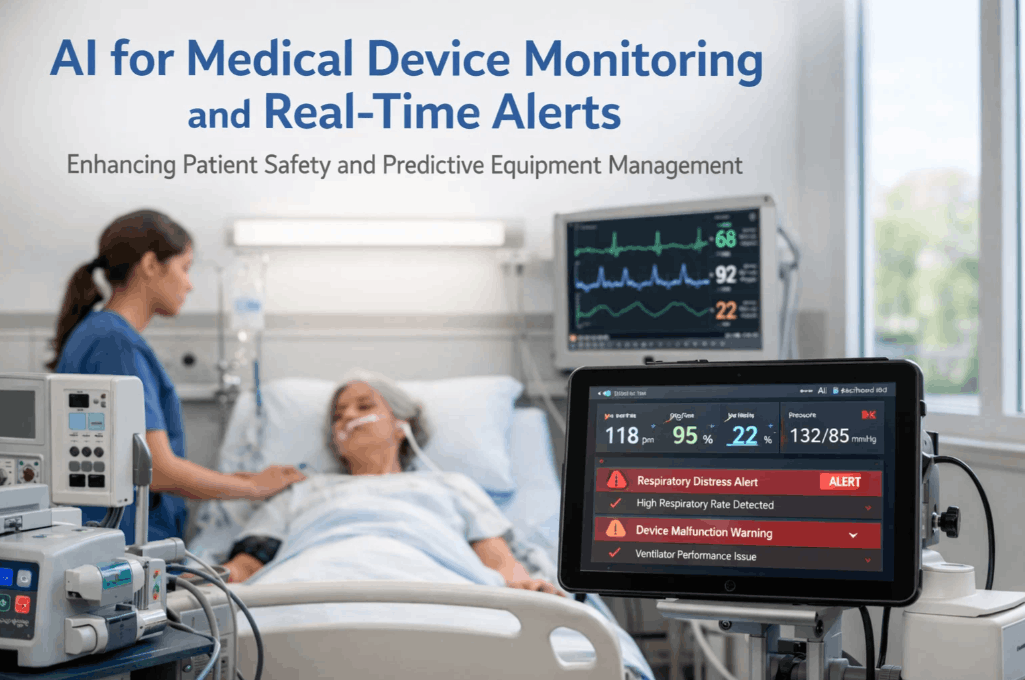
A hospital system missing a single FDA medical device recall notification — without real-time alert routing, without affected equipment identification, and without documented remediation — costs an average of $2.1 million in liability exposure, compliance fines, and patient safety risk. In 2023, 62 percent of healthcare facility inspections by CMS and state regulators identified at least one critical gap in medical equipment recall documentation and response protocol. The recalls were issued by the FDA. The hospitals received notification. The remediation procedures existed in policy. The failure was in the connection — between what happened in the field and what was documented in a retrievable, auditable record. That gap is exactly what Oxmaint closes. Book a demo to see how Oxmaint digitalizes hospital equipment recall tracking, device safety inventory, and remediation workflows across your full facility network.
Healthcare facility equipment recall management requires documented control of four critical functions: FDA alert receipt and real-time routing to clinical engineering and risk management, rapid identification of affected equipment across facility inventory systems, remediation workflow tracking with mandatory documentation of isolation, removal, or repair actions, and proof of completion capture at the point of work. Oxmaint digitizes every recall notification, equipment identification record, and remediation action — connecting FDA alerts to auditable facility documentation automatically, without manual tracking and without paper forms.
The Four Critical Systems Where Hospitals Face Recall Management Risk
Each system carries regulatory obligation, documentation requirements, and liability exposure when managed through email, spreadsheets, or disconnected clinical engineering databases. Book a demo to see how Oxmaint structures all four into a unified digital recall management program.
FDA medical device recalls are issued via MedWatch bulletin, recall notification letters, and direct manufacturer communications. Hospital risk management, clinical engineering, and affected clinical departments must receive alert notification simultaneously. Delayed alert routing creates patient safety risk and regulatory exposure. Oxmaint integrates with FDA MedWatch subscription feeds, routes recall notifications in real-time to designated facility contacts via SMS and email, and creates a dated receipt log documenting alert receipt time at the hospital level.
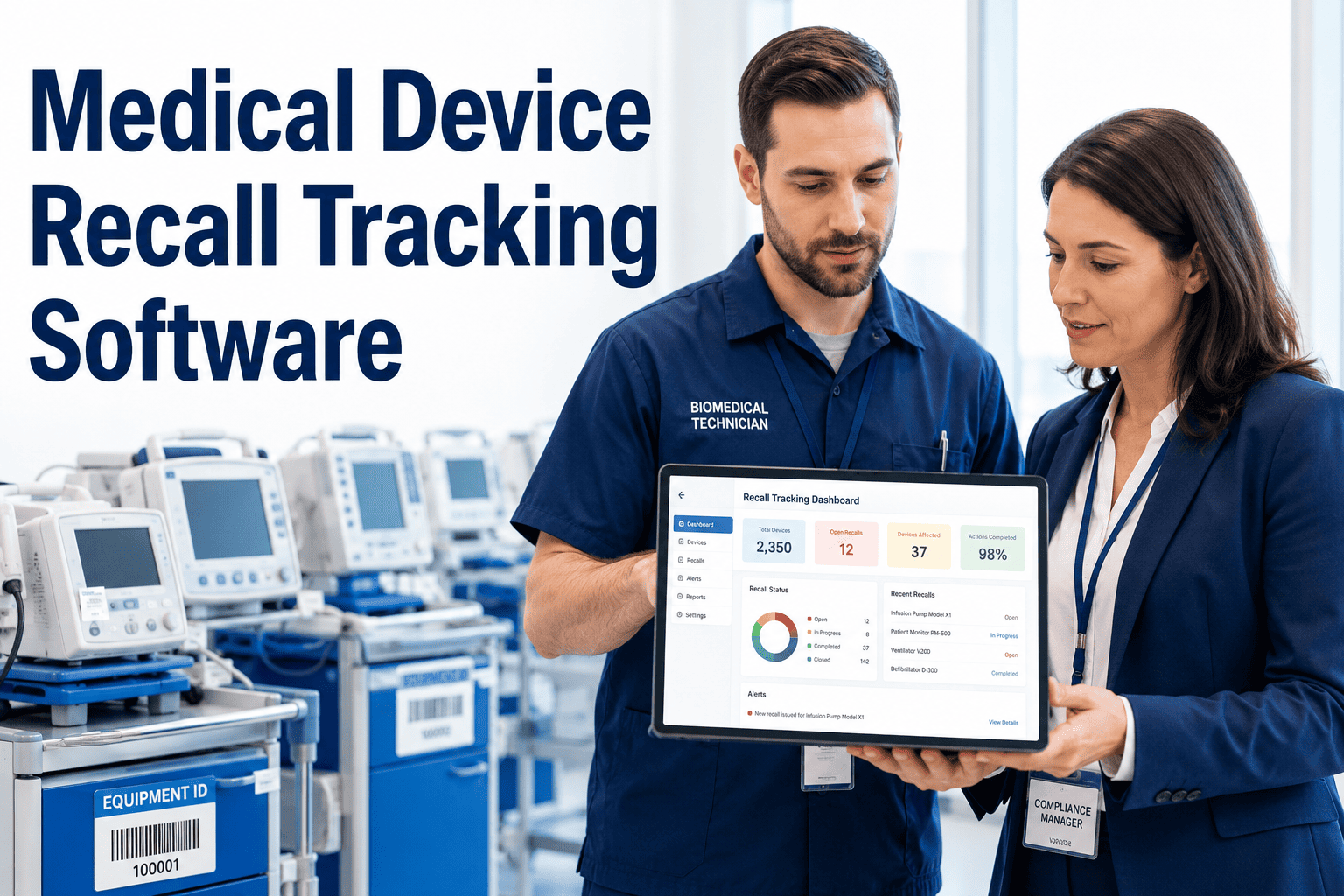
Recall notices specify device model, serial number ranges, manufacturing dates, or lot codes for affected equipment. Hospitals must identify all matching equipment in their inventory — across surgery, ICU, ED, and storage locations — within 24 to 72 hours depending on recall severity. Manual cross-reference against inventory records, equipment maintenance logs, and departmental device lists causes delayed identification and incomplete coverage. Oxmaint digitizes the hospital equipment inventory with manufacturer model, serial number, and lot code fields pre-populated from biomedical procurement records. A single recall entry triggers automated equipment matching, flagging all affected devices across the facility instantly.
Recall remediation actions include device isolation and removal from clinical use, manufacturer repair or replacement, software/firmware updates, or destruction — depending on recall classification. Each action must be documented with date, responsible personnel identity, method, and completion evidence (inspection photos, firmware version verification, destruction certificate). Oxmaint generates recall remediation work orders with equipment-specific action checklists — technician identity, timestamp, and photographic evidence captured at each step. The system prevents closure of recall remediation tasks until all required documentation is complete.
FDA and regulatory agencies require hospitals to demonstrate completed recall response through documentation packages — identifying all affected equipment, describing remediation action taken, providing completion dates, and certifying all units have been remediated or removed from inventory. These packages must be produced within 30 to 90 days of recall notice depending on severity classification. Paper-based tracking and scattered email documentation make package assembly time-intensive and error-prone. Oxmaint generates audit-ready recall closure documentation in under 2 hours — equipment identification list, remediation action log with technician signatures, and regulatory proof-of-compliance export formatted for FDA and state regulator submission.
Every Recall Alert. Every Affected Device. Every Remediation Action. Captured at the Point of Work — Not After.
Oxmaint automatically routes FDA recall notifications, identifies matching equipment from facility inventory in real-time, and documents remediation actions on mobile — completing recall response documentation in the field, not reconstructed from memory in a post-incident investigation. Book a demo to see the medical equipment recall workflow configured for your hospital's clinical engineering and risk management teams.
Oxmaint Medical Equipment Recall Management — Implementation Workflow and Roadmap
A structured deployment moves your hospital system from email-based recall tracking to a fully automated digital recall management platform — without disrupting clinical operations or existing biomedical infrastructure.
Every medical device across surgical suites, ICU, ED, imaging, and storage facilities registered in Oxmaint's equipment hierarchy with manufacturer, model number, serial number, and lot code. Historical recall data from prior three years imported to establish baseline recall response history. Equipment classification mapped to FDA device category and recall frequency profile. Risk management and clinical engineering team contact information configured for recall alert routing.
Oxmaint configured to receive FDA MedWatch bulletin feed — all Class I, II, and III recalls automatically ingested. Recall classification, affected device model, serial number ranges, and recall action type extracted and stored in structured format. Risk management and clinical engineering contacts configured to receive instant SMS and email alert when new recall matching facility inventory is received. Recall alert receipt logged with timestamp for regulatory proof of notification timeliness. Book a demo to see FDA MedWatch alert integration and facility routing configuration.
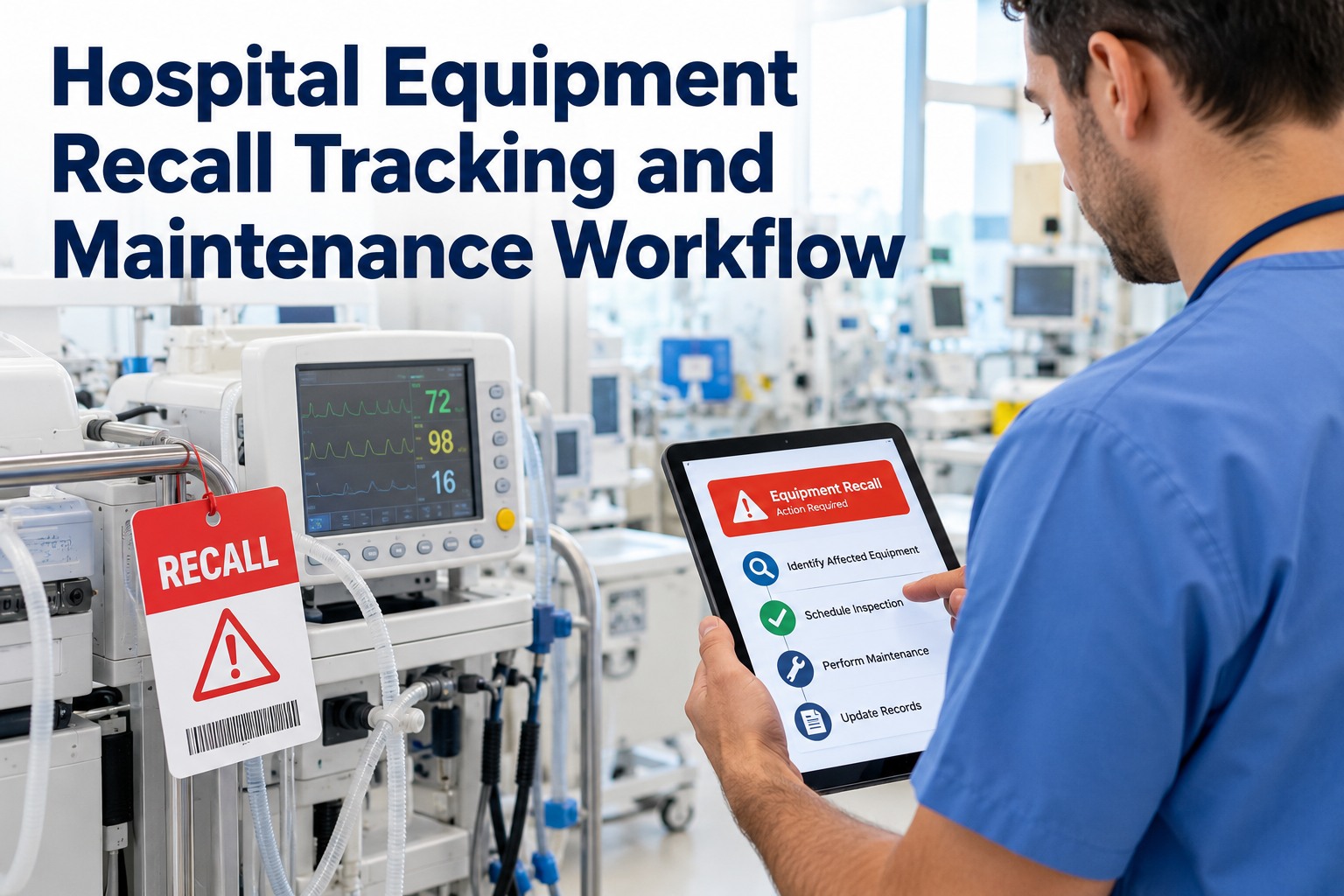
When a recall alert is received, Oxmaint automatically cross-references the affected device model and serial number range against the hospital equipment inventory — instantly flagging all matching units across all facility locations. Clinical engineering team receives mobile work order with list of affected equipment, recommended remediation action (isolation, removal, repair, or firmware update), and equipment-specific checklists. Technicians complete remediation on mobile with photo documentation and timestamp capture. System prevents work order closure until all remediation fields are completed and verified.
All recall remediation actions, equipment identification, and completion evidence archived and indexed by recall ID. Regulatory-compliant recall closure documentation generated automatically — equipment identification list, remediation action log with technician signatures and timestamps, and proof-of-compliance statement formatted for FDA and state regulator submission. Recall closure package exported in under 2 hours versus weeks of manual document assembly. Historical recall data retained for Joint Commission and accreditation audit evidence.
Healthcare Facility Recall Compliance Coverage
Hospital systems operating across multiple states and international locations face different regulatory recall obligations per jurisdiction. Oxmaint's recall management templates are pre-configured for each primary healthcare regulatory framework.
| Region | Primary Regulatory Frameworks | Key Medical Recall Requirements | Oxmaint Recall Coverage |
|---|---|---|---|
| USA | FDA 21 CFR Part 806 Medical Device Reporting, FDA MedWatch, CMS Conditions of Participation 482.24, Joint Commission MS.10180, State Health Department Requirements | FDA recall alert receipt documentation, affected equipment identification within 24 to 72 hours, remediation action documentation, recall closure proof within 30 to 90 days, 2-year record retention per FDA | FDA MedWatch feed integration, automated equipment matching, mobile remediation workflow, audit-ready recall closure export, 2-year record retention archive |
| Canada | Health Canada Medical Device Regulations Part 3, Health Canada Urgent Public Safety Announcements, Provincial Health Authority Requirements | Health Canada recall alert response documentation, affected device identification in Canadian facility inventory, remediation action log, Health Canada compliance reporting within required timeframe | Health Canada alert feed subscription, device identification against Canadian equipment registry, bilingual remediation workflows (English/French), Health Canada compliance export templates |
| United Kingdom | MHRA Medical Device Regulations 2002, MHRA Safety Alerts, NHS England Equipment Notification System, Health and Safety at Work Act 1974 | MHRA alert receipt and investigation response, affected equipment identification, investigation report documentation, MHRA Serious Adverse Event reporting within 30 days | MHRA alert subscription, NHS Equipment Notification System integration, Serious Adverse Event reporting templates, UK healthcare facility compliance documentation |
| Australia | TGA Medical Devices Regulations, TGA Product Safety Alerts, State Health Department Requirements, Australian Standard AS/NZS 3585 | TGA alert identification and facility response, affected equipment tracking in Australian hospitals and clinics, remediation documentation, TGA recall response reporting | TGA Product Safety Alert feed, Australian hospital equipment matching, NHMRC guideline compliance documentation, state-specific reporting templates |
| European Union | EU Medical Device Regulation 2017/745, EudraVigilance Adverse Event Database, CE Mark Compliance, National Notified Body Requirements | EudraVigilance alert management, CE Mark device tracking and recall response, affected equipment identification across EU member states, Adverse Event reporting within mandatory timeframe | EudraVigilance feed integration, multilingual remediation workflows, EU member state-specific compliance documentation, CE Mark device registry management |
FDA MedWatch, Equipment Inventory, and Remediation Tracking — One Digital System
Whether your hospital operates under FDA in the US, Health Canada regulations in Canada, or MHRA standards in the UK — Oxmaint pre-configures the correct recall alert feeds, equipment matching logic, and regulatory export formats for your jurisdiction. Book a demo to see multi-facility medical equipment recall management for your hospital system.
Oxmaint vs Competing Biomedical Management Platforms — Medical Equipment Recall
Most general-purpose biomedical equipment management systems track maintenance records — they do not handle FDA recall alert integration, automated equipment matching, or regulatory proof-of-compliance documentation configured for hospital risk management requirements.
| Recall Management Capability | Oxmaint | MaintainX | UpKeep | Fiix | Limble | IBM Maximo | Hippo CMMS | Infor EAM |
|---|---|---|---|---|---|---|---|---|
| FDA MedWatch alert feed integration | Yes | No | No | No | No | Custom | No | Custom |
| Automated equipment identification against inventory | Yes | Generic | Generic | Partial | Generic | Yes | Generic | Yes |
| Real-time recall alert routing to facility contacts | Yes | No | No | No | No | Custom | No | Custom |
| Recall remediation workflow with mobile documentation | Yes | Generic | Generic | Partial | Generic | Yes | Generic | Yes |
| Regulatory proof-of-compliance export under 2 hours | Yes | Partial | Partial | Partial | Partial | Yes | Partial | Yes |
| Multi-state regulatory framework support | Yes | Partial | Partial | Partial | Partial | Yes | Partial | Yes |
| Recall closure documentation and archive | Yes | Generic | Generic | Generic | Generic | Yes | Generic | Yes |
| Multi-hospital system administration and reporting | Yes | Yes | Partial | Partial | Partial | Yes | Partial | Yes |
| Deployment in weeks without IT consultant | Yes | Yes | Yes | Varies | Yes | No | Yes | No |
Medical Equipment Recall Compliance KPI Benchmarks — Healthcare Industry
Client Results — Healthcare Facilities Using Oxmaint Recall Management
These outcomes are drawn from hospital deployments where Oxmaint's automated medical equipment recall system replaced email-based and spreadsheet-based tracking within the first year of operation.
From 78% to 100% Equipment Identification — in 90 Days
Healthcare facilities that move from email-based recall tracking to Oxmaint's automated recall management close the documentation gap before the next regulatory inspection — not after. Book a demo to see your current recall compliance gap identified in the first deployment session.
Oxmaint Medical Equipment Recall Platform Features
Automatic FDA recall alert ingestion and real-time routing to risk management and clinical engineering. Recall classification, affected device models, serial number ranges, and remediation recommendations extracted and routed in real-time SMS and email alerts.
Recall alert automatically cross-references hospital equipment inventory by manufacturer, model number, serial number, and lot code. All matching devices across all facility locations instantly identified and flagged for remediation action.
Clinical engineering teams receive mobile work orders with equipment-specific remediation checklists — device isolation, removal, repair, or firmware update actions documented with technician identity, timestamp, and photographic evidence at point of work.
Regulatory-compliant recall closure packages generated automatically — equipment identification list, remediation action log, technician sign-offs, and proof-of-compliance statement formatted for FDA and state health department submission.
Complete historical recall data archived and indexed by device type, manufacturer, and recall classification. Trend analysis identifies high-risk equipment categories and patterns for procurement and clinical decision-making.
Hospital system administrators manage recalls across multiple facilities in a single platform — synchronized equipment identification, coordinated remediation timing, and consolidated regulatory reporting for multi-hospital compliance.
Medical Equipment Recall Documentation: Before and After Oxmaint
| Recall Documentation Area | Before Oxmaint | After Oxmaint |
|---|---|---|
| FDA recall alert receipt notification | Email forwarded to risk management, may be missed | Instant SMS and email alert to designated contacts, receipt timestamp logged |
| Equipment identification across facility | Manual search of three separate databases — 4 to 8 hours per recall | Automated inventory matching in under 5 minutes, all devices identified |
| Remediation action assignment and tracking | Email and handwritten work orders — incomplete and delayed | Mobile work orders with required checklists, photo documentation, and timestamp capture |
| Regulatory closure documentation assembly | 3 to 4 weeks gathering email, spreadsheets, and handwritten records | 2-hour automated export of complete recall closure package |
| Multi-hospital system recall coordination | Separate email threads and manual synchronization — inconsistent timelines | Single platform with real-time coordination across all facilities |
| Recall history and trend analysis | No systematic tracking — high-risk patterns missed | Complete historical recall archive with trend analysis and risk scoring |
| Joint Commission and regulatory audit readiness | Document gathering on demand — potential findings for incomplete records | Audit-ready recall documentation always current and immediately accessible |
Frequently Asked Questions
Close the Recall Documentation Gap Before the Next Joint Commission or CMS Inspection
FDA recall alert routing, automated equipment identification, mobile remediation workflow, and regulatory proof-of-compliance documentation — all live in Oxmaint within 4 to 6 weeks, no IT project required. Book a demo with your clinical engineering and risk management leadership and see the full medical equipment recall workflow configured for your hospital system.