Medical Gas Pipeline Leak Detection & Maintenance Checklist Guide
By Willam Jerry on October 21, 2026
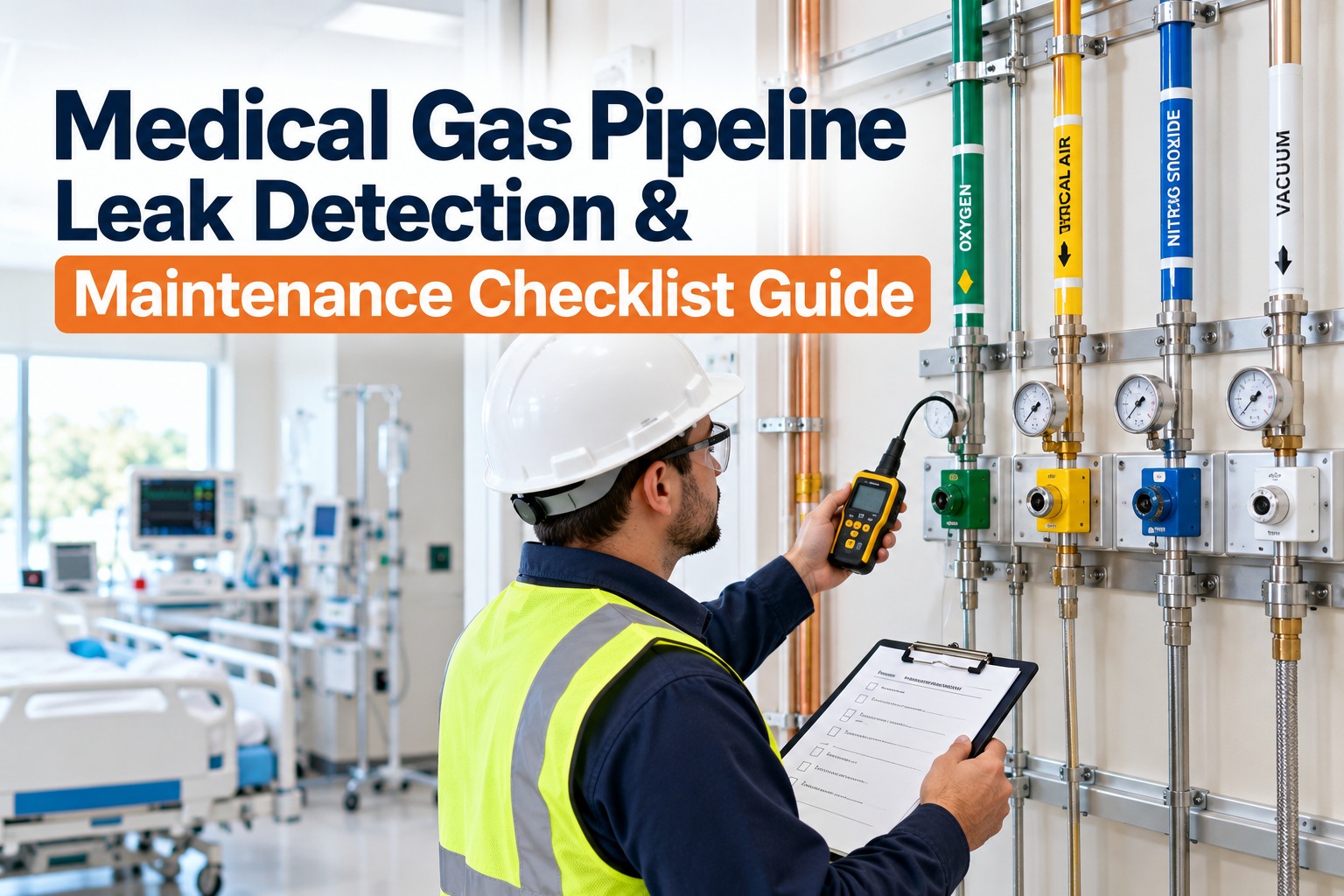
A medical gas pipeline system is a hospital's quietest life-safety asset. Oxygen, medical air, nitrous oxide, nitrogen, carbon dioxide, medical vacuum and WAGD all run through pipework that looks like plumbing but behaves like life-support — a leak that would be a nuisance in a chilled-water line is a Joint Commission finding in a med-gas line, and in the worst case a patient-harm event. This checklist walks the three cadence sections (daily, monthly, annual), the gas-identification reference, the leak-detection method matrix and the zone-valve-box inspection pattern. OXMAINT AI is the AI-powered hospital maintenance management software that holds the whole checklist on one register, ties every finding to the asset serial, time-stamps the sign-off and keeps the inspection record Joint-Commission-ready.
MEDICAL GAS PIPELINE · LEAK DETECTION & MAINTENANCE CHECKLIST · 2026
Medical Gas Pipeline Leak Detection & Maintenance Checklist Guide
Seven medical gases, three cadence sections, 36 checklist items, native checkboxes. OXMAINT AI assigns the walk, logs every finding against the zone-valve box, time-stamps the sign-off and keeps the record Joint-Commission-ready.
The Zone-Valve-Box Anatomy — Where The Checklist Lives
A zone-valve box is the field element the checklist works against — the shut-off valve, the gauge, the alarm panel and the station outlets downstream all live or die by what the inspection records. Six components per box; OXMAINT AI holds each as a sub-asset.
01
Zone shut-off valve
Ball valve with lock-open feature; shut-off only in a code emergency per NFPA 99.
02
Pressure / vacuum gauge
Reads downstream of the zone valve; the operating-window check on every walk.
03
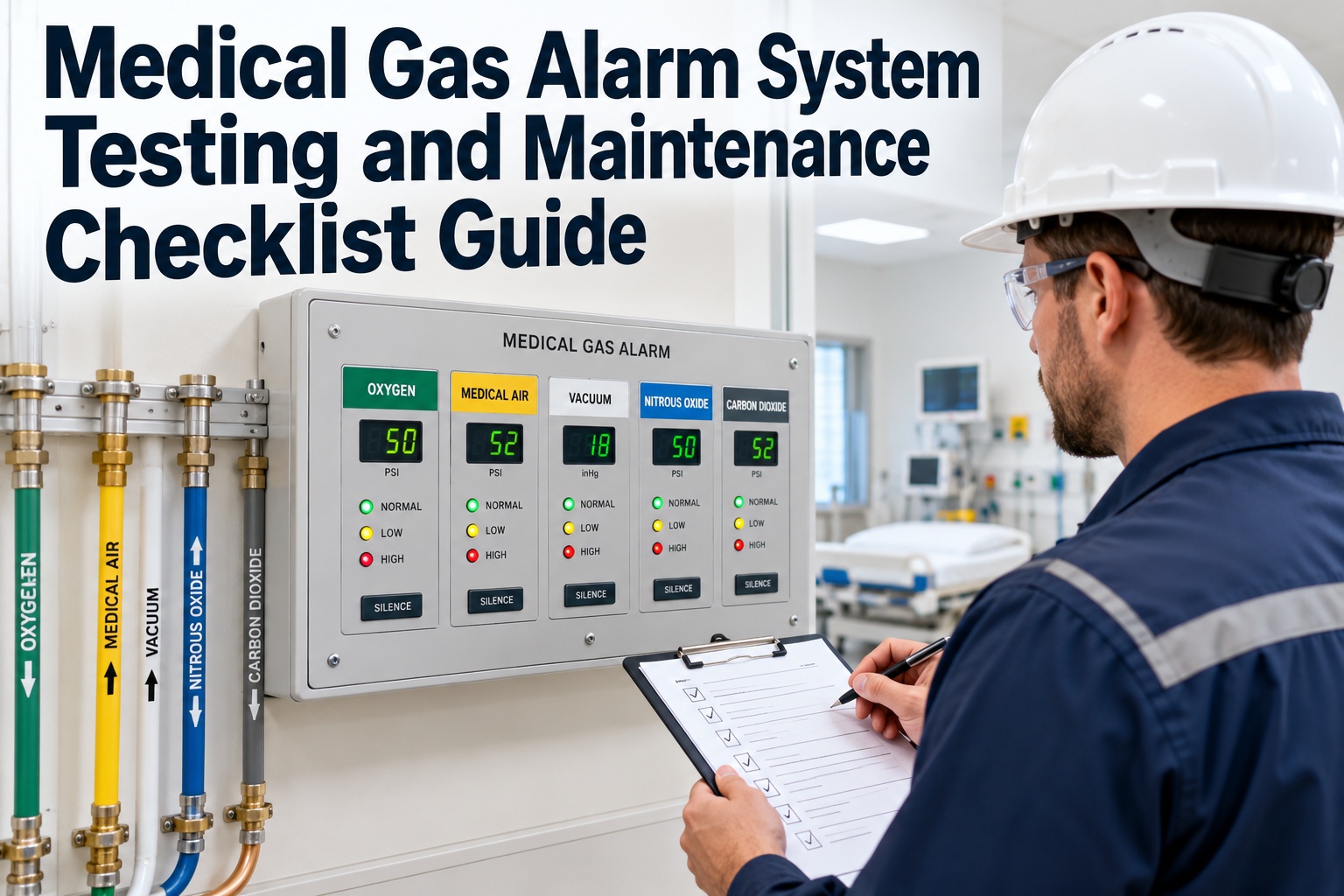
Area alarm panel
Visual + audible alarm for low / high pressure per gas; test button for monthly verify.
04
Gas identification label
Gas name, color band, direction-of-flow arrow — must be legible, must not be painted over.
05
Door & frangible breaker
Breakable glazing for emergency access; door operates freely, hinges secure.
06
Station outlets (downstream)
DISS / quick-connect outlets, head wall and ceiling columns; keyed to the gas type.
NFPA 99 Cadence — What's Due When
NFPA 99 (Health Care Facilities Code) sets the inspection and testing cadence. The schedule below is the headline cycle used by most hospitals; OXMAINT AI loads the full table as the default PM calendar.
DAILY
Operator walk
Source gauge readings, master alarm status, visible leak check at source. Logged by the on-shift operator / RT.
MONTHLY
Facilities inspection
Area alarm panel test, zone-valve box visual, label legibility, outlet function check sample. On the facilities PM calendar.
ANNUAL
ASSE 6030 verification
Full system verification by an ASSE 6030-certified verifier — leak test, cross-connection test, purity test, alarm test. Report filed with the AHJ.
Section 1 · Daily Operator Walk Checklist
Twelve items. Walked by the respiratory therapy supervisor or facilities on-shift tech every operating day; findings close on the WO before shift handover.
Twelve items. Driven by an ASSE 6030-certified verifier per NFPA 99 Chapter 5; findings land on the formal verification report filed with the AHJ.
Leak Detection Methods — Which Tool For Which Suspect
A suspected leak has three detection paths. The right tool depends on where the suspicion came from — a sawtooth pressure trend, a smell at a terminal, a failed standing-pressure test.
Soap / code-approved solution
Applied at threaded joints, couplings, outlet bodies. Cheap, visual, catches most suspect-fitting leaks.
When: monthly walk visible, or spot-check on sawtooth trend.
Standing-pressure decay
Section isolated, pressurized above operating level, held and gauged. Quantifies leak rate across a branch.
When: annual verification; after any pipe modification.
Ultrasonic / electronic sniffer
Handheld sensor detects ultrasound of escaping gas or trace molecules; locates leak to within inches on an active system.
When: active leak suspected but soap inconclusive; concealed pipe runs.
Live Medical Gas Zone Board — What A Facilities Director Sees
The live board shows every zone-valve box with its last-walk status, alarm state and any open WO. OXMAINT AI renders it live from the WO log.
MED GAS ZONE BOARD · MAIN HOSPITAL · 18:24
84
zone boxes
79
clean this month
4
non-critical findings
1
impairment WO active
OR-3 O₂ zone valveLow-pressure alarm actuating · suspect leak downstreamIMPAIRMENT · ASSE 6030 called
L&D N₂O zoneDoor hinge loose · frangible intactWO 71422 open
ICU-2 vacuumGauge sticker faded · still readableWO 71418 scheduled
ED med air zoneAll gauges in band · alarm cleanOK · walked today
Lab CO₂ zonePressure stable · no alarmOK
OR-3 O₂ impairment: zone isolated, redundant O₂ feed to OR-3 confirmed, OR schedule not affected · ASSE 6030 verifier arrived 17:50
A Sawtooth On The Overnight Trend Is The Leak Nobody Smelled.
The daily walk catches the obvious; the trend review catches the slow bleed. OXMAINT AI holds both — the walk sign-off and the sensor trend — on the same record, so the sawtooth gets caught at the morning handover instead of the quarterly audit.
The seven-gas reference, zone-valve-box register, three-cadence checklists, leak-detection method pin, live zone board and annual ASSE 6030 report trail all live natively in the OXMAINT AI hospital maintenance management software — open an account and bring the medical-gas program into OXMAINT AI.
Zone-Valve-Box Register
Every box as a parent asset with six sub-assets; gas type, operating window, downstream outlets each held on record.
Three-Cadence Checklists
Daily operator walk, monthly facilities inspection, annual ASSE 6030 verification — each with its own template.
Trend Watch
BMS pressure trend ingested per gas; sawtooth or sustained drift auto-raises a leak-investigation WO.
Impairment Workflow
Suspected leak or alarm triggers the impairment workflow — isolation, backup verification, AHJ / Joint Commission notice, WO.
Qualified-Tech Gate
Annual verification WOs can only close under an ASSE 6030-certified sign-off; license-level enforcement on template.
AHJ / JC Report Export
Annual verification, monthly audit summary and corrective-action plan exported with one click from the live WO log.
Frequently Asked Questions
Who is allowed to work on medical gas pipework?
Hospitals in the US generally require ASSE 6010-certified installers for pipework and ASSE 6030 verifiers for annual system verification. Monthly inspections and daily walks can be done by trained facility staff under the medical-gas program; OXMAINT AI stores the license level required per template and gates close-outs on it.
How quickly does a suspected leak need investigation?
A confirmed low-pressure alarm or active leak is an impairment — immediate response, isolate the zone if possible, verify redundant supply to patient-care areas, notify the AHJ and the Joint Commission file. A sawtooth trend without alarm is a 24-72 hour investigation. OXMAINT AI tier-tags each on the WO.
What's the highest-risk finding at Joint Commission survey?
Documentation gaps on the annual ASSE 6030 verification, followed by missing monthly zone-valve-box inspection records. The surveyor will ask to see the records before they walk the floor. A WO log with photos and sign-offs settles it; a binder of paper tickets does not.
Does this program interact with other hospital maintenance?
Yes. Medical-gas WOs flow through the same OXMAINT AI system as fire-protection and general facilities WOs, but with the ASSE 6030 and NFPA 99 fields, the license gate and the dedicated compliance category. One system, one WO log, one dashboard; separate category for the Joint Commission file.
Every Zone, Every Gauge, Every Alarm — On One Record.
Load the medical-gas program into the OXMAINT AI hospital maintenance management software — seven-gas reference, zone-valve-box register, three-cadence checklists, leak-detection method pin, live zone board and the annual ASSE 6030 report trail. The next Joint Commission survey opens the system, not the binder.