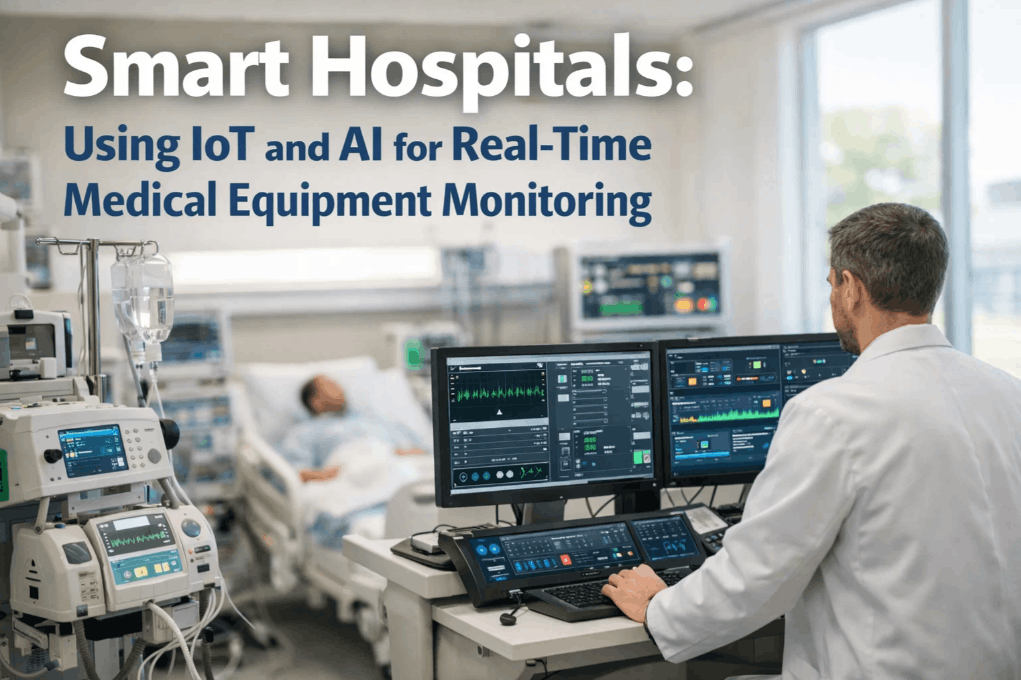
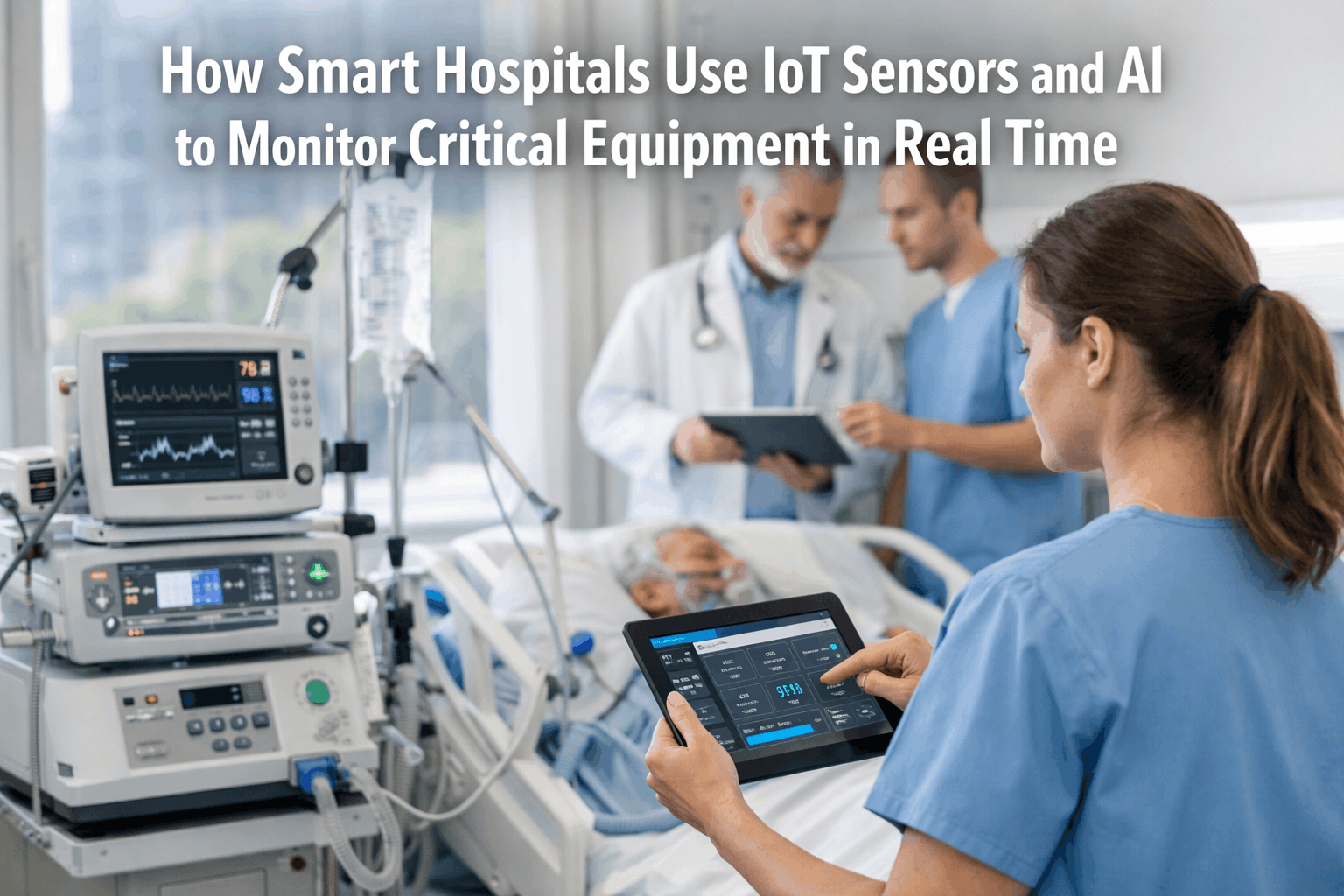
Patient monitoring equipment sits at the intersection of technology and human life. Bedside monitors, telemetry systems, pulse oximeters, capnography units, and multi-parameter vital signs monitors continuously track the physiological state of critically ill and recovering patients — often making the first detection of a deteriorating condition that triggers a life-saving clinical response. Yet in many hospitals and acute care settings, the maintenance programs governing these devices lag significantly behind their clinical importance. Preventive maintenance schedules are inconsistently applied, alarm calibration drifts go undetected between service intervals, and battery degradation quietly reduces the reliability of portable monitoring systems until a failure occurs at the worst possible moment. A structured, documented maintenance program for patient monitoring equipment is not optional — it is a fundamental requirement of safe clinical operations and regulatory compliance. Sign up for Oxmaint to build a complete, auditable maintenance program for your clinical monitoring fleet today.
Why Patient Monitoring Equipment Demands a Structured Maintenance Approach
Unlike passive diagnostic equipment, patient monitoring devices operate in continuous or near-continuous clinical use, often for extended periods without interruption. A bedside monitor in a medical ICU may run uninterrupted for weeks, cycling through hundreds of alarm events, recording waveforms, and transmitting data to central stations — all while being exposed to cleaning agents, accidental impacts, connector wear, and the cumulative electrical stress of constant operation. This operational profile creates a maintenance challenge distinct from equipment used episodically, such as imaging modalities or laboratory analyzers. Sign up for Oxmaint to start managing your monitoring equipment maintenance program today.
The consequences of maintenance failures in this category are immediate and patient-facing. A pulse oximeter probe with degraded optical performance underreports oxygen saturation, potentially delaying intervention in a patient developing respiratory compromise. A bedside monitor with miscalibrated non-invasive blood pressure measurement may produce readings that are consistently 15–20 mmHg outside the true value — a deviation that would alter medication dosing decisions in hypertensive emergencies. An ECG lead set with degraded electrode contact produces artifact-laden waveforms that can trigger false arrhythmia alarms or, more dangerously, obscure real rhythm changes. Proper maintenance eliminates these failure modes before they reach the patient. Book a demo with Oxmaint to see how structured maintenance workflows protect your clinical fleet.
Degraded optical probe underreports oxygen saturation — delays respiratory intervention in critically ill patients.
Readings 15–20 mmHg outside true value directly alters medication dosing in hypertensive emergencies.
Artifact-laden waveforms trigger false arrhythmia alarms or obscure real rhythm changes at the bedside.
Silent lithium-ion degradation drops capacity to 40% of rated runtime — causes monitoring loss during transport.
Core Components of a Patient Monitor Maintenance Program
An effective maintenance program for patient monitoring equipment addresses five distinct domains: physical inspection and cleaning compliance, electrical safety verification, performance calibration and accuracy testing, alarm system functional testing, and power and battery management. Each domain targets a different failure mode and requires different testing methodologies, frequency schedules, and documentation standards.
Covers housing integrity, display condition, cable and connector wear, probe and lead set inspection, and cleaning compliance documentation. Visual inspection catches mechanical failures before they become electrical or functional failures.
Encompasses ground wire continuity, chassis leakage current measurement, patient lead leakage current testing, and isolation resistance verification per IEC 60601-1 and NFPA 99 requirements.
Includes NIBP accuracy verification using a calibrated reference manometer, SpO2 accuracy with a certified simulator, ECG amplitude and frequency response testing, and temperature probe calibration using traceable reference standards.
Validates that audible and visual alarms trigger at defined threshold values, that alarm suspension and escalation behaviors function per specification, and that central monitoring station alarm transmission is intact and latency-compliant.
Tests battery charge capacity against rated run-time under clinical load conditions, inspects battery connectors and housing for corrosion or swelling, and documents battery replacement cycles with timestamps for each device asset.
Preventive Maintenance Checklists by Device Type
Patient monitoring encompasses a broad range of device types, each with distinct maintenance requirements. The checklists below cover the essential inspection, calibration, and functional testing tasks for the primary categories of clinical monitoring equipment found in hospital and acute care environments.
Bedside Multi-Parameter Monitor
Inspect display for dead pixels, persistent burn-in, touch-screen responsiveness degradation, and screen brightness uniformity across the active viewing area.
Connect calibrated reference manometer; test systolic, diastolic, and mean arterial pressure accuracy across low, mid, and high pressure ranges against manufacturer tolerance.
Connect ECG simulator; verify heart rate display accuracy, waveform amplitude accuracy (±5%), and arrhythmia detection response at defined trigger values.
Test pulse oximetry module using certified SpO2 simulator across 70%–100% saturation range; verify readings within ±2% of simulator reference values.
Test temperature measurement accuracy using a NIST-traceable reference thermometer across clinical temperature range (35°C–42°C); document results per probe channel.
If equipped, verify IBP transducer interface zero calibration and accuracy using a calibrated pressure source across the clinical measurement range.
Verify high and low alarm limits trigger audible and visual alerts at the set threshold values; confirm alarm tone volume meets minimum clinical audibility standards.
Confirm wired or wireless network connection is stable; verify waveform and alarm transmission to central monitoring station with measured latency within acceptable limits.
Measure chassis leakage current and patient lead leakage current in normal and single-fault conditions; verify compliance with IEC 60601-1 limits for the equipment classification.
Fully charge battery; operate monitor under standard clinical load; measure actual run-time against manufacturer-rated capacity; replace battery if run-time falls below 80% of rated value.
Telemetry Transmitter and Central Station
Inspect transmitter housing for cracks, lead attachment integrity, and moisture ingress indicators; verify electrode connector contact resistance is within specification.
Connect patient simulator via leads; evaluate transmitted ECG signal clarity, baseline noise level, and waveform fidelity at central monitoring station display.
Walk-test transmitter across intended clinical coverage zone; verify signal strength remains above threshold throughout all patient care areas covered by the system.
Test battery under active transmission load; verify operational duration meets or exceeds clinical shift requirements; replace batteries on scheduled interval regardless of apparent charge.
Trigger arrhythmia and parameter alarms from simulator; confirm alarm type, patient identifier, and bed location display correctly on central station with appropriate audible alert.
Verify central station and transmitter timestamps are synchronized; confirm that ECG strip printouts and event records contain accurate date-time metadata.
Pulse Oximeter (Portable and Dedicated)
Inspect probe emitter window for discoloration, contamination, or lens clouding that degrades optical transmission; clean or replace as indicated.
Use a multi-level SpO2 simulator to test saturation accuracy at 70%, 80%, 90%, 95%, and 100% levels; verify all readings fall within ±2% ARMS per ISO 80601-2-61.
Test pulse rate display accuracy at low (40 bpm), normal (80 bpm), and high (120 bpm) simulator rates; verify agreement within ±3 bpm or ±3% of set rate.
Evaluate device performance under simulated low perfusion index conditions using simulator; verify stable readings are maintained without spurious low-signal alarms.
Inspect probe cable for kinks, cuts, and insulation damage; test connector seating force and confirm no intermittent signal loss occurs with cable movement simulation.
Capnography Monitor
Perform zero calibration using certified zero gas; perform span calibration using certified CO2 reference gas mixture; document calibration coefficients and compare to previous baseline.
Inspect mainstream or sidestream sampling components for condensation buildup, cracks, and occlusion; replace sampling lines per manufacturer-recommended interval.
Evaluate capnogram waveform shape for appropriate inspiratory baseline, expiratory plateau, and alpha and beta angle characteristics using a lung simulator or reference waveform comparison.
Test 10%–90% rise time for the CO2 measurement signal; verify response time meets manufacturer specifications for the applicable respiratory rate range.
Maintenance Frequency Schedule for Clinical Monitoring Equipment
Not all maintenance tasks require the same frequency. Structuring maintenance schedules by appropriate intervals maximizes biomedical engineering efficiency while ensuring critical failure modes are detected before they create clinical risk. The table below summarizes recommended maintenance intervals across the primary monitoring device categories.
| Device Type | Daily / Each Use | Monthly / Quarterly | Annual |
|---|---|---|---|
| Bedside Multi-Parameter Monitor | Visual inspection, alarm system check, display verification | NIBP calibration, ECG accuracy, SpO2 simulator test, battery load test | Full electrical safety, leakage current, all-parameter calibration, network audit |
| Telemetry Transmitter | Battery charge check, lead and housing inspection | RF range walk-test, signal quality assessment, alarm transmission test | Battery replacement, full system calibration, central station audit |
| Pulse Oximeter | Probe inspection, cable condition check | Simulator accuracy test, low perfusion test, connector inspection | Full electrical safety, replacement of probes at service life limit |
| Capnography Monitor | Sampling line inspection, zero calibration | Span calibration with reference gas, response time test, waveform assessment | Full calibration verification, sensor replacement assessment, electrical safety |
| Central Monitoring Station | System uptime verification, display check | Alarm annunciation test, record synchronization audit, network latency measurement | Server hardware inspection, software version review, UPS battery test |
Alarm Management and Calibration: The Most Critical Maintenance Domain
Of all the maintenance domains for patient monitoring equipment, alarm system integrity demands the most rigorous and frequent attention. Clinical alarm fatigue has been identified by The Joint Commission as a persistent patient safety hazard, contributing to sentinel events where alarm signals were ignored, silenced, or simply failed to annunciate due to equipment malfunction. A meaningful portion of alarm fatigue originates not from excessive clinician desensitization but from poorly calibrated monitoring equipment that generates false alarms at rates far above what properly maintained systems would produce.
Maintenance of alarm systems encompasses three levels of verification. At the device level, biomedical engineers must confirm that audible alarm tone levels meet minimum decibel thresholds specified by IEC 60601-1-8 and that both high-priority and medium-priority alarms produce the correct signal pattern. At the parameter level, alarm threshold accuracy must be verified — a monitor that triggers a bradycardia alarm at 58 bpm when the threshold is set to 50 bpm creates exactly the kind of alarm credibility problem that drives inappropriate silencing behaviors. At the system level, alarm transmission from bedside devices through the central station, nurse call integration, and secondary notification platforms must be tested end-to-end to ensure that no alarms are lost in the network pathway.
Confirm audible alarm tone levels meet minimum dB thresholds per IEC 60601-1-8. Both high-priority and medium-priority alarms must produce the correct signal pattern at the device.
Verify alarm threshold accuracy — a bradycardia alarm triggering at 58 bpm when set to 50 bpm creates exactly the credibility problem that drives inappropriate silencing behaviors.
Test alarm transmission from bedside through central station, nurse call integration, and secondary notification platforms end-to-end — ensure no alarms are lost in the network pathway.
Alarm calibration records must be maintained per device. When a clinical incident involves alarm failure, producing a complete calibration and maintenance history for that specific device is critical.
Paper-based maintenance systems rarely survive this scrutiny. A CMMS that associates every calibration result with a specific device asset — with a timestamped record of the technician who performed the test — provides the documentation infrastructure that patient safety and legal defensibility require. Sign up for Oxmaint to build a fully auditable alarm calibration record system for your monitoring fleet.
Battery Management for Portable Monitoring Equipment
Battery failure in portable patient monitoring equipment represents one of the most preventable causes of monitoring interruption — and one of the most frequently encountered. Lithium-ion batteries in bedside monitors and telemetry transmitters degrade predictably over charge cycles and calendar time, but without systematic tracking, battery replacement is typically reactive: a nurse reports that a monitor died during transport, or a telemetry transmitter lost signal mid-shift because the battery capacity had silently dropped to 40% of its original rating.
A structured battery management program tracks three key parameters for each battery in the monitoring fleet: total charge cycles since installation, measured capacity at last load test expressed as a percentage of rated capacity, and calendar age since manufacture. Batteries that fail any of these thresholds — typically greater than 500 full cycles, capacity below 80% of rated value, or age beyond the manufacturer's service life — are replaced on a scheduled basis rather than at point of failure. For high-acuity monitoring environments such as ICUs, step-down units, and surgical suites, this approach ensures that portable monitoring equipment is always capable of supporting a full clinical shift without recharging.
Track total charge cycles since installation per device asset. Replace when cycle count exceeds 500 full cycles — the threshold beyond which lithium-ion capacity degradation becomes clinically significant.
Test measured capacity at last load test as a percentage of rated capacity. Batteries below 80% of rated capacity are replaced on schedule — before a monitoring interruption during transport or shift handover.
Track calendar age since manufacture for each battery. Replace when age exceeds the manufacturer's service life specification — regardless of apparent charge status or cycle count alone.
A battery failing any single threshold — cycles, capacity, or age — is replaced immediately. All three parameters must be within limits for a battery to remain in the clinical fleet.
Regulatory and Accreditation Requirements for Monitoring Equipment Maintenance
Patient monitoring equipment maintenance is subject to overlapping regulatory and accreditation requirements that collectively demand documented, systematic maintenance programs. The Joint Commission's NFPA 99 requirements specify inspection, testing, and maintenance standards for patient care equipment, including monitoring devices, with documentation retention requirements of at least three years. CMS Conditions of Participation require hospitals to maintain medical equipment in a safe and operable manner, with performance standards that specifically address patient-connected equipment. State biomedical equipment registration programs in many jurisdictions require annual safety inspections with records available for review.
ECRI Institute guidelines and AAMI standards provide the technical benchmarks against which monitoring equipment performance should be evaluated, including reference values for acceptable leakage current limits, recommended calibration intervals, and criteria for determining when equipment should be removed from clinical service. Facilities seeking Joint Commission accreditation or DNV certification must demonstrate that their biomedical engineering programs address all patient-connected equipment categories with documented preventive maintenance schedules, calibration records, and corrective maintenance work order histories. Inspectors reviewing the biomedical equipment management program during surveys examine not only whether records exist, but whether the records reflect a systematic, risk-based approach to maintenance prioritization. Book a demo with Oxmaint to see how your facility can stay accreditation-ready year-round.
Inspection, testing, and maintenance standards for all patient care equipment. Minimum 3-year documentation retention with records available for survey review on demand.
Hospitals must maintain medical equipment in safe and operable condition with performance standards specifically addressing all patient-connected equipment categories.
Technical benchmarks for acceptable leakage current limits, recommended calibration intervals, and criteria for removing equipment from clinical service per ECRI Institute guidelines.
DNV surveys assess systematic, risk-based maintenance prioritization. State programs in many jurisdictions require annual safety inspections with records available for review.
Integrating Patient Monitor Maintenance into a CMMS Platform
The maintenance complexity of a hospital monitoring fleet — potentially hundreds of bedside monitors, dozens of telemetry systems, portable pulse oximeters distributed across every unit, and capnography systems in procedural areas — makes manual tracking fundamentally inadequate at scale. Biomedical engineering departments that manage monitoring equipment through spreadsheets and paper work orders consistently face the same problems: missed preventive maintenance intervals, incomplete calibration records, inability to quickly identify all devices of a specific model affected by a safety alert, and preparation for accreditation surveys that becomes a weeks-long document assembly project.
A purpose-built CMMS for biomedical equipment management transforms this operational model. Preventive maintenance schedules are configured once per equipment type and then execute automatically, generating work orders for the appropriate technician at the correct interval. Calibration results, electrical safety test data, and battery test outcomes are entered directly into the work order using mobile devices, with results permanently linked to the specific device asset record. When a manufacturer field safety corrective action is issued for a specific monitor model, a CMMS can instantly generate a list of all affected devices in the fleet, filtered by model and serial number, allowing systematic response rather than manual inventory review.
Oxmaint provides biomedical engineering teams with a maintenance management platform designed to meet the specific documentation and workflow requirements of clinical equipment programs. Automated work order generation, mobile-first checklist completion, calibration record retention, and compliance reporting dashboards give biomed teams the infrastructure to maintain large monitoring fleets reliably and demonstrate maintenance compliance to surveyors on demand. Book a demo with Oxmaint to see how leading hospital biomedical departments are managing their patient monitoring fleet maintenance at scale.
PM schedules configured once per equipment type execute automatically — generating work orders for the correct technician at the correct interval without manual tracking.
Calibration results, electrical safety test data, and battery test outcomes entered directly from mobile devices — permanently linked to the specific device asset record.
When a manufacturer field safety corrective action is issued, CMMS instantly generates a complete list of all affected devices filtered by model and serial number.
Compliance summary reports generated instantly for accreditation surveys — no weeks-long document assembly. Complete maintenance history for any device available on demand.
Manage Your Entire Patient Monitoring Fleet in One Platform
Oxmaint gives biomedical engineering teams automated PM scheduling, calibration tracking, battery management, and instant compliance reporting — across every bedside monitor, telemetry system, and portable device in your fleet.
Building a Sustainable Biomedical Maintenance Culture
Technical maintenance protocols and CMMS platforms are enablers, but the foundation of reliable patient monitoring is a clinical and biomedical culture in which equipment problems are reported promptly, maintenance findings receive timely responses, and every member of the care team understands their role in equipment reliability. Nursing staff who identify a monitor displaying unusual waveform artifacts, an alarm that fails to sound when a threshold is crossed, or a telemetry transmitter that repeatedly loses signal are the first line of detection for equipment problems that would not surface until the next scheduled preventive maintenance interval.
Biomedical engineering departments can strengthen this early detection capability by establishing clear, accessible equipment reporting pathways — including mobile-accessible work order submission tools that allow nursing staff to log a concern from the bedside — and by closing the feedback loop when equipment issues are investigated and resolved. When clinical staff see that reported concerns generate prompt biomedical responses with documented outcomes, reporting behavior improves. When reports disappear into an unresponsive queue, underreporting becomes entrenched. A maintenance management system with real-time notification workflows, escalation paths, and visible work order status tracking supports exactly the closed-loop communication that sustains a proactive maintenance culture over time.
Frequently Asked Questions
How often should bedside patient monitors be calibrated?
Bedside multi-parameter monitors should undergo formal calibration and performance verification at a minimum annually, with some high-frequency parameters such as NIBP accuracy and SpO2 simulator testing performed quarterly. Daily visual inspection and alarm system checks should be performed at the unit level. Facilities with high patient turnover or intensive clinical environments often adopt semi-annual calibration schedules for high-risk monitoring parameters to reduce the interval between formal verifications. Sign up for Oxmaint to configure your calibration schedule today.
What electrical safety tests are required for patient monitoring equipment?
Patient monitoring equipment requires electrical safety testing per IEC 60601-1 standards, which includes chassis leakage current measurement, patient lead leakage current measurement under normal and single-fault conditions, and ground wire continuity testing. For equipment connected directly to patients — such as ECG leads, SpO2 probes, and IBP transducers — patient lead leakage current limits are particularly stringent because current conducted through patient-connected leads bypasses the skin's protective resistance. NFPA 99 and AAMI ES60601 provide the applicable limits for different equipment classifications used in patient care areas.
How do you test pulse oximeter accuracy during preventive maintenance?
Pulse oximeter accuracy is verified using a certified SpO2 functional simulator that replicates the optical transmission characteristics of human tissue at defined saturation levels. Testing should span the full clinical range, typically at 70%, 80%, 90%, 95%, and 100% saturation levels. Readings from the device under test are compared to the simulator's certified reference values. Acceptable accuracy is generally ±2% ARMS across the 70%–100% range per ISO 80601-2-61 requirements. Pulse rate accuracy should also be verified at multiple rates using the simulator.
What documentation is required for patient monitoring equipment maintenance?
Required documentation includes preventive maintenance work orders with dates, technician identification, and test results for each device; electrical safety test records with measured values and pass/fail determinations; calibration records identifying the reference standards used and traceability to national standards; corrective maintenance work orders documenting the problem identified, parts replaced, and post-repair verification; and battery replacement records with installation dates. The Joint Commission and CMS require retention of these records for a minimum of three years, though some states impose longer retention requirements. Book a demo to see how Oxmaint structures every required documentation element automatically.
How should hospitals manage battery replacement for telemetry monitors?
Effective battery management for telemetry systems requires tracking three parameters per battery: charge cycle count, measured capacity as a percentage of rated capacity, and calendar age. Batteries should be replaced when any threshold is exceeded — commonly more than 500 full charge cycles, capacity below 80% of rated value, or age beyond the manufacturer's specified service life. Proactive replacement on a scheduled basis, rather than reactive replacement after failure, prevents the monitoring interruptions that occur when battery capacity drops unpredictably during active patient monitoring shifts.
How does a CMMS improve patient monitoring equipment compliance?
A CMMS automates preventive maintenance scheduling so that calibration, electrical safety testing, and functional checks are generated as work orders at the correct intervals without manual tracking. It ensures every maintenance action is documented with a timestamp, technician attribution, and test results linked to a specific device record. During accreditation surveys, compliance summary reports can be generated instantly rather than assembled from paper records. When manufacturer safety alerts are issued, a CMMS allows rapid identification of all affected devices in the fleet by model and serial number, enabling systematic corrective action response. Sign up for Oxmaint to see how these capabilities work for your biomedical team.
Every Device. Every Calibration. Every Audit.
Oxmaint gives biomedical engineering departments the platform to manage their full patient monitoring fleet with automated PM scheduling, mobile-first calibration workflows, battery replacement tracking, and compliance reporting that is accreditation-ready on demand. No more spreadsheets. No more missed intervals. No more weeks-long audit prep.
No credit card required. 30-day free trial. Cancel anytime.

.png)