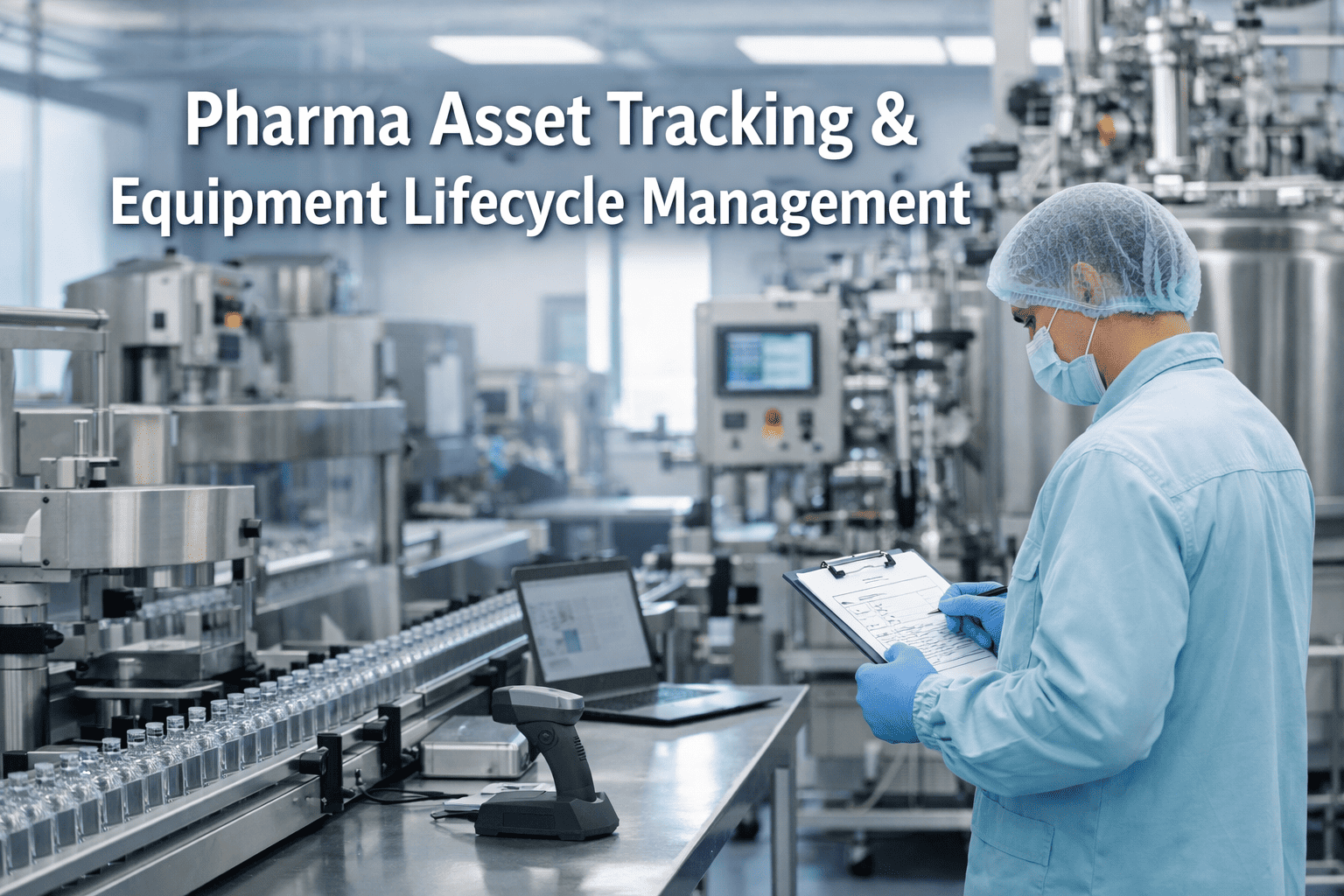
A serialization system failure at a pharmaceutical manufacturer — without real-time barcode verification, without aggregation chain compliance, without track-and-trace audit records — costs an average DSCSA violation of $487,000 per incident, plus supply chain recall expenses that reach $8M to $15M. In 2023, FDA enforcement actions against pharma serialization non-compliance increased 62 percent. The serialization infrastructure exists. The barcode printers run. The verification cameras are installed. The failure is in the connection — between what happens at the line and what is documented in an auditable, FDA-ready record. That gap is exactly what Oxmaint closes.
Pharmaceutical serialization compliance requires documented control of four critical systems: barcode print verification for every serialized unit, real-time aggregation chain validation from line to pallet, track-and-trace visibility across distribution channels, and FDA-audit-ready documentation of all system downtime and remedial actions. Oxmaint digitizes every barcode verification, every aggregation transaction, and every equipment maintenance event — connecting print-line execution to auditable records automatically, without manual data transfer.
The Four Serialization Systems Where Pharma Carries Highest Compliance Risk
Each system has its own FDA requirement, its own documentation obligation, and its own failure mode when management is manual.
Every serialized unit requires real-time barcode verification capture at print point. Oxmaint links vision system verification results, print quality inspection logs, and failed unit disposition records against line equipment automatically. Print downtime is logged with root cause and remediation timestamp.
Pharmaceutical aggregation — unit to case to pallet — must be documented at each step with timestamp and system verification. Oxmaint captures aggregation transactions in real time from equipment, validates parent-child serial relationships, and produces FDA-ready case and pallet level documentation. Aggregation system downtime is isolated and documented separately from print downtime.
Any serialization system downtime exceeding 4 hours requires FDA notification and documented remediation. Oxmaint monitors all serialization-critical equipment (print engine, verification camera, aggregation server, network connectivity) and automatically logs downtime events with maintenance action records linked to the affected batch.
Barcode printers, vision verification systems, and aggregation equipment require scheduled preventive maintenance and annual calibration. Oxmaint generates maintenance work orders with equipment-specific calibration intervals, captures calibration certificates, and links all maintenance history against FDA audit queries by batch or date range.
Every Barcode. Every Aggregation. Every Downtime Event. Captured at Source — Not Reconstructed Later.
Oxmaint captures barcode verification readings, aggregation transactions, and equipment maintenance events on the production line — completing FDA-ready documentation at time of execution, not after shift-end data entry.
Oxmaint Serialization Deployment — Implementation Roadmap
A structured deployment moves your pharmaceutical operation from manual serialization logging to a fully operational digital track-and-trace system.
Every print engine, vision verification system, aggregation platform, and track-and-trace server registered in Oxmaint with equipment classification, system dependency mapping, and calibration requirement schedule. Print line equipment linked to barcode verification rules and aggregation validation logic.
Barcode verification capture, aggregation transaction logging, and downtime event management configured as automated Oxmaint workflows. Direct API integration with print engines and vision systems enables real-time data capture without manual entry. System downtime monitoring activated with 4-hour threshold alerts for FDA-reportable events.
Real-time dashboard shows barcode verification pass/fail rates, aggregation chain completeness, system downtime history, and equipment calibration status. FDA audit export package configured to produce serialization records by batch, date range, or product code. Automated alerts for overdue equipment maintenance and expiring calibrations.
Oxmaint tracks serialization system health across all production lines with daily compliance KPI reporting. In recall event, product traceability queries execute in minutes — unit-level serial identification against distribution channels completed in under 2 hours. All maintenance and equipment history retrievable per affected batch for FDA correspondence.
Pharmaceutical Serialization KPI Benchmarks
Client Results — Pharma Manufacturers Using Oxmaint Serialization Management
From 97% to 99.8% Barcode Compliance — in 60 Days
Pharmaceutical manufacturers that move from manual serialization logging to Oxmaint's digital track-and-trace system achieve FDA audit readiness within the first compliance cycle.
Oxmaint Serialization Platform Features
Vision system integration captures barcode quality readings at print point. Failed units automatically logged with image documentation and disposition tracking.
Parent-child serial relationships validated at each aggregation level. Oxmaint prevents pallet closure until all unit and case serials are verified linked.
Automated 4-hour threshold alerts for serialization system downtime. Downtime logs exportable for FDA 24-hour notification requirement with remediation documentation.
Annual calibration schedules managed per equipment with certificate archival. Maintenance history linked to affected product batches for FDA audit traceability.
Serialization records by batch, date range, or product code exportable in FDA-required format. Recall traceability across distribution channels completed in under 2 hours.
All serialization records stored with audit trail, electronic signatures, and data integrity controls required by 21 CFR Part 11 for FDA submissions.
Frequently Asked Questions
Close the Serialization Documentation Gap Before the Next FDA Inspection
Digital barcode verification, aggregation chain validation, equipment calibration tracking, and FDA-ready audit exports — all live in Oxmaint within 4 to 6 weeks. No IT project required. Book a demo with your quality or operations leader and see the serialization workflow configured for your print lines.