AI-Powered Wearables and Smart Home Devices in Healthcare: Real-Time Patient Insights

By Jack Edwards on March 13, 2026

ai-wearables-smart-home-medical-devices-real-time-patient-insights

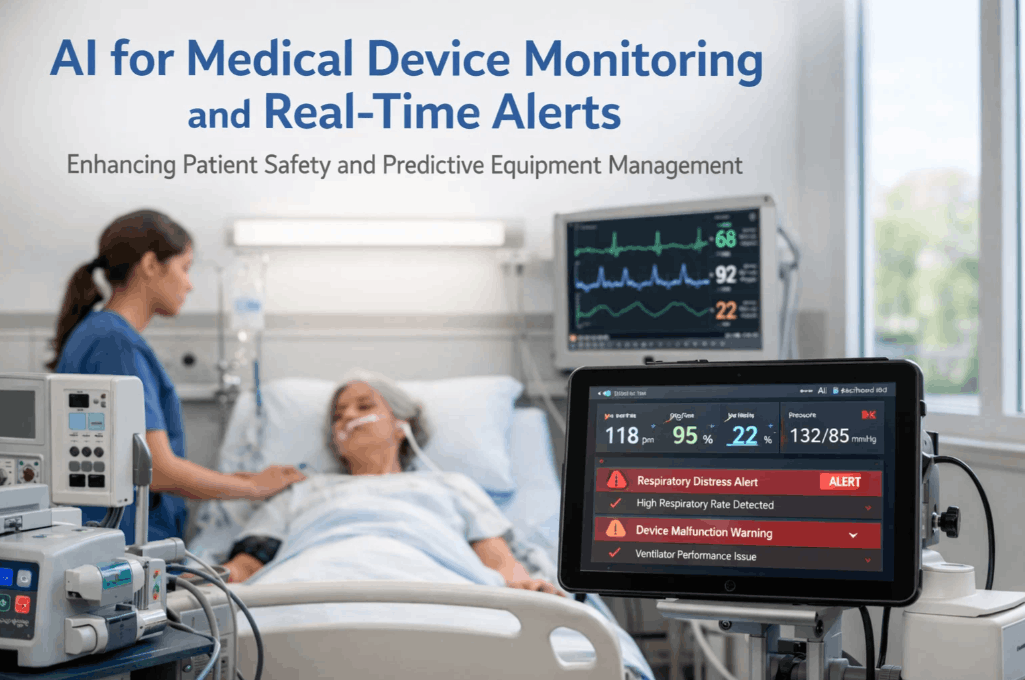
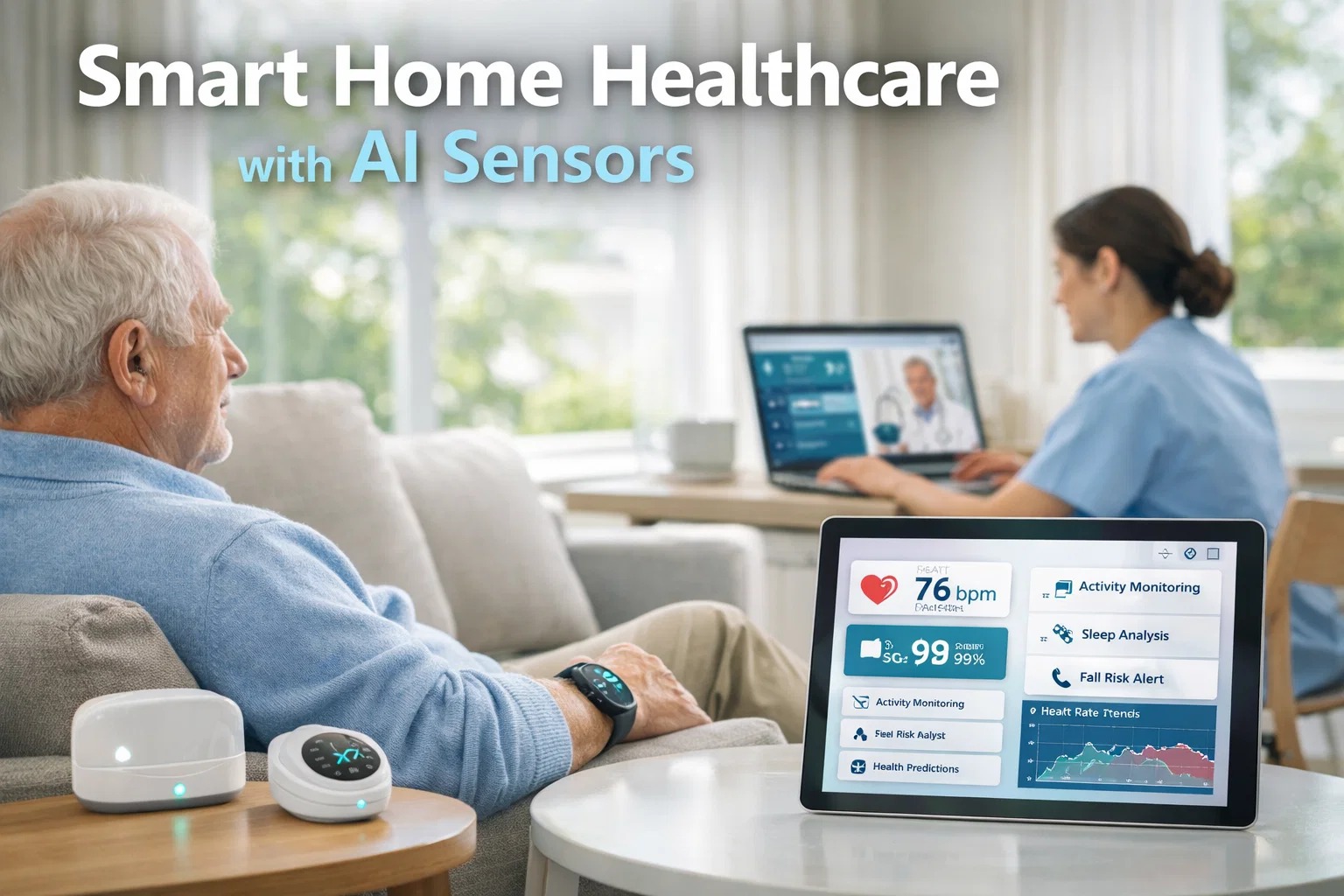
Intelligent wearables and home medical devices are transforming how clinicians monitor patients outside clinical settings — streaming continuous vitals, behavioral signals, and environmental data into AI systems that flag deterioration before symptoms appear. This is connected care at scale, and it demands infrastructure that is reliable, auditable, and integrated.

72%
of hospitals report unplanned device downtime disrupts patient monitoring programs
4.8x
higher cost of emergency device repair vs. scheduled preventive maintenance
38%
of wearable device failures go unlogged, creating compliance gaps in patient care
$2.1B
projected global market for connected home medical devices by 2027

What Are Intelligent Wearables and Home Medical Devices?

Intelligent wearables are sensor-equipped devices worn or used by patients at home — continuously capturing biometric data like heart rate, SpO2, glucose levels, sleep cycles, and activity patterns. Home medical devices extend this to stationary equipment: connected infusion pumps, smart nebulizers, remote ECG patches, blood pressure monitors, and glucose meters that sync automatically to clinical systems.

Together, these form a continuous data pipeline from patient to clinician — eliminating the gaps between scheduled appointments. AI layers on top interpret trends, surface anomalies, and trigger alerts before a condition escalates. The result is proactive intervention, not reactive crisis management. Want to experience how Oxmaint helps healthcare facilities manage this device ecosystem — start a free trial and see what connected asset management looks like in practice.

Wearable Devices
Smartwatches, ECG patches, continuous glucose monitors, pulse oximeters, smart clothing — all streaming physiological data in real time to cloud platforms and clinical dashboards.
Home Medical Devices
Stationary connected equipment used in patient homes — blood pressure cuffs, spirometers, weight scales, CPAP machines — transmitting readings automatically without manual entry.

How the Real-Time Patient Data Pipeline Works

From sensor to clinician, intelligent monitoring works in four integrated layers. Each layer depends on the one below it — and a failure at any layer breaks the entire chain of care.

01
Data Capture
Sensors on wearables and home devices continuously record vitals, activity, and environmental signals at intervals as short as every 15 seconds.
02
Transmission
Data streams via Bluetooth, Wi-Fi, or cellular to secure cloud platforms — HL7 FHIR and DICOM protocols ensure interoperability with hospital EHR systems.
03
AI Analysis
Machine learning models score each data point against the patient's baseline and population benchmarks — identifying deviations that precede clinical deterioration by hours or days.
04
Clinical Action
Prioritized alerts reach care teams through dashboards and mobile notifications — with enough context to act immediately without ordering unnecessary tests.
Manage Every Connected Device Across Your Healthcare Portfolio

From wearables to imaging equipment, Oxmaint gives your team full asset visibility, preventive maintenance scheduling, and compliance-ready documentation — all in one platform.

Eight Wearable and Home Device Categories Reshaping Patient Monitoring

Clinical programs today deploy across a diverse range of connected device types. Each category generates distinct data streams requiring different maintenance protocols and calibration schedules.

CARDIAC
ECG Patches and Holter Monitors
Continuous 14-day cardiac rhythm monitoring outside the clinic. Detects AFib, arrhythmias, and silent ischemia in patients who never triggered an event during a standard 24-hour Holter test.
METABOLIC
Continuous Glucose Monitors
Reads interstitial glucose every 5 minutes without fingerprick. AI models predict hypo- and hyperglycemic events up to 30 minutes in advance, enabling pre-emptive intervention.
RESPIRATORY
Smart Pulse Oximeters and Spirometers
Track SpO2 and lung function in COPD, asthma, and post-COVID patients at home. Downward trends in FEV1 readings trigger outpatient review before acute exacerbation develops.
NEUROLOGICAL
EEG Headbands and Sleep Monitors
Capture brainwave activity during natural sleep cycles at home. Used in epilepsy management, sleep disorder diagnosis, and post-stroke cognitive rehabilitation programs.
CARDIOVASCULAR
Connected Blood Pressure Monitors
Automated readings on schedule with zero manual entry. AI identifies white-coat effect vs. true hypertension using home vs. clinic trend comparison over a rolling 90-day window.
MOBILITY
Smart Insoles and Gait Sensors
Measure foot pressure distribution, step symmetry, and balance in real time. Used in fall-risk assessment for elderly patients and recovery tracking in post-surgical orthopedic programs.
INFUSION
Connected Infusion Pumps
Home infusion therapy with remote dose verification and alarm logging. Clinicians can confirm delivery compliance and flag occlusion errors without a home visit.
SLEEP
Smart CPAP and BiPAP Devices
Stream nightly adherence data, AHI scores, and mask leak rates to sleep labs. AI flags patients with declining therapy effectiveness before they present with daytime symptoms.

What Breaks Down in Real-World Connected Care Programs

The technology works. The operational infrastructure around it often does not. These are the four failure points that erode ROI in wearable and remote monitoring programs.

Device Failures Go Unreported
38% of wearable failures are never logged. When a patient's CGM loses signal or a BP cuff fails to sync, the gap in data goes unnoticed until a clinical incident. There is no maintenance record, no calibration log, no asset history.
No Preventive Maintenance Scheduling
Most healthcare teams have zero formal PM schedules for home devices. Battery replacements, sensor recalibrations, and firmware updates happen reactively — or not at all. This means patients receive care from equipment operating outside specification.
Compliance Documentation Is Manual
Audit-readiness requires device serial numbers, calibration dates, technician sign-offs, and service histories. Without a CMMS, this lives in spreadsheets, email threads, and paper logs — none of which survive regulatory inspection.
CapEx Planning Is Guesswork
Hospital networks deploying thousands of wearables have no system tracking device age, fault frequency, or remaining useful life. Replacement budgets are based on manufacturer recommendations, not actual asset condition — leading to both premature replacements and catastrophic late failures.

These are operational problems, not technology problems. The solution is asset management infrastructure built for healthcare device fleets. If your program is scaling and you need control, book a demo with our team to walk through how Oxmaint is deployed in connected care environments.

Stop Managing Medical Device Fleets on Spreadsheets

Oxmaint gives you a complete asset registry, automated PM schedules, calibration tracking, and audit-ready reports — purpose-built for healthcare operations teams managing connected devices at scale.

How Oxmaint Supports Connected Healthcare Device Management

Oxmaint is a modern CMMS built for multi-site commercial and healthcare portfolios. For teams managing fleets of wearables, home devices, and monitoring systems, it provides the operational backbone that patient data programs depend on.

1
Full Asset Registry with Condition Scoring
Every device — from individual ECG patches to CPAP units assigned to specific patients — is registered with serial number, purchase date, calibration history, fault log, and condition score. Nothing falls through the cracks.
2
Automated Preventive Maintenance Scheduling
PM tasks for battery replacement, sensor recalibration, firmware updates, and device sterilization are scheduled automatically based on manufacturer intervals, usage hours, or cycle counts — whichever threshold triggers first.
3
Work Order Management with Full Technician History
Every service event is logged against the asset record — technician, timestamp, parts used, and resolution notes. Digital signatures make every maintenance action audit-ready from day one.
4
Rolling CapEx Forecasting for Device Fleets
5 to 10 year replacement forecasts built on actual asset condition, fault frequency, and manufacturer end-of-life data — not guesswork. Finance teams get defensible numbers. Operations teams get budget certainty.
5
IoT and SCADA Integration for Real-Time Alerts
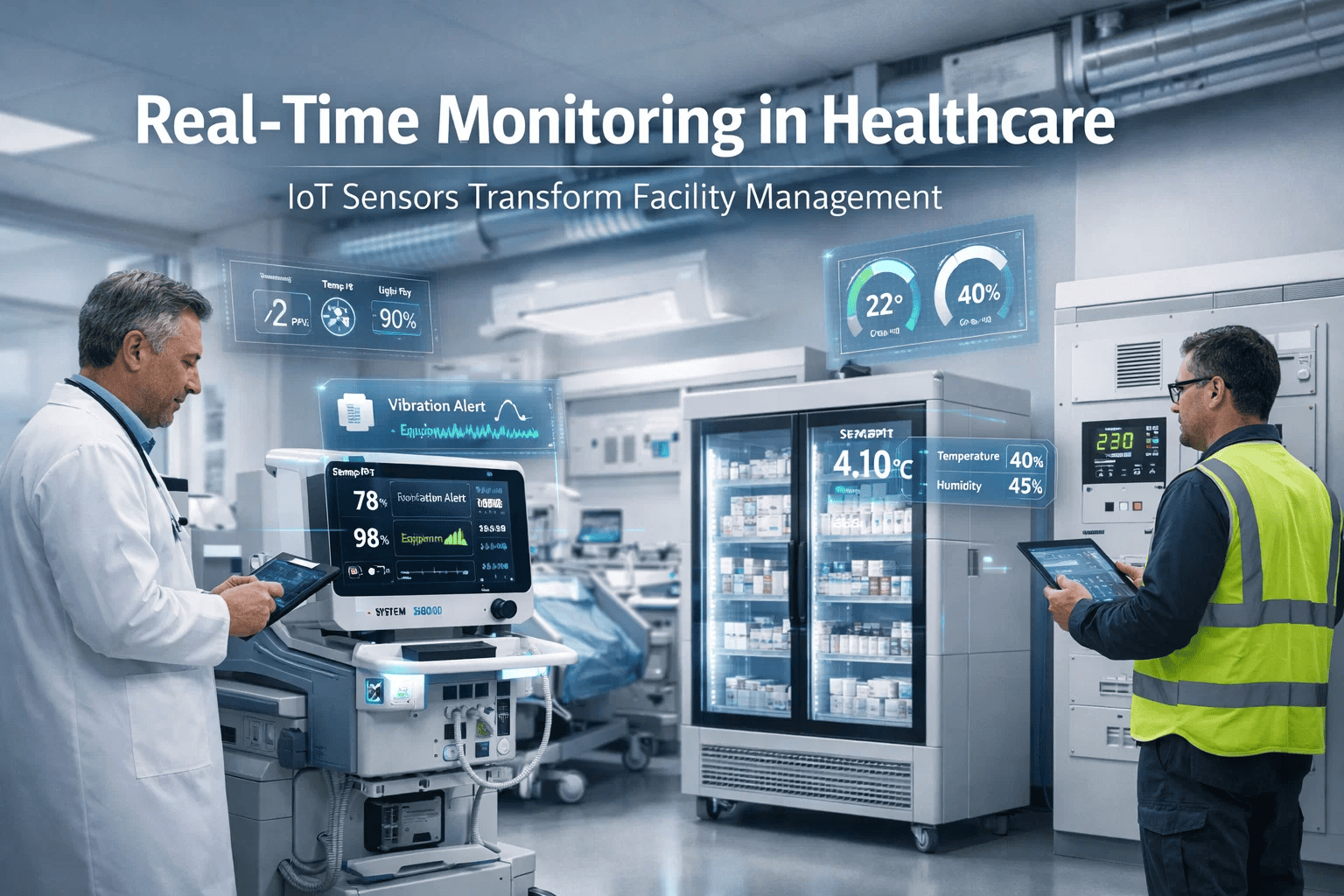
Connect device telemetry directly to Oxmaint. When a sensor reports an out-of-range reading or a device goes offline, a maintenance work order is triggered automatically — before the clinical team notices a data gap.
6
Multi-Site Portfolio Reporting
Hospital networks, home care agencies, and telehealth providers managing devices across dozens of locations get unified dashboards — compliance rates, PM adherence, fault frequency, and asset condition at the portfolio level.

Healthcare operations leaders using Oxmaint report a 34% reduction in unplanned device downtime within the first 90 days of deployment. Ready to see the numbers for your fleet — start a free 30-day trial with no setup fees and no onboarding delays, and get your connected care infrastructure under control today.

Reactive Device Management vs. Planned Asset Management

The difference between reactive and planned device management is not just operational — it is financial, clinical, and regulatory. Here is what the data shows.

Factor Reactive Management Planned Asset Management
Device Downtime Unpredictable — discovered when a patient misses a reading Scheduled maintenance windows with zero clinical disruption
Repair Cost 4.8x higher due to emergency callouts and expedited parts Planned parts procurement reduces cost by up to 60%
Compliance Risk Manual logs, missing calibration records, audit failures Digital signatures and automated logs — always audit-ready
Calibration Tracking Calendar reminders or spreadsheets — frequently missed Automated scheduling tied to device usage hours and cycles
CapEx Planning Replacement based on visible failure or vendor push Condition-based lifecycle forecasting with 5-year models
Patient Data Continuity Gaps when devices fail mid-monitoring cycle Predictive alerts prevent failures before data loss occurs
Portfolio Visibility Per-site silos with no consolidated view Unified dashboard across all sites and device categories
Technician Efficiency Reactive dispatches consume 3x more labor hours per event Planned routes reduce travel time and eliminate repeat visits

The ROI of Getting Connected Device Management Right

Healthcare operations teams that implement structured asset management for their connected device fleets see measurable outcomes across cost, compliance, and clinical performance within the first year.

34%
Reduction in Unplanned Device Downtime
Achieved within 90 days of deploying structured PM schedules on connected device fleets
60%
Lower Reactive Repair Costs
Planned parts procurement and scheduled callouts eliminate emergency labor premiums
100%
Audit-Ready Documentation
Digital signatures and automated logs ensure every device record is complete and retrievable on demand
3x
Faster Technician Response
IoT-triggered work orders eliminate manual fault reporting and reduce time-to-repair by an average of 67%

These are not projections — they reflect outcomes from healthcare operations teams using Oxmaint across multi-site portfolios managing wearables, home devices, and clinical equipment in parallel. If your program is growing and you need this level of operational control, book a demo and walk through a live environment built for your device category.

Wearable and Connected Device Programs Across Key Markets

Regulatory requirements and market drivers differ by region. Oxmaint is deployed across healthcare portfolios in six major markets — each with distinct compliance and operational demands.

USA
FDA 510(k) clearance requirements for home medical devices demand rigorous maintenance documentation. OSHA standards for device management in clinical settings require audit trails that manual systems cannot provide consistently.
UK
NHS Digital's Connected Medical Devices framework mandates traceability across device lifecycles. Building Safety Act compliance for NHS facility equipment creates additional documentation requirements that Oxmaint handles automatically.
UAE
Vision 2030 smart hospital initiatives are driving rapid adoption of connected home care devices. The Dubai Health Authority requires medical device registries that align with Oxmaint's asset hierarchy model out of the box.
Australia
High labor costs make preventive maintenance ROI exceptionally strong in the Australian market. A single avoided emergency callout for a connected device fleet can recover three months of platform subscription cost.
Built for the Complexity of Healthcare Asset Management

Oxmaint gives you a unified platform for asset registries, PM scheduling, work order management, CapEx forecasting, and compliance documentation — with no heavy implementation fees and no long onboarding timelines.

Frequently Asked Questions

How does Oxmaint integrate with existing hospital IoT infrastructure?
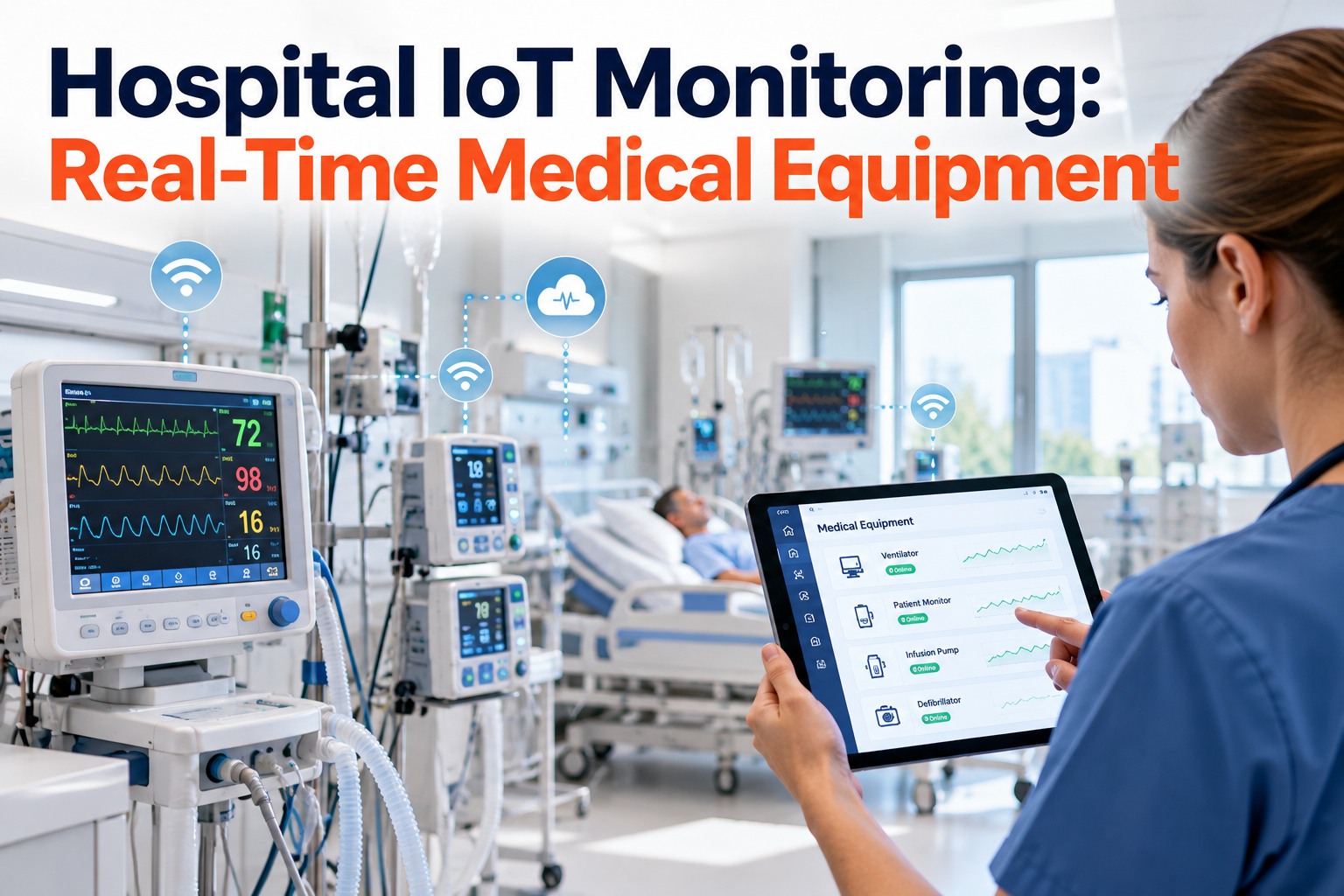
Oxmaint connects to IoT and SCADA systems via standard API integrations. Device telemetry — including connectivity status, battery levels, sensor readings, and fault codes — feeds directly into the CMMS. When a threshold is breached, a maintenance work order is automatically created and assigned. No custom development is required for most connected device ecosystems commonly deployed in healthcare environments.
Can Oxmaint manage a fleet that spans wearables, home devices, and in-facility clinical equipment simultaneously?
Yes. Oxmaint uses a five-level asset hierarchy — Portfolio, Property, System, Asset, and Component — that accommodates every device category in a single unified registry. A hospital network can manage bedside monitors, wearables in a home care program, and CPAP devices assigned to specific patients, all within the same platform and reporting framework.
What compliance documentation does Oxmaint generate automatically?
Every maintenance event, calibration, inspection, and repair is logged automatically with technician digital signatures, timestamps, parts used, and resolution notes. Reports can be exported in formats suitable for FDA, NHS, TGA, and DHA regulatory submissions. GMP-compliant inspection workflows with digital sign-off are built into the platform standard, not available as an add-on.
How quickly can a healthcare operations team get Oxmaint deployed?
Most teams are operational within days, not months. Oxmaint is designed for fast deployment with no heavy implementation fees or extended onboarding timelines. Asset data can be bulk imported from existing spreadsheets or legacy CMMS systems. Mobile-first design means technicians are productive from day one without extensive training programs. A free 30-day trial lets your team validate the platform in your own environment before any commitment.
GET STARTED
Your Connected Device Fleet Deserves Better Than Spreadsheets

Healthcare operations leaders managing wearables, home medical devices, and connected monitoring programs need infrastructure that matches the sophistication of the technology they deploy. Oxmaint gives you full asset visibility, automated PM scheduling, IoT-triggered work orders, calibration tracking, and investor-grade CapEx forecasting — all in one platform built for multi-site healthcare portfolios.

Teams using Oxmaint report a 34% reduction in unplanned device downtime, 60% lower reactive repair costs, and 100% audit-ready documentation from day one. No heavy implementation fees. No months-long onboarding. Start managing your connected care infrastructure the way it should be managed.
Share This Story, Choose Your Platform!