Deferred maintenance in a pharmaceutical manufacturing facility is not a cost avoidance strategy — it is a liability that compounds. A single batch loss from an uninspected HVAC system costs more than three years of preventive maintenance on that system. An FDA Warning Letter triggered by documentation gaps in equipment calibration records can halt production for months and trigger consent decrees that outlast the executive team that approved the deferral. Oxmaint replaces deferred-maintenance cycles with scheduled, documented, audit-ready maintenance programs — before the inspection, not after. Book a demo to see how Oxmaint closes maintenance backlogs and builds FDA-defensible records for your facility.
Deferred maintenance in pharmaceutical facilities creates compounding financial, regulatory, and operational exposure across four domains: batch integrity loss from utility and equipment failures, FDA enforcement triggered by calibration and PM documentation gaps, contamination risk from unserviced HVAC and purified water systems, and equipment replacement cost acceleration from deferred preventive work. Oxmaint digitizes the full maintenance program — scheduling, execution, documentation, and audit export — eliminating the gap between work performed and records available for inspection.
Four Cost Categories Where Deferred Maintenance Compounds
Each category represents a distinct financial and regulatory exposure — and each accelerates the others when maintenance investment is reduced. Book a demo to see how Oxmaint quantifies your current backlog exposure across all four.
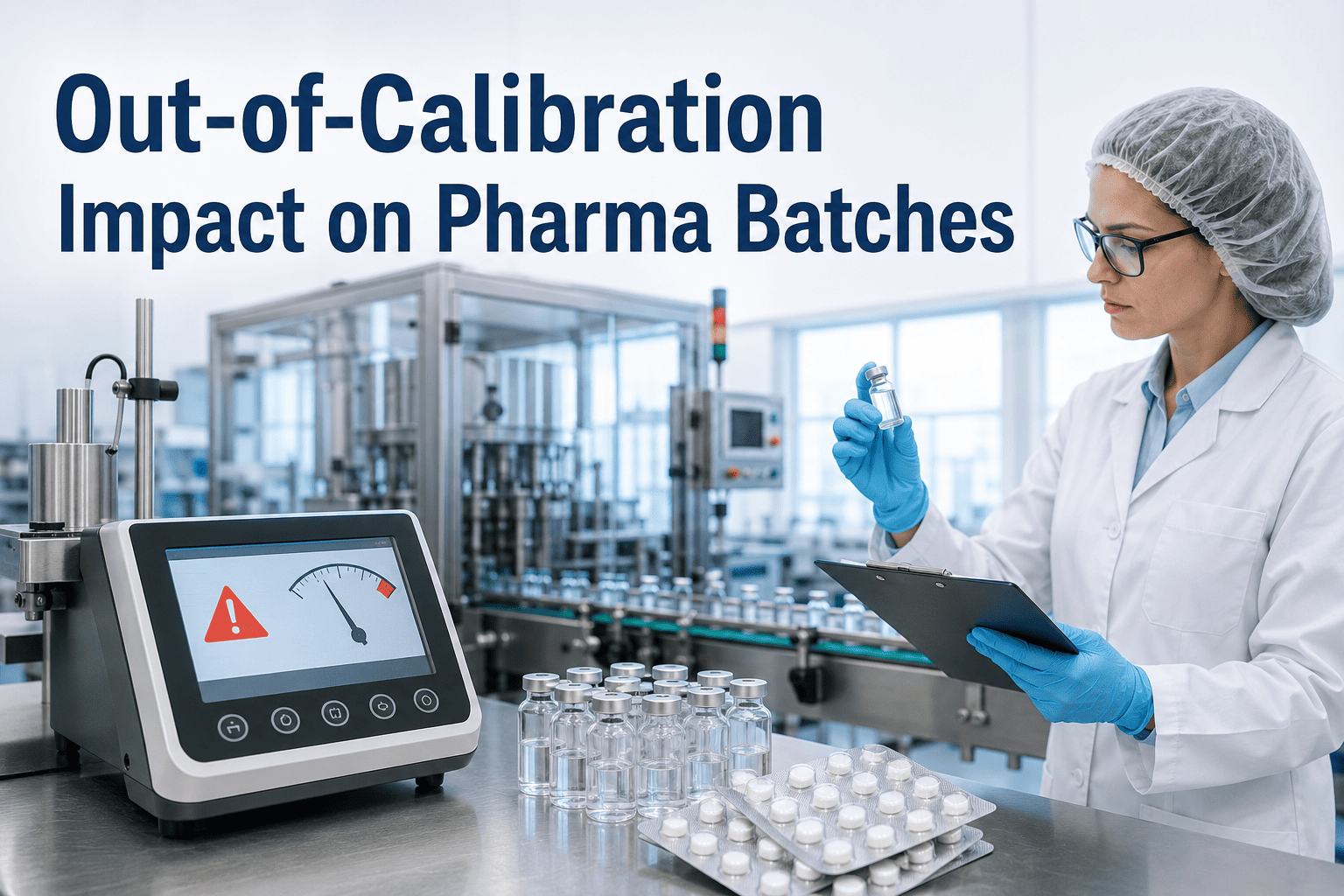
HVAC systems, purified water loops, compressed air systems, and autoclave equipment that miss scheduled servicing create uncontrolled environmental conditions. A single excursion — differential pressure loss in a cleanroom, endotoxin spike in a WFI loop, particulate contamination from a degraded HEPA filter — invalidates in-process batches. The deferred maintenance event that caused the excursion is rarely the only item overdue; batch investigations typically reveal three to seven additional overdue PMs on connected systems.
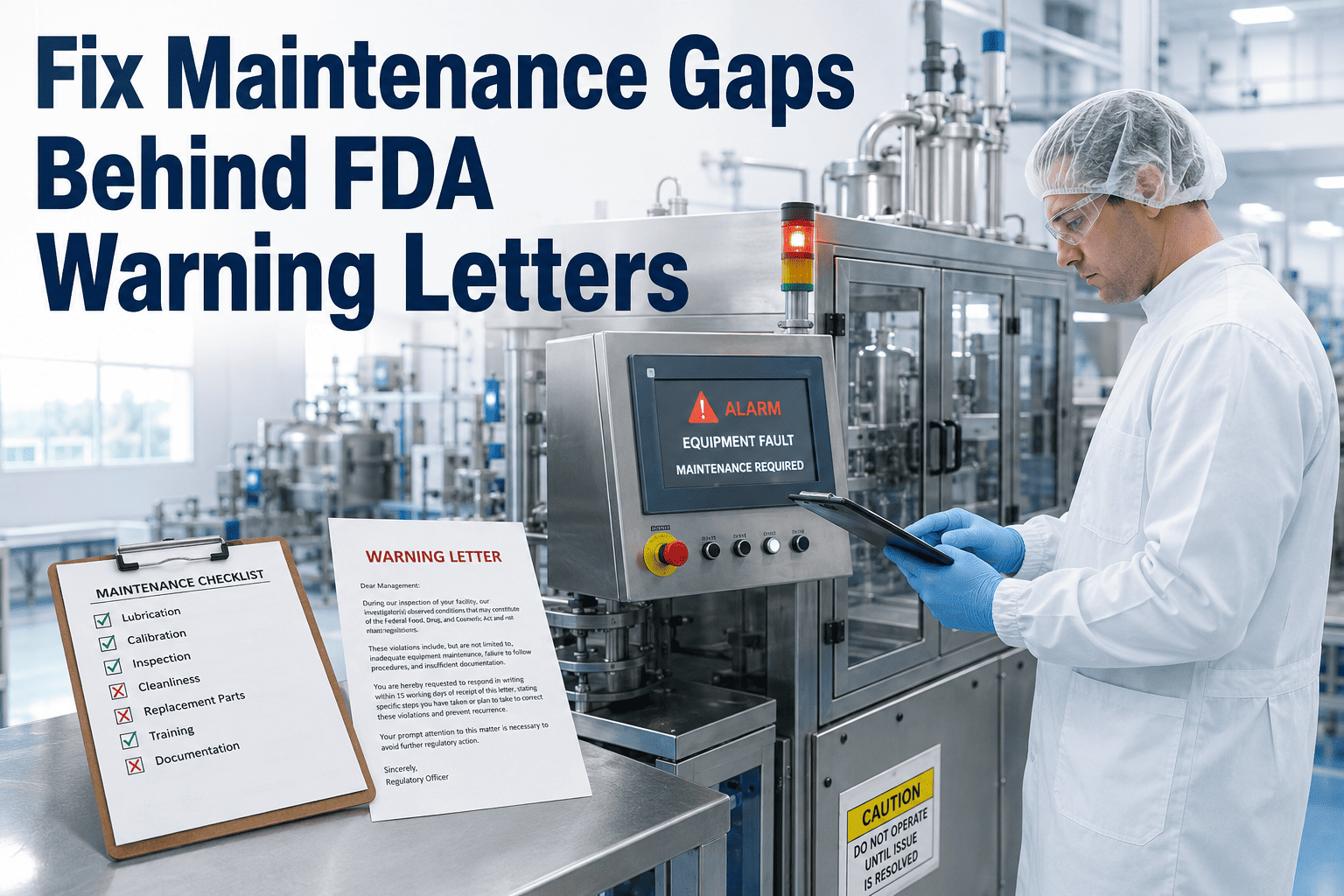
FDA investigators do not distinguish between maintenance that was performed but not documented and maintenance that was not performed. Overdue calibration records, incomplete PM work orders, and missing equipment qualification updates all present identically in an inspection: as GMP violations. A cluster of maintenance documentation gaps in a Form 483 escalates to Warning Letter when the agency determines the facility lacks systematic controls — not just isolated oversights. Warning Letters require written responses, third-party audits, and documented corrective action programs that typically run 12 to 24 months.
HVAC filter replacement, cleanroom pressure cascade verification, purified water system sanitization, and compressed air oil trap servicing are maintenance activities with direct contamination consequence when deferred. EU GMP Annex 1 (2022 revision) places specific responsibility on maintenance systems to demonstrate HVAC and cleanroom integrity as an ongoing program — not a one-time qualification. Contamination events traced to deferred utility maintenance create product recall exposure, regulatory market action, and reputational risk with the patient population the facility serves.
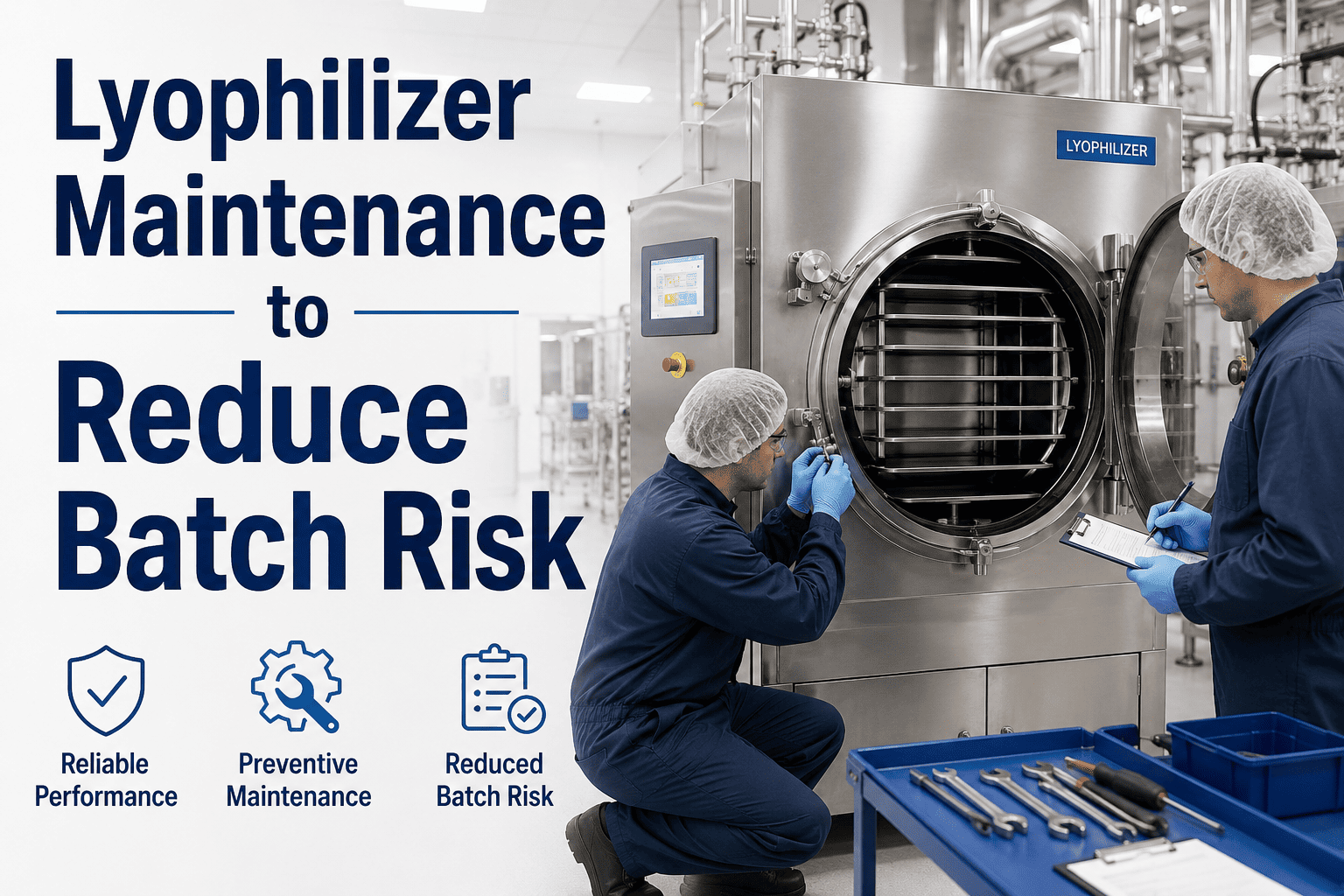
Pharmaceutical equipment — tablet presses, lyophilizers, fermenters, filling lines — carries capital replacement costs of $400K to $4M per asset. Preventive maintenance programs extend equipment life by 30 to 60 percent versus run-to-failure operation. Deferred maintenance that results in catastrophic failure triggers unplanned capital expenditure, revalidation costs, and — where the equipment supports a single product line — supply disruption with regulatory consequence. The deferred maintenance saving is typically 2 to 4 percent of equipment replacement value; the failure cost is 40 to 80 percent.
Every PM. Every Calibration. Every Inspection Record — Documented at Execution.
Oxmaint closes the gap between maintenance performed and maintenance documented — giving your facility FDA-defensible records at the point of work, not assembled under pressure before an inspection. Book a demo to see the pharmaceutical PM and calibration workflow configured for your facility.
Deferred Maintenance Backlog — Industry Benchmarks
Oxmaint Deployment — Pharma Maintenance Backlog Recovery
Every GMP-critical asset — HVAC, purified water, autoclaves, manufacturing equipment, utilities — registered in Oxmaint with PM frequency, calibration interval, and regulatory classification. Existing backlog items imported and prioritized by regulatory risk and production impact. Overdue calibration and PM items surfaced immediately for VP-level visibility.
Preventive maintenance schedules and calibration intervals configured per asset in Oxmaint — with automated work order generation, mobile field execution, and electronic sign-off. Technician-level task documentation captured at the equipment, not transcribed after. Book a demo to see PM schedule configuration for your critical pharma assets.
Live PM compliance rate, calibration currency, and backlog trending visible to plant managers and VP Operations — with automated escalation alerts at 7-day and 1-day intervals before critical PMs are due. Overdue items escalated to supervisor level automatically without manual follow-up.
All PM records, calibration certificates, work order history, and corrective maintenance documentation exportable in FDA inspection-ready format — assembled in under 2 hours, not weeks. Ongoing 21 CFR Part 211 documentation compliance maintained automatically through Oxmaint's record retention and access control framework.
Operational Impact — Pharma Facilities Using Oxmaint
From 61% to 97% PM Compliance — Without Adding Headcount
Pharma facilities that move from paper PM systems to Oxmaint close maintenance documentation gaps before the next FDA inspection — not in response to a 483. Book a demo to see your current backlog exposure quantified in the first deployment session.
Platform Capabilities for Pharma Maintenance Programs
Automated work order generation for all GMP-critical assets — HVAC, utilities, manufacturing equipment — with frequency-based triggers, technician assignment, and electronic sign-off on mobile.
Instrument calibration schedules managed per asset — automated alerts before due dates, calibration certificate upload and retention, currency status visible across the full instrument register.
All maintenance records, PM work orders, calibration history, and corrective action closures exportable in 21 CFR Part 211-compliant format — assembled in under 2 hours for any inspection.
Live backlog dashboard with overdue PMs ranked by GMP risk tier — giving VP Operations and Plant Managers immediate visibility into regulatory exposure from deferred maintenance items.
Corrective and preventive action records generated directly from maintenance failures — with root cause documentation, closure evidence, and escalation alerts when CAPA deadlines are missed.
External service provider work orders managed in Oxmaint with same documentation standard as internal maintenance — service reports, qualification certificates, and regulatory documentation centralized per asset.
Frequently Asked Questions
Stop Deferring. Start Documenting. Protect Your Next Batch.
Oxmaint gives pharmaceutical operations executives a complete, FDA-defensible maintenance program — PM scheduling, calibration management, backlog visibility, and audit-ready documentation — deployed in 4 to 6 weeks without an IT project. Book a strategic demo and see how your current maintenance exposure is quantified in the first session.