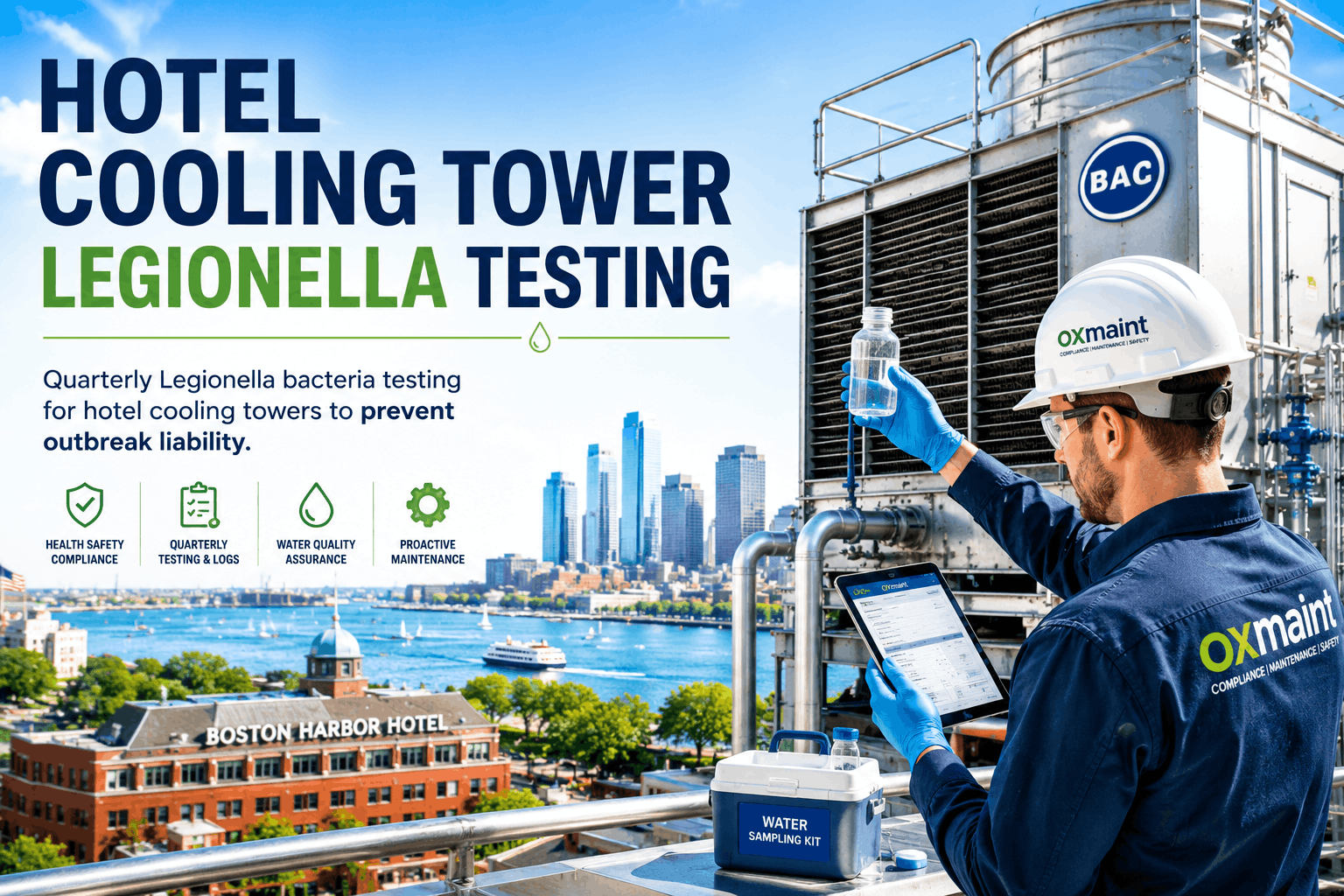
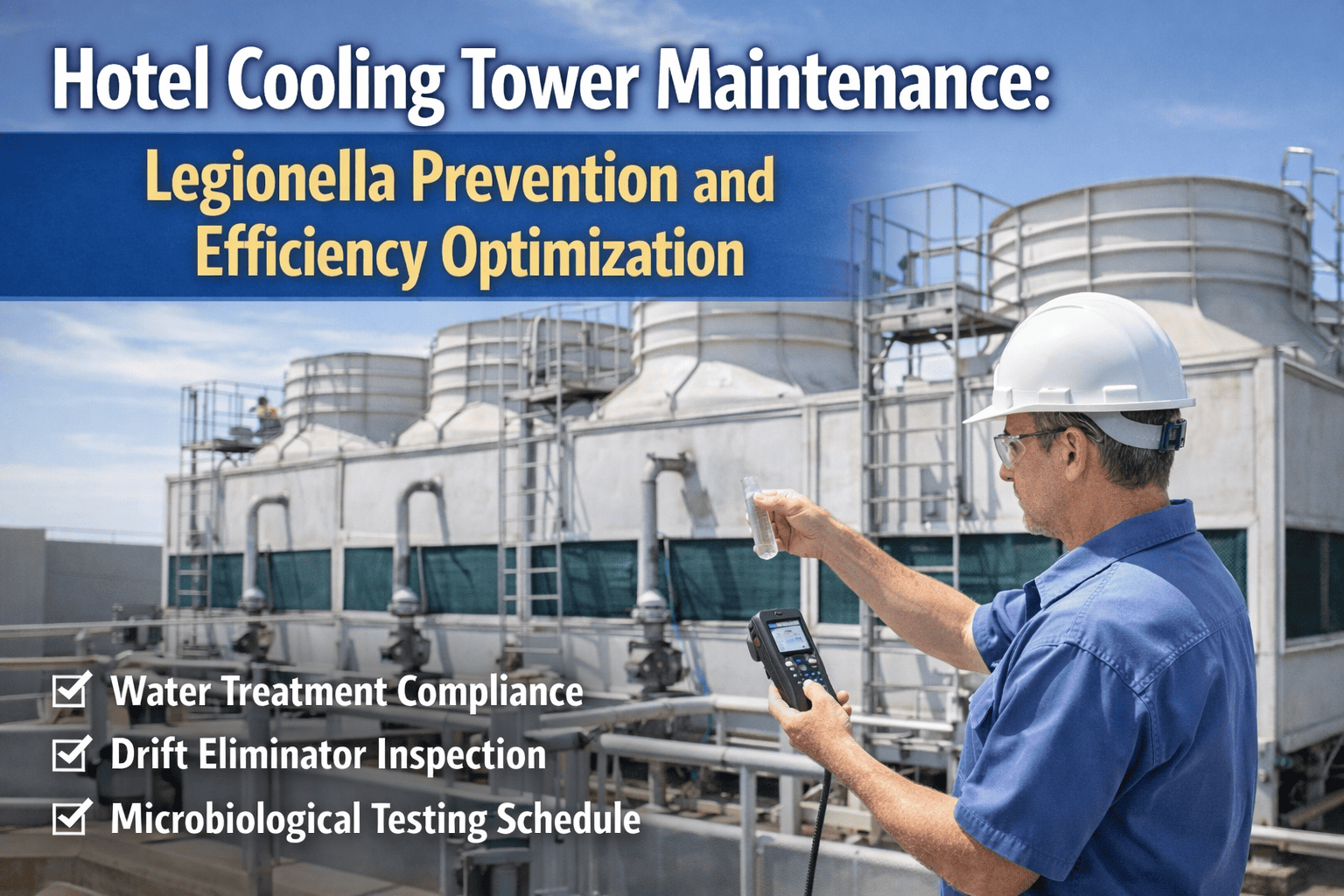
Legionella bacteria in hotel cooling towers causes outbreak liability, guest illness, and regulatory fines—not because cooling tower water is inherently dangerous, but because quarterly legionella bacteria testing and monthly biocide treatment are skipped. The CDC estimates 10,000+ pneumonia cases annually from legionella exposure, with hospitality facilities as the top source. A single legionella outbreak costs hotels $2.8 million in litigation, remediation, reputation damage, and lost bookings. Legionella prevention requires systematic quarterly water sampling, biocide injection verification, drift eliminator inspection, and health department compliance logging. OxMaint's cooling tower legionella testing module schedules quarterly bacteria testing, tracks biocide treatment cycles, logs water temperature and pH, and maintains the audit trail required by state health departments—ensuring every cooling tower passes legionella prevention compliance before the next seasonal peak.
HOSPITALITY · WATER SAFETY · LEGIONELLA PREVENTION · 2026
Hotel Cooling Tower Legionella Bacteria Testing Compliance
Quarterly legionella testing, biocide treatment logging, and health department documentation—all automated. Prevent outbreak liability with systematic cooling tower water testing, drift eliminator maintenance, and compliance audits that keep your hotel safe and legal.
10K+Annual legionella pneumonia cases in USA from contaminated water systems including hospitality facilities
$2.8MAverage outbreak liability cost including litigation, remediation, and lost bookings per hotel incident
45 daysLegionella bacteria incubation period—why monthly monitoring and quarterly testing is critical for early detection
3xCost multiplier for emergency water remediation vs. quarterly preventive testing
What Cooling Tower Legionella Testing Actually Prevents in 2026
Legionella bacteria grows in warm water between 77°F and 108°F—the exact temperature range of cooling tower systems. The bacteria becomes aerosolized in cooling tower drift, travels into guest rooms through intake vents, and causes Legionnaires' disease within 2-10 days. Quarterly water sampling identifies legionella colonies at <1 CFU/mL before they reach infectious levels (>1,000 CFU/mL). Biocide treatment verification ensures oxidizing biocides like sodium hypochlorite kill bacteria before drift release. Drift eliminator inspection prevents water droplet escape carrying bacteria. Water temperature and pH logging confirms conditions that inhibit legionella growth. Health department compliance documentation proves your hotel maintained mandatory testing records if an outbreak occurs. OxMaint's cooling tower legionella testing platform logs every water sample result, tracks biocide concentration and injection dates, records temperature/pH trends, schedules drift eliminator cleaning, and maintains the audit trail required by ASHRAE 188 standards and state health departments—turning legionella prevention from an afterthought into a documented compliance system.
Cooling Tower Water Testing Capability Map—What Each Inspection Prevents
Section 1: Legionella Bacteria Detection and Risk Factors
Legionella pneumophila thrives in water systems where conditions allow unrestricted growth: warm water (optimal 35-46°C or 95-115°F), biofilm accumulation on cooling tower surfaces, sediment harboring bacteria, and stagnant zones with low chlorine residual. Cooling towers create the perfect environment—warm circulating water, constant drift release, and seasonal operation that leaves water stagnant in winter. Quarterly water sampling using EPA-approved legionella culture methods identifies bacterial presence before it reaches levels capable of causing infection. Lab analysis measures CFU/mL (colony forming units per milliliter), with <1 CFU/mL being the preventive target and >1,000 CFU/mL representing outbreak risk. The bacteria becomes aerosolized in cooling tower drift—fine water droplets released into the atmosphere that travel into guest rooms through fresh air intake systems. A single inhalation of legionella-contaminated mist can cause pneumonia symptoms within 2-10 days: high fever, cough, shortness of breath, and chest pain. Immunocompromised guests, smokers, and elderly populations face 5-10x higher risk of severe infection. OxMaint's legionella detection system schedules quarterly sampling, tracks lab results against baseline trends, and alerts facility managers when results approach warning thresholds.
Quarterly water sampling identifies legionella presence before infection risk. Trend analysis prevents rapid colony growth from being discovered only after outbreak symptoms appear in guests.
Section 2: Biocide Treatment Protocols and Chemical Safety
Biocide treatment kills legionella bacteria in cooling tower water through oxidation or metabolic disruption. The most common approach—sodium hypochlorite (liquid bleach) injection—maintains 1-3 mg/L free chlorine residual that kills legionella on contact while remaining safe for system operation. Continuous biocide dosing prevents bacterial regrowth between quarterly tests. Some facilities use non-oxidizing biocides (isothiazolin compounds) for systems where continuous chlorine injection interferes with equipment materials. The key is verification: after biocide injection, a residual chlorine test must confirm that active disinfectant reaches all zones of the cooling tower basin. Dead legs, low-flow areas, and sediment zones can shelter bacteria from treatment. Monthly verification testing (free chlorine residual, oxidation reduction potential) ensures biocide effectiveness. Treatment logs documenting injection dates, chemical supplier, batch numbers, and post-treatment sample results create the audit trail required by health departments and ASHRAE 188 standards. Schedule a demo to see how OxMaint tracks biocide injection cycles and residual verification across multiple cooling towers.
Biocide Treatment Inspection Points—Monthly Verification and Quarterly Documentation
Free Chlorine Residual
Test residual chlorine weekly. Target 1-3 mg/L. Levels <0.5 mg/L fail to kill legionella; >5 mg/L corrodes equipment.
Action: Log residual; adjust injection rate if outside range
Chemical Injection Verification
Monthly test to confirm biocide pump function and correct injection rate. Verify dosing controller displays vs. actual basin chemistry.
Action: Repair or replace injection pump if delivery fails
Basin Sediment and Biofilm
Quarterly inspection of basin floor. Legionella hides in sediment and biofilm where biocide cannot reach. Visual inspection and water sampling before/after cleaning.
Action: Basin cleaning when sediment depth >2 inches
Action: Increase biocide if ORP falls below 600 mV
Treatment Record Documentation
Monthly log of biocide type, supplier, batch number, injection date/time, dosage rate, and lab result verification.
Action: Archive treatment logs for 3 years per health department requirement
System Shutdown and Winter Care
Seasonal tower shutdown requires special protocols. Draining water, cleaning basin and fill media, documenting standby period protects water quality during months of inactivity.
Action: Spring restart includes pre-season sampling and biocide boost
Section 3: Drift Eliminator Maintenance and Prevention
Cooling tower drift eliminators trap water droplets before they escape to the atmosphere, preventing bacteria-laden mist from entering guest room ventilation systems. Modern drift eliminators achieve 99.9% water droplet capture efficiency, but only when clean and properly maintained. As bacterial biofilm, mineral deposits, and algae accumulate on drift eliminator surfaces, capture efficiency drops to 50-70% or lower. Bacteria can penetrate degraded drift eliminator media. Quarterly drift eliminator inspection checks for visual damage, clogging, sediment accumulation, and proper water flow through elimination zones. When drift elimination efficiency falls below acceptable levels, the unit requires cleaning or replacement—a procedure that must occur while the cooling tower is offline. Drift eliminator cleaning uses low-pressure water spray (>100 PSI risks damage) to dislodge biofilm and mineral deposits without harming the polypropylene or cellular plastic media. After cleaning, visual inspection confirms restored water flow distribution and elimination efficiency. OxMaint's drift eliminator tracking system schedules quarterly inspections, logs cleaning dates and methods, alerts facility managers to deterioration trends, and tracks replacement schedules to ensure drift elimination efficiency remains above 99%.
Quarterly Inspection
Visual Assessment
Exterior surfaces, fill media, water flow pattern
Check for visible biofilm, algae, mineral crusting, structural damage, or media deterioration
Efficiency loss = bacteria release risk to guest room air intakes
Quarterly or As-Needed
Cleaning Protocol
Biofilm removal, mineral deposits, algae elimination
Low-pressure wash (<100 PSI), gentle brushing, air-dry after cleaning
Improper cleaning damages media = replacement needed
Annually or After Damage
Replacement Planning
Media deterioration, structural failure, clogging resistant to cleaning
Order replacement media, schedule offline installation, verify 99.9% efficiency after replacement
Delayed replacement = continuous bacteria release
Section 4: Health Department Compliance and ASHRAE 188 Standards
ASHRAE 188-2018 (Legionellosis: Risk Management for Building Water Systems) sets the standard for legionella prevention across all commercial water systems in the USA. Health departments in 43 states plus the District of Columbia have adopted ASHRAE 188 as regulatory requirement or guidance document. The standard requires facilities to maintain a legionella prevention plan documenting system assessment, biocide treatment protocols, monitoring procedures, training records, and outbreak response procedures. Quarterly water sampling with lab analysis certified by third-party testing is mandatory documentation. Treatment logs, maintenance records, and inspection results must be archived for a minimum of 3 years—and indefinitely if an outbreak occurs. Health departments conduct inspections during license renewal or after complaint investigations. Facilities unable to produce complete quarterly sampling records, documented biocide treatment, and maintenance logs face citations, operational restrictions, and legal liability if an outbreak causes guest illness. States including New York, California, Illinois, and Texas have specific legionella testing requirements for hotels, requiring quarterly sampling with results filed directly to state health departments. Book a compliance review to ensure your cooling tower legionella testing meets state health department requirements and ASHRAE 188 documentation standards.
ASHRAE 188 compliance eliminates the scramble to find records during health department inspections. Documented quarterly testing and biocide treatment prove systematic legionella prevention.
43 States
Adopted ASHRAE 188 as regulatory requirement or guidance for commercial water systems legionella prevention
Health departments use ASHRAE 188 as standard for inspections. Compliance documentation is essential for license renewal.
$2.8M
Average outbreak liability per hotel incident including litigation, remediation, and reputation damage
Quarterly legionella testing costs <$2,000 annually. Outbreak costs 1,400x more.
4-6 weeks
Time for legionella lab results—requiring proactive quarterly testing to catch colonies before they reach outbreak risk levels
Health departments require results within 30 days of notification. Delayed testing means delayed intervention.
99.9%
Drift elimination efficiency target maintained by quarterly inspection and cleaning
How often should hotel cooling towers be tested for legionella bacteria?
Quarterly water sampling (every 90 days) with lab analysis is the industry standard per ASHRAE 188. High-risk facilities or those with previous detections may require monthly sampling. Monthly residual chlorine and ORP verification ensures biocide effectiveness between quarterly lab tests.
What does a legionella outbreak cost a hotel in liability and remediation?
Average cost per outbreak is $2.8 million including litigation settlements ($1-2M), emergency water system remediation ($400K), guest medical claims, and lost bookings from reputation damage. One outbreak erases 10+ years of operational savings from skipping legionella testing.
How does a CMMS help manage cooling tower legionella compliance?
A CMMS automates quarterly sampling scheduling, tracks lab results against baseline trends, logs biocide injection and verification tests, maintains drift eliminator maintenance records, and compiles audit-ready compliance packages for health department inspections—replacing manual spreadsheets with systematic documentation.
What happens if legionella water samples show elevated bacteria levels?
Levels 1-100 CFU/mL require increased biocide dosing and within-week resampling. Levels 100-1,000 CFU/mL trigger emergency shock treatment and potential tower shutdown. Levels >1,000 CFU/mL require immediate shutdown, health department notification, and system remediation before operation resumes.
Are there specific state requirements for hotel cooling tower legionella testing in the USA?
New York, California, Illinois, Texas, and other states have adopted ASHRAE 188 as regulatory requirement with quarterly testing mandates. Some states require results filed directly to health departments. Check your state health department website for specific cooling tower legionella testing requirements applicable to your facility.
What is the cost of quarterly legionella testing versus the outbreak liability risk?
Quarterly water sampling, biocide treatment, and lab analysis typically costs $1,500-$2,500 per cooling tower annually. Outbreak costs average $2.8 million. ROI on legionella prevention is 1,100+ times the annual testing cost—not counting lost guest trust and operational disruption.
How should a hotel respond if a legionella outbreak is confirmed?
Immediate actions include tower shutdown, health department notification within 24 hours, guest communication protocol activation, system disinfection (heat treatment or chemical shock at high concentration), and complete water sample retesting before tower restart—with legal consultation for liability exposure and notification procedures.
We switched to OxMaint's cooling tower legionella tracking after a health department inspection revealed we had no documented quarterly testing records. The system auto-schedules our water sampling, tracks lab results, and generates the compliance documentation we need. During our next inspection, we had a complete audit-ready package showing 3 years of legionella prevention records. It's peace of mind knowing our cooling tower water testing is systematic and documented—not dependent on one person remembering to order samples.
— Regional Hotel Manager, Texas USA
Protect Your Hotel from Legionella Outbreak Liability
OxMaint automates quarterly legionella water sampling scheduling, biocide treatment logging, drift eliminator maintenance, and health department compliance documentation—ensuring your cooling tower passes every inspection and protects guest health. Systematic legionella prevention eliminates outbreak liability risk.