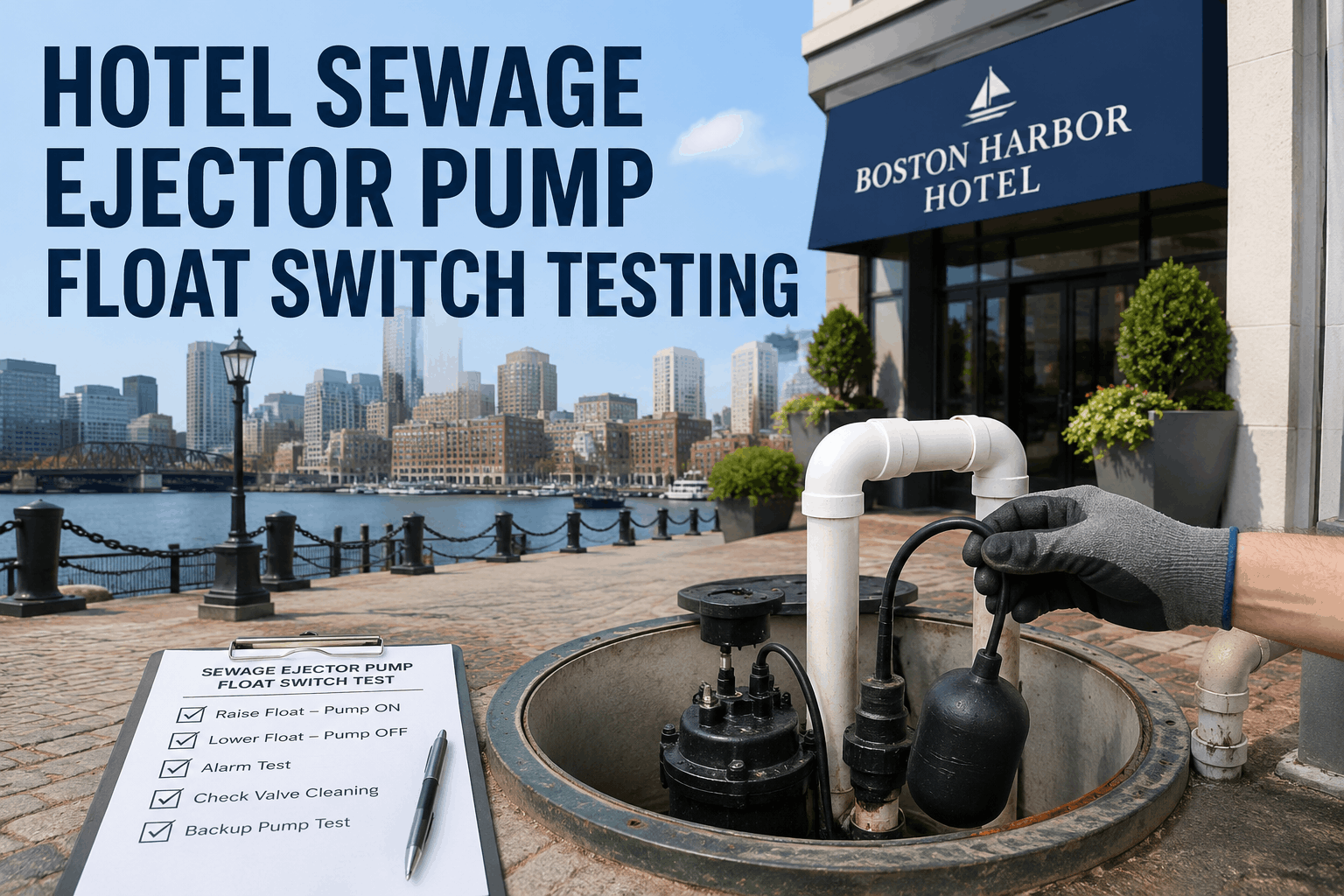
Hotel Sewage Ejector Pump Float Switch Testing

By Alex Jordan on June 10, 2026

hotel-sewage-ejector-pump-float-switch-testing

Sewage ejector pump float switch failure causes basement flooding, property damage, and health code violations—not because pump hardware fails randomly, but because monthly float switch testing and backup pump verification are skipped. A malfunctioning float switch fails to trigger the pump when sewage level rises, allowing waste to back up into basement bathrooms, laundry areas, and mechanical rooms. A single basement flooding event costs hotels $50,000-$150,000 in water damage, remediation, guest relocation, and operational disruption. Monthly float switch testing verifies the switch activates the pump at correct sewage height, alarm systems trigger on overfill, and backup pump functions if primary pump fails. OxMaint's plumbing maintenance module schedules monthly float switch tests, tracks pump cycle counts, logs alarm verification results, and maintains flood prevention compliance documentation—ensuring every hotel basement remains dry and protected from sewage backup liability.

HOSPITALITY · FLOOD PREVENTION · PLUMBING COMPLIANCE · 2026

Hotel Sewage Ejector Pump Float Switch Monthly Testing

Monthly float switch testing, backup pump verification, and basement flood prevention—automated. Protect your hotel from sewage backup with systematic pump maintenance, alarm testing, and compliance documentation required by municipal plumbing codes and health departments.

8-10%Of hotel basement flooding incidents caused by failed sewage ejector pump switches vs. equipment capacity issues
$75KAverage basement water damage cost per flooding incident including cleanup, remediation, and guest relocation
3-5 yrsTypical lifespan of sewage ejector pump float switches before mechanical failure or corrosion occurs
15-30 minAverage time from sewage backup start to basement flooding if pump fails and float switch doesn't activate

What Monthly Sewage Ejector Pump Testing Actually Prevents in 2026

Sewage ejector pumps in hotel basements lift waste from below-grade bathrooms and laundry areas to the municipal sewer line via check valve and discharge pipe. The pump operates only when sewage level rises to the float switch activation point (typically 8-12 inches above tank bottom). If the float switch corrodes, becomes mechanically stuck, or loses electrical connection, the pump never activates even as sewage rises. Waste backs up into basement plumbing fixtures—toilets overflow, sinks don't drain, and laundry room slop sinks fill with raw sewage. Monthly testing manually raises the float switch to verify pump activation, confirming both mechanical movement and electrical signal transmission. Alarm systems test verifies that a high-level alarm sounds if sewage rises above the float switch to the overfill point (safety margin). Backup pump testing confirms that if the primary pump fails, a redundant pump engages automatically, preventing overflow. Check valve inspection prevents backflow of sewage if the discharge line develops a leak. Documentation of monthly testing proves the hotel maintained systematic flood prevention protocols, protecting against liability if damage occurs. OxMaint's sewage pump tracking system schedules monthly float switch testing, logs pump cycle data, tracks alarm functionality, sets backup pump testing reminders, and maintains flood prevention documentation required by municipal plumbing inspectors.

Sewage Pump Flood Prevention Capability Map—What Each Inspection Prevents
Float Switch Activation Test
Monthly + After Any Repair
Manual float raise, pump startup confirmation, mechanical movement verification, electrical continuity confirmation
Pump Motor Operation
Monthly Test + Quarterly Deep
Motor start sequence, vibration and noise assessment, current draw verification, cooling function check
Discharge Check Valve
Quarterly + Annual Cleaning
Backflow prevention, discharge pipe inspection, valve seat sealing, blockage removal
High-Level Alarm System
Monthly Test + Notification
Audible alarm activation, notification system function, alert documentation
Backup Pump Verification
Quarterly + Annual Cycling
Redundant pump functionality, automatic switchover confirmation, motor startup and operation
Flood Prevention Compliance
Monthly Logs + Annual Audit
Municipal code compliance documentation, health department inspection readiness, insurance liability protection

Section 1: Sewage Backup Risk and Float Switch Failure Mechanisms

Below-grade bathrooms and laundry facilities in hotels require sewage ejector pumps because gravity alone cannot move waste upward to the municipal sewer line. The pump activates when a float switch detects rising sewage level in the sump tank. The float is a hollow plastic or metal bulb attached to an arm that pivots as sewage rises. At a preset height (typically 8-12 inches), the float arm contacts an electrical switch, closing a circuit that energizes the pump motor. As the pump discharges sewage, the level drops and the float descends, opening the circuit and stopping the pump. Float switch failure occurs through three mechanisms: mechanical corrosion (the pivot joint rusts and won't move), electrical connection failure (the switch contact wire corrodes or the terminal loosens), or mechanical damage (the float bulb cracks or the arm breaks). When the float switch fails, the pump never activates, sewage backs up into basement fixtures, and within 15-30 minutes the basement can be flooded with raw waste. Monthly testing prevents this by manually raising the float to confirm pump activation before a real failure creates an emergency. Schedule a flood prevention audit to identify float switch corrosion or mechanical wear before catastrophic failure occurs.

Sewage Ejector Pump Float Switch Lifespan and Replacement Schedule
Condition
Age/Status
Test Result
Action Required
New Installation
0-6 months
Activates smoothly
Monthly testing baseline
Normal Operation
6-36 months
Slight activation delay
Monitor closely
Aging Float
36-60 months
Sluggish movement
Plan replacement
Failure Risk
> 60 months
Won't activate or stuck
Immediate replacement
Float switch lifespan averages 3-5 years in corrosive sewage environments. Monthly testing identifies degradation early, allowing planned replacement before failure causes basement flooding.

Section 2: Check Valve Maintenance and Backflow Prevention

The discharge check valve prevents sewage from flowing backward into the sump tank if the pump stops or if the discharge line develops a leak or blockage. The check valve contains a spring-loaded flapper that allows one-way flow: sewage flows out through the valve during pump operation, but if back pressure develops, the flapper seats and blocks reverse flow. Check valve failure occurs when the flapper becomes stuck open (allowing constant backflow), stuck closed (preventing pump discharge even when running), or develops a crack (allowing slow seepage). Quarterly check valve inspection includes visual examination for corrosion or mechanical damage, manual testing of flapper movement, and visual inspection of the discharge pipe downstream. If the valve is stuck or damaged, it must be replaced—a malfunctioning check valve allows sewage to re-enter the sump tank, reducing pump effectiveness and increasing overflow risk. In some hotel configurations, multiple backup pumps exist—if the primary pump fails, a secondary pump should engage automatically. Annual verification of backup pump functionality confirms both pumps can operate independently and the switchover mechanism works correctly. OxMaint's sewage system maintenance platform tracks check valve inspection dates, schedules quarterly testing, logs backup pump verification, and alerts managers when replacement is needed.

Sewage Pump System Maintenance Points—Monthly, Quarterly, and Annual Tasks
Float Switch Mechanical Test
Monthly: Manually raise float arm. Pump should start immediately. Lower float; pump should stop. Repeat test 3 times to confirm consistency.
Action: If float sluggish or pump doesn't start, replace float switch immediately
Alarm System Verification
Monthly: Raise sewage level to overfill point. Audible alarm should sound. Verify alert notification reaches facility staff.
Action: Silent alarm = immediate repair or replace alarm solenoid
Check Valve Flapper Movement
Quarterly: Manually test flapper action. Should move freely and seat completely. Verify discharge pipe for leaks or blockage.
Action: Stuck flapper = immediate valve replacement
Backup Pump Switchover Test
Quarterly: Disable primary pump. Verify backup pump activates at float switch. Re-enable primary and confirm proper functioning.
Action: Backup pump fails = immediate electrician call to repair switchover logic
Sump Tank Inspection
Quarterly: Visual check for debris, solids buildup, or sediment. Excessive accumulation reduces pump effectiveness and float sensor accuracy.
Action: Tank cleaning if sediment >3 inches or debris visible
Maintenance Documentation
Monthly logs of all tests, quarterly inspection reports, annual compliance summary. Archive for 3+ years per municipal code.
Action: Missing documentation = code violation and liability exposure

Section 3: Basement Flooding Prevention and Damage Mitigation

Basement flooding from sewage backup creates multiple cascading damages: water damage to mechanical equipment, HVAC systems, electrical panels, and structural components; mold and contamination requiring professional remediation ($10,000-$50,000); guest relocation if rooms are affected by flood or odor; health department citation if raw sewage contaminates potable water systems; and operational closure until remediation is complete. Beyond property damage, sewage backup creates health risks—raw sewage contains pathogenic bacteria (E. coli, Salmonella), viruses (hepatitis A, norovirus), and parasites that cause serious illness. Hotel staff and guests exposed to contaminated areas face potential infection. Insurance claims for sewage backup are often contested; policies may exclude coverage if the hotel failed to maintain systematic prevention procedures. Monthly testing documentation proves the hotel maintained systematic flood prevention protocols, supporting insurance claims if damage occurs. Some municipalities require documentation of sewage ejector pump maintenance as a condition of business licensing. Schedule a flood prevention consultation to develop a documented maintenance protocol meeting municipal code requirements.

Monthly Standard Test
Float Activation
5-10 minutes per pump
Manually raise float, confirm pump starts. Lower float, confirm pump stops. Document results.
Failed test = immediate technician dispatch
Quarterly Inspection
Check Valve & Tank
20-30 minutes per system
Visual valve inspection, flapper movement test, tank debris check, discharge pipe verification
Delayed inspection = accumulated damage and increased failure risk
Annual Deep Assessment
Pump Motor & Backup System
45-60 minutes per system
Motor load test, vibration analysis, backup pump switchover, electrical connections, compliance documentation
Skipped annual = undetected motor wear and backup system failure

Section 4: Municipal Plumbing Code Compliance and Insurance Requirements

Municipal plumbing codes in most USA jurisdictions require documentation of sewage ejector pump maintenance, float switch testing, and emergency response procedures. Health departments conduct inspections during business license renewals or following complaints about backup or odor. Plumbing inspectors specifically look for evidence of systematic testing: monthly logbooks showing float switch function dates, alarm test documentation, and maintenance work orders. Facilities without records face code violations, operational restrictions, or plumbing system shutdown orders until compliance is demonstrated. Insurance carriers underwriting property and liability policies often require documented sewage pump maintenance as a coverage condition. If a flooding incident occurs and the hotel cannot produce testing documentation, the insurer may deny the claim, leaving the property to absorb damage costs. With systematic documented testing proving flood prevention protocols, insurance claims are typically approved. OxMaint's plumbing compliance platform automates monthly testing scheduling, logs all results with alert notifications, generates quarterly compliance reports for municipal inspectors, and archives 7+ years of documentation to protect insurance claims and demonstrate systematic risk management.

OxMaint Sewage Pump Maintenance Integration—Municipal Compliance Workflow
Monthly Test Data
Float switch activation results
Pump motor startup confirmation
Alarm system function verification
Backup pump test results
Maintenance technician documentation

Compile for audit

Municipal & Insurance Actions
Plumbing code compliance package
Health department inspection readiness
Insurance claim documentation
Flood prevention liability protection
Annual compliance audit summary
Documented monthly sewage pump testing proves systematic flood prevention protocols. Municipal inspectors and insurance carriers accept maintenance logs as evidence of compliance with plumbing codes and policy requirements.
8-10%
Of basement floods in hotels caused by failed float switches or pump malfunction
Monthly float switch testing is the single most effective prevention measure for sewage backup flooding.
$75K
Average basement water damage cost including cleanup, remediation, and operational closure
Monthly testing costs <$300 annually. One flood event costs 250+ times more than annual preventive maintenance.
3-5 yrs
Typical float switch lifespan in corrosive sewage environments
Monthly testing identifies degradation early, allowing planned replacement before failure causes flooding.
15-30 min
Time from sewage backup start to basement flooding if pump fails
Rapid failure makes early detection critical. Monthly testing prevents the cascade of events that leads to flooding.

Frequently Asked Questions—Sewage Ejector Pump Float Switch Testing

How often must hotel sewage ejector pump float switches be tested?
Monthly float switch activation testing is the standard for flood prevention. Quarterly check valve inspection and annual backup pump verification provide additional protection. Monthly testing catches mechanical or electrical failure before it causes basement flooding.
What does sewage backup cost a hotel in water damage and remediation?
Average basement flood from sewage backup costs $50,000-$150,000 in water damage, mold remediation, equipment replacement, and guest relocation. Health department fines and insurance deductibles add $10,000-$25,000. Monthly testing costs less than $300 annually—250+ times less than one flooding event.
How does a float switch fail and why is monthly testing important?
Float switches fail through corrosion (pivot joint rusts), mechanical damage (arm or bulb breaks), or electrical failure (contact wire corrodes). Monthly manual testing confirms the pump activates before a real failure creates emergency flooding. Testing catches degradation early when replacement is planned rather than after catastrophic failure.
What role does the check valve play in flood prevention?
The discharge check valve prevents sewage from flowing backward into the sump tank during pump shutdown or if the discharge line develops a leak. A stuck or damaged check valve allows backflow, reducing pump effectiveness and increasing overflow risk. Quarterly inspection ensures the flapper moves freely and seals completely.
What compliance documentation is required for sewage pump maintenance?
Monthly test logs showing float switch function, quarterly inspection reports, annual maintenance summaries, and alarm verification records. Municipal plumbing codes require 3+ years of documentation. Health departments review these during license renewals and inspect for systematic maintenance protocols.
How long does a sewage ejector pump float switch typically last?
Typical lifespan is 3-5 years in corrosive sewage environments. Monthly testing identifies degradation, allowing planned replacement before failure. Switches over 5 years old should be replaced proactively to eliminate flood risk from age-related failure.
What should a hotel do if a sewage pump float switch test fails?
Immediately contact a licensed plumber for emergency replacement. The pump may not activate during a real sewage backup, creating flooding risk. Temporary overflow alarm monitoring should be activated until the float switch is replaced. Document the failure and corrective action immediately.
We had a sewage backup incident in a competitor's hotel that cost them $200,000 in damages. That made us take our basement plumbing seriously. OxMaint's monthly float switch testing and automated alerts mean we're testing the pump every month without fail. During a health department inspection, we had a complete three-year test log ready. The inspector said systematic maintenance was the best liability protection we could have. Now we sleep better knowing our basement is protected and documented.
— Facilities Manager, Multi-Property Hotel Owner, Florida USA

Prevent Basement Flooding and Sewage Backup Liability

OxMaint automates monthly float switch testing, tracks pump cycle data, verifies alarm systems, schedules quarterly check valve inspections, and maintains flood prevention documentation required by municipal codes and insurance carriers—protecting your hotel from the $75,000+ cost of basement sewage flooding.


Share This Story, Choose Your Platform!