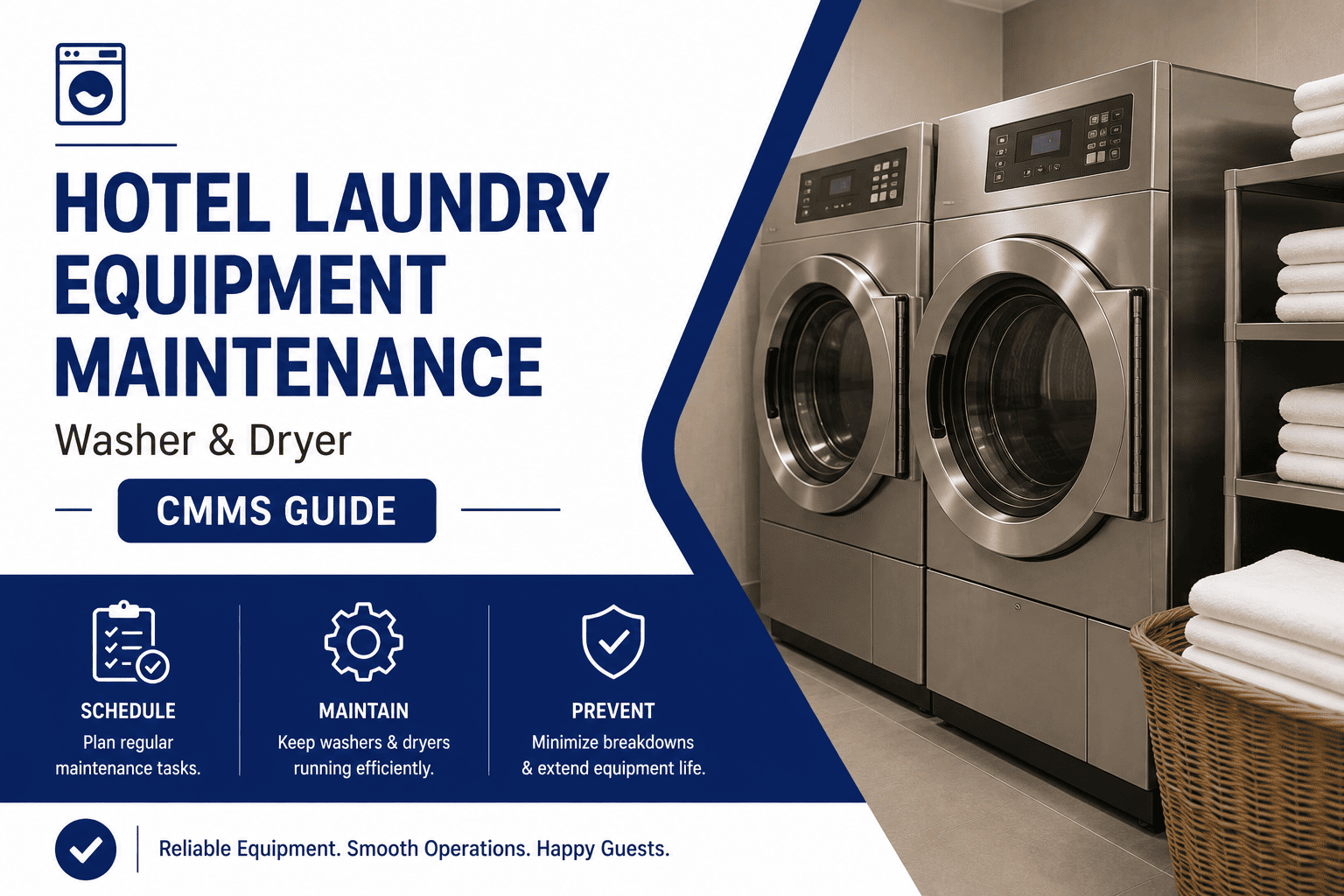
Lint filter clogging in hotel laundry dryers causes appliance fires, equipment damage, and regulatory citations—not because dryer lint is dangerous by itself, but because daily filter cleaning before every laundry cycle is skipped due to staffing gaps or forgotten routines. The National Fire Protection Association (NFPA) reports over 13,000 dryer-related residential and commercial structure fires annually in the USA, with 40% caused by lint accumulation. A single commercial laundry dryer fire can ignite linens, damage the laundry room infrastructure, close the hotel to guests, and trigger investigations by fire safety inspectors and insurance carriers. Dryer lint filter cleaning requires systematic daily inspection, filter removal and cleaning, lint trap verification, exhaust duct inspection, and documented adherence logs. OxMaint's laundry equipment maintenance module schedules daily filter cleaning tasks, tracks lint filter cleaning logs, sets exhaust duct inspection reminders, and maintains fire safety compliance documentation—ensuring every hotel dryer operates at peak efficiency while eliminating fire risk.
Hotel Laundry Dryer Lint Filter Daily Cleaning and Fire Prevention
Daily lint filter cleaning, exhaust duct inspection, and fire hazard prevention—all automated. Keep hotel laundry equipment safe and efficient with systematic dryer maintenance scheduling, cleaning verification, and safety compliance documentation.
What Daily Dryer Lint Filter Cleaning Actually Prevents in 2026
Lint accumulation in commercial dryer filters blocks airflow, reducing drying efficiency and forcing increased operating temperatures to compensate. Higher operating temperatures + restricted airflow + lint debris = ignition risk. Lint is highly flammable—a single lint-coated heating element reaching 400°F in the presence of restricted airflow can ignite a fire that spreads to linens inside the drum and damages the laundry room structure. Daily filter cleaning before each laundry cycle removes all lint accumulation from the mesh screen and frame, restoring full airflow and preventing temperature buildup. Lint trap inspection verifies the trap beneath the filter is clear of debris that could restrict airflow below the drum. Exhaust duct cleaning quarterly (or more frequently in high-usage facilities) prevents lint accumulation in the external vent that could force hot air backward into the dryer cabinet, accelerating fire risk. Safety documentation demonstrates systematic lint filter cleaning, protecting the hotel from fire code violations and insurance liability if a dryer fire occurs. OxMaint's dryer maintenance platform schedules daily filter cleaning tasks linked to laundry schedules, tracks cleaning completion with photo verification, sets quarterly exhaust duct inspection reminders, and maintains fire safety compliance logs required by NFPA standards and fire marshals.
Section 1: Lint Accumulation Hazards and Fire Science
Dryer lint is composed of fabric fibers, skin cells, dust, and detergent residue that naturally separate during washing and tumbling. Inside the dryer, air circulation carries lint toward the filter where airflow slows, causing lint to accumulate. Each laundry cycle deposits lint; if the filter is not cleaned before the next cycle, lint compounds, eventually blocking 30-50% of the filter mesh. Clogged filters force heated air backward through the dryer cabinet rather than exhausting it safely outside, raising internal temperatures. Lint is highly flammable—ignition temperature is only 400°F (compared to paper at 450°F or wood at 300-450°F). Commercial dryer heating elements routinely reach 300-325°F; if lint coats the element and airflow is restricted, local hot spots can exceed 400°F. A single smoldering lint particle touching a heating element can ignite accumulated lint in the vent duct, creating a fire that spreads into the laundry room. Daily lint filter cleaning before each cycle removes all accumulated fiber, maintaining full airflow and preventing temperature buildup. Schedule a demo to see how OxMaint automates daily dryer lint filter cleaning tasks and tracks laundry safety compliance across multiple equipment units.
Section 2: Daily Lint Cleaning Procedures and Best Practices
Daily dryer lint filter cleaning must occur before every laundry load, not after. Before-load cleaning ensures the filter is clear when heated air begins flowing, preventing temperature buildup from the first minute of operation. The procedure is simple: remove the lint filter screen from the dryer housing, hold it under light to visually inspect the mesh for lint coverage, use a dry lint brush or hand-card the accumulated lint from both sides of the mesh, visually verify the mesh is clear, and reinstall the filter. The entire procedure takes 60-90 seconds per dryer. In high-volume laundry facilities (hotels with 200-500 guest rooms doing 15-30 laundry cycles daily), multiple dryers require daily cleaning coordination. Assigning cleaning responsibility to the laundry attendant on duty before each shift prevents gaps. Documentation—a simple daily checklist or photo log showing filter cleaned—provides evidence of systematic fire safety protocol if fire investigators are ever involved. Some facilities implement electronic reminders linked to dryer start buttons, requiring acknowledgment that the filter has been cleaned before allowing the cycle to begin. OxMaint's laundry equipment tracking system sends daily cleaning reminders to staff, tracks completion status with photo uploads, alerts managers to missed cleaning cycles, and maintains compliance documentation required by fire marshals and insurance inspectors.
Section 3: Energy Efficiency and Operational Cost Reduction
Beyond fire safety, daily lint filter cleaning directly reduces operational costs through improved drying efficiency. A clean dryer filter reduces drying time by 15-20% per cycle compared to a clogged filter, saving electricity and accelerating linen turnover. For a hotel operating a 50-lb commercial dryer 15 times daily at 45 minutes per cycle (675 minutes daily operation), a clogged filter extending each cycle by 10 minutes adds 150 minutes (2.5 hours) of daily operation, consuming an extra 25-40 kWh per day. At average US electricity rates ($0.14/kWh), that's $3.50-5.60 additional daily cost per dryer, or $1,280-2,050 annually per unit. A hotel with four commercial laundry dryers pays $5,120-8,200 extra annually in electricity due to lint accumulation alone. Daily lint filter cleaning eliminates this efficiency loss. Additionally, reduced operating time decreases heating element stress, extending dryer lifespan from 8-10 years to 12-15 years, saving replacement capital costs of $15,000-25,000 per appliance. Schedule a cost-benefit analysis to calculate how daily dryer maintenance reduces energy costs and extends appliance lifespan in your hotel laundry operations.
Section 4: Fire Code Compliance and Insurance Requirements
The National Fire Protection Association (NFPA) Standard 70B (Electrical Equipment Maintenance) and NFPA 1 (Fire Code) require commercial establishments to maintain documented dryer maintenance logs demonstrating systematic lint removal and fire hazard prevention. Fire marshals in most US jurisdictions conduct laundry room inspections during facility fire safety audits, checking for visible lint accumulation, clogged filters, and maintenance documentation. Facilities unable to produce daily cleaning logs or showing visible lint in filters receive citations and operational orders to clean equipment before further use. Insurance carriers often require documented maintenance schedules as a condition of coverage; dryer fires causing property damage at facilities without maintenance records may result in claim denial or premium increases. OSHA standards for commercial laundry facilities require that laundry management train staff on fire safety procedures and maintain training records. A systematic approach using OxMaint's laundry maintenance platform documents daily filter cleaning, tracks training completion, archives inspection photos, and generates compliance reports required by fire marshals and insurance auditors—transforming dryer fire safety from a reactive crisis response into a systematic prevention protocol.
Frequently Asked Questions—Hotel Dryer Lint Filter Cleaning
Eliminate Dryer Fire Risk and Reduce Laundry Costs
OxMaint automates daily lint filter cleaning task assignment, tracks completion with photo verification, sets quarterly exhaust duct inspection reminders, and maintains fire safety compliance documentation required by fire marshals and insurance carriers—protecting your hotel from fire liability while reducing energy costs and extending appliance lifespan.