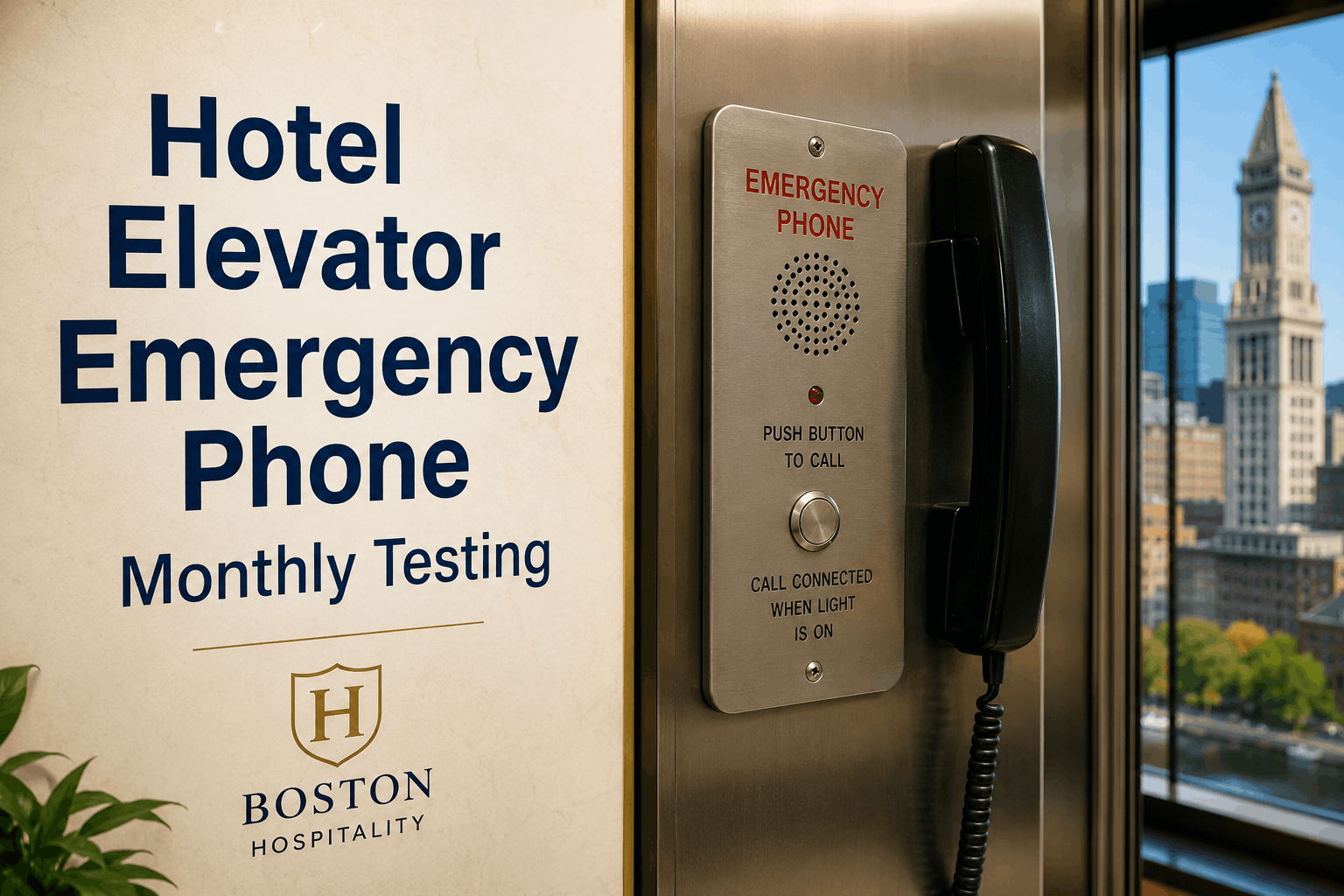
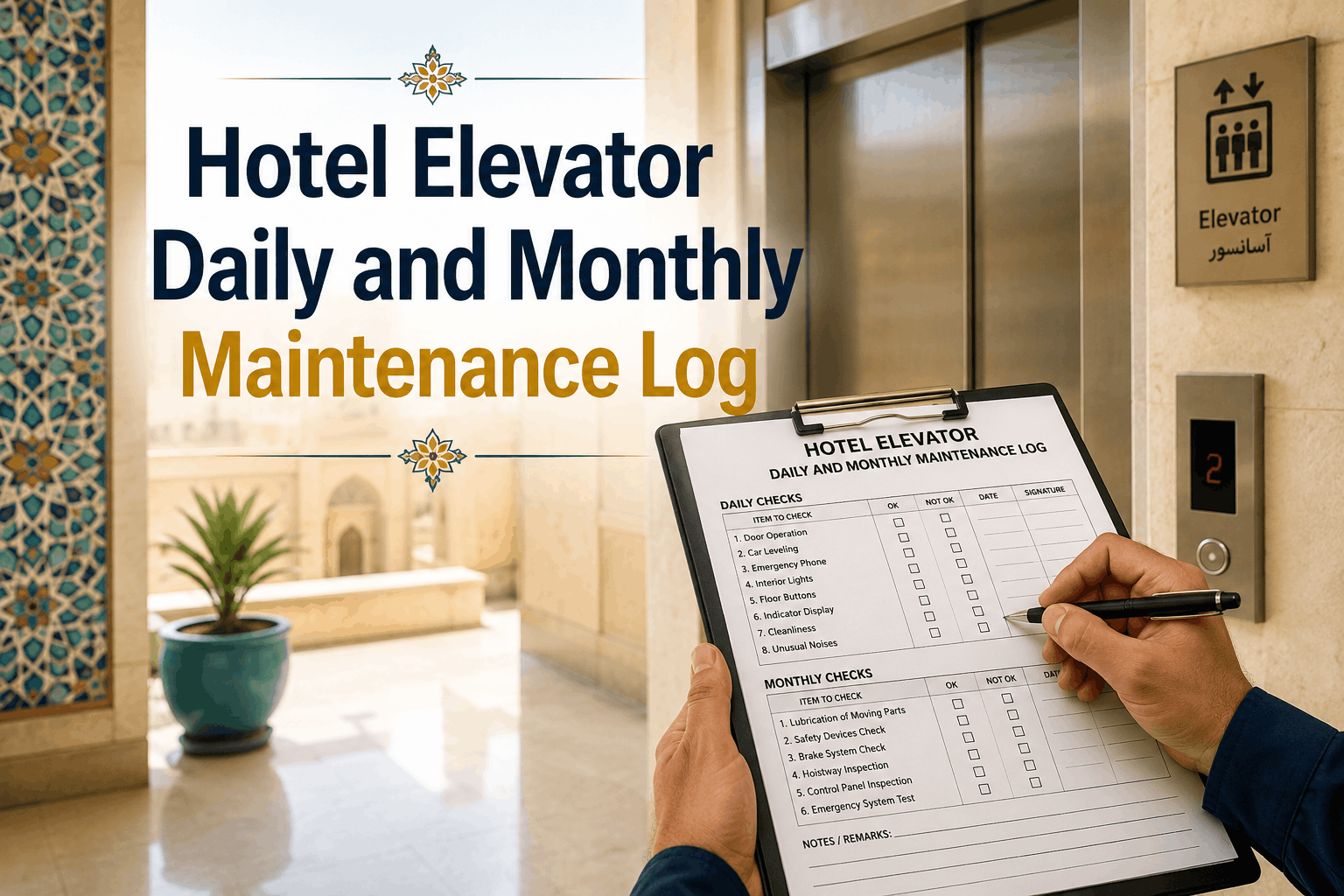
Elevator emergency phones that fail during guest entrapment create liability, guest trauma, and regulatory violations—not because elevator phones are inherently unreliable, but because monthly testing and annual call center verification are skipped. A trapped passenger in an elevator for 30+ minutes without working communication attempts to escape by forcing doors or prying the hatch, risking serious injury. If the hotel cannot prove documented monthly emergency phone testing, liability shifts to the property owner regardless of equipment condition. Monthly two-way communication testing verifies the phone connects to the assigned call center, microphone and speaker function, and the call center operator can hear and respond to occupants. OxMaint's elevator safety module schedules monthly emergency phone testing, logs call center verification results, tracks repair work orders, and maintains compliance documentation required by ASME A17.1 elevator codes—ensuring every elevator occupant can communicate with trained responders within seconds of entrapment.
HOSPITALITY · ELEVATOR SAFETY · GUEST PROTECTION · 2026
Hotel Elevator Emergency Phone Monthly Testing and Compliance
Monthly two-way communication testing, call center verification, and passenger safety documentation—automated. Protect guests during entrapment with systematic emergency phone testing, immediate response protocols, and compliance audits that meet ASME A17.1 elevator code requirements.
2-4KElevator entrapment incidents annually in USA hotels, many preventable with functional emergency phones
30 secMaximum time limit for guest to reach working emergency phone after discovering entrapment per ASME A17.1
$1.2M+Average liability claim when guest injury occurs during entrapment with non-functional emergency communication
72 hrsTypical maximum response time requirement for elevator maintenance to address failed emergency phone
What Monthly Elevator Emergency Phone Testing Actually Prevents in 2026
Elevator emergency phones are the direct communication link between trapped passengers and trained responders. If the phone is non-functional or call center routing fails, trapped passengers experience 30 minutes or more of isolation, attempting self-rescue by prying doors or forcing hatches, creating injury risk. Monthly testing verifies the phone connects to the assigned call center, microphone and speaker function at normal speaking volume, and the call center operator can confirm receipt of the call. Call center verification requires the monitoring company to log the test call, confirm guest location (elevator car and building address), and confirm readiness to dispatch rescue. Failure to respond to test calls indicates the phone line is down, the call center routing is misconfigured, or the monitoring service contract has lapsed—all fixable problems if discovered via testing rather than during actual entrapment. Documentation of monthly testing creates liability protection: if entrapment occurs and emergency communication fails, the hotel can prove systematic testing was conducted, shifting liability to the phone service provider or elevator manufacturer. OxMaint's elevator safety platform schedules monthly testing, logs call center responses, escalates failed tests immediately to technicians, and maintains the test documentation required by ASME A17.1 elevator codes and state elevator inspection authorities.
Elevator Emergency Communication Capability Map—What Each Test Verifies
Call center contact procedures, maintenance technician dispatch protocols, guest communication guidelines, rescue timing expectations
Testing Compliance Documentation
Monthly Log + Annual Summary
ASME A17.1 code compliance records, testing technician name and credentials, call center documentation, repair history logs
Section 1: Elevator Entrapment and Emergency Communication Failure
Elevator entrapment occurs when mechanical or electrical failure stops the car between floor levels, preventing door opening and trapping passengers inside. ASME A17.1 (Safety Code for Elevators and Escalators) requires that trapped passengers be able to communicate with a trained responder within 30 seconds via a dedicated emergency phone. The emergency phone line must connect directly to a 24/7 call center staffed by operators trained in entrapment response procedures. The operator confirms the location (building address and elevator car number), informs the trapped passengers that help is on the way, assesses medical emergencies, and dispatches emergency services if needed. When emergency phones fail, trapped passengers cannot reach help, leading to panic, self-rescue attempts (prying doors, forcing hatches), and injury. Legal liability follows: hotels are responsible for equipment functionality, and entrapment injuries combined with non-functional emergency phones create negligence liability claims of $1-3 million on average. Monthly testing ensures the phone is functional and the call center is staffed and monitoring the assigned line. Schedule a safety audit to ensure your elevators meet ASME A17.1 emergency communication requirements and state elevator code standards.
Elevator Emergency Phone Test Verification Schedule—Monthly Compliance
Test Phase
Frequency
What's Tested
Pass Criteria
Phone Function Test
Monthly
Speaker, microphone, dial tone
Clear audio both directions
Call Center Routing
Monthly Call
Connection to 24/7 operator
Operator answers within 10 sec
Line Integrity Check
Quarterly
Power supply, backup battery, signal strength
All systems functional
Failed Test Recovery
Within 72 hrs
Repair or replacement initiated
Elevator out of service until functional
Monthly testing catches communication failures before entrapment occurs. Failed tests trigger immediate 72-hour repair order. ASME A17.1 requires zero tolerance for non-functional emergency phones.
Section 2: Call Center Coordination and Operator Response Protocols
Elevator emergency phone call centers are specialized facilities staffed 24/7 with operators trained in entrapment response procedures. When a call arrives, the operator uses automatic number identification (ANI) technology to identify the building address and elevator car number, eliminating the need for trapped passengers to state location (critical if panicked or unable to speak clearly). The operator immediately dispatches a local elevator technician to manually open the doors and free the occupants. The response time from call to technician arrival typically ranges from 30 minutes (in urban areas) to 120 minutes (rural areas). Call center verification requires confirmation that the phone line is connected to the facility, the assigned operator is monitoring it, and the location information is correctly registered in the system. Monthly testing involves placing an actual call, speaking with the operator, confirming receipt of location information, and logging the operator's name and time of response. If the call center does not answer, or the technician cannot be verified, the problem must be escalated immediately: either the phone line has failed, the call center contract has lapsed, or the monitoring company has changed the elevator's assignment without notification. OxMaint's elevator emergency phone tracking system logs call center responses, tracks technician dispatch confirmations, and alerts facility managers to any break in the communication chain before entrapment occurs.
Elevator Emergency Communication Inspection Points—Monthly Testing Details
Phone Hardware Inspection
Visual check of phone handset, buttons, speaker grille, microphone. Look for damage, corrosion, loose components, dirt obstruction.
Action: Repair or replace if hardware damaged or non-functional
Test Call Placement
Place call from the elevator phone to the assigned call center. Record time to answer, operator name, confirmation of location information.
Action: If no answer or wrong location, escalate to call center and phone service provider immediately
Audio Quality Assessment
Speak in normal voice volume. Verify operator can hear clearly. Check for distortion, echo, feedback, or other audio issues.
Action: Poor audio quality = phone line replacement required
Power Supply and Backup Battery
Quarterly: Check power indicator lights. Verify backup battery status. Test battery function if power loss simulated.
Action: Battery replacement if voltage below spec or age >5 years
Technician Dispatch Confirmation
Confirm with call center that a local elevator technician has been assigned to your building. Verify technician name and estimated response time.
Action: If technician not assigned or response time >2 hours, escalate immediately
Test Documentation and Filing
Log test date, technician name, operator name, time to answer, any issues found, and corrective actions taken.
Action: Archive all test records for 3+ years per ASME A17.1 requirement
Section 3: Guest Communication and Entrapment Management Training
Even with a fully functional emergency phone, trapped passengers often panic, believing they are in immediate danger. Hotel staff must be trained to reassure occupants that help has been dispatched, a technician is en route, and the occupants are safe (elevators are designed with multiple safety systems preventing falls). The emergency phone operator plays a crucial role in this reassurance—providing real-time updates on technician location, answering questions about how long release will take, and providing emergency medical guidance if needed. Hotel management should communicate to front desk staff, housekeeping, and maintenance personnel how entrapment is handled: the process is normal, takes 30-120 minutes depending on location, and the guest will receive compensation or future benefits. Annual staff training on entrapment procedures includes practicing the emergency phone call, understanding the call center response protocol, and learning how to comfort trapped guests while waiting for rescue. Hotels should also post signage inside elevators instructing passengers on how to use the emergency phone (it's not a standard phone—no dialing required, just press the call button). Schedule staff training on entrapment response procedures and emergency communication protocols.
Monthly Standard Test
Phone Function
5-10 minutes per elevator
Place call, verify audio quality, log operator response and location confirmation
Failed call = immediate service escalation required
Quarterly Deep Check
Line Integrity & Power
15-20 minutes per elevator
Verify power supply, backup battery status, signal strength, and fault indicator lights
Power/battery failure = phone non-functional during power loss
Annual Compliance Audit
Documentation & Training
30-45 minutes per building
Review 12 months of test logs, verify call center staffing contract, conduct staff training
Missing documentation = ASME A17.1 violation and liability exposure
Section 4: ASME A17.1 Code Compliance and Liability Protection
ASME A17.1 (Safety Code for Elevators, Escalators, Amusement Rides, and Devices) is the national standard for elevator safety in the USA, adopted into law by 45 states and the District of Columbia. The code requires emergency phones in every elevator, functional communication links to a 24/7 call center, monthly testing with documented results, and a documented emergency response plan. State elevator inspectors conduct compliance audits during annual license renewals or when complaints are filed. Facilities without documented monthly testing records face violations, operational restrictions, and in some cases, elevator shutdown orders until compliance is demonstrated. If an entrapment injury occurs and the property lacks monthly testing documentation, liability is presumed against the hotel—a legal position that virtually guarantees a settlement. With documented testing proving the hotel maintained systematic safety procedures, liability shifts to the phone service provider or call center if those failures contributed to the injury. OxMaint's elevator safety compliance platform schedules monthly testing, logs all results with call center verification, generates annual compliance reports required by state inspectors, and archives 7+ years of documentation to defend against liability claims.
OxMaint Elevator Safety Integration—ASME A17.1 Testing and Documentation
Monthly Test Data
Emergency phone function test results
Call center operator name and response time
Location confirmation log
Audio quality assessment
Power/battery status verification
Archive for compliance
ASME A17.1 Actions
Annual compliance report generation
State inspector audit preparation
Liability protection documentation
Entrapment response plan verification
Staff training record maintenance
ASME A17.1 compliance eliminates liability in entrapment situations. Documented monthly testing proves systematic safety protocols, shifting liability to equipment failures rather than property negligence.
45 States
Adopted ASME A17.1 as mandatory elevator safety standard with monthly testing requirements
Compliance with state elevator codes is legally required. Non-compliance triggers citations and elevator shutdown orders.
$1.2M+
Average liability claim for entrapment injury with non-functional emergency phone
Monthly testing costs less than $500 annually. Entrapment litigation costs 2,400+ times more.
10 sec
Maximum time for call center operator to answer test call per ASME A17.1 requirement
Slow answer times indicate understaffing or call routing problems. Monthly testing identifies these issues before entrapment.
30-120 min
Typical technician response time from call center notification to elevator door opening
Knowing response time in advance helps guests understand entrapment is temporary and managed. Panic risk decreases with reassurance.
Frequently Asked Questions—Hotel Elevator Emergency Phone Testing
How often must hotel elevator emergency phones be tested?
Monthly testing is the ASME A17.1 requirement. Monthly calls to the assigned call center verify the phone works and responders are monitoring. Quarterly power and backup battery checks ensure functionality during power outages.
What happens if an elevator emergency phone fails during guest entrapment?
Trapped guests cannot contact responders, leading to panic, self-rescue attempts, potential injury, and significant liability. If the hotel lacks documented monthly testing proving it maintained safety protocols, liability shifts entirely to the property owner—averaging $1.2 million in settlement costs.
How does call center verification work during elevator phone testing?
Place a test call from the elevator phone. The call center operator answers, verifies the building address and elevator car number automatically, and logs that the test call was received. This confirms both the phone line and the monitoring service are functioning and your building is still assigned to the facility.
What is the liability risk for hotel entrapment without emergency phone documentation?
Hotels without monthly testing documentation are presumed negligent if entrapment injuries occur—liability defaults to the property. With documented systematic testing, liability shifts to equipment failures. Monthly testing costs <$500 annually; litigation for undocumented entrapment costs $1+ million.
How should hotel staff be trained for elevator entrapment situations?
Annual training should cover the emergency phone location and use, reassurance for trapped guests, understanding that entrapment is not dangerous, typical 30-120 minute rescue time, and compensation procedures for guest inconvenience. This reduces guest trauma and improves entrapment management outcomes.
What should a hotel do if an elevator emergency phone test fails?
Immediately report the failure to your elevator maintenance provider and call center. The elevator must be taken out of service until the phone is restored to functioning order. ASME A17.1 requires all failed tests to be corrected within 72 hours. The hotel should move guests to alternative elevators during repairs.
What compliance documentation is required for elevator emergency phones?
Monthly test logs, call center operator responses, technical inspection reports, repair work orders, and staff training records. ASME A17.1 requires all records be retained for 3+ years. State elevator inspectors review these documents during annual audits.
Our facilities team was managing elevator phone testing via a paper log—spotty at best. During a state elevator inspection, we couldn't produce complete documentation for the past year. OxMaint's scheduling and documentation system fixed that immediately. Now we have monthly verified test logs, call center confirmations, and an annual compliance report ready for inspectors. It's one less liability risk hanging over our heads, and guests are safer knowing emergency communication is being systematically maintained.
— Chief Engineer, Multi-Property Hotel Group, New York USA
Protect Guests and Eliminate Entrapment Liability
OxMaint automates monthly elevator emergency phone testing, verifies call center responses, schedules quarterly power/battery inspections, and maintains ASME A17.1 compliance documentation—ensuring trapped guests can always communicate with responders and your hotel is protected against entrapment liability claims.