Thermal Imaging for Hotel Electrical Systems: Prevent Failures & Fires

By Mark Strong on April 17, 2026

hotel-thermal-imaging-predictive-maintenance-electrical

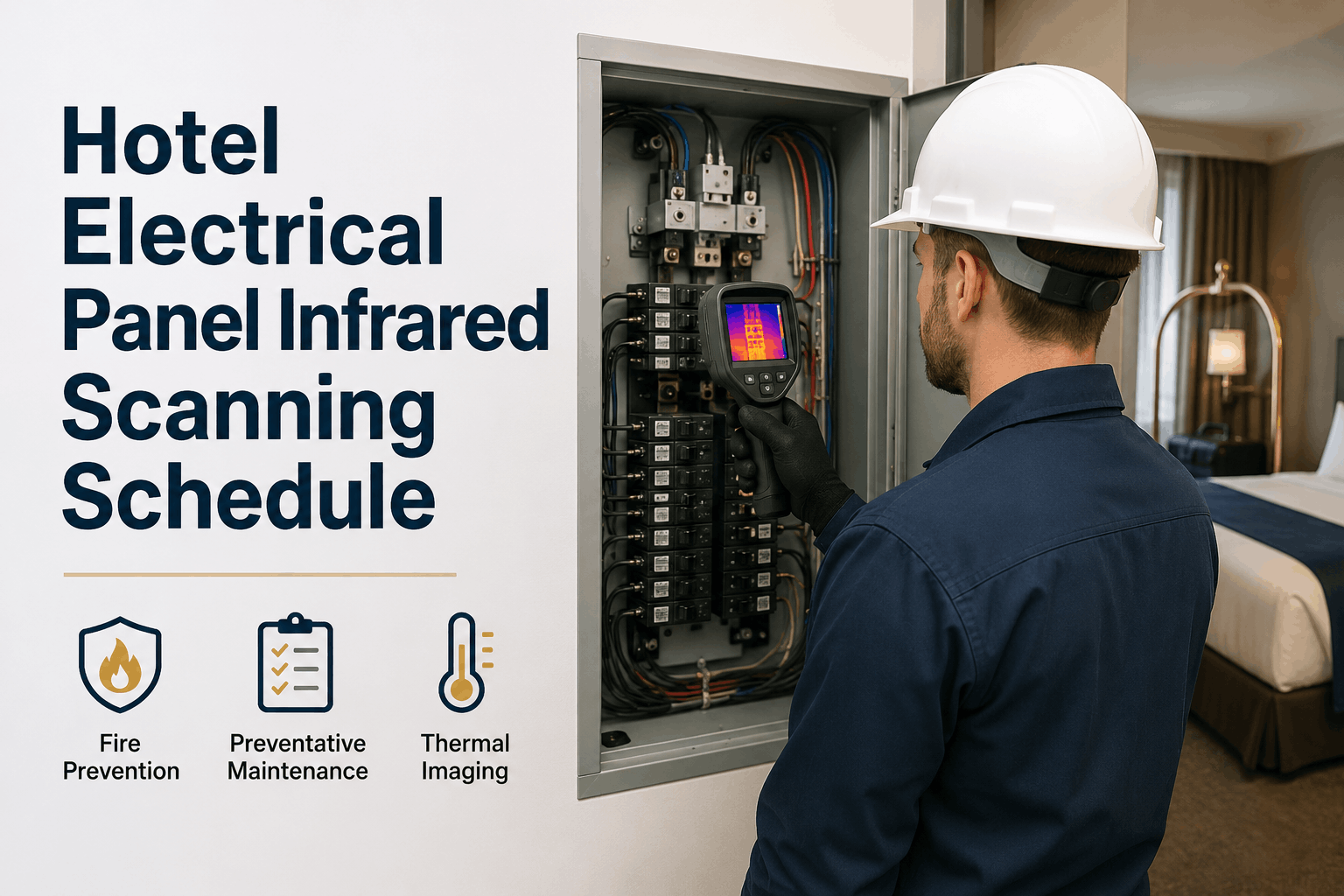
Electrical fires in hotels do not start suddenly. They begin as overheating connections — loose bus bars conducting resistance heat, overloaded breakers running above rated capacity, corroded contacts building thermal stress behind locked panel doors. Thermal imaging makes that invisible heat visible. A single infrared inspection of a hotel's main electrical distribution, switchgear, and motor control panels can identify faults that would otherwise remain undetected until a tripped breaker, a shutdown, or worse. Start your free trial to see how Oxmaint integrates thermal inspection records directly into your hotel's maintenance workflow.

85–90%
of electrical faults detectable by thermal imaging before any failure occurs

30–40%
reduction in maintenance costs for facilities with structured thermal inspection programmes

10×
return on investment from predictive maintenance programmes including thermal imaging

45–65%
reduction in electrical-related downtime with thermal predictive maintenance versus reactive repair

What Thermal Imaging Finds in Hotel Electrical Systems

Six fault types detected before guest impact, equipment failure, or fire risk develops

An infrared camera scans electrical equipment while it is live and under load — the exact conditions when faults generate the most heat. What a thermographer sees on screen reveals developing problems that no visual inspection, no scheduled maintenance, and no panel labelling would ever surface.


Critical
Loose busbar connections
Resistance at loosened contacts generates concentrated heat that can reach 80–120°C above ambient. Arc flash ignition threshold reached in hours once this stage is visible.
Temp. delta: +60°C to +120°C above reference

Critical
Overloaded circuit breakers
Breakers running at 80–100% of rated capacity generate measurable heat signatures. Thermal shows load imbalance across phases before nuisance tripping or internal damage.
Temp. delta: +15°C to +40°C vs adjacent breakers

Serious
Deteriorating transformer windings
Insulation degradation creates asymmetric thermal patterns across transformer cores. AI trend analysis identifies gradual winding temperature rise weeks before efficiency loss becomes measurable.
Temp. delta: +8°C to +25°C from winding baseline

Serious
Phase imbalance in distribution panels
Unequal load distribution across three-phase systems creates an asymmetric thermal map across phase conductors. Left uncorrected, phase imbalance accelerates motor and transformer wear.
Temp. delta: +5°C to +20°C between phases

Moderate
Corroded cable terminations
Oxidation at cable-to-lug connections increases contact resistance progressively. Thermal imaging identifies affected terminations before resistance heat reaches dangerous levels.
Temp. delta: +5°C to +15°C at termination point

Moderate
Failing fuses near current limit
Fuses operating near rated capacity run noticeably warmer than correctly sized ones. Thermal survey flags over-fused circuits and near-limit conditions across all distribution boards.
Temp. delta: +3°C to +12°C versus correctly rated fuse

Connect Thermal Inspection Findings Directly to Work Orders

Oxmaint logs thermal survey results, attaches IR images to asset records, and auto-generates prioritised work orders from fault severity ratings — keeping your electrical maintenance audit trail complete and actionable.

Thermal Survey Frequency: What Hotel Regulations and Insurers Require

Thermal imaging inspections are no longer optional for most commercial hotel operations. Insurers, local fire authorities, and electrical safety standards increasingly require documented thermographic evidence as part of annual electrical safety compliance — and the requirements differ by asset class.

Electrical Asset Recommended Survey Frequency Primary Risk if Missed
Main incoming switchgear / MSB Quarterly under load Full property power loss, arc flash event, regulatory shutdown
Distribution boards (all floors) Bi-annual Zone power failure, tripped protection, guest disruption
Motor control centres (plant room) Bi-annual HVAC, pump, and lift drive failures — guest comfort and safety
LV transformer Annual minimum Winding failure, supply quality degradation, fire risk
UPS and battery systems Annual Loss of backup power to life safety and critical systems
Kitchen extract and mechanical plant Annual Fire risk from overloaded extract motor circuits

From Survey to Work Order: How Thermal Findings Integrate with Oxmaint

A thermal inspection report that lives in a PDF on the maintenance manager's desktop has limited value. The fault findings need to be in the CMMS — attached to the relevant asset, prioritised by severity, and assigned to a technician with a deadline. Oxmaint closes that gap completely.

1
Thermal survey completed — images captured per asset
Thermographer surveys all defined electrical assets under load. Thermal images, temperature readings, and fault severity classifications recorded per asset ID in Oxmaint's mobile app or imported via CSV post-survey.

2
Thermal images attached to asset records
Each thermal image attaches directly to the asset's history in Oxmaint — with timestamp, thermographer attribution, ambient conditions, and delta-T reading logged against the asset's permanent maintenance record.

3
Work orders auto-generated by fault severity
Critical findings (delta-T above 40°C) generate immediate work orders assigned to the engineering team. Serious findings generate scheduled work orders within 7 days. Moderate findings create PM items for the next planned maintenance window. All with the thermal image pre-attached.

4
Audit-ready compliance record generated automatically
Every completed thermal inspection creates a timestamped, asset-linked record exportable for insurance audits, fire authority inspections, and GFSI-adjacent compliance requirements — no manual document assembly required.

Frequently Asked Questions

Yes — thermal imaging is a non-contact inspection method performed at a safe standoff distance. Panels are opened under controlled conditions following arc flash safety protocols, and the thermographer images internal components without any contact. The inspection requires panels to be under normal operating load to generate the heat signatures that reveal faults — a de-energised panel reveals nothing useful from a thermal standpoint. Book a demo to see how Oxmaint manages thermal inspection scheduling for live electrical assets.
IEC 60694 specifies maximum temperature rise limits for switchgear components: 65K above ambient for bare copper or aluminium conductors, 75K for silver-plated contacts. As a practical guide, a delta-T of 10–15°C above a reference component warrants monitoring; 15–40°C warrants a scheduled repair within 30 days; above 40°C is a critical finding requiring immediate action. A delta-T above 60°C on a busbar connection indicates arc flash risk and should trigger a same-day planned outage. Oxmaint's fault severity framework maps these thresholds to work order priority levels automatically.
Thermal imaging detects any failure mode that generates excess heat — which covers a broad range beyond electrical faults. Motor bearing wear creates asymmetric housing heat patterns. Chiller compressor valve deterioration shows as localised hot spots on the compressor shell. Heat exchanger fouling is visible as uneven surface temperature distribution. For hotel maintenance, a single structured thermal walkthrough of the plant room can surface electrical, mechanical, and HVAC findings simultaneously — making it one of the highest-coverage inspection technologies available. Start your free trial to configure multi-discipline thermal survey workflows in Oxmaint.
Periodic IR surveys — a thermographer walking the hotel once or twice a year — provide a snapshot of electrical condition during those specific hours. Faults that develop between survey windows, or faults that only manifest under specific load conditions (e.g. peak occupancy evening load) may be missed entirely. Fixed continuous thermal cameras inside switchgear and main distribution enclosures watch for hot spots 24/7, alerting the moment a temperature anomaly develops — regardless of time of day or current load. For main incoming switchgear and MSBs, continuous monitoring is the professional standard. For floor distribution boards and motor control centres, bi-annual surveys with Oxmaint-logged records represent best practice.

Oxmaint CMMS + Thermal Inspection

Keep Thermal Survey Findings Where They Belong — Inside Your CMMS

Oxmaint stores thermal images against asset records, auto-generates work orders from severity ratings, and maintains a full audit trail for every electrical inspection cycle — so your hotel's electrical safety compliance is always current and provable.

Share This Story, Choose Your Platform!