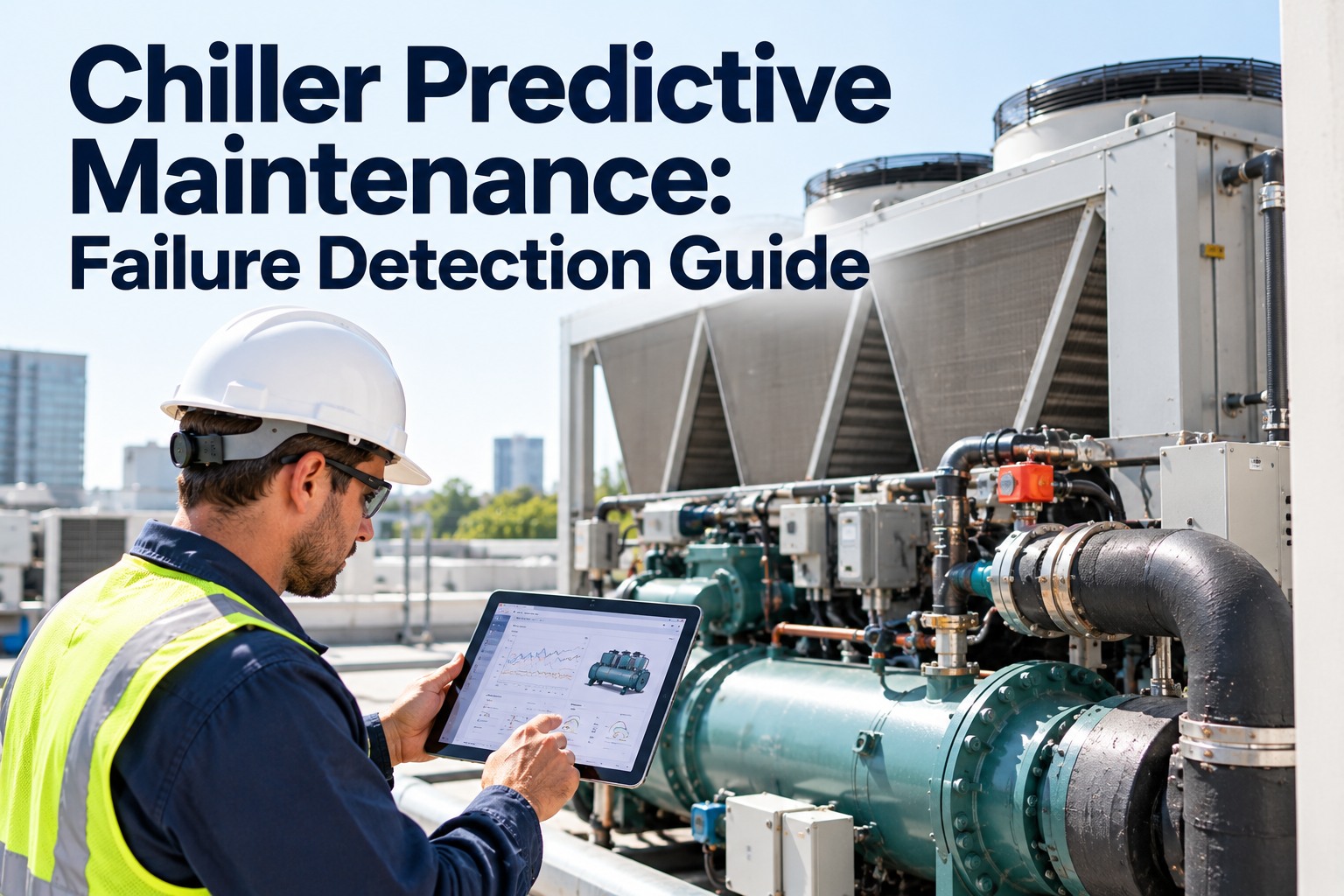
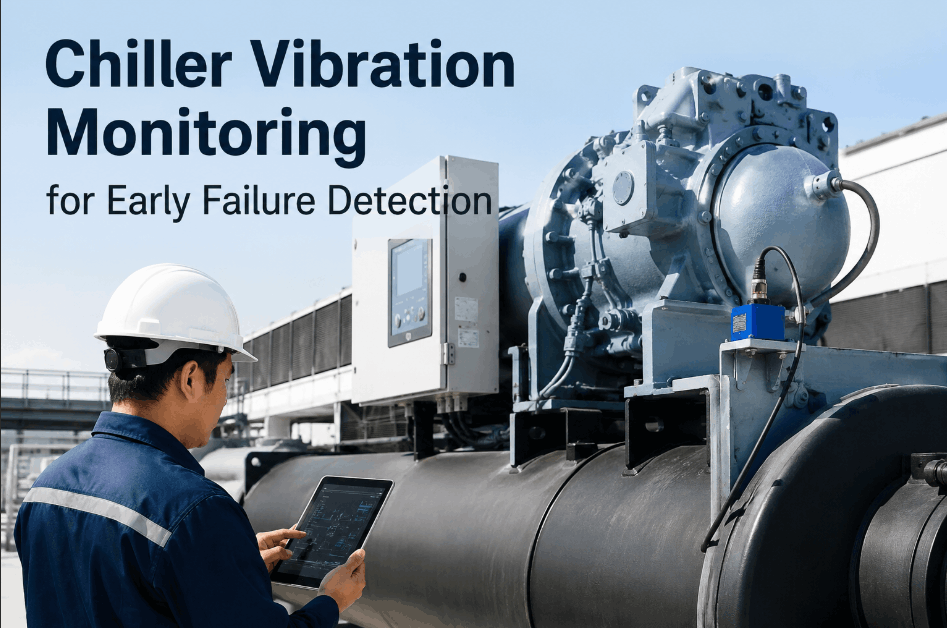
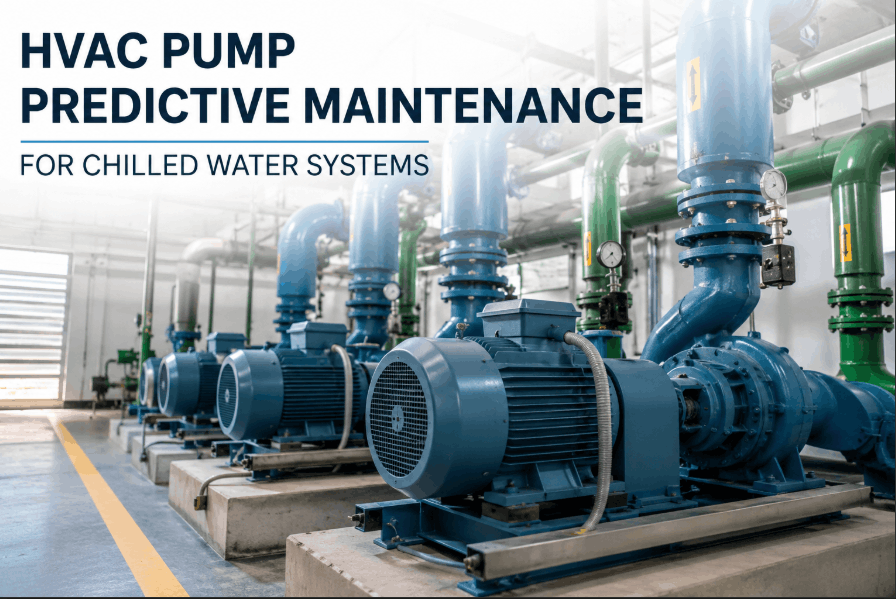
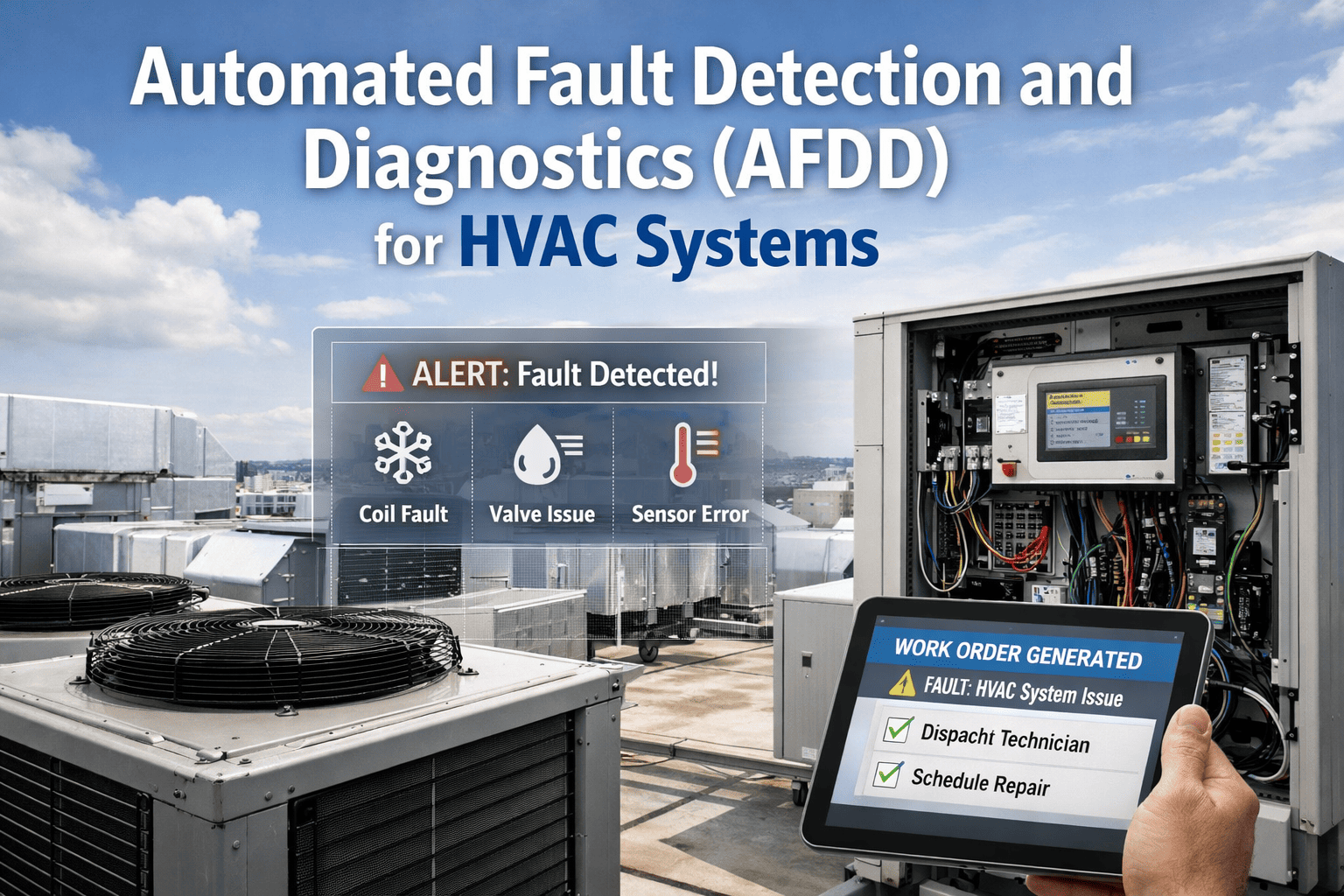
The average commercial HVAC compressor gives measurable warning signals 3 to 8 weeks before failure — in vibration frequency shifts, current signature deviations, refrigerant pressure drift, and differential temperature trends. Without AI-powered monitoring, none of these signals are seen until the system stops. OxMaint's Predictive Maintenance AI continuously analyses sensor streams across your HVAC fleet, detects anomaly patterns weeks before breakdown, and generates work orders the moment degradation crosses a threshold — giving your team time to plan, not react. Book a 15-minute demo to see AI fault detection running on your HVAC system data.
AI-Powered Predictive Maintenance for HVAC Systems
Machine learning detects compressor anomalies, coil fouling trends, and refrigerant leaks 3–8 weeks before breakdown — automatically generating maintenance work orders before failure occurs.
Six HVAC Failure Modes AI Detects Before They Become Breakdowns
Each failure mode produces a distinct sensor signature that AI can detect weeks before it becomes visible to a technician on a manual inspection round. OxMaint's predictive models track all six simultaneously across your entire HVAC fleet.
Book a Demo — See AI Fault Detection Running on Your HVAC Data.
OxMaint's predictive models analyse your sensor feeds and surface the anomalies your team is currently missing between manual inspection rounds. See live anomaly detection in 15 minutes.
Four-Stage AI Pipeline — From Raw Sensor Data to Maintenance Action
Which Sensors Feed Which Predictions
| Sensor Type | Measurement | Failure Modes Detected | Detection Lead Time |
|---|---|---|---|
| Vibration accelerometer | RMS, spectral bands (0.5–20 kHz) | Bearing wear, imbalance, belt harmonics, looseness | 3–8 weeks |
| Motor current transducer | Current signature, harmonic distortion, power factor | Winding faults, rotor bar defects, load anomalies, overloading | 4–8 weeks |
| Refrigerant pressure (suction/discharge) | Absolute and differential pressure | Refrigerant leak, compressor valve failure, coil fouling | 3–6 weeks |
| Temperature (supply/return/ambient) | Approach temperature, superheat, subcooling, delta-T | Coil fouling, refrigerant loss, heat exchanger scaling | 4–7 weeks |
| Power / energy meter | kW, kVA, power factor, kW/ton ratio | Efficiency degradation, coil fouling, refrigerant loss | 4–8 weeks |
| Differential pressure (coil / filter) | ΔP across evaporator coil, condenser coil, air filter | Coil fouling, filter overloading, flow restriction | 4–6 weeks |
OxMaint integrates with BAS/BMS systems via OPC-UA and MQTT, and with standalone IoT sensor gateways for assets not connected to BAS. Book a demo to see sensor integration for your HVAC system.
What HVAC Engineering and AI Maintenance Leaders Say
Every compressor that fails catastrophically in a commercial building was giving signals for weeks. Vibration trending up. Current draw creeping higher. Approach temperatures widening. The problem is not that the data was unavailable — it is that without AI-powered analysis running continuously, no human team has the bandwidth to spot gradual trends across dozens of units simultaneously. Predictive maintenance does not replace maintenance technicians. It gives them a week's advance notice instead of a 2 AM emergency call.
What OxMaint Delivers for AI-Powered HVAC Maintenance
Questions About AI Predictive Maintenance for HVAC
How long does OxMaint need to collect data before AI anomaly detection becomes reliable?
OxMaint begins building baseline models from the first day of sensor data. Basic threshold alerts are active immediately. Statistical anomaly detection becomes reliable after 30–60 days of data, and the full multivariate predictive model reaches production accuracy after 90 days of continuous sensor readings across seasonal conditions. Most HVAC fleets see their first predictive alert within the first 30 days — even before the full model matures. Sign in to connect your first HVAC sensor and start building the baseline.
What sensors are required to detect the failure modes in this article?
Vibration sensors and motor current transducers are the highest-value sensors for rotating equipment (compressors, fans, pumps). Refrigerant suction and discharge pressure sensors enable leak and coil fouling detection. Supply/return temperature sensors and energy meters add the thermodynamic picture. OxMaint integrates with BAS systems that already provide most of these readings — meaning many HVAC fleets already have the sensors, just not the AI analysis layer. Book a demo to assess which failure modes your current sensors cover.
How is AI predictive maintenance different from the alarm thresholds already in our BAS?
BAS alarms fire when a parameter crosses a fixed limit — by which point the equipment has often already failed or is hours from failure. AI predictive maintenance detects the trend toward failure weeks earlier, when readings are still within normal range but are drifting at an anomalous rate. A compressor whose vibration is rising 0.2 mm/s per week will not trip a BAS alarm for weeks — but OxMaint will flag it on Day 7 of the trend. Sign in to see the difference between threshold alerts and trend-based predictions.
Can OxMaint's predictive maintenance work on older HVAC equipment without IoT sensors?
Yes — OxMaint supports retrofit IoT sensor deployment on existing HVAC equipment using wireless vibration and temperature sensors that attach without rewiring. For equipment connected to BAS systems, OxMaint integrates via OPC-UA to ingest existing sensor data without new hardware. For fully legacy systems with no sensor data, OxMaint's structured PM programme with condition-based inspection intervals provides the closest alternative until sensor retrofit becomes viable. Book a demo to discuss your specific HVAC equipment and sensor retrofit options.
Book a Demo — See AI Detecting HVAC Failures 3–8 Weeks Before They Happen.
Dynamic baselines · Multi-sensor anomaly confirmation · Fault-specific work orders · Fleet health dashboard · BAS integration via OPC-UA and MQTT. Every failure your team currently discovers on breakdown day — OxMaint finds on week four of the trend.