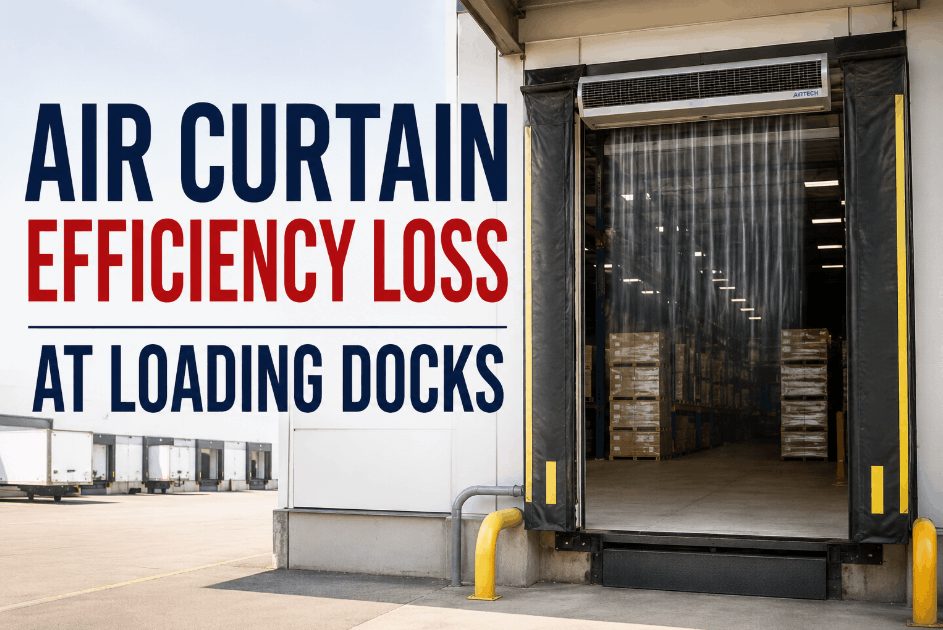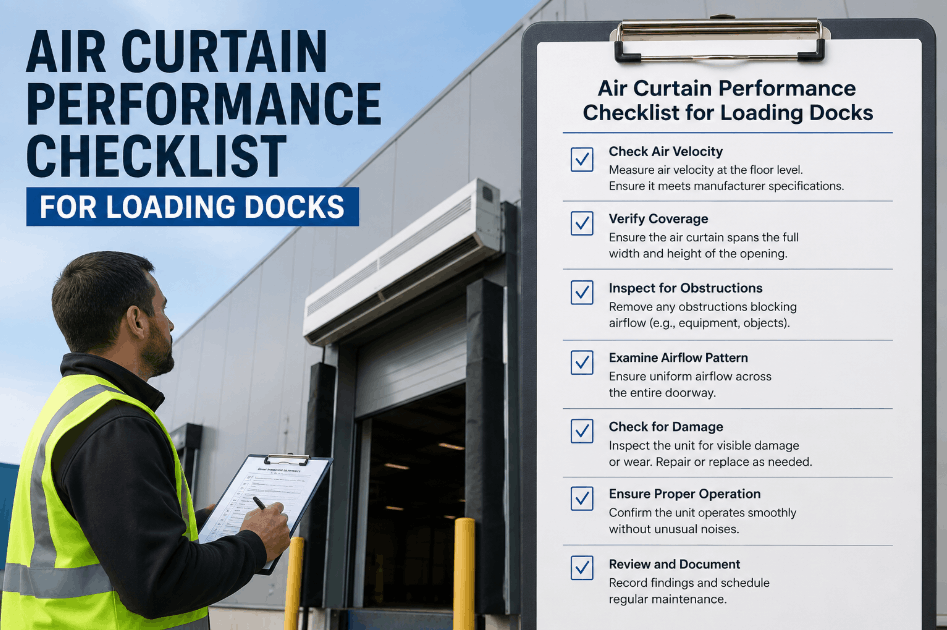
Air curtain performance degradation at loading docks is one of the most financially invisible sources of energy loss and comfort failure in warehouse and distribution facility operations — because the failure is gradual, the symptoms diffuse, and the connection between a poorly performing air curtain and elevated heating or cooling costs is rarely made until energy audits confirm what routine inspection would have caught earlier. Air curtains at dock doors separate conditioned interior environments from outdoor air infiltration, insect entry, and temperature-driven stack effect infiltration. When air velocity drops below design levels, coverage gaps develop at door edges, or unit mounting positions shift after dock bumper impacts, the barrier effect degrades without triggering any visible alarm. Facility managers and warehouse operations teams managing loading dock environments need a structured inspection process to verify air curtain velocity, coverage uniformity, obstruction clearance, and mounting integrity before seasonal loading cycles place peak demand on systems that may have degraded without detection. Sign Up Free on Oxmaint to schedule air curtain inspections by asset, capture velocity and coverage findings digitally, and generate corrective work orders when field readings confirm performance below design specification. From discharge velocity confirmation to blade condition and mounting angle verification, unstructured air curtain inspection is one of the most correctable contributors to loading dock energy loss and comfort complaints. Book a Demo to see how Oxmaint links air curtain inspection records to facility energy tracking and PM scheduling across every dock door in your building.
1. Air Discharge Velocity and Coverage Uniformity
Air curtain barrier effectiveness is determined by discharge velocity and the uniformity of coverage across the door width. Velocity below design specification or coverage gaps at door edges allow outdoor air, insects, and temperature differentials to penetrate the barrier regardless of whether the unit is operating.
2. Fan, Motor, and Blade Condition
Fan and motor condition directly determines discharge velocity and coverage uniformity. Blade damage, motor underperformance, and belt slip in belt-driven units produce velocity deficits that reduce barrier effectiveness without triggering unit fault conditions that would alert facility staff to the degradation.
3. Mounting Position, Angle, and Structural Integrity
Air curtain mounting position and discharge angle determine where the air stream intersects the door opening plane and whether coverage reaches all critical infiltration zones. Mounting shifts from dock bumper impacts and structural vibration are common at loading dock locations and degrade barrier performance without any change in unit mechanical condition.
4. Obstruction Clearance and Intake Condition
Air curtain intake and discharge faces must remain unobstructed to deliver design air volume at rated velocity. Obstructions introduced by storage placement, dock equipment, or maintenance activities near the unit are among the most common and most correctable causes of air curtain performance loss at loading dock locations.
5. Controls, Activation Logic, and Seasonal Setting Verification
Air curtain controls determine when and how the unit operates relative to dock door status. Units that operate continuously waste energy; units that fail to activate when doors open provide no barrier protection. Control verification is the final step in confirming that a mechanically sound unit is delivering its performance when the barrier is actually needed.