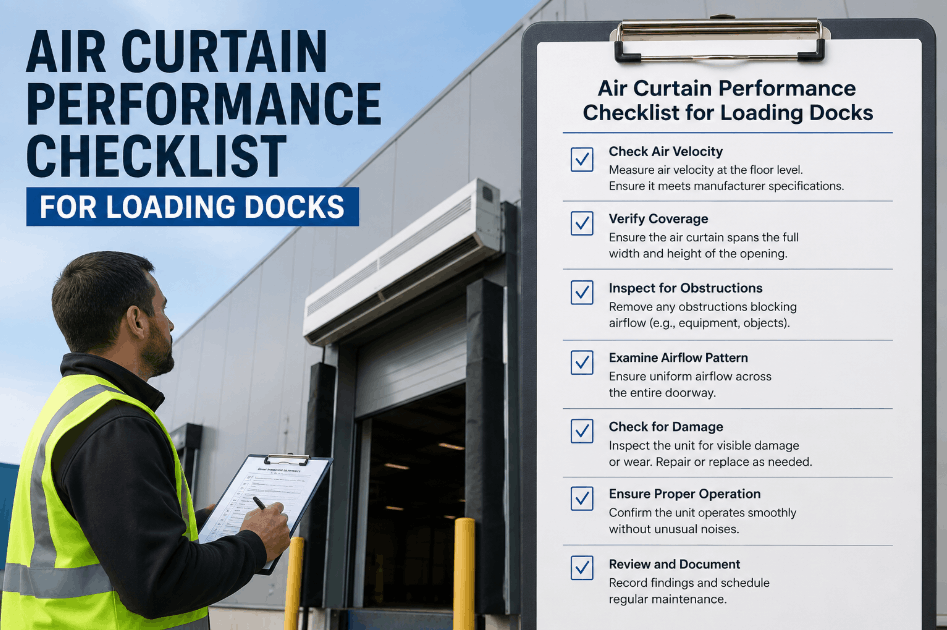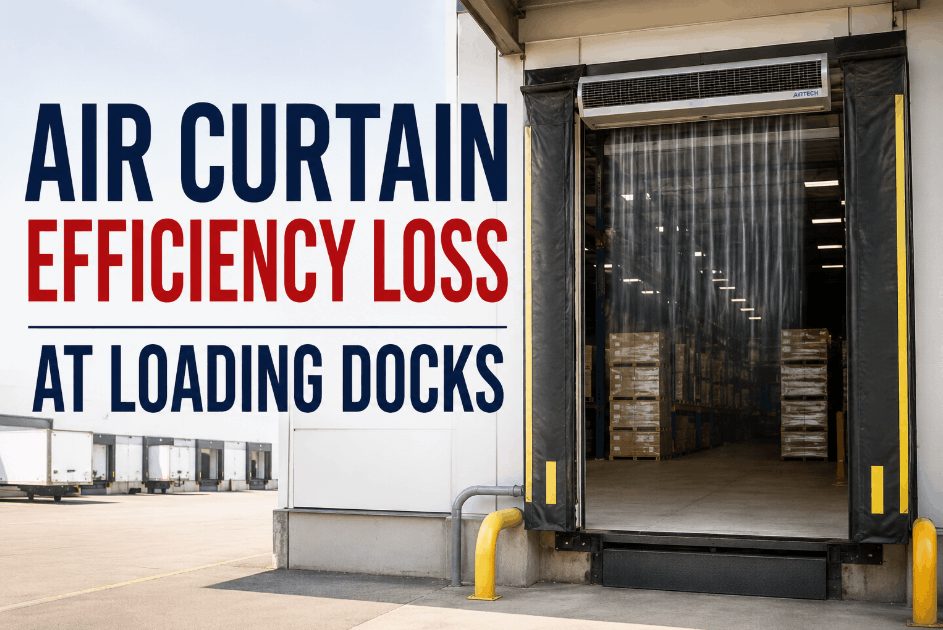
Air curtains at loading docks are meant to hold back outside air while doors stay open for forklift traffic and deliveries, but efficiency loss creeps in long before anyone notices a comfort or energy problem. Dropping fan velocity, worn door seals, and doors propped open longer than intended all let conditioned air escape and outside air enter, driving up HVAC load near the dock zone. Facilities teams that Sign Up Free on Oxmaint can log air curtain performance checks alongside dock door maintenance, turning scattered observations into a trackable equipment record. Warehouse and distribution operations managing multiple dock doors can Book a Demo to see how Oxmaint connects dock equipment inspections to a structured maintenance schedule.
Oxmaint tracks air curtain inspections, fan performance checks, and dock door condition together so efficiency loss gets flagged before it becomes a recurring energy drain.
What Causes Air Curtain Efficiency Loss at Loading Docks
Air curtain performance degrades gradually, which is exactly why it tends to go unnoticed until energy bills or comfort complaints raise a flag. Teams that Sign Up Free on Oxmaint can build a recurring inspection checklist around the signals below.
Dust and debris buildup on the fan housing or motor wear gradually reduces output velocity, weakening the air barrier even though the unit still appears to run normally.
Vibration from dock traffic and door operation can shift the curtain's discharge angle over time, letting air slip past the intended barrier zone.
Even a properly functioning air curtain cannot compensate for gaps around a worn door seal, which lets unconditioned air bypass the barrier entirely.
Doors held open longer than necessary during loading increase the volume of unwanted air exchange, regardless of how well the curtain itself performs.
Door-activated curtain controls that fall out of calibration may delay activation or shut off early, reducing the effective coverage window during dock operations.
Cold weather conditions place more demand on the air barrier, and units already running below design output struggle most during peak seasonal swings.
Loading Dock Air Curtain Inspection Reference: Signal, Cause, and Response
This reference connects what a technician observes during a dock walk-through to a likely cause and a clear next step. Operations teams without a structured dock equipment checklist can Book a Demo to see how Oxmaint structures this kind of inspection workflow.
| Observed Signal | Likely Cause | Inspection Method | Recommended Response | Priority |
|---|---|---|---|---|
| Weak airflow at door threshold | Fan velocity loss | Manual velocity check | Clean fan, inspect motor | Critical |
| Drafts felt past the curtain line | Discharge angle drift | Visual inspection | Realign curtain mounting | Critical |
| Cold or hot air near dock interior | Worn door seal | Seal condition check | Replace door seal gasket | Important |
| Curtain delayed at door open | Sensor or control drift | Control system test | Recalibrate activation sensor | Important |
| Doors open beyond load time | Operational procedure gap | Door log review | Review dock door procedures | Important |
| Seasonal load increase | Output below design at peak | Pre-season checklist | Full curtain performance review | Routine |
Managing Air Curtain and Dock Door Maintenance Across a Distribution Portfolio
Distribution centers and warehouses often manage dozens of dock doors and curtains across one or more sites, and tracking condition by memory does not scale. Teams can Sign Up Free on Oxmaint and map each curtain and door pairing as a linked asset from day one.
- Air curtains and doors logged as linked assets per bay
- Mobile checklist for fan, alignment, and seal condition
- Recurring inspection schedule by season or runtime
- Work orders generated automatically from failed checks
- Fault history retained per dock door, not per site
- Portfolio view of dock equipment health across all sites
Why Dock Equipment Inspection Pays Off Over Time
A structured inspection habit at the dock costs little and prevents larger energy and comfort issues. Teams can Sign Up Free to start building that habit with a simple mobile checklist.
Catching velocity and alignment drift early keeps the air barrier working as designed, reducing unwanted air exchange at the dock.
A working air curtain reduces the heating and cooling load HVAC systems must offset near dock zones, particularly during seasonal extremes.
Consistent air barrier performance keeps dock-adjacent work areas more comfortable for staff during high-traffic loading periods.
Oxmaint helps distribution and warehouse teams track air curtain and dock door condition across every bay and every site.
Air Curtain Maintenance at Loading Docks — Common Questions
Reduced fan velocity from dust buildup or motor wear is the most frequent cause, often combined with discharge angle drift over time.
A quarterly inspection is typical, with additional checks recommended before seasonal temperature extremes increase demand on the barrier.
Yes. A worn door seal allows air to bypass the curtain entirely, regardless of how well the curtain itself is functioning.
Yes. Oxmaint lets teams log dock equipment as linked assets with mobile inspection checklists and recurring schedule triggers.
Yes. A portfolio dashboard shows dock equipment condition and inspection status across every facility in one place.
Oxmaint gives warehouse and distribution facilities teams a structured way to monitor, inspect, and maintain dock air barrier equipment.