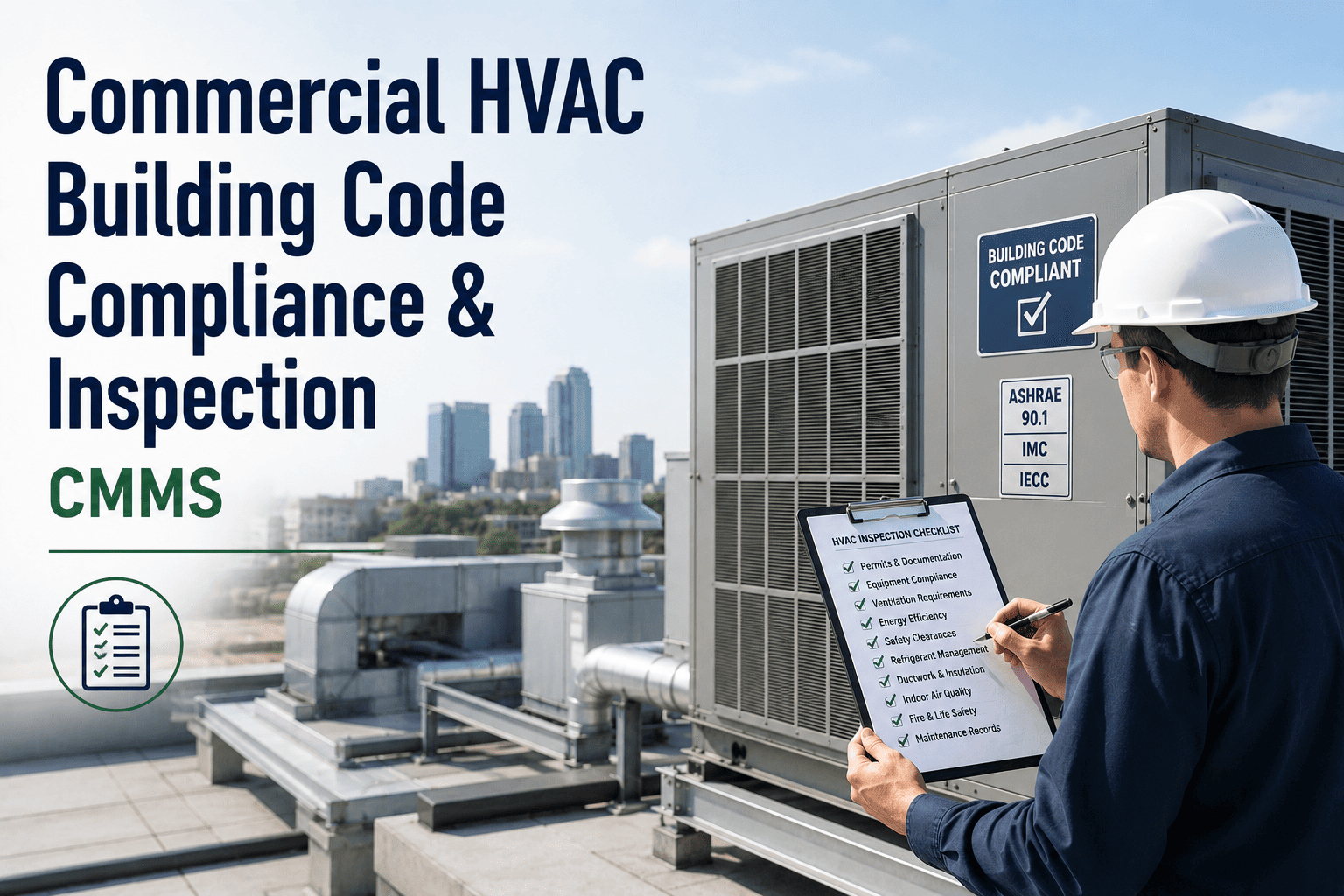
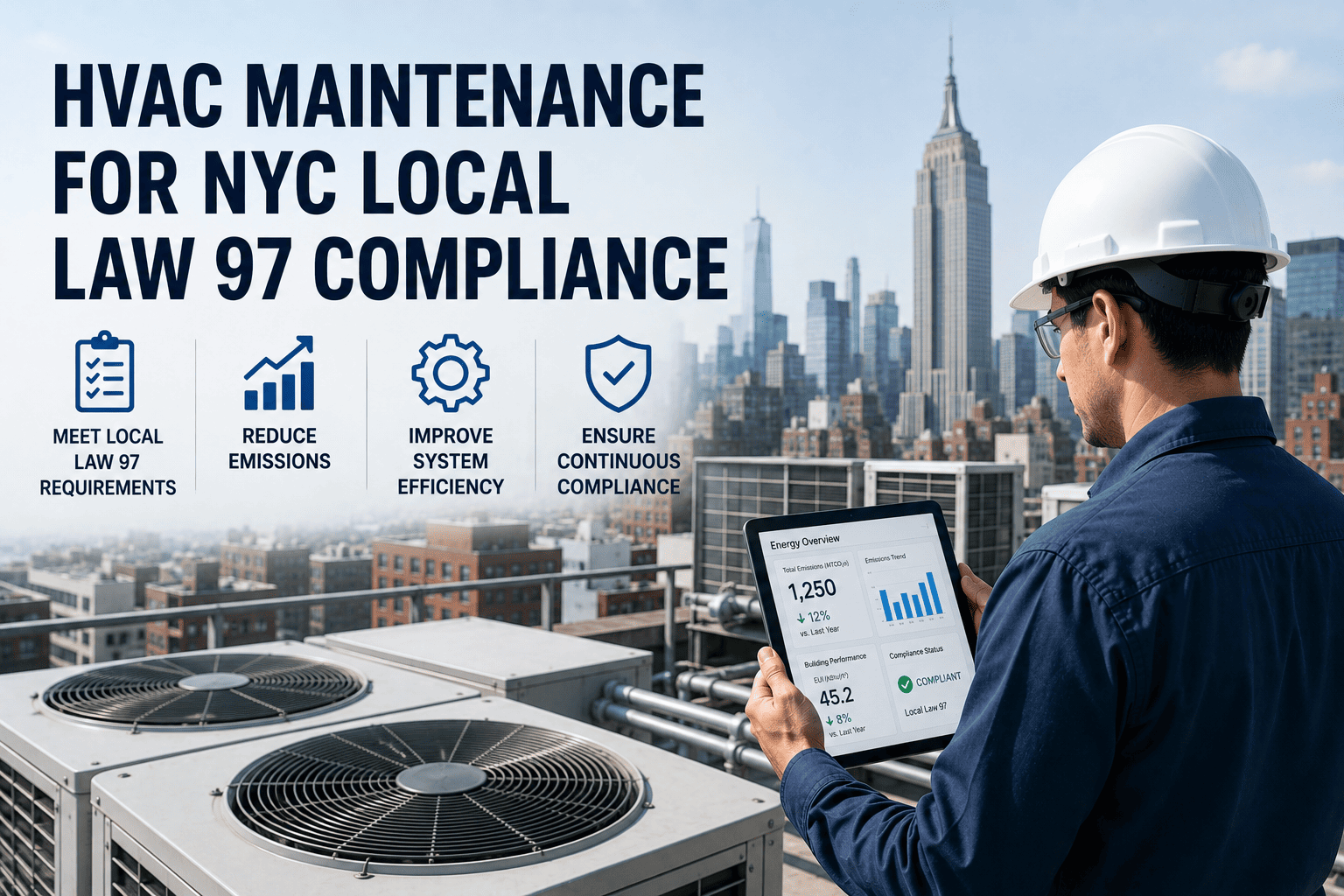
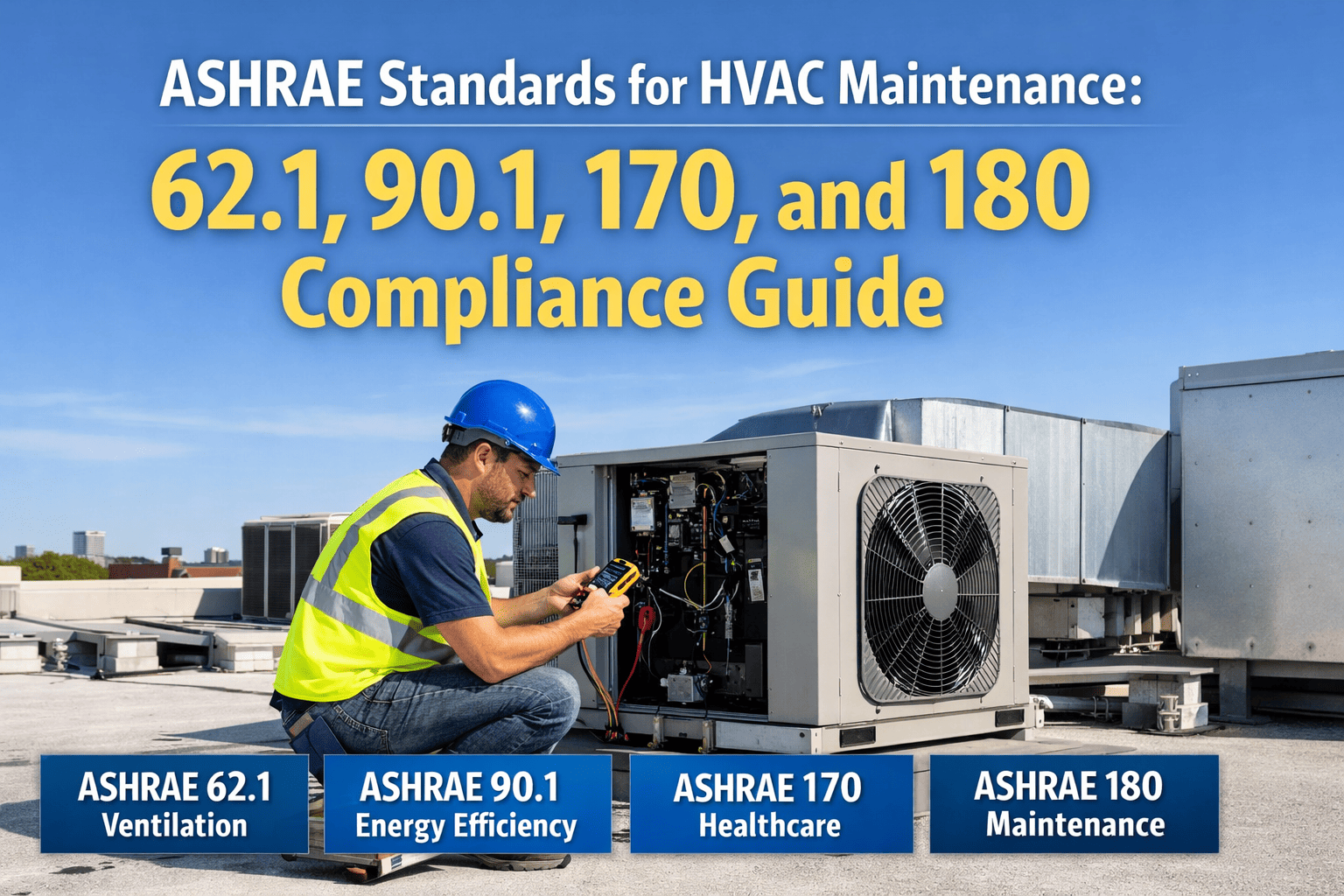
Building energy codes have transformed from obscure regulatory footnotes into make-or-break compliance challenges that can halt construction, void permits, and trigger six-figure retrofit costs. The 2024 International Energy Conservation Code now mandates energy monitoring for buildings as small as 10,000 square feet while tightening HVAC efficiency standards that directly impact your maintenance protocols. Whether you are managing a portfolio of commercial properties or overseeing a single facility, understanding how IECC economizer mandates, minimum efficiency standards, and maintenance provisions affect your operations is not optional. Building inspectors are increasingly scrutinizing HVAC maintenance records during audits, and non-compliance can delay certificates of occupancy or trigger mandatory system replacements. The intersection of energy codes and maintenance has created a new compliance frontier where proactive monitoring and digital documentation separate compliant facilities from costly violations. Ready to ensure your HVAC systems meet every current and emerging code requirement? Sign up today to automate your compliance tracking, or book a demo to see how leading facilities eliminate code violations before they happen.
Building Energy Code Compliance for HVAC Maintenance
Navigate IECC requirements, local mandates, and inspector-verified maintenance provisions that keep your systems compliant and efficient
IECC Compliance Pathways for HVAC Systems
Prescriptive Path
Component-by-component compliance with specific IECC requirements for each HVAC system. Equipment must meet minimum SEER, EER, and economizer standards based on climate zone and cooling capacity.
Performance Path
Energy modeling demonstrates proposed design achieves consumption equal to or less than reference building. Requires ongoing monitoring to verify actual performance matches modeled predictions.
Additional Efficiency
Section C406 points-based system offering 50+ options for efficiency credits beyond baseline. Enhanced monitoring capabilities earn credits while ensuring future compliance.
Critical IECC HVAC Maintenance Requirements
Economizer Maintenance
Air and water economizers must be tested annually to ensure dampers, sensors, and controls function properly. High-limit shutoff must be verified to prevent energy waste during economizer operation.
Energy Monitoring
Buildings 10,000+ sq ft must monitor HVAC energy consumption at 15-minute intervals, retain data for 36 months, and report hourly through annually. End-use submetering required for compliance.
Minimum Equipment Efficiency
HVAC systems must maintain original SEER, EER, and IEER ratings through proper maintenance. Degraded performance triggers non-compliance even if equipment initially met standards.
Demand Control Ventilation
DCV systems in spaces with variable occupancy must be tested semiannually. CO2 sensors require calibration per manufacturer specifications to maintain code-mandated ventilation efficiency.
California Title 24: Beyond IECC Standards
Stricter RequirementsCalifornia's Title 24 Part 6 imposes HVAC maintenance and compliance requirements that exceed IECC baselines. Facilities in California face mandatory HERS testing, certified acceptance test technicians, and specific documentation that inspectors verify during audits. Track Title 24 compliance alongside IECC requirements with unified digital workflows.
HERS Verification
Home Energy Rating System testing mandatory for refrigerant charge, airflow (≥350 CFM/ton), fan watt draw, and duct leakage (≤5%). Third-party raters submit results directly to CEC registry.
Certified ATT Requirements
Acceptance Test Technicians must be certified by approved providers since October 2021. Non-certified test submissions are rejected, delaying permits and certificates of occupancy.
Duct Insulation R-6 Mandate
All supply and return ducts require R-6 insulation regardless of location, including boots and plenums. Attic installations require roof deck insulation to R-4 continuous minimum.
Smart Thermostat Integration
OpenADR 2.0a/2.0b certified virtual end nodes required for demand response. Manual override capabilities must be preserved while enabling automatic setpoint adjustments.
What Building Inspectors Verify During HVAC Audits
Modern energy code enforcement has shifted from plan review to active performance verification. Inspectors now cross-reference maintenance records against installed equipment to confirm continuous compliance. Book a demo to see how digital documentation streamlines inspector approvals.
- Maintenance logs proving economizer testing within 12 months
- Energy monitoring data showing 15-minute interval compliance
- Equipment ratings matching original design specifications
- DCV sensor calibration certificates less than 6 months old
- Duct leakage test results within allowable percentages
- Refrigerant charge verification documentation
- Thermostat programming compliance with deadband requirements
Code-Driven Maintenance Provisions
Economizer Testing & Calibration
Verify damper operation, sensor accuracy, and high-limit controls. Document enthalpy or dry-bulb settings per climate zone requirements. Automate quarterly scheduling to prevent lapses.
DCV Sensor Verification
Calibrate CO2 sensors and verify ventilation rates meet ASHRAE 62.1 standards. Test occupancy sensor integration with HVAC controls.
Energy Data Review
Analyze 15-minute interval data for anomalies indicating efficiency degradation. Compare current performance to baseline IECC modeling.
Annual Efficiency Audit
Comprehensive system testing against original SEER/EER ratings. Verify duct sealing integrity and insulation R-values meet current code.
Eliminate Energy Code Violations Before They Happen
Oxmaint integrates IECC, Title 24, and local requirements into automated maintenance workflows. Real-time compliance dashboards, inspector-ready documentation, and predictive alerts keep your facilities audit-ready 365 days a year.
Frequently Asked Questions
How does the 2024 IECC differ from the 2021 edition for HVAC maintenance?
The 2024 IECC reduces the energy monitoring threshold from 25,000 to 10,000 square feet, expands economizer requirements to smaller systems, tightens air leakage standards to 0.27-0.35 cfm per square foot, and introduces Section C406 efficiency credits for enhanced monitoring. Maintenance teams must now track 15-minute interval data for significantly more buildings and retain records for 36 months minimum.
What specific HVAC maintenance records do inspectors request during energy code audits?
Inspectors verify economizer testing documentation within 12 months, DCV sensor calibration certificates less than 6 months old, energy monitoring data proving 15-minute interval compliance, equipment efficiency ratings matching original specifications, duct leakage test results, refrigerant charge verification, and smart thermostat programming compliance. Digital systems that automatically compile this data reduce inspection times by 70%.
Are there different compliance requirements for existing buildings versus new construction?
Existing buildings undergoing major renovations or HVAC replacements must comply with current IECC standards for the replaced equipment. Some jurisdictions offer compliance pathways for existing buildings that demonstrate overall energy performance equivalent to code requirements. However, maintenance provisions apply universally, meaning all buildings must maintain equipment efficiency and monitoring systems regardless of construction date.
How do I comply with both IECC and stricter local codes like California Title 24?
When local codes exceed IECC requirements, the stricter standard applies. California Title 24 requires HERS verification, certified Acceptance Test Technicians, R-6 duct insulation, and specific smart thermostat capabilities beyond IECC. Digital compliance platforms should support multi-jurisdictional requirements, automatically applying the strictest applicable standard based on facility location and flagging conflicting provisions.
What happens if my HVAC system fails to meet efficiency standards during an inspection?
Failed inspections trigger stop-work orders, permit denials, or certificate of occupancy delays. Corrective actions may include equipment replacement, system recommissioning, or implementation of approved alternative compliance paths. Facilities with continuous monitoring catch efficiency degradation early, allowing proactive maintenance before inspector involvement. See how predictive alerts prevent violations.
Can digital maintenance tracking really improve IECC compliance outcomes?
Facilities using automated compliance tracking achieve 90% reduction in violations compared to paper-based systems. Digital platforms automate 15-minute data logging, generate AHJ-ready reports instantly, alert teams 90 days before testing deadlines, and maintain 36-month retention automatically. The 2024 IECC's expanded monitoring requirements make digital solutions essential rather than optional for multi-facility portfolios.
Energy codes will continue tightening through 2030 and beyond. Buildings with established digital compliance infrastructure today will seamlessly adapt to tomorrow's requirements while competitors scramble to retrofit paper-based systems. Secure your compliance future with Oxmaint, or book a consultation to assess your current IECC readiness.